Ahead of the release of US non-farm payroll data, market sentiment was cautious, and gold prices remained range-bound.
2026-05-08 09:40:28
On Friday during the Asian session, the international gold market maintained a high-level consolidation trend, with spot gold (XAU/USD) hovering around $4,700 per ounce. As the market awaited the release of the US April non-farm payroll report, investors were noticeably more cautious in their short-term operations, resulting in a slight decrease in gold volatility compared to previous periods.
The market generally expects the US to add approximately 62,000 non-farm payroll jobs in April, with the unemployment rate expected to remain around 4.3%. Given the recent divergence in US economic data, the market is using this employment data to further assess whether the US economy is showing signs of slowing down, and to evaluate the Federal Reserve's future interest rate policy direction.

The core driving logic of the gold market remains the dynamic balance between "expectations of a Fed rate cut" and "global safe-haven demand." If the US job market continues to be resilient, the Fed may maintain high interest rates for a longer period, thereby driving a dollar rebound and suppressing gold prices. Conversely, if employment data is significantly weak, it may strengthen market expectations for a rate cut this year and further support gold prices to remain high.
The US dollar index has recently maintained a generally volatile pattern, and market fund flows have begun to diverge. On the one hand, the US economy continues to show some resilience; on the other hand, the pressure of high interest rates on consumption and business investment is gradually becoming apparent. Some institutions believe that the US job market is gradually cooling, but there are no obvious signs of recession yet, therefore the Federal Reserve may continue to maintain a cautious stance in the short term.
Meanwhile, the temporary easing of tensions in the Middle East has somewhat suppressed demand for gold as a safe haven. Previously, tensions between the US and Iran had fueled a rapid rise in market risk aversion, driving gold to new historical highs. However, with the Trump administration pushing for negotiations to reopen the Strait of Hormuz, market concerns about oil supply disruptions have subsided, leading to a significant decline in international oil prices.
The US is still awaiting a formal response from Iran regarding the proposed ceasefire. Although Iran has not yet explicitly accepted the conditions, the market generally believes that the risk of a full-blown conflict in the Middle East has decreased. With energy prices falling, concerns about a renewed acceleration in global inflation have also eased, which has somewhat weakened short-term safe-haven buying of gold.
However, the market remains highly vigilant regarding Iran's nuclear program. Analysts point out that Iran has previously maintained a relatively hardline stance on the nuclear issue, while the United States hopes to reinstate relevant restrictive agreements. Given the significant differences in their positions, geopolitical risks in the Middle East have not truly disappeared, meaning that the gold market still retains a certain safe-haven premium.
From a global market perspective, gold is currently influenced not only by geopolitics but also by expectations regarding global monetary policy. As growth momentum slows in major European and American economies, more and more investors are reallocating their gold assets to mitigate potential future economic volatility and financial market risks.
Central banks worldwide are continuing to increase their gold reserves, which is becoming an important force supporting the long-term rise in international gold prices. Especially against the backdrop of long-term credit risk to the US dollar and the continued rise in global debt, gold's importance as a traditional safe-haven asset is further enhanced.
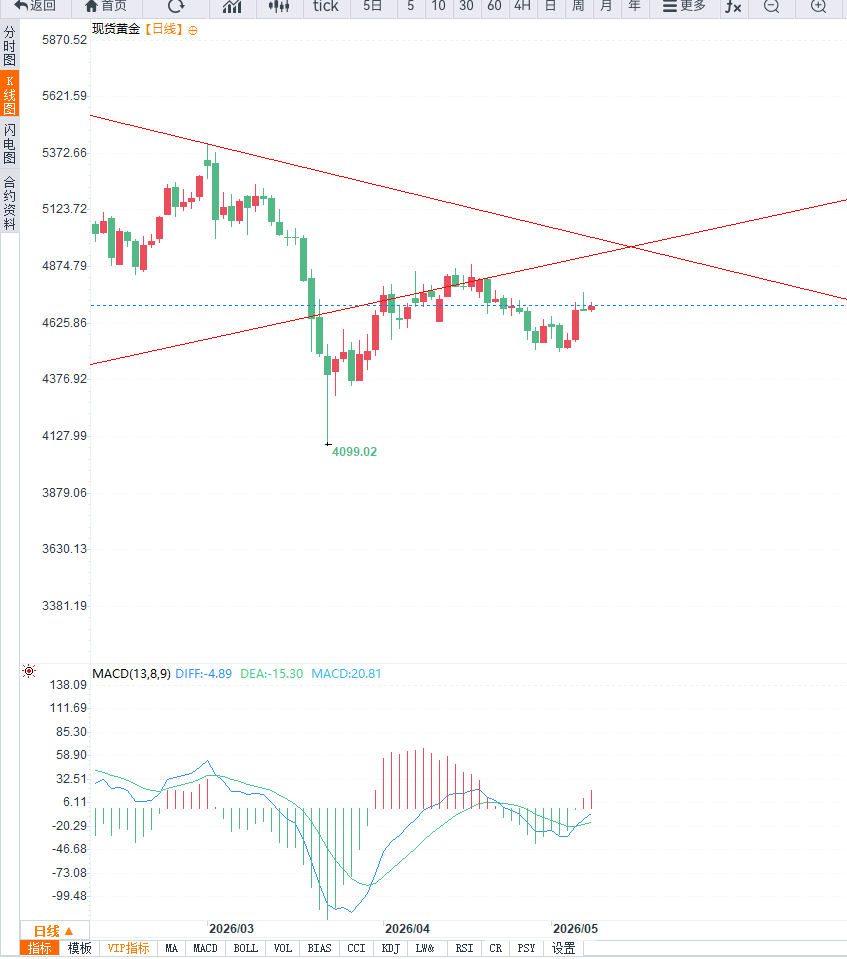
From a technical perspective, the daily chart for gold maintains a clear bullish trend. After breaking through key resistance levels of $4600 and $4650, the upward momentum has continued to strengthen. Currently, the daily moving average system remains in a bullish alignment, and the MACD indicator remains at a high level, indicating that medium- to long-term funds are still biased towards bullish gold.
However, given the significant gains in gold prices previously, some technical indicators have entered overbought territory, creating some short-term profit-taking pressure. The current area around $4680 is a crucial short-term support level. If gold can maintain this level, it may retest the $4750-$4800 range. Conversely, if US employment data is significantly stronger than expected, it could trigger a dollar rebound and push gold prices down to around $4650 or even $4620 in the short term.
From a 4-hour chart perspective, gold has entered a short-term high-level consolidation phase. The RSI indicator shows some signs of cooling, while the MACD histogram has narrowed, indicating a weakening of short-term bullish sentiment. However, given the overall strong trend, the current pullback is largely seen as a technical correction rather than a trend reversal.
In terms of market sentiment, investors are currently maintaining a cautious stance overall. Some funds have chosen to temporarily exit the market before the release of the non-farm payroll data, awaiting clearer signals on policy direction. In the coming days, US employment data, speeches by Federal Reserve officials, and developments in the Middle East will remain key factors influencing gold price fluctuations.
Editor's Summary : The international gold market is currently in a phase of "high-level fluctuations and policy maneuvering." On the one hand, US employment data will directly influence market expectations regarding the pace of the Federal Reserve's interest rate cuts; on the other hand, although the situation in the Middle East has eased somewhat, potential geopolitical risks remain, which provides strong safe-haven support for gold. In the medium to long term, slowing global economic growth, rising expectations of interest rate cuts by major central banks, and increasing global debt risks are likely to continue supporting gold's strong performance. However, after gold prices have repeatedly hit record highs, short-term market volatility may increase significantly, and investors should be wary of the risk of a phased adjustment brought about by employment data and the dollar's performance.
The market generally expects the US to add approximately 62,000 non-farm payroll jobs in April, with the unemployment rate expected to remain around 4.3%. Given the recent divergence in US economic data, the market is using this employment data to further assess whether the US economy is showing signs of slowing down, and to evaluate the Federal Reserve's future interest rate policy direction.
The core driving logic of the gold market remains the dynamic balance between "expectations of a Fed rate cut" and "global safe-haven demand." If the US job market continues to be resilient, the Fed may maintain high interest rates for a longer period, thereby driving a dollar rebound and suppressing gold prices. Conversely, if employment data is significantly weak, it may strengthen market expectations for a rate cut this year and further support gold prices to remain high.
The US dollar index has recently maintained a generally volatile pattern, and market fund flows have begun to diverge. On the one hand, the US economy continues to show some resilience; on the other hand, the pressure of high interest rates on consumption and business investment is gradually becoming apparent. Some institutions believe that the US job market is gradually cooling, but there are no obvious signs of recession yet, therefore the Federal Reserve may continue to maintain a cautious stance in the short term.
Meanwhile, the temporary easing of tensions in the Middle East has somewhat suppressed demand for gold as a safe haven. Previously, tensions between the US and Iran had fueled a rapid rise in market risk aversion, driving gold to new historical highs. However, with the Trump administration pushing for negotiations to reopen the Strait of Hormuz, market concerns about oil supply disruptions have subsided, leading to a significant decline in international oil prices.
The US is still awaiting a formal response from Iran regarding the proposed ceasefire. Although Iran has not yet explicitly accepted the conditions, the market generally believes that the risk of a full-blown conflict in the Middle East has decreased. With energy prices falling, concerns about a renewed acceleration in global inflation have also eased, which has somewhat weakened short-term safe-haven buying of gold.
However, the market remains highly vigilant regarding Iran's nuclear program. Analysts point out that Iran has previously maintained a relatively hardline stance on the nuclear issue, while the United States hopes to reinstate relevant restrictive agreements. Given the significant differences in their positions, geopolitical risks in the Middle East have not truly disappeared, meaning that the gold market still retains a certain safe-haven premium.
From a global market perspective, gold is currently influenced not only by geopolitics but also by expectations regarding global monetary policy. As growth momentum slows in major European and American economies, more and more investors are reallocating their gold assets to mitigate potential future economic volatility and financial market risks.
Central banks worldwide are continuing to increase their gold reserves, which is becoming an important force supporting the long-term rise in international gold prices. Especially against the backdrop of long-term credit risk to the US dollar and the continued rise in global debt, gold's importance as a traditional safe-haven asset is further enhanced.
From a technical perspective, the daily chart for gold maintains a clear bullish trend. After breaking through key resistance levels of $4600 and $4650, the upward momentum has continued to strengthen. Currently, the daily moving average system remains in a bullish alignment, and the MACD indicator remains at a high level, indicating that medium- to long-term funds are still biased towards bullish gold.
However, given the significant gains in gold prices previously, some technical indicators have entered overbought territory, creating some short-term profit-taking pressure. The current area around $4680 is a crucial short-term support level. If gold can maintain this level, it may retest the $4750-$4800 range. Conversely, if US employment data is significantly stronger than expected, it could trigger a dollar rebound and push gold prices down to around $4650 or even $4620 in the short term.
From a 4-hour chart perspective, gold has entered a short-term high-level consolidation phase. The RSI indicator shows some signs of cooling, while the MACD histogram has narrowed, indicating a weakening of short-term bullish sentiment. However, given the overall strong trend, the current pullback is largely seen as a technical correction rather than a trend reversal.
In terms of market sentiment, investors are currently maintaining a cautious stance overall. Some funds have chosen to temporarily exit the market before the release of the non-farm payroll data, awaiting clearer signals on policy direction. In the coming days, US employment data, speeches by Federal Reserve officials, and developments in the Middle East will remain key factors influencing gold price fluctuations.
Editor's Summary : The international gold market is currently in a phase of "high-level fluctuations and policy maneuvering." On the one hand, US employment data will directly influence market expectations regarding the pace of the Federal Reserve's interest rate cuts; on the other hand, although the situation in the Middle East has eased somewhat, potential geopolitical risks remain, which provides strong safe-haven support for gold. In the medium to long term, slowing global economic growth, rising expectations of interest rate cuts by major central banks, and increasing global debt risks are likely to continue supporting gold's strong performance. However, after gold prices have repeatedly hit record highs, short-term market volatility may increase significantly, and investors should be wary of the risk of a phased adjustment brought about by employment data and the dollar's performance.
- Risk Warning and Disclaimer
- The market involves risk, and trading may not be suitable for all investors. This article is for reference only and does not constitute personal investment advice, nor does it take into account certain users’ specific investment objectives, financial situation, or other needs. Any investment decisions made based on this information are at your own risk.