Expectations of a Federal Reserve rate cut cooled, but the dollar came under pressure due to weakening risk sentiment; Japanese intervention failed to stem the yen's decline.
2026-05-09 07:37:14
The dollar index fell 0.43% to 97.86 on Friday, nearing its lowest point since February 27 and marking its second consecutive weekly decline. Despite renewed clashes between the US and Iran near the Strait of Hormuz and attacks on the UAE, investors remained cautiously optimistic about US President Trump's statement that the ceasefire remained in effect, anticipating a swift end to the Middle East conflict.
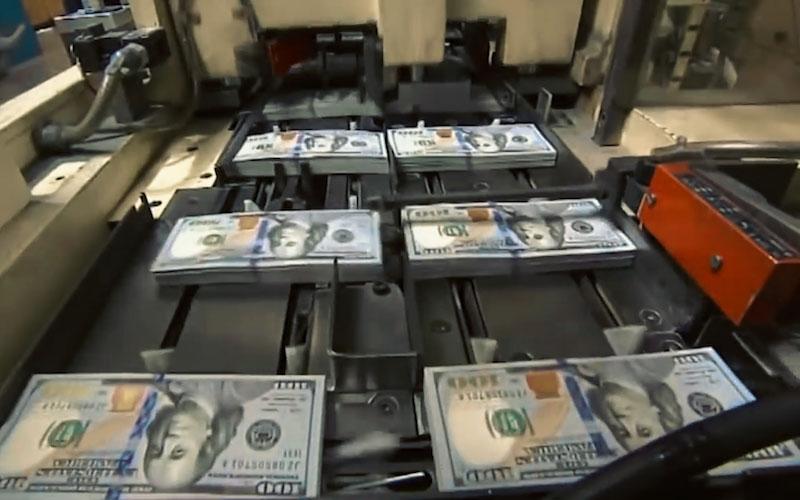
Analysts point out that the US is trying to avoid escalation, a signal that has boosted market risk appetite. Morgan Stanley strategists are explicitly bearish on the dollar, believing that rising risk appetite and increased risk premiums will push the dollar index down to 95 in the coming months.
Meanwhile, the euro rose 0.5% against the dollar to $1.17808, reflecting a trend of funds flowing from safe-haven assets to higher-yielding currencies. It's worth noting that while Iran's blockade of the Strait of Hormuz previously caused oil prices to surge, prompting investors to flock to the dollar as a safe haven, this logic is reversing as hopes for a ceasefire grow.
The resilience of the US job market
Data from the U.S. Department of Labor showed that nonfarm payrolls increased by 115,000 in April, far exceeding market expectations of 62,000, and the March figure was revised upward to 185,000. The unemployment rate remained unchanged at 4.3%, demonstrating unexpected resilience in the labor market. This data reinforced expectations that the Federal Reserve will maintain interest rates unchanged for some time. The chief economist at the Bank of Montreal pointed out that labor supply and demand are in a delicate balance, rising prices are weakening household purchasing power, and future market conditions may deteriorate again. Average hourly earnings increased by 3.6% year-on-year, a faster pace than the previous 3.4%, but soaring energy prices—gasoline retail prices across the U.S. have risen by more than 50% since the outbreak of the conflict to about $4.55 per gallon—may erode the real gains in wage growth. The Federal Reserve kept interest rates unchanged at 3.50%-3.75% last week, citing inflation concerns, and the strong employment data further reduced the likelihood of a rate cut this year.
Deep pressures in the labor market
Despite the strong nonfarm payroll data in April, the household survey revealed underlying concerns: the number of people working part-time for economic reasons surged by 445,000 to 4.9 million, the largest increase in 14 months; household employment declined for the fourth consecutive month, with a cumulative decrease of 1.37 million this year; and the labor force participation rate fell from 61.9% to 61.8%. Economists estimate that without the decline in the participation rate, the unemployment rate would have risen to 4.4%. The broader U6 unemployment indicator (which includes those who have given up job hunting and those working part-time) rose from 8.0% to 8.2%.
The healthcare sector remains the main engine of growth (adding 37,000 jobs), while the federal government cut 9,000 jobs in April, bringing the total number of job losses since its peak to 348,000. A senior economist at EY-Parthenon points out that slowing population growth, an aging population, and a significant decrease in immigration have created a structural tightness in the labor supply. This limited buffer will keep the unemployment rate within a certain range even as hiring slows. Uncertainty surrounding Trump's trade policies has already dampened hiring, and the full impact of the US-Iran conflict on the economy has not yet materialized.
Japanese intervention and the yen's exchange rate
The dollar fell 0.13% to 156.67 against the yen on Friday, after Tokyo allegedly intervened in the currency market last week with approximately $35 billion, along with verbal warnings, successfully curbing a sharp sell-off in the yen. Japan's chief currency diplomat stated that there were no restrictions on the frequency of intervention and that daily contact was maintained with US authorities. However, analysts generally believe that the intervention measures will have little impact on long-term trends.
Mitsubishi UFJ Financial Group points out that the conflict between the US and Iran in the Strait of Hormuz increases the risk of another surge in oil prices, which would undermine Japan's efforts to prevent the dollar/yen exchange rate from breaking through the 160 mark. According to IMF rules on a free-floating exchange rate regime, the Bank of Japan can intervene a maximum of three times within six months, each intervention not exceeding three consecutive trading days. Japan has already used one opportunity and has two more "ammunitions," but the authorities are unlikely to launch another costly operation unless there is a sharp and disorderly fluctuation in the exchange rate. Most analysts expect the dollar/yen exchange rate to fluctuate between 155 and 160 in the short term, with Japan's ultra-low interest rates and the interest rate differential in high-yield markets remaining the main factor weighing on the yen.
Minutes from the Bank of Japan's March meeting revealed that several members believed an interest rate hike would be necessary if the energy shock triggered by the Iran war continued and raised concerns about further inflation. One member warned that as the yen's depreciation increasingly impacted inflation, the central bank "might inadvertently fall behind the times."
The meeting minutes indicated that if a supply shock is temporary, the basic response should be to ignore its impact; however, if it persists for a longer period and triggers a secondary transmission effect, the central bank must assess the situation and respond accordingly. Currently, rising raw material and labor costs have kept the inflation rate near the 2% target for four consecutive years. Under the risk scenarios of high oil prices and a weakening yen, the Bank of Japan predicts that core inflation will hover around 3% for the second consecutive year. This highlights the vulnerability of the Japanese economy to energy shocks and strengthens market expectations for an interest rate hike as early as June. However, some members also expressed concern that a prolonged blockade of the Strait of Hormuz could harm business activity through supply chain disruptions.
High-risk currencies and the British pound and Australian dollar
Despite the Labour Party's crushing defeat in local elections, Prime Minister Starmer's statement that he would not resign boosted the pound and UK government bonds, a sign of political stability. The pound rose 0.6% to $1.3626. Meanwhile, the Australian and New Zealand dollars rose 0.5% and 0.4% respectively, benefiting from a recovery in risk appetite. Previously, concerns about energy supply disruptions due to the Middle East conflict had prompted investors to sell off currencies of oil-import-dependent economies, but as hopes for a ceasefire increased, funds flowed back into higher-risk currencies.
Nomura Research analysts warned that if Brent crude oil prices remain around $90 per barrel, the Bank of England may raise interest rates by 25 basis points in 2026—while Brent crude oil has already risen to $101.55, and the market has fully priced in the expected two rate hikes in December.
Analysts point out that the US is trying to avoid escalation, a signal that has boosted market risk appetite. Morgan Stanley strategists are explicitly bearish on the dollar, believing that rising risk appetite and increased risk premiums will push the dollar index down to 95 in the coming months.
Meanwhile, the euro rose 0.5% against the dollar to $1.17808, reflecting a trend of funds flowing from safe-haven assets to higher-yielding currencies. It's worth noting that while Iran's blockade of the Strait of Hormuz previously caused oil prices to surge, prompting investors to flock to the dollar as a safe haven, this logic is reversing as hopes for a ceasefire grow.
The resilience of the US job market
Data from the U.S. Department of Labor showed that nonfarm payrolls increased by 115,000 in April, far exceeding market expectations of 62,000, and the March figure was revised upward to 185,000. The unemployment rate remained unchanged at 4.3%, demonstrating unexpected resilience in the labor market. This data reinforced expectations that the Federal Reserve will maintain interest rates unchanged for some time. The chief economist at the Bank of Montreal pointed out that labor supply and demand are in a delicate balance, rising prices are weakening household purchasing power, and future market conditions may deteriorate again. Average hourly earnings increased by 3.6% year-on-year, a faster pace than the previous 3.4%, but soaring energy prices—gasoline retail prices across the U.S. have risen by more than 50% since the outbreak of the conflict to about $4.55 per gallon—may erode the real gains in wage growth. The Federal Reserve kept interest rates unchanged at 3.50%-3.75% last week, citing inflation concerns, and the strong employment data further reduced the likelihood of a rate cut this year.
Deep pressures in the labor market
Despite the strong nonfarm payroll data in April, the household survey revealed underlying concerns: the number of people working part-time for economic reasons surged by 445,000 to 4.9 million, the largest increase in 14 months; household employment declined for the fourth consecutive month, with a cumulative decrease of 1.37 million this year; and the labor force participation rate fell from 61.9% to 61.8%. Economists estimate that without the decline in the participation rate, the unemployment rate would have risen to 4.4%. The broader U6 unemployment indicator (which includes those who have given up job hunting and those working part-time) rose from 8.0% to 8.2%.
The healthcare sector remains the main engine of growth (adding 37,000 jobs), while the federal government cut 9,000 jobs in April, bringing the total number of job losses since its peak to 348,000. A senior economist at EY-Parthenon points out that slowing population growth, an aging population, and a significant decrease in immigration have created a structural tightness in the labor supply. This limited buffer will keep the unemployment rate within a certain range even as hiring slows. Uncertainty surrounding Trump's trade policies has already dampened hiring, and the full impact of the US-Iran conflict on the economy has not yet materialized.
Japanese intervention and the yen's exchange rate
The dollar fell 0.13% to 156.67 against the yen on Friday, after Tokyo allegedly intervened in the currency market last week with approximately $35 billion, along with verbal warnings, successfully curbing a sharp sell-off in the yen. Japan's chief currency diplomat stated that there were no restrictions on the frequency of intervention and that daily contact was maintained with US authorities. However, analysts generally believe that the intervention measures will have little impact on long-term trends.
Mitsubishi UFJ Financial Group points out that the conflict between the US and Iran in the Strait of Hormuz increases the risk of another surge in oil prices, which would undermine Japan's efforts to prevent the dollar/yen exchange rate from breaking through the 160 mark. According to IMF rules on a free-floating exchange rate regime, the Bank of Japan can intervene a maximum of three times within six months, each intervention not exceeding three consecutive trading days. Japan has already used one opportunity and has two more "ammunitions," but the authorities are unlikely to launch another costly operation unless there is a sharp and disorderly fluctuation in the exchange rate. Most analysts expect the dollar/yen exchange rate to fluctuate between 155 and 160 in the short term, with Japan's ultra-low interest rates and the interest rate differential in high-yield markets remaining the main factor weighing on the yen.
Minutes from the Bank of Japan's March meeting revealed that several members believed an interest rate hike would be necessary if the energy shock triggered by the Iran war continued and raised concerns about further inflation. One member warned that as the yen's depreciation increasingly impacted inflation, the central bank "might inadvertently fall behind the times."
The meeting minutes indicated that if a supply shock is temporary, the basic response should be to ignore its impact; however, if it persists for a longer period and triggers a secondary transmission effect, the central bank must assess the situation and respond accordingly. Currently, rising raw material and labor costs have kept the inflation rate near the 2% target for four consecutive years. Under the risk scenarios of high oil prices and a weakening yen, the Bank of Japan predicts that core inflation will hover around 3% for the second consecutive year. This highlights the vulnerability of the Japanese economy to energy shocks and strengthens market expectations for an interest rate hike as early as June. However, some members also expressed concern that a prolonged blockade of the Strait of Hormuz could harm business activity through supply chain disruptions.
High-risk currencies and the British pound and Australian dollar
Despite the Labour Party's crushing defeat in local elections, Prime Minister Starmer's statement that he would not resign boosted the pound and UK government bonds, a sign of political stability. The pound rose 0.6% to $1.3626. Meanwhile, the Australian and New Zealand dollars rose 0.5% and 0.4% respectively, benefiting from a recovery in risk appetite. Previously, concerns about energy supply disruptions due to the Middle East conflict had prompted investors to sell off currencies of oil-import-dependent economies, but as hopes for a ceasefire increased, funds flowed back into higher-risk currencies.
Nomura Research analysts warned that if Brent crude oil prices remain around $90 per barrel, the Bank of England may raise interest rates by 25 basis points in 2026—while Brent crude oil has already risen to $101.55, and the market has fully priced in the expected two rate hikes in December.
- Risk Warning and Disclaimer
- The market involves risk, and trading may not be suitable for all investors. This article is for reference only and does not constitute personal investment advice, nor does it take into account certain users’ specific investment objectives, financial situation, or other needs. Any investment decisions made based on this information are at your own risk.