The resilience of the US economy and high inflation expectations have weakened expectations for interest rate cuts, making it more difficult for the Federal Reserve to shift course this year.
2026-05-12 15:26:35
With US economic data continuing to show resilience and global energy prices remaining high due to the Middle East situation, market expectations for a Federal Reserve rate cut this year are clearly cooling. John Willis and David Tan, strategists at BNY Mellon, recently stated that US macroeconomic data released over the past two weeks indicates that the US economy has not yet been significantly hampered by the Middle East situation and energy shocks.

The recently released US employment data, in particular, remains generally robust. Data shows that non-farm payrolls increased by 115,000 in April, a slight slowdown from previous months, but still indicating a certain resilience in the US labor market. However, household survey data shows that the number of unemployed increased by 134,000, while the number of employed decreased by 226,000. This suggests that some divergence is beginning to emerge within the US labor market.
The biggest contradiction in the market right now is that "economic resilience" and "potential slowdown risk" coexist.
On the one hand, the US job market has not deteriorated significantly, and consumer spending and overall economic activity remain stable; on the other hand, high energy prices and persistently high interest rates are gradually increasing the downside risks to the economy. The most closely watched variable in the market remains US inflation. The market expects the US Consumer Price Index (CPI) to rise to 3.7% year-on-year in April, higher than the previous level of 3.3%, while the Producer Price Index (PPI) is also likely to remain high.
BNY Mellon believes that in a high-inflation environment, the Federal Reserve is unlikely to have the conditions to cut interest rates in the short term. Rising international oil prices and shipping risks in the Strait of Hormuz are reinforcing market concerns about "double-dip inflation." Due to continued tensions in the Middle East, the shipping problem in the Strait of Hormuz has not improved substantially. The market is worried that if global energy supplies continue to be disrupted in the future, international oil prices may remain high, thereby pushing up global inflationary pressures.
BNY Mellon points out that its forecast of two rate cuts in the fourth quarter of 2026 is based on two key assumptions.
First, the Strait of Hormuz must be reopened to push international oil prices down. Analysts believe that only a significant drop in energy prices will allow the Federal Reserve to refocus its policy on the job market rather than inflation.
Secondly, the US job market needs to weaken further. Only if the US unemployment rate rises significantly in the future, while job growth continues to slow, will the Federal Reserve likely shift to a more dovish stance.
However, the agency also acknowledges that neither of these conditions is yet to be met in the short term. The situation in the Middle East remains tense, and while the US labor market has shown some signs of slowing, it remains relatively stable overall.
Nevertheless, BNY Mellon still believes that these conditions could gradually materialize by the end of the third quarter, thereby prompting a change in the Federal Reserve's policy stance.
It's worth noting that more discussion about future policy risks began within the Federal Reserve's April meeting. While no officials explicitly opposed the direction of interest rate policy at the time, some expressed differing opinions on the wording of the policy statement. This suggests that the Fed is beginning to focus on the two-way risks of future policy, rather than just the single risk of inflation. The market interprets this change as indicating that the Fed is gradually reserving room for possible future policy shifts.
From the perspective of global financial markets, the US dollar index remains strong, US Treasury yields are generally at high levels, and the gold and silver precious metals markets continue to be affected by both "high interest rate expectations" and "safe-haven demand." Meanwhile, international oil prices continue to remain high. Brent crude is currently trading around $104, and the market remains highly vigilant about the risks to energy supply from the Middle East.
From a technical perspective, the US dollar index is currently maintaining a low-level rebound pattern, with market expectations that the Federal Reserve will maintain high interest rates for a longer period becoming a significant supporting factor for the dollar. As for US Treasury yields, the 10-year Treasury yield has rebounded recently, indicating that the market is readjusting its pricing of future interest rate cuts.
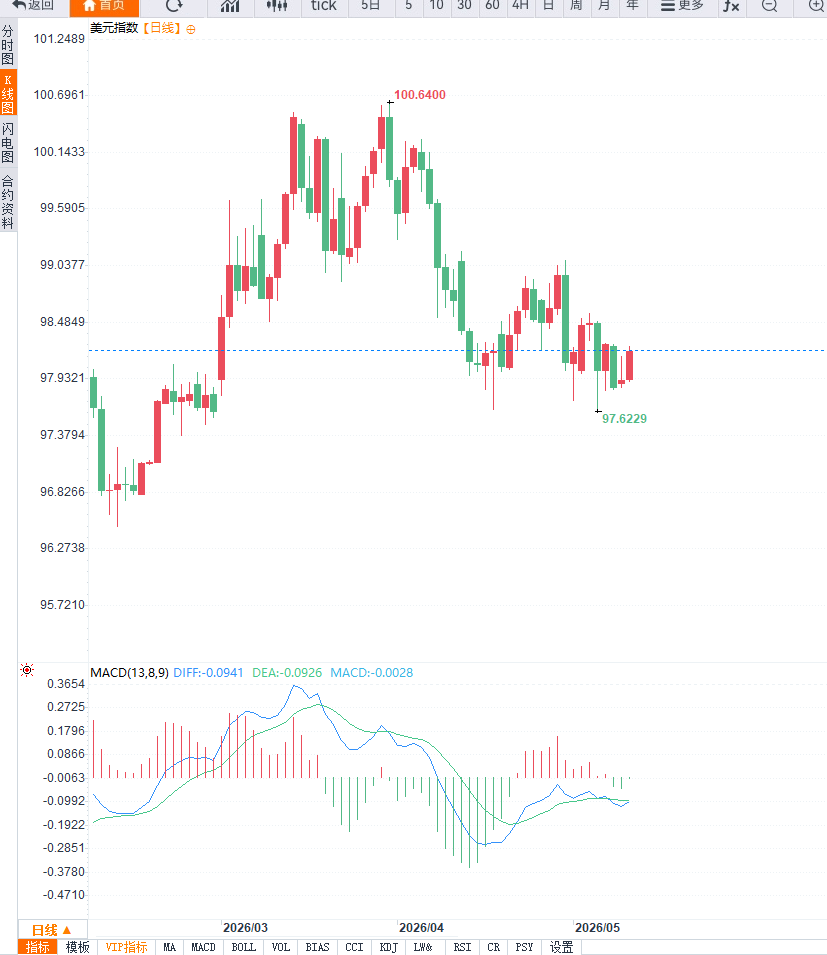
Overall, the core logic of the global market has gradually shifted from the previous "interest rate cut trade" to a "high inflation + persistent high interest rates" trading model. The situation in the Middle East and changes in energy prices will continue to be important variables influencing the Federal Reserve's policy expectations.
Editor's Summary : Market expectations for a Federal Reserve rate cut are cooling significantly. The US economy and job market continue to demonstrate strong resilience, while the Middle East situation, leading to persistently high international oil prices, has reinforcing market concerns about a rebound in inflation. BNY Mellon believes that for the Fed to shift to an easing policy in the future, two key conditions need to be met simultaneously: a decline in energy prices and a significant weakening of the job market. However, given the current situation, these two conditions are unlikely to be met in the short term. Going forward, the market will need to focus on US inflation data, changes in the job market, and developments in the Strait of Hormuz, as these factors will continue to determine the Fed's future policy direction and changes in global market risk appetite.
The recently released US employment data, in particular, remains generally robust. Data shows that non-farm payrolls increased by 115,000 in April, a slight slowdown from previous months, but still indicating a certain resilience in the US labor market. However, household survey data shows that the number of unemployed increased by 134,000, while the number of employed decreased by 226,000. This suggests that some divergence is beginning to emerge within the US labor market.
The biggest contradiction in the market right now is that "economic resilience" and "potential slowdown risk" coexist.
On the one hand, the US job market has not deteriorated significantly, and consumer spending and overall economic activity remain stable; on the other hand, high energy prices and persistently high interest rates are gradually increasing the downside risks to the economy. The most closely watched variable in the market remains US inflation. The market expects the US Consumer Price Index (CPI) to rise to 3.7% year-on-year in April, higher than the previous level of 3.3%, while the Producer Price Index (PPI) is also likely to remain high.
BNY Mellon believes that in a high-inflation environment, the Federal Reserve is unlikely to have the conditions to cut interest rates in the short term. Rising international oil prices and shipping risks in the Strait of Hormuz are reinforcing market concerns about "double-dip inflation." Due to continued tensions in the Middle East, the shipping problem in the Strait of Hormuz has not improved substantially. The market is worried that if global energy supplies continue to be disrupted in the future, international oil prices may remain high, thereby pushing up global inflationary pressures.
BNY Mellon points out that its forecast of two rate cuts in the fourth quarter of 2026 is based on two key assumptions.
First, the Strait of Hormuz must be reopened to push international oil prices down. Analysts believe that only a significant drop in energy prices will allow the Federal Reserve to refocus its policy on the job market rather than inflation.
Secondly, the US job market needs to weaken further. Only if the US unemployment rate rises significantly in the future, while job growth continues to slow, will the Federal Reserve likely shift to a more dovish stance.
However, the agency also acknowledges that neither of these conditions is yet to be met in the short term. The situation in the Middle East remains tense, and while the US labor market has shown some signs of slowing, it remains relatively stable overall.
Nevertheless, BNY Mellon still believes that these conditions could gradually materialize by the end of the third quarter, thereby prompting a change in the Federal Reserve's policy stance.
It's worth noting that more discussion about future policy risks began within the Federal Reserve's April meeting. While no officials explicitly opposed the direction of interest rate policy at the time, some expressed differing opinions on the wording of the policy statement. This suggests that the Fed is beginning to focus on the two-way risks of future policy, rather than just the single risk of inflation. The market interprets this change as indicating that the Fed is gradually reserving room for possible future policy shifts.
From the perspective of global financial markets, the US dollar index remains strong, US Treasury yields are generally at high levels, and the gold and silver precious metals markets continue to be affected by both "high interest rate expectations" and "safe-haven demand." Meanwhile, international oil prices continue to remain high. Brent crude is currently trading around $104, and the market remains highly vigilant about the risks to energy supply from the Middle East.
From a technical perspective, the US dollar index is currently maintaining a low-level rebound pattern, with market expectations that the Federal Reserve will maintain high interest rates for a longer period becoming a significant supporting factor for the dollar. As for US Treasury yields, the 10-year Treasury yield has rebounded recently, indicating that the market is readjusting its pricing of future interest rate cuts.
Overall, the core logic of the global market has gradually shifted from the previous "interest rate cut trade" to a "high inflation + persistent high interest rates" trading model. The situation in the Middle East and changes in energy prices will continue to be important variables influencing the Federal Reserve's policy expectations.
Editor's Summary : Market expectations for a Federal Reserve rate cut are cooling significantly. The US economy and job market continue to demonstrate strong resilience, while the Middle East situation, leading to persistently high international oil prices, has reinforcing market concerns about a rebound in inflation. BNY Mellon believes that for the Fed to shift to an easing policy in the future, two key conditions need to be met simultaneously: a decline in energy prices and a significant weakening of the job market. However, given the current situation, these two conditions are unlikely to be met in the short term. Going forward, the market will need to focus on US inflation data, changes in the job market, and developments in the Strait of Hormuz, as these factors will continue to determine the Fed's future policy direction and changes in global market risk appetite.
- Risk Warning and Disclaimer
- The market involves risk, and trading may not be suitable for all investors. This article is for reference only and does not constitute personal investment advice, nor does it take into account certain users’ specific investment objectives, financial situation, or other needs. Any investment decisions made based on this information are at your own risk.