Has the "Wash Trade" completely collapsed? A review of why the US Treasury market quickly abandoned its illusions of loose monetary policy.
2026-05-12 20:17:22
On Tuesday, May 12th, the US Treasury market was at a critical turning point. The 30-year Treasury yield was approaching 5%, the 10-year yield remained around 4.4%, and the 2-year yield was approximately 3.92%. Crude oil prices fluctuated at high levels, with WTI crude hovering around $101 per barrel, and the energy shock continuing to push up short-term inflationary pressures. The April Consumer Price Index (CPI) is expected to rise to 3.7% year-on-year, a significant acceleration from 3.3% in March. Against this backdrop, market pricing in Federal Reserve policy expectations has undergone a dramatic reversal: previously, there were widespread bets that Kevin Warsh, as chairman, would push for multiple rate cuts and balance sheet reduction; now, the bond market is more inclined to believe that restrictive policies will be maintained for a longer period, and the steepening yield curve trade has quickly subsided.

The current yield curve is in stark contrast to its position at the beginning of the year. The market initially expected the Federal Reserve under Warsh's leadership to accelerate easing, driving a widening spread between the 2-year and 30-year yields. However, economic growth data and high energy prices quickly reversed this trend. The 30-year yield is now near 5%, reflecting not only challenges to long-term inflation anchoring but also investors' repricing of final interest rate levels.
Recent yield levels are as follows
This change means that the previous "Wash trade"—betting on a steepening yield curve to profit—has largely collapsed. Traders are closely watching whether the yield curve will flatten further or experience a renewed surge in volatility driven by data. Persistently high energy prices are being transmitted to core inflation through production costs, limiting the Federal Reserve's room for a rapid shift to easing.
The US economy has demonstrated resilience, with a robust job market and active capital spending supporting growth momentum, but this has also amplified inflation risks. The April Consumer Price Index (CPI) rose 3.7% year-on-year, a new high since 2023, primarily driven by the energy component. Adam Marden, a fund manager at T. Rowe Price, recently pointed out: "Events will dominate Warsh's actions, not ideology. If we see the CPI rise to 3.5% in September, there will be no discussion of interest rate cuts."
This view is highly consistent with market pricing. The interest rate swap market is currently pricing in a near 60% probability of a rate hike before April 2027, a significant upward revision from before the conflict with Iran at the end of February. Bank of America strategists believe that the strong April jobs report has increased the likelihood of a rate hike and recommend going long on 2-year Treasury yields. Similarly, Morgan Stanley manager Andrew Szczurowski remains long on short-term Treasuries but acknowledges that the recent rise in yields presents a potential buying opportunity, provided there is significant weakness in the labor market. Traders should be wary: high yields have begun to raise the cost of auto loans and mortgages, creating a natural damper on growth, but this transmission effect will take several quarters to fully materialize.
The wave of artificial intelligence is driving a surge in corporate capital spending, optimizing supply chains, and boosting potential growth rates, but the energy market is simultaneously facing its biggest supply shock. JPMorgan Chase manager Priya Misra bluntly stated, "This is an extremely difficult market to operate in, or even analyze. Artificial intelligence is generating capital investment, bond issuance, and optimism about long-term U.S. growth, while we simultaneously face our biggest energy shock."
Warsh himself previously emphasized that AI-driven productivity gains could curb inflation, creating room for interest rate cuts. However, current crude oil prices remaining above $100 per barrel have exceeded expectations, making it difficult for inflation expectations to fall quickly in the short term. Ed Al-Hussainy, manager at Columbia Threadneedle, believes that the window for Warsh's bet to return to normalcy still exists, but it would require a significant weakening of the labor market before the end of the year. Traders are focused on whether productivity gains can offset the squeeze on corporate profit margins from rising energy costs, and how this dynamic will affect the pace of corporate bond issuance and credit spreads.
With Warsh set to officially take over the Federal Reserve, his policy style will face a real test. While there were initial expectations that he would lean towards aggressive easing, current economic data has forced the market to lower that expectation. Morgan Stanley strategists point out that a Fed under Warsh's leadership may focus more on new inflation indicators, reduce forward guidance, and push for further balance sheet reduction, thereby increasing volatility in the Treasury market.
In contrast, some investors still believe that Warsh might push for a policy shift if economic growth slows or inflation falls. The current high yield on 10-year Treasury bonds has already put substantial pressure on credit costs, and if oil prices remain high for an extended period, downside risks to the economy will gradually accumulate. Overall, Warsh's actual actions will depend heavily on data evolution rather than a predetermined path, which explains the current cautious shift in market pricing.
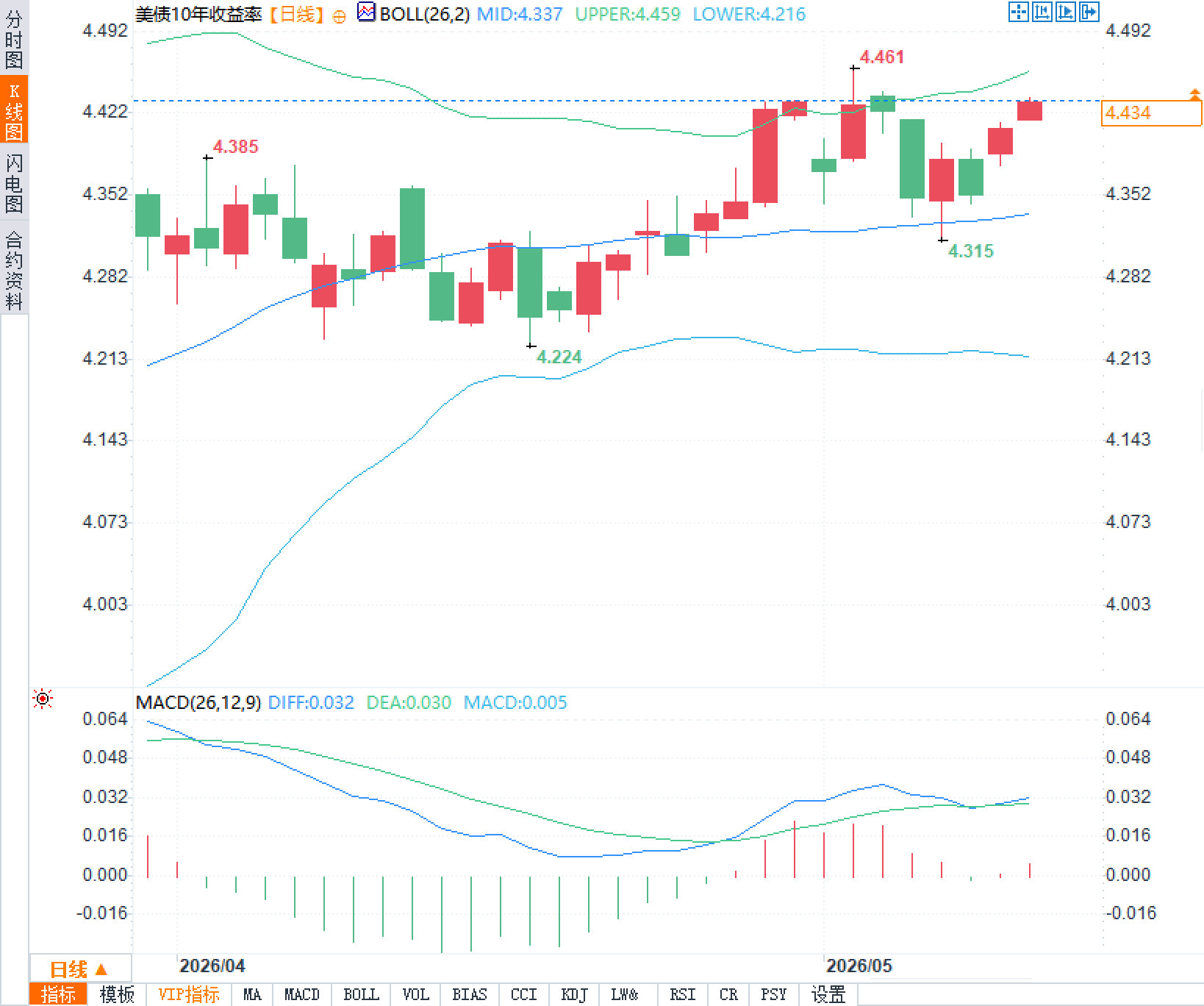
Expected inversion of the US Treasury yield curve
The current yield curve is in stark contrast to its position at the beginning of the year. The market initially expected the Federal Reserve under Warsh's leadership to accelerate easing, driving a widening spread between the 2-year and 30-year yields. However, economic growth data and high energy prices quickly reversed this trend. The 30-year yield is now near 5%, reflecting not only challenges to long-term inflation anchoring but also investors' repricing of final interest rate levels.
Recent yield levels are as follows
| the term | Current yield (%) | Change from the beginning of the month (basic points) |
|---|---|---|
| 2-year term | 3.92 | +14 |
| 10-year term | 4.44 | +8 |
| 30-year term | 4.99 | +12 |
Economic resilience and inflationary pressures once again dominate policy debates.
The US economy has demonstrated resilience, with a robust job market and active capital spending supporting growth momentum, but this has also amplified inflation risks. The April Consumer Price Index (CPI) rose 3.7% year-on-year, a new high since 2023, primarily driven by the energy component. Adam Marden, a fund manager at T. Rowe Price, recently pointed out: "Events will dominate Warsh's actions, not ideology. If we see the CPI rise to 3.5% in September, there will be no discussion of interest rate cuts."
This view is highly consistent with market pricing. The interest rate swap market is currently pricing in a near 60% probability of a rate hike before April 2027, a significant upward revision from before the conflict with Iran at the end of February. Bank of America strategists believe that the strong April jobs report has increased the likelihood of a rate hike and recommend going long on 2-year Treasury yields. Similarly, Morgan Stanley manager Andrew Szczurowski remains long on short-term Treasuries but acknowledges that the recent rise in yields presents a potential buying opportunity, provided there is significant weakness in the labor market. Traders should be wary: high yields have begun to raise the cost of auto loans and mortgages, creating a natural damper on growth, but this transmission effect will take several quarters to fully materialize.
The Long-Term Game Between Artificial Intelligence Productivity Improvement and Energy Shock
The wave of artificial intelligence is driving a surge in corporate capital spending, optimizing supply chains, and boosting potential growth rates, but the energy market is simultaneously facing its biggest supply shock. JPMorgan Chase manager Priya Misra bluntly stated, "This is an extremely difficult market to operate in, or even analyze. Artificial intelligence is generating capital investment, bond issuance, and optimism about long-term U.S. growth, while we simultaneously face our biggest energy shock."
Warsh himself previously emphasized that AI-driven productivity gains could curb inflation, creating room for interest rate cuts. However, current crude oil prices remaining above $100 per barrel have exceeded expectations, making it difficult for inflation expectations to fall quickly in the short term. Ed Al-Hussainy, manager at Columbia Threadneedle, believes that the window for Warsh's bet to return to normalcy still exists, but it would require a significant weakening of the labor market before the end of the year. Traders are focused on whether productivity gains can offset the squeeze on corporate profit margins from rising energy costs, and how this dynamic will affect the pace of corporate bond issuance and credit spreads.
Potential Operating Framework of the Federal Reserve under Kevin Warsh's Leadership
With Warsh set to officially take over the Federal Reserve, his policy style will face a real test. While there were initial expectations that he would lean towards aggressive easing, current economic data has forced the market to lower that expectation. Morgan Stanley strategists point out that a Fed under Warsh's leadership may focus more on new inflation indicators, reduce forward guidance, and push for further balance sheet reduction, thereby increasing volatility in the Treasury market.
In contrast, some investors still believe that Warsh might push for a policy shift if economic growth slows or inflation falls. The current high yield on 10-year Treasury bonds has already put substantial pressure on credit costs, and if oil prices remain high for an extended period, downside risks to the economy will gradually accumulate. Overall, Warsh's actual actions will depend heavily on data evolution rather than a predetermined path, which explains the current cautious shift in market pricing.
Frequently Asked Questions
Question 1: Why did the market quickly shift from betting on a "significant interest rate cut by Walsh" to expectations of more restrictive policies?
A: This is mainly due to strong April employment data and persistently high energy prices pushing up inflation. The interest rate swap market has priced in a near 60% probability of a rate hike before April 2027, and yield curve steepening trades have quickly subsided.
Question 2: Can the productivity gains from artificial intelligence ultimately offset the energy shock and support interest rate cuts?
A: Artificial intelligence has indeed driven capital investment and long-term growth optimism, but short-term energy cost increases have directly raised the consumer price index to the expected 3.7%. JPMorgan's Priya Misra points out that the simultaneous effect of these two factors makes market operations extremely difficult. Warsh believes productivity can curb inflation, but this needs data verification; currently, traders are more focused on whether the labor market will weaken first.
Question 3: How will Warsh adjust the Fed's balance sheet and forward guidance after taking office?
A: The market anticipates that it may reduce forward guidance, adopt new inflation indicators, and accelerate balance sheet reduction, thereby increasing the volatility of government bonds. Analysis shows that this will lead to larger swings in the bond market, rather than a smooth path.
- Risk Warning and Disclaimer
- The market involves risk, and trading may not be suitable for all investors. This article is for reference only and does not constitute personal investment advice, nor does it take into account certain users’ specific investment objectives, financial situation, or other needs. Any investment decisions made based on this information are at your own risk.