Better-than-expected US inflation data reinforced hawkish expectations, causing the USD/CAD pair to remain range-bound at high levels.
2026-05-13 09:50:28
The USD/CAD pair traded in a narrow range during Wednesday's Asian trading session, hovering around 1.3695. While the dollar found support after better-than-expected US inflation data, continued rises in international oil prices limited further upside for the USD/CAD pair, and overall market sentiment remained cautious.

Data released by the U.S. Bureau of Labor Statistics on Tuesday showed that the U.S. Consumer Price Index (CPI) rose 0.6% month-over-month in April, reaching an annualized rate of 3.8% , the highest level since May 2023. This figure significantly exceeded market expectations, indicating that inflationary pressures in the U.S. remain persistent.
Meanwhile, core CPI, excluding food and energy prices, rose 0.4% month-on-month and reached an annualized rate of 2.8% . The persistently high core inflation indicates continued cost pressures on the US service sector and housing, reinforcing market expectations that the Federal Reserve will maintain high interest rates for an extended period.
Influenced by the data, US Treasury yields remained high, providing overall support for the US dollar index. The market has begun to readjust its expectations for the Federal Reserve's future interest rate cut path, with some institutions even believing that the number of rate cuts by the Fed this year may further decrease.
Several Wall Street analysts said that the renewed rise in US inflation means that the Federal Reserve is unlikely to send a clear dovish signal in the short term, and the high-interest-rate environment may continue into the second half of this year.
However, the continued rise in international oil prices acts as a hedge against the dollar's weakness. Due to the prolonged closure of the Strait of Hormuz and significant uncertainties surrounding the Middle East, the international crude oil market remains strong. WTI crude oil is currently trading near the important $100 mark.
As one of the world's major energy exporters, Canada's economy is closely linked to the crude oil market. Typically, rising oil prices increase Canadian export revenue and support the Canadian dollar. Therefore, even with the US dollar being driven by expectations of high interest rates, rising oil prices still limit further upside for USD/CAD.
Market analysts point out that the current USD/CAD exchange rate movement actually reflects the interplay of two forces: on the one hand, high US inflation strengthens the dollar's interest rate advantage, and on the other hand, rising energy prices drive commodity currencies to strengthen.
From a technical perspective, the USD/CAD daily chart currently maintains a slightly bullish, range-bound pattern. The exchange rate is generally trading above major moving averages, indicating that the US dollar still holds some advantage in the short term. If subsequent US PPI data continues to exceed expectations, USD/CAD may further test the resistance area around 1.3750. However, due to continued support for the Canadian dollar from rising oil prices, the upside potential for USD/CAD in the short term may be limited. The initial support level is currently around 1.3650; a break below this level could lead to a further test of the 1.3600 area.
From a 4-hour chart perspective, USD/CAD is currently maintaining a high-level sideways consolidation structure. Short-term momentum indicators are starting to flatten, suggesting the market is awaiting new fundamental catalysts. The Stochastic Relative Strength Index (SRSI) is in neutral territory, indicating a lack of clear directional movement in the short term. If US PPI data again exceeds expectations, the US dollar may regain buying support, potentially driving USD/CAD out of its recent trading range. However, if international oil prices continue to rise, or market risk sentiment improves, the Canadian dollar may regain support, limiting the pair's upside.
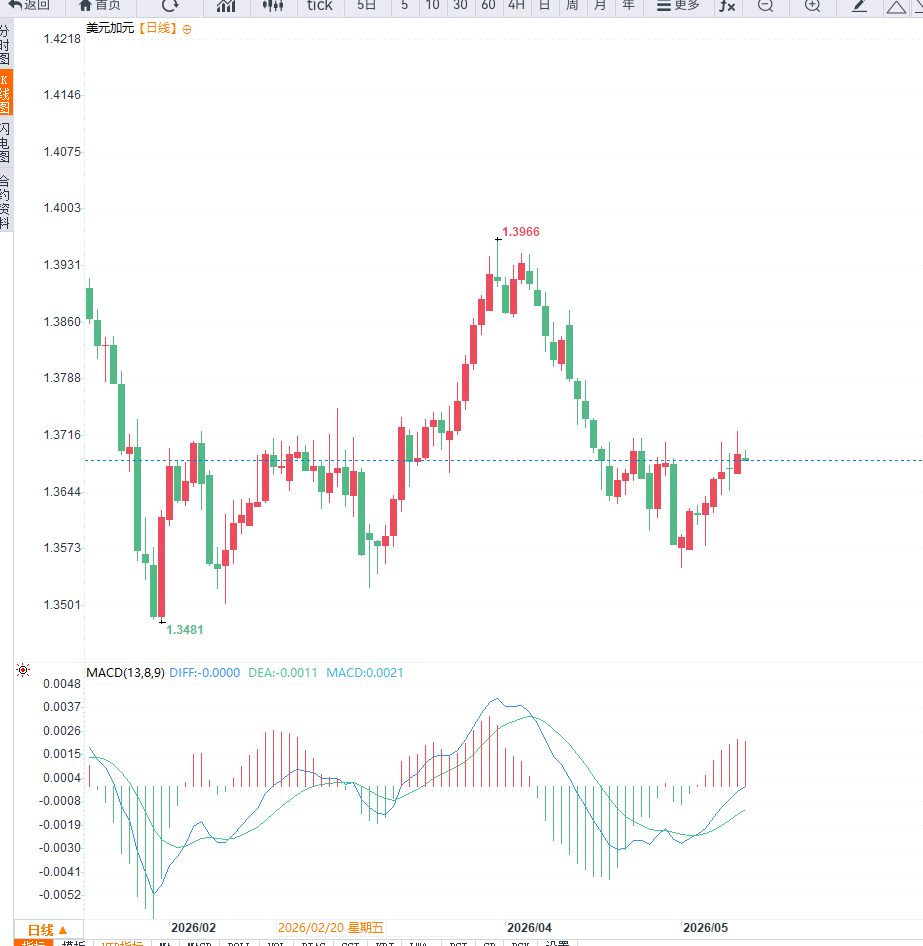
Overall, the core logic behind the USD/CAD exchange rate remains a dynamic balance between "expectations of high US interest rates" and "rising energy prices supporting the Canadian dollar."
Editor's Summary : The core contradiction in the current USD/CAD market lies in the hedging between the US dollar's interest rate advantage and rising oil prices. Persistently high US inflation data has reinforced market expectations that the Federal Reserve will maintain high interest rates, providing significant support for the US dollar. However, at the same time, the situation in the Middle East has led to a continued rise in international oil prices, providing additional support for Canada as an energy exporter. In the coming days, US PPI data, speeches by Federal Reserve officials, and the trend of international oil prices will be key factors determining the next direction of USD/CAD. If US inflation continues to rise, the US dollar may resume its upward trend; however, if oil prices continue to rise, the Canadian dollar's resilience may also significantly increase.
Data released by the U.S. Bureau of Labor Statistics on Tuesday showed that the U.S. Consumer Price Index (CPI) rose 0.6% month-over-month in April, reaching an annualized rate of 3.8% , the highest level since May 2023. This figure significantly exceeded market expectations, indicating that inflationary pressures in the U.S. remain persistent.
Meanwhile, core CPI, excluding food and energy prices, rose 0.4% month-on-month and reached an annualized rate of 2.8% . The persistently high core inflation indicates continued cost pressures on the US service sector and housing, reinforcing market expectations that the Federal Reserve will maintain high interest rates for an extended period.
Influenced by the data, US Treasury yields remained high, providing overall support for the US dollar index. The market has begun to readjust its expectations for the Federal Reserve's future interest rate cut path, with some institutions even believing that the number of rate cuts by the Fed this year may further decrease.
Several Wall Street analysts said that the renewed rise in US inflation means that the Federal Reserve is unlikely to send a clear dovish signal in the short term, and the high-interest-rate environment may continue into the second half of this year.
However, the continued rise in international oil prices acts as a hedge against the dollar's weakness. Due to the prolonged closure of the Strait of Hormuz and significant uncertainties surrounding the Middle East, the international crude oil market remains strong. WTI crude oil is currently trading near the important $100 mark.
As one of the world's major energy exporters, Canada's economy is closely linked to the crude oil market. Typically, rising oil prices increase Canadian export revenue and support the Canadian dollar. Therefore, even with the US dollar being driven by expectations of high interest rates, rising oil prices still limit further upside for USD/CAD.
Market analysts point out that the current USD/CAD exchange rate movement actually reflects the interplay of two forces: on the one hand, high US inflation strengthens the dollar's interest rate advantage, and on the other hand, rising energy prices drive commodity currencies to strengthen.
From a technical perspective, the USD/CAD daily chart currently maintains a slightly bullish, range-bound pattern. The exchange rate is generally trading above major moving averages, indicating that the US dollar still holds some advantage in the short term. If subsequent US PPI data continues to exceed expectations, USD/CAD may further test the resistance area around 1.3750. However, due to continued support for the Canadian dollar from rising oil prices, the upside potential for USD/CAD in the short term may be limited. The initial support level is currently around 1.3650; a break below this level could lead to a further test of the 1.3600 area.
From a 4-hour chart perspective, USD/CAD is currently maintaining a high-level sideways consolidation structure. Short-term momentum indicators are starting to flatten, suggesting the market is awaiting new fundamental catalysts. The Stochastic Relative Strength Index (SRSI) is in neutral territory, indicating a lack of clear directional movement in the short term. If US PPI data again exceeds expectations, the US dollar may regain buying support, potentially driving USD/CAD out of its recent trading range. However, if international oil prices continue to rise, or market risk sentiment improves, the Canadian dollar may regain support, limiting the pair's upside.
Overall, the core logic behind the USD/CAD exchange rate remains a dynamic balance between "expectations of high US interest rates" and "rising energy prices supporting the Canadian dollar."
Editor's Summary : The core contradiction in the current USD/CAD market lies in the hedging between the US dollar's interest rate advantage and rising oil prices. Persistently high US inflation data has reinforced market expectations that the Federal Reserve will maintain high interest rates, providing significant support for the US dollar. However, at the same time, the situation in the Middle East has led to a continued rise in international oil prices, providing additional support for Canada as an energy exporter. In the coming days, US PPI data, speeches by Federal Reserve officials, and the trend of international oil prices will be key factors determining the next direction of USD/CAD. If US inflation continues to rise, the US dollar may resume its upward trend; however, if oil prices continue to rise, the Canadian dollar's resilience may also significantly increase.
- Risk Warning and Disclaimer
- The market involves risk, and trading may not be suitable for all investors. This article is for reference only and does not constitute personal investment advice, nor does it take into account certain users’ specific investment objectives, financial situation, or other needs. Any investment decisions made based on this information are at your own risk.