Crude oil analysis: Iran releases oil tanker, oil prices initially fall then rise.
2026-05-15 01:11:03
On Thursday (May 14), international oil prices fluctuated during the US trading session. Brent crude oil climbed to a high of $107.13 per barrel before falling back, closing at $104.90 per barrel at 11:21 a.m. ET, a decrease of 0.7%. West Texas Intermediate (WTI) crude oil was trading at $100.82 per barrel during the same period, a slight decrease of 0.2%. Meanwhile, WTI touched a low of $95.50 during the day, eventually closing near $97.30, up about 0.34% from the previous day, exhibiting a typical "V-shaped" oscillation throughout the day.

Easing of restrictions across the Taiwan Strait + Meeting between Chinese and US leaders
There are two core events driving the fluctuations in oil prices.
First, there are clear signs of easing tensions in the Strait of Hormuz. Iranian state media reported that approximately 30 ships have transited the strait in recent hours; the semi-official Fars News Agency, citing sources, stated that Iran has begun allowing some Chinese vessels to pass through. A Chinese supertanker carrying 2 million barrels of Iraqi crude oil passed smoothly on Wednesday after being stuck in the Gulf for over two months; a tanker managed by the Japanese refining group Eneos also became the second Japanese-related vessel to pass through this passage.
Since the outbreak of the war with Iran at the end of February this year, the Strait of Hormuz, a key global energy route, has been virtually closed. This move is seen by the market as an important signal of easing tensions.
Secondly, high-level diplomatic exchanges between China and the US provide political endorsement for the opening of the Strait of Hormuz. The White House stated that US President Trump and Chinese President Xi Jinping agreed during their talks that the Strait of Hormuz must remain open to ensure the free flow of energy. Trump described the talks as "extremely positive and constructive" and announced that he would invite Xi Jinping to visit the White House on September 24. Xi Jinping's side stated that China intends to purchase more US oil to reduce its dependence on the Strait of Hormuz.
This series of diplomatic statements significantly reduced the geopolitical risk premium embedded in recent oil prices, triggering a temporary pullback during the trading session.
Institutional Views
Analysts are generally cautious about this easing of tensions.
PVM oil market analyst Tamas Varga pointed out that the increase in the number of vessels allowed to pass has a far greater positive impact on market sentiment than on actual supply and demand. "This may help to set a ceiling on oil prices in the short term, but it is not an effective way to significantly lower oil prices."
Tim Snyder, chief economist at Matador Economics, remained wary of Iran's motives: "Many people are wondering if Iran allowed these ships to pass in order to prevent the balance of negotiations from tipping in their favor."
The International Energy Agency (IEA) said on Wednesday that global oil supply is expected to decrease by about 3.9 million barrels per day this year due to supply disruptions caused by conflicts in the Middle East, with supply remaining below demand throughout the year.
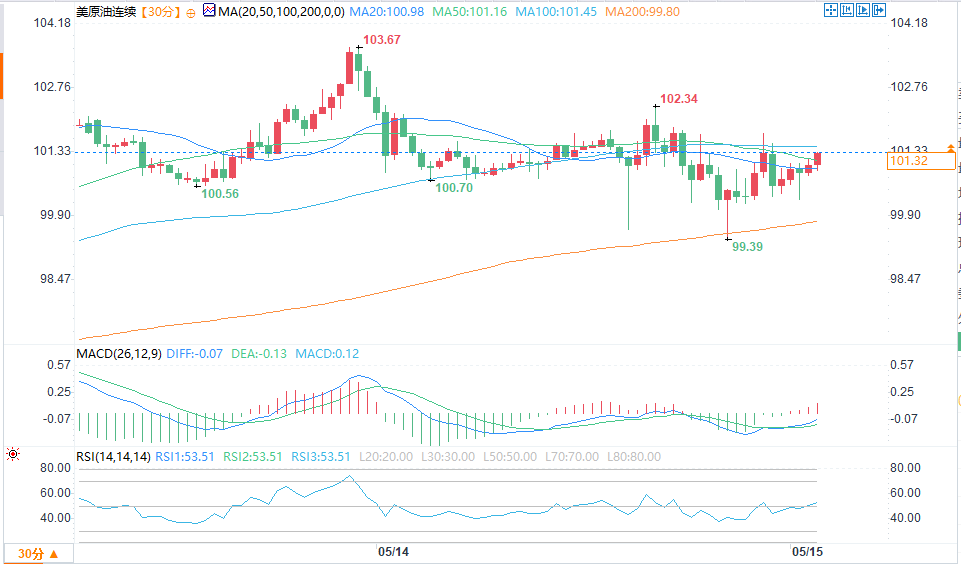
(WTI crude oil 30-minute chart source: EasyForex)
The strongest warning comes from Ryan McKay, senior commodities strategist at TD Securities. He believes the current market calm is an illusion, stating bluntly that "a storm is brewing"—with multiple factors such as restricted speculative funds, continued depletion of Chinese inventories, rapid decline in US inventories, and tightening product markets, Brent crude oil prices could potentially break through $150 per barrel.
Market Outlook
A loosening of tensions in the Strait of Hormuz and diplomatic gestures have put short-term downward pressure on oil prices; however, the supply-demand gap remains real, and geopolitical risks are far from over. The market is in a delicate moment of apparent calm masking underlying turmoil—the future direction of negotiations with Iran and the sustainability of the Strait of Hormuz will be key variables determining the next move in oil prices.
At 01:06 Beijing time, WTI crude oil was trading at $101.12 per barrel, up 0.10%. Brent crude oil was trading at $105.21 per barrel, down 0.33%.
Easing of restrictions across the Taiwan Strait + Meeting between Chinese and US leaders
There are two core events driving the fluctuations in oil prices.
First, there are clear signs of easing tensions in the Strait of Hormuz. Iranian state media reported that approximately 30 ships have transited the strait in recent hours; the semi-official Fars News Agency, citing sources, stated that Iran has begun allowing some Chinese vessels to pass through. A Chinese supertanker carrying 2 million barrels of Iraqi crude oil passed smoothly on Wednesday after being stuck in the Gulf for over two months; a tanker managed by the Japanese refining group Eneos also became the second Japanese-related vessel to pass through this passage.
Since the outbreak of the war with Iran at the end of February this year, the Strait of Hormuz, a key global energy route, has been virtually closed. This move is seen by the market as an important signal of easing tensions.
Secondly, high-level diplomatic exchanges between China and the US provide political endorsement for the opening of the Strait of Hormuz. The White House stated that US President Trump and Chinese President Xi Jinping agreed during their talks that the Strait of Hormuz must remain open to ensure the free flow of energy. Trump described the talks as "extremely positive and constructive" and announced that he would invite Xi Jinping to visit the White House on September 24. Xi Jinping's side stated that China intends to purchase more US oil to reduce its dependence on the Strait of Hormuz.
This series of diplomatic statements significantly reduced the geopolitical risk premium embedded in recent oil prices, triggering a temporary pullback during the trading session.
Institutional Views
Analysts are generally cautious about this easing of tensions.
PVM oil market analyst Tamas Varga pointed out that the increase in the number of vessels allowed to pass has a far greater positive impact on market sentiment than on actual supply and demand. "This may help to set a ceiling on oil prices in the short term, but it is not an effective way to significantly lower oil prices."
Tim Snyder, chief economist at Matador Economics, remained wary of Iran's motives: "Many people are wondering if Iran allowed these ships to pass in order to prevent the balance of negotiations from tipping in their favor."
The International Energy Agency (IEA) said on Wednesday that global oil supply is expected to decrease by about 3.9 million barrels per day this year due to supply disruptions caused by conflicts in the Middle East, with supply remaining below demand throughout the year.
(WTI crude oil 30-minute chart source: EasyForex)
The strongest warning comes from Ryan McKay, senior commodities strategist at TD Securities. He believes the current market calm is an illusion, stating bluntly that "a storm is brewing"—with multiple factors such as restricted speculative funds, continued depletion of Chinese inventories, rapid decline in US inventories, and tightening product markets, Brent crude oil prices could potentially break through $150 per barrel.
Market Outlook
A loosening of tensions in the Strait of Hormuz and diplomatic gestures have put short-term downward pressure on oil prices; however, the supply-demand gap remains real, and geopolitical risks are far from over. The market is in a delicate moment of apparent calm masking underlying turmoil—the future direction of negotiations with Iran and the sustainability of the Strait of Hormuz will be key variables determining the next move in oil prices.
At 01:06 Beijing time, WTI crude oil was trading at $101.12 per barrel, up 0.10%. Brent crude oil was trading at $105.21 per barrel, down 0.33%.
- Risk Warning and Disclaimer
- The market involves risk, and trading may not be suitable for all investors. This article is for reference only and does not constitute personal investment advice, nor does it take into account certain users’ specific investment objectives, financial situation, or other needs. Any investment decisions made based on this information are at your own risk.