Trump's patience is running out, Iran has taken a tough stance: Is crude oil poised for a sharp $10 swing?
2026-05-15 19:59:17
On Friday, May 15th, the international crude oil market experienced significant volatility amid ongoing tensions between Iran and the United States. The Strait of Hormuz, a crucial passage for approximately one-fifth of global oil and gas transportation, directly impacts supply stability due to its navigation status. Recent statements by the Iranian Foreign Minister reiterated a limited opening stance while emphasizing the necessity of coordination. Current market risk premiums remain high, with the WTI crude oil futures contract hovering around $104 and Brent crude oil prices in the $108-$110 range, significantly higher than pre-conflict levels, reflecting traders pricing in the possibility of prolonged disruption.

Iran has made it clear that vessels other than those from countries in conflict with it can pass through the strait, but must coordinate with the Iranian Navy. Current traffic volume in the strait is below normal levels, and reports describing the strait as "very complex" highlight the uncertainties in actual operations, including potential inspections, route adjustments, and related costs.
In the global crude oil supply chain, Middle Eastern crude oil exports are highly dependent on this route. A prolonged disruption would force buyers to turn to other sources, such as increased production in the US or other regions, but differences in transportation time and costs would drive up overall delivery prices. Traders have observed a significant contango structure in the futures curve, with forward contracts trading at a wider premium to spot contracts, indicating that the market expects supply tightness to continue at least until a breakthrough in recent negotiations.
Iranian Foreign Minister Abbas Araqchi recently stated that he is cautious about negotiations, mainly due to a lack of trust caused by "conflicting information." Tehran emphasized its desire to maintain the ceasefire through diplomatic means, but also prepared to re-enter the conflict. Key disagreements include nuclear-related issues and control of the Strait of Hormuz.
In the US, Trump stated that patience was wearing thin and sought to push for a full reopening of the Strait through international channels. These developments have made it difficult for the market to form a clear direction in the short term, with traders closely monitoring any marginal changes that may result from updates to geopolitical news.
This standoff has prolonged the window of uncertainty. Energy analysts point out that Iran's continued willingness to export limited energy (such as through cooperation with buyers like India) limits the possibility of a quick compromise. Overall, diplomatic efforts are ongoing, but the lack of a breakthrough makes it difficult for the supply risk premium to fall quickly.
The current rise in oil prices is primarily driven by supply-side concerns, rather than strong demand. While demand expectations are relatively moderate against the backdrop of slowing global economic growth, geopolitical disruptions are directly compressing available supply. Inventory data indicates that the utilization of strategic reserves by major consuming countries needs continuous monitoring to assess their buffering capacity.
In the futures market, the WTI-Brent price spread is also noteworthy, typically reflecting differences in transportation and quality. In the current environment, a widening spread may indicate exacerbating supply bottlenecks in specific regions. Traders are focused on whether cross-strait traffic becomes more normalized, which could increase downward pressure on prices; conversely, if coordination requirements further restrict actual flow, oil prices are likely to remain volatile at high levels.
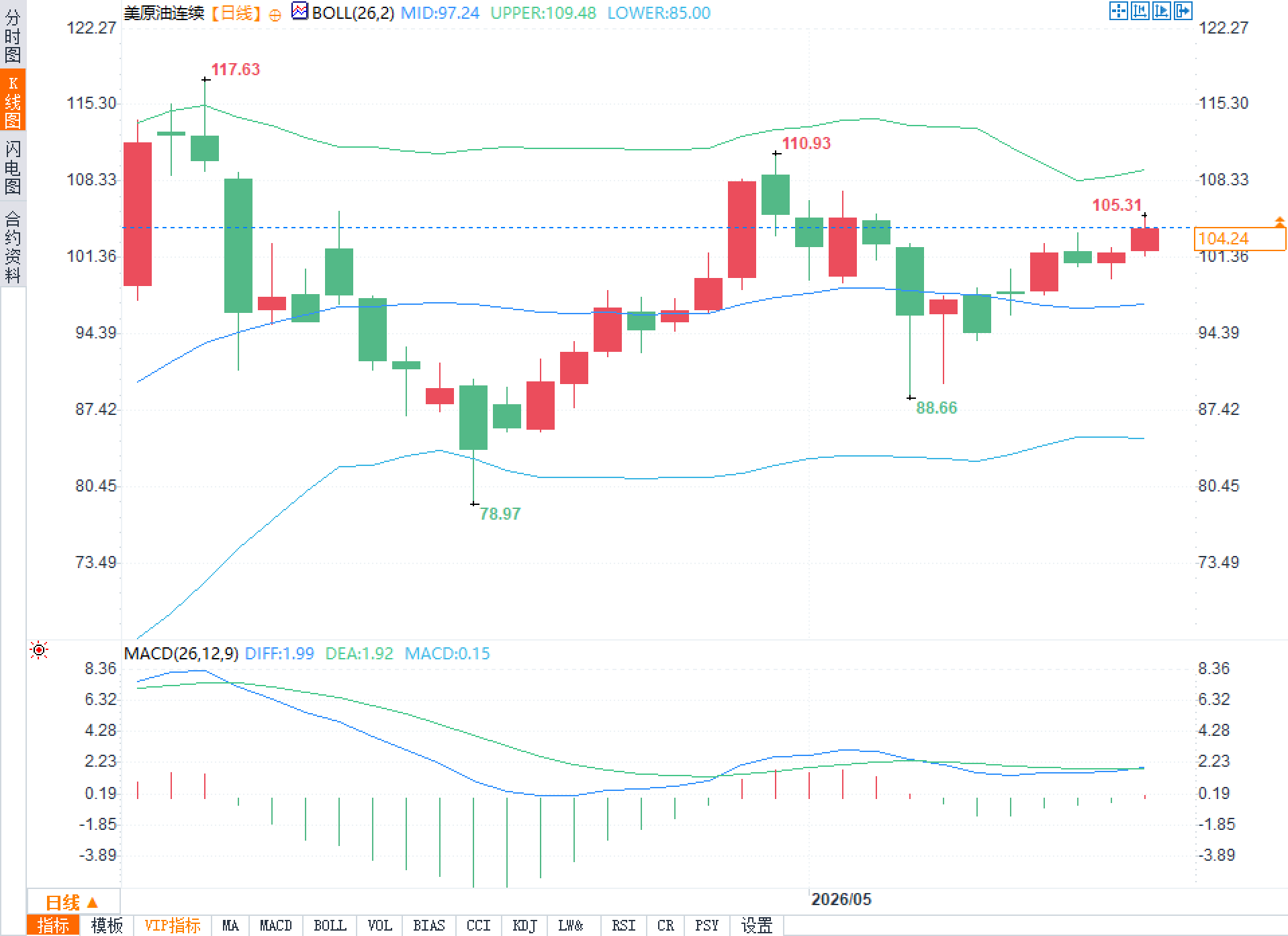
Furthermore, rising costs of alternative routes and soaring insurance premiums are indirectly pushing up global refining margins and end-fuel prices, which could then have a ripple effect on broader economic indicators.
Current Status and Supply Impact of the Strait of Hormuz
Iran has made it clear that vessels other than those from countries in conflict with it can pass through the strait, but must coordinate with the Iranian Navy. Current traffic volume in the strait is below normal levels, and reports describing the strait as "very complex" highlight the uncertainties in actual operations, including potential inspections, route adjustments, and related costs.
In the global crude oil supply chain, Middle Eastern crude oil exports are highly dependent on this route. A prolonged disruption would force buyers to turn to other sources, such as increased production in the US or other regions, but differences in transportation time and costs would drive up overall delivery prices. Traders have observed a significant contango structure in the futures curve, with forward contracts trading at a wider premium to spot contracts, indicating that the market expects supply tightness to continue at least until a breakthrough in recent negotiations.
Iran's Negotiation Stance and Diplomatic Developments
Iranian Foreign Minister Abbas Araqchi recently stated that he is cautious about negotiations, mainly due to a lack of trust caused by "conflicting information." Tehran emphasized its desire to maintain the ceasefire through diplomatic means, but also prepared to re-enter the conflict. Key disagreements include nuclear-related issues and control of the Strait of Hormuz.
In the US, Trump stated that patience was wearing thin and sought to push for a full reopening of the Strait through international channels. These developments have made it difficult for the market to form a clear direction in the short term, with traders closely monitoring any marginal changes that may result from updates to geopolitical news.
This standoff has prolonged the window of uncertainty. Energy analysts point out that Iran's continued willingness to export limited energy (such as through cooperation with buyers like India) limits the possibility of a quick compromise. Overall, diplomatic efforts are ongoing, but the lack of a breakthrough makes it difficult for the supply risk premium to fall quickly.
Crude oil market fundamentals and price drivers
The current rise in oil prices is primarily driven by supply-side concerns, rather than strong demand. While demand expectations are relatively moderate against the backdrop of slowing global economic growth, geopolitical disruptions are directly compressing available supply. Inventory data indicates that the utilization of strategic reserves by major consuming countries needs continuous monitoring to assess their buffering capacity.
In the futures market, the WTI-Brent price spread is also noteworthy, typically reflecting differences in transportation and quality. In the current environment, a widening spread may indicate exacerbating supply bottlenecks in specific regions. Traders are focused on whether cross-strait traffic becomes more normalized, which could increase downward pressure on prices; conversely, if coordination requirements further restrict actual flow, oil prices are likely to remain volatile at high levels.
Furthermore, rising costs of alternative routes and soaring insurance premiums are indirectly pushing up global refining margins and end-fuel prices, which could then have a ripple effect on broader economic indicators.
Frequently Asked Questions
Question 1: How does the current actual traffic situation in the Strait of Hormuz affect crude oil supply?
A: Although Iran has stated that it will allow non-conflict vessels to pass through, subject to coordination, actual traffic is far below the normal level of about one-fifth of global oil and gas shipments. This has hampered Middle Eastern crude oil exports, forcing the market to rely on alternative sources and driving up overall logistics costs and price premiums. In the short term, the supply gap will be mainly filled by inventory releases and increased production in alternative production areas, but this is of limited sustainability.
Question 2: What does Iran's "no-confidence" statement mean for the prospects of negotiations?
A: This statement highlights the differences between the two sides on core issues, including the nuclear issue and control of the Strait, increasing the difficulty of reaching a permanent agreement. While the ceasefire is being maintained, the lack of mutual trust makes any progress fragile. Traders need to pay attention to the progress of mediation by third parties such as Pakistan.
Question 3: With crude oil prices running at high levels, what risks should traders pay close attention to?
A: The key factors are the suddenness of geopolitical events, changes in inventory data, and macroeconomic demand signals. Prices have already factored in a significant risk premium; if there is a positive breakthrough in diplomacy, the risk of a pullback increases; conversely, a prolonged disruption will support prices. It is recommended to make a comprehensive judgment based on the futures curve structure and the correlation with related assets, rather than relying on a single event-driven factor.
- Risk Warning and Disclaimer
- The market involves risk, and trading may not be suitable for all investors. This article is for reference only and does not constitute personal investment advice, nor does it take into account certain users’ specific investment objectives, financial situation, or other needs. Any investment decisions made based on this information are at your own risk.