The situation in Iran fueled inflation concerns, which, combined with expectations of a Federal Reserve rate hike, kept gold prices range-bound.
2026-05-19 09:44:52
International gold prices saw a technical rebound during Asian trading hours on Tuesday, with spot gold (XAU/USD) rising back to around $4,560 after a previous correction. A weakening US dollar provided support for gold, and some safe-haven funds flowed back into the precious metals market. However, due to rising market expectations of global inflation risks and further interest rate hikes by the Federal Reserve, the overall upside potential for gold is temporarily limited.

Tensions in the Middle East remain high, with the risk of conflict between the US and Iran showing no significant signs of abating. Market concerns about disruptions to the energy supply chain are driving international oil prices to remain high, further intensifying global inflationary pressures. International crude oil prices have recently fluctuated above $100, and high energy costs are reigniting global market concerns about recurring inflation. Against this backdrop, investors are beginning to reassess the Federal Reserve's future monetary policy direction.
The dollar index retreated from its recent highs on Tuesday, partly as markets reassessed the possibility of a diplomatic de-escalation of the Middle East situation. This short-term dollar correction provided some breathing room for gold. Jim Wyckoff, a U.S. gold trading market analyst, stated that the dollar's decline offered some support to the gold market, and was one of the key reasons for the gold price rebound.
However, unlike the typical logic of "safe-haven demand driving up gold prices" in the past, the market is currently facing a complex environment of "high inflation + high interest rates." While geopolitical risks typically increase demand for gold as a safe haven, gold itself does not generate interest income, so its attractiveness may be limited in a high-interest-rate environment. Especially with US Treasury yields remaining high, some funds are more inclined to flow into higher-yielding dollar assets.
The market currently estimates a 35% probability of the Federal Reserve raising interest rates by another 25 basis points this year. With international oil prices remaining high, there are concerns that rising energy prices could lead to a resurgence of inflation in the US, forcing the Fed to maintain its tightening policy for an extended period. Analysts believe that if future US inflation data exceeds expectations again, the gold market may continue to face pressure.
Meanwhile, global investor sentiment is also shifting. Recent increased volatility in global stock markets has led some institutional investors to increase their allocations to cash and US dollar assets, resulting in a slight weakening of short-term buying pressure in the gold market. However, given the significant uncertainties surrounding the Middle East situation, the long-term demand for gold as a traditional safe-haven asset remains.
From a market psychology perspective, investors are currently in a tug-of-war between "safe-haven demand" and "interest rate pressure." On the one hand, geopolitical risks are driving some funds to buy gold as a safe haven; on the other hand, the Federal Reserve's potential continued maintenance of high interest rates is limiting further gold price increases. This contradictory situation has led to gold's recent overall high-level consolidation pattern.
From a technical perspective, gold's daily chart still shows a strong medium-to-long-term uptrend, but recent downward pressure has increased significantly. Gold prices previously fell rapidly from historical highs, even touching a one-and-a-half-month low, indicating that long positions were beginning to take profits. On the daily chart, the $4500 level has become a key short-term support area, while the $4620-$4680 area constitutes a significant resistance zone. If the US dollar continues to weaken, gold may retest the upper resistance; however, if expectations of a Fed rate hike intensify further, it could put downward pressure on gold prices again.
In terms of technical indicators, the daily MACD indicator remains above the zero line, but the red bars are continuing to narrow, indicating that the medium-term upward momentum is slowing. The RSI indicator has clearly fallen from the previous overbought zone, and market sentiment has shown signs of cooling from previous highs. However, there are currently no clear signs of a reversal in the overall trend, suggesting that the medium- to long-term safe-haven demand for gold remains.
From a 4-hour chart perspective, gold shows signs of a short-term oversold rebound. The 4-hour MACD is beginning to form a golden cross at a low level, indicating a weakening of short-term bearish momentum. Meanwhile, a short-term support zone has formed around $4550. If the US dollar index continues to decline, gold prices may further challenge the $4600 level. However, if US Treasury yields rise again, gold may face renewed selling pressure.
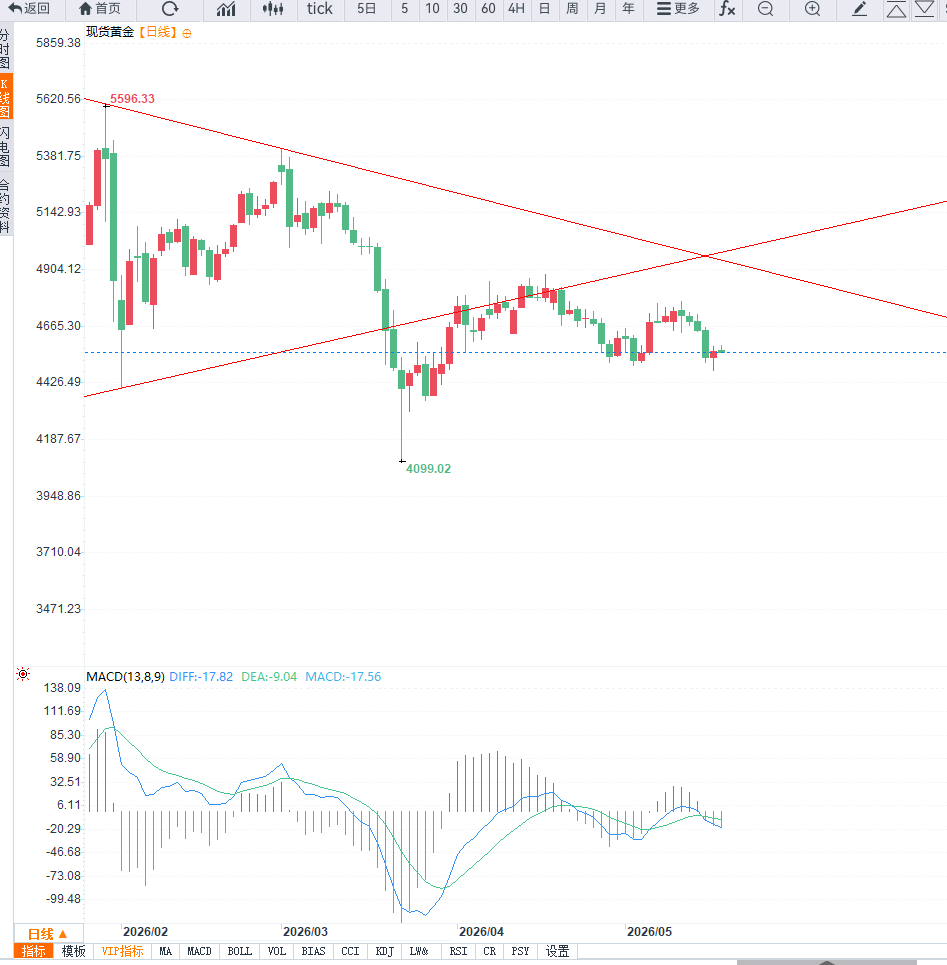
It's worth noting that the market is currently extremely sensitive to changes in the Federal Reserve's policy path. Future data, including US PCE inflation figures, non-farm payroll data, and energy price trends, could directly influence the direction of the gold market. If US economic data continues to be strong, the Fed may maintain a hawkish stance for a longer period, thus weakening gold's appeal; however, if risks in the Middle East escalate, safe-haven buying of gold could rapidly intensify again.
Overall, the current gold market is being influenced by multiple factors, including a weakening dollar, geopolitical risks, inflationary pressures, and expectations surrounding Federal Reserve policy. In the short term, gold is likely to continue its high-level consolidation, and market volatility is expected to remain at a high level.
Editor's Summary : The current gold market has entered a typical phase of "dual game between risk and interest rates." While the situation in the Middle East continues to provide safe-haven support for gold, the inflationary pressure from rising international oil prices has further strengthened market expectations that the Federal Reserve will maintain high interest rates, significantly limiting the upside potential for gold. In the medium to long term, if global geopolitical risks persist, gold will still possess safe-haven value. However, if US inflation rebounds and prompts the Federal Reserve to further tighten policy, gold may continue to face periodic adjustment pressures. The market will need to focus on the dollar's performance, changes in US Treasury yields, and developments in the Middle East, as these factors will determine the main direction of gold's future movement.
Tensions in the Middle East remain high, with the risk of conflict between the US and Iran showing no significant signs of abating. Market concerns about disruptions to the energy supply chain are driving international oil prices to remain high, further intensifying global inflationary pressures. International crude oil prices have recently fluctuated above $100, and high energy costs are reigniting global market concerns about recurring inflation. Against this backdrop, investors are beginning to reassess the Federal Reserve's future monetary policy direction.
The dollar index retreated from its recent highs on Tuesday, partly as markets reassessed the possibility of a diplomatic de-escalation of the Middle East situation. This short-term dollar correction provided some breathing room for gold. Jim Wyckoff, a U.S. gold trading market analyst, stated that the dollar's decline offered some support to the gold market, and was one of the key reasons for the gold price rebound.
However, unlike the typical logic of "safe-haven demand driving up gold prices" in the past, the market is currently facing a complex environment of "high inflation + high interest rates." While geopolitical risks typically increase demand for gold as a safe haven, gold itself does not generate interest income, so its attractiveness may be limited in a high-interest-rate environment. Especially with US Treasury yields remaining high, some funds are more inclined to flow into higher-yielding dollar assets.
The market currently estimates a 35% probability of the Federal Reserve raising interest rates by another 25 basis points this year. With international oil prices remaining high, there are concerns that rising energy prices could lead to a resurgence of inflation in the US, forcing the Fed to maintain its tightening policy for an extended period. Analysts believe that if future US inflation data exceeds expectations again, the gold market may continue to face pressure.
Meanwhile, global investor sentiment is also shifting. Recent increased volatility in global stock markets has led some institutional investors to increase their allocations to cash and US dollar assets, resulting in a slight weakening of short-term buying pressure in the gold market. However, given the significant uncertainties surrounding the Middle East situation, the long-term demand for gold as a traditional safe-haven asset remains.
From a market psychology perspective, investors are currently in a tug-of-war between "safe-haven demand" and "interest rate pressure." On the one hand, geopolitical risks are driving some funds to buy gold as a safe haven; on the other hand, the Federal Reserve's potential continued maintenance of high interest rates is limiting further gold price increases. This contradictory situation has led to gold's recent overall high-level consolidation pattern.
From a technical perspective, gold's daily chart still shows a strong medium-to-long-term uptrend, but recent downward pressure has increased significantly. Gold prices previously fell rapidly from historical highs, even touching a one-and-a-half-month low, indicating that long positions were beginning to take profits. On the daily chart, the $4500 level has become a key short-term support area, while the $4620-$4680 area constitutes a significant resistance zone. If the US dollar continues to weaken, gold may retest the upper resistance; however, if expectations of a Fed rate hike intensify further, it could put downward pressure on gold prices again.
In terms of technical indicators, the daily MACD indicator remains above the zero line, but the red bars are continuing to narrow, indicating that the medium-term upward momentum is slowing. The RSI indicator has clearly fallen from the previous overbought zone, and market sentiment has shown signs of cooling from previous highs. However, there are currently no clear signs of a reversal in the overall trend, suggesting that the medium- to long-term safe-haven demand for gold remains.
From a 4-hour chart perspective, gold shows signs of a short-term oversold rebound. The 4-hour MACD is beginning to form a golden cross at a low level, indicating a weakening of short-term bearish momentum. Meanwhile, a short-term support zone has formed around $4550. If the US dollar index continues to decline, gold prices may further challenge the $4600 level. However, if US Treasury yields rise again, gold may face renewed selling pressure.
It's worth noting that the market is currently extremely sensitive to changes in the Federal Reserve's policy path. Future data, including US PCE inflation figures, non-farm payroll data, and energy price trends, could directly influence the direction of the gold market. If US economic data continues to be strong, the Fed may maintain a hawkish stance for a longer period, thus weakening gold's appeal; however, if risks in the Middle East escalate, safe-haven buying of gold could rapidly intensify again.
Overall, the current gold market is being influenced by multiple factors, including a weakening dollar, geopolitical risks, inflationary pressures, and expectations surrounding Federal Reserve policy. In the short term, gold is likely to continue its high-level consolidation, and market volatility is expected to remain at a high level.
Editor's Summary : The current gold market has entered a typical phase of "dual game between risk and interest rates." While the situation in the Middle East continues to provide safe-haven support for gold, the inflationary pressure from rising international oil prices has further strengthened market expectations that the Federal Reserve will maintain high interest rates, significantly limiting the upside potential for gold. In the medium to long term, if global geopolitical risks persist, gold will still possess safe-haven value. However, if US inflation rebounds and prompts the Federal Reserve to further tighten policy, gold may continue to face periodic adjustment pressures. The market will need to focus on the dollar's performance, changes in US Treasury yields, and developments in the Middle East, as these factors will determine the main direction of gold's future movement.
- Risk Warning and Disclaimer
- The market involves risk, and trading may not be suitable for all investors. This article is for reference only and does not constitute personal investment advice, nor does it take into account certain users’ specific investment objectives, financial situation, or other needs. Any investment decisions made based on this information are at your own risk.