Escalating US-Iran conflict and rising expectations of a Federal Reserve interest rate hike put pressure on gold, with prices fluctuating around $4,500.
2026-05-27 09:46:05
International gold prices continued to decline in Asian trading on Wednesday, with spot gold (XAU/USD) falling back to around $4,500, continuing its previous consolidation at higher levels. While renewed tensions in the Middle East typically stimulate safe-haven buying, concerns about persistently high US inflation and the Federal Reserve maintaining high interest rates are limiting further upside potential for gold.

Tensions between the United States and Iran have recently resurfaced in the market spotlight. The US military launched a new strike against Iran on Tuesday, prompting a retaliatory response. Meanwhile, significant uncertainty remains regarding security in the Strait of Hormuz. US Central Command denied market rumors that US forces were providing escort support for merchant ships, further exacerbating investor concerns about the security of global energy transport.
Previously, US President Donald Trump stated that important negotiations between the US and Iran regarding extending the ceasefire agreement and reopening the Strait of Hormuz were still underway. However, the outbreak of a new round of military conflict has significantly weakened market optimism regarding a short-term peace agreement.
Ryan McKay, senior commodities strategist at TD Securities, said that although the market still has some expectations for an agreement between the United States and Iran, the overall situation remains very fragile, and the persistent inflationary risks are also putting pressure on the gold market.
Gold is typically considered a global safe-haven asset, attracting capital during periods of escalating geopolitical tensions or heightened financial market volatility. However, in this recent gold price surge, the high-interest-rate environment has become a significant suppressive factor. Since gold itself does not generate interest income, when market interest rates remain high, investors tend to hold higher-yielding dollar assets or US Treasury bonds, thus reducing gold's appeal.
The market now expects the probability of a 25 basis point rate hike by the Federal Reserve this year to have risen to around 39%. This expectation has significantly strengthened the dollar index and the yield on US Treasury bonds. As the market reassesses the future path of monetary policy, some long positions in the gold market have begun to exit, causing gold prices to correct from near historical highs.
Meanwhile, the official swearing-in of new Federal Reserve Chairman Kevin Warsh further strengthened market expectations that global monetary policy may continue to lean hawkish. The market believes that Warsh may place greater emphasis on controlling inflation compared to some previous officials, therefore the Fed's policy stance may remain cautious in the future.
Looking at global market reactions, the US dollar index has remained strong recently, and the yield on 10-year US Treasury bonds has risen in tandem, while global risk assets have shown divergent trends. Some funds are rebalancing between risk aversion and the high-interest-rate environment, resulting in gold not fully benefiting from escalating geopolitical risks.
The Strait of Hormuz handles approximately 20% of global seaborne crude oil transport. If shipping in the region continues to be threatened, international oil prices could rise further, reigniting global inflationary pressures. Market concerns that high energy prices may cause major central banks worldwide to postpone interest rate cuts, thus further suppressing gold's performance.
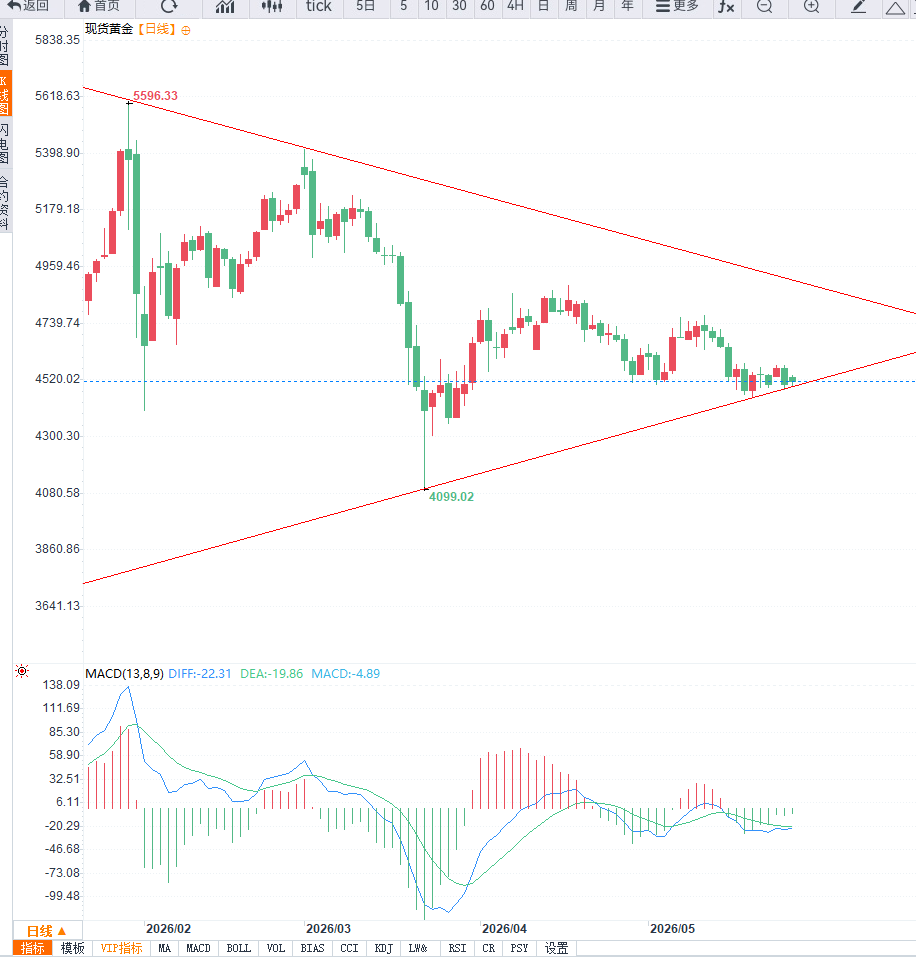
From a technical perspective, the daily chart for gold maintains its medium-to-long-term upward structure, but it has entered a short-term consolidation phase at high levels. The price is currently trading above major moving averages, indicating that the overall trend has not completely weakened. However, the MACD indicator shows signs of a death cross at high levels, and the red momentum bars are continuously narrowing, indicating that upward momentum is beginning to weaken. The RSI indicator has also fallen from the overbought zone, suggesting that the market may need further correction in the short term. Key resistance levels to watch are the $4550 and $4600 area; a break above these levels could see gold challenge its historical highs again. Important support levels are located around $4450 and $4380.
The 4-hour chart shows increasing short-term bearish pressure on gold, with prices breaking below several short-term moving averages. The MACD indicator has entered negative territory, indicating that short-term bearish forces are dominant. Meanwhile, the RSI indicator remains below 50, suggesting a cautious market sentiment in the short term. If the US dollar continues to strengthen and US Treasury yields rise further, gold may continue to test support around $4450. However, if the situation in the Middle East deteriorates further and safe-haven funds flow back in, a rapid rebound in gold prices is still possible.
The market is currently focused on the progress of ongoing negotiations between the US and Iran, speeches by Federal Reserve officials, and future US inflation data. Particular attention is being paid to whether high energy prices will further strengthen market expectations that the Fed will maintain its high-interest-rate policy, as this will directly impact the future price movement of gold.
Editor's Summary : The current gold market is in a complex tug-of-war between "safe-haven demand" and "high interest rate pressure." On the one hand, continued tensions in the Middle East, rising shipping risks in the Strait of Hormuz, and global geopolitical uncertainties provide medium- to long-term support for gold. On the other hand, renewed concerns about US inflation, increased hawkish expectations from the Federal Reserve, and a stronger dollar continue to suppress short-term upside potential for gold. From a market perspective, future gold price movements will largely depend on the Federal Reserve's policy path and the evolution of global geopolitical risks. If high oil prices drive a resurgence in US inflation, the Federal Reserve may continue to maintain high interest rates, which will limit the upside potential for gold. However, if global risk events continue to escalate, safe-haven demand may still drive gold to remain at high levels. In the short term, gold market volatility may continue to rise, and investors should pay close attention to the impact of the US dollar, US Treasury yields, and changes in the Middle East situation on market sentiment.
Tensions between the United States and Iran have recently resurfaced in the market spotlight. The US military launched a new strike against Iran on Tuesday, prompting a retaliatory response. Meanwhile, significant uncertainty remains regarding security in the Strait of Hormuz. US Central Command denied market rumors that US forces were providing escort support for merchant ships, further exacerbating investor concerns about the security of global energy transport.
Previously, US President Donald Trump stated that important negotiations between the US and Iran regarding extending the ceasefire agreement and reopening the Strait of Hormuz were still underway. However, the outbreak of a new round of military conflict has significantly weakened market optimism regarding a short-term peace agreement.
Ryan McKay, senior commodities strategist at TD Securities, said that although the market still has some expectations for an agreement between the United States and Iran, the overall situation remains very fragile, and the persistent inflationary risks are also putting pressure on the gold market.
Gold is typically considered a global safe-haven asset, attracting capital during periods of escalating geopolitical tensions or heightened financial market volatility. However, in this recent gold price surge, the high-interest-rate environment has become a significant suppressive factor. Since gold itself does not generate interest income, when market interest rates remain high, investors tend to hold higher-yielding dollar assets or US Treasury bonds, thus reducing gold's appeal.
The market now expects the probability of a 25 basis point rate hike by the Federal Reserve this year to have risen to around 39%. This expectation has significantly strengthened the dollar index and the yield on US Treasury bonds. As the market reassesses the future path of monetary policy, some long positions in the gold market have begun to exit, causing gold prices to correct from near historical highs.
Meanwhile, the official swearing-in of new Federal Reserve Chairman Kevin Warsh further strengthened market expectations that global monetary policy may continue to lean hawkish. The market believes that Warsh may place greater emphasis on controlling inflation compared to some previous officials, therefore the Fed's policy stance may remain cautious in the future.
Looking at global market reactions, the US dollar index has remained strong recently, and the yield on 10-year US Treasury bonds has risen in tandem, while global risk assets have shown divergent trends. Some funds are rebalancing between risk aversion and the high-interest-rate environment, resulting in gold not fully benefiting from escalating geopolitical risks.
The Strait of Hormuz handles approximately 20% of global seaborne crude oil transport. If shipping in the region continues to be threatened, international oil prices could rise further, reigniting global inflationary pressures. Market concerns that high energy prices may cause major central banks worldwide to postpone interest rate cuts, thus further suppressing gold's performance.
From a technical perspective, the daily chart for gold maintains its medium-to-long-term upward structure, but it has entered a short-term consolidation phase at high levels. The price is currently trading above major moving averages, indicating that the overall trend has not completely weakened. However, the MACD indicator shows signs of a death cross at high levels, and the red momentum bars are continuously narrowing, indicating that upward momentum is beginning to weaken. The RSI indicator has also fallen from the overbought zone, suggesting that the market may need further correction in the short term. Key resistance levels to watch are the $4550 and $4600 area; a break above these levels could see gold challenge its historical highs again. Important support levels are located around $4450 and $4380.
The 4-hour chart shows increasing short-term bearish pressure on gold, with prices breaking below several short-term moving averages. The MACD indicator has entered negative territory, indicating that short-term bearish forces are dominant. Meanwhile, the RSI indicator remains below 50, suggesting a cautious market sentiment in the short term. If the US dollar continues to strengthen and US Treasury yields rise further, gold may continue to test support around $4450. However, if the situation in the Middle East deteriorates further and safe-haven funds flow back in, a rapid rebound in gold prices is still possible.
The market is currently focused on the progress of ongoing negotiations between the US and Iran, speeches by Federal Reserve officials, and future US inflation data. Particular attention is being paid to whether high energy prices will further strengthen market expectations that the Fed will maintain its high-interest-rate policy, as this will directly impact the future price movement of gold.
Editor's Summary : The current gold market is in a complex tug-of-war between "safe-haven demand" and "high interest rate pressure." On the one hand, continued tensions in the Middle East, rising shipping risks in the Strait of Hormuz, and global geopolitical uncertainties provide medium- to long-term support for gold. On the other hand, renewed concerns about US inflation, increased hawkish expectations from the Federal Reserve, and a stronger dollar continue to suppress short-term upside potential for gold. From a market perspective, future gold price movements will largely depend on the Federal Reserve's policy path and the evolution of global geopolitical risks. If high oil prices drive a resurgence in US inflation, the Federal Reserve may continue to maintain high interest rates, which will limit the upside potential for gold. However, if global risk events continue to escalate, safe-haven demand may still drive gold to remain at high levels. In the short term, gold market volatility may continue to rise, and investors should pay close attention to the impact of the US dollar, US Treasury yields, and changes in the Middle East situation on market sentiment.
- Risk Warning and Disclaimer
- The market involves risk, and trading may not be suitable for all investors. This article is for reference only and does not constitute personal investment advice, nor does it take into account certain users’ specific investment objectives, financial situation, or other needs. Any investment decisions made based on this information are at your own risk.