Rising expectations of Japanese intervention in the currency market, coupled with a resurgence in safe-haven demand from the Middle East, kept the USD/JPY pair fluctuating at high levels.
2026-05-27 10:00:24
The US dollar continued to weaken against the Japanese yen (USD/JPY) in Asian trading on Wednesday, falling to around 159.20. Previously, the pair had maintained high levels of fluctuation, but the yen received some short-term support as the Japanese government reiterated its verbal intervention stance and escalating tensions in the Middle East stimulated safe-haven demand.

The market remains highly vigilant regarding the possibility of renewed intervention by the Japanese government in the foreign exchange market. Jun Mimura, Japan's top foreign exchange official, stated that the Japanese government will continue to closely monitor short-selling speculation in the yen market and pay close attention to any abnormal fluctuations. This statement is seen by the market as a signal that the Japanese authorities are further strengthening their efforts to stabilize the exchange rate.
Meanwhile, Japanese Finance Minister Satsuki Katayama stated that the Japanese government is prepared to take action at any time to address excessive exchange rate volatility. She emphasized that when intervening in the foreign exchange market, Japan will try to avoid pushing up US Treasury yields to minimize the impact on global financial markets.
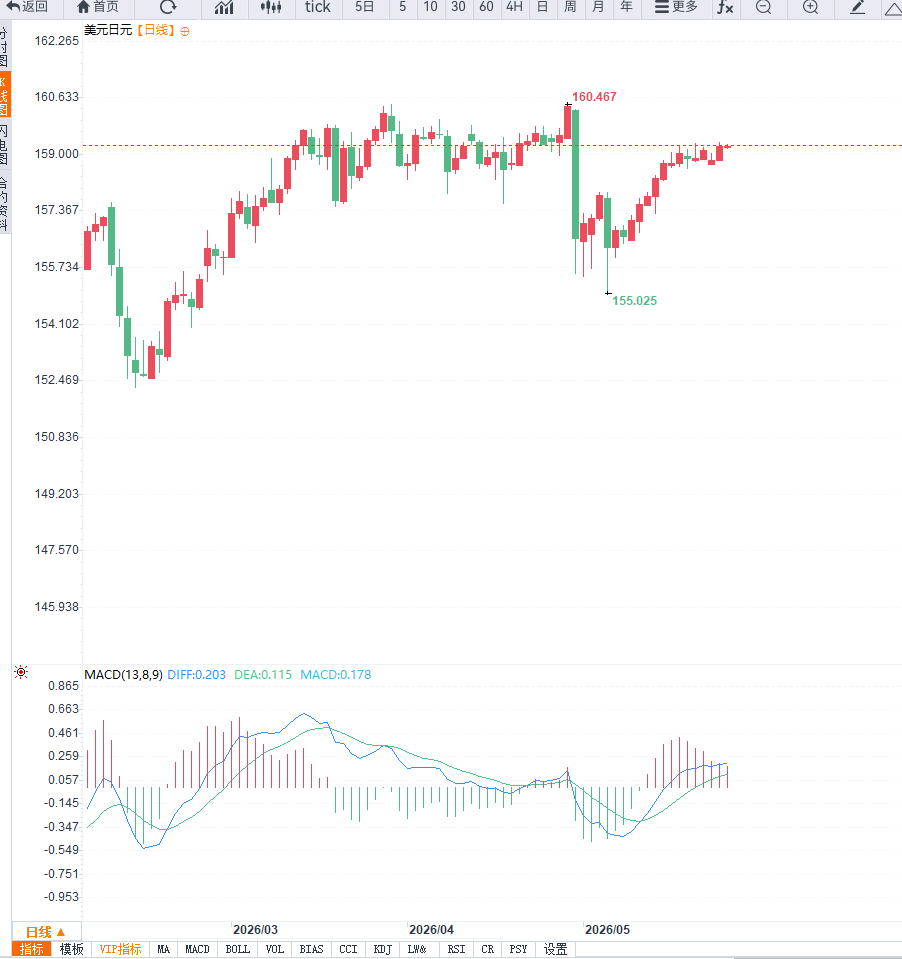
The market generally believes that the area around the 160 level remains a key defensive zone for the Japanese government. Given that Japanese authorities previously intervened on a large scale when the USD/JPY exchange rate approached 160, the market is currently highly sensitive to the exchange rate approaching this level again.
Furthermore, Bank of Japan Governor Kazuo Ueda stated on Wednesday that the current Middle East conflict constitutes Japan's "fifth major oil shock." He pointed out that wage, inflation expectations, and exchange rate fluctuations will determine whether this energy shock is a short-term impact or longer-term inflationary pressure. Because Japan is highly dependent on energy imports, rising international oil prices often directly increase Japan's import costs and put pressure on the yen. The recent resurgence of tensions in the Middle East has raised market concerns that shipping security issues in the Strait of Hormuz could affect global energy supplies.
The Strait of Hormuz handles approximately 20% of the world's seaborne crude oil shipments. A significant disruption to shipping in this region would expose energy-importing countries like Japan to greater risks of imported inflation. On Tuesday, the United States launched defensive strikes against several Iranian vessels and missile facilities, further exacerbating market concerns about an escalation of tensions in the Middle East. Subsequently, the Iranian Revolutionary Guard stated that it reserved the right to carry out "legitimate and explicit" retaliation against the United States for violating the ceasefire. This led to a renewed surge in risk aversion in global financial markets.
Typically, the Japanese yen receives support from safe-haven flows when global risk events escalate. Although a significant interest rate differential exists between Japan and the US, some funds tend to flow back to traditional safe-haven assets like the yen when geopolitical risks intensify. However, from the perspective of the overall monetary policy environment, the US dollar remains supported by high US interest rates. The market is currently awaiting the release of the US April Personal Consumption Expenditures (PCE) price index data. Since the PCE is a key inflation indicator monitored by the Federal Reserve, the data results could directly influence market expectations regarding the Fed's future policy path.
If US PCE data continues to exceed market expectations, the Federal Reserve may extend its high interest rate policy. This would further widen the US-Japan interest rate differential and potentially limit the yen's upside potential.
The market is currently reassessing the Federal Reserve's future policy direction. Due to rising international oil prices and escalating global geopolitical risks, the market is concerned that US inflation may face renewed upward pressure, making it difficult for the Fed to quickly shift to an easing policy.
From a technical perspective, the USD/JPY daily chart maintains an overall upward trend, but short-term signs of a high-level correction are emerging. The exchange rate is currently trading above major moving averages, and the medium-to-long-term bullish structure has not completely changed. However, the MACD indicator's momentum at high levels is weakening, with the red histogram bars continuing to narrow, indicating a slowdown in the upward pace. The RSI indicator has also retreated from overbought territory, suggesting a further short-term correction is possible. Key resistance levels to watch are the 159.80 and 160.20 areas; a break above these levels could lead to a retest of the year's high. Initial support levels are around 158.50 and 157.80.
The 4-hour chart shows that the USD/JPY pair has begun to weaken in the short term, with the price breaking below some short-term moving average support. The MACD indicator has entered negative territory, indicating increased short-term bearish momentum. Meanwhile, the RSI indicator remains below 50, suggesting a cautious short-term market sentiment. If the Japanese government continues to signal intervention, or if US PCE data falls short of expectations, USD/JPY may further decline to around the 158 level. However, if US inflation continues to strengthen and US Treasury yields rise, the dollar may regain support.
Investors are currently focused on US PCE data, the Japanese government's stance on currency intervention, and developments in the Middle East. The market is also watching whether the Bank of Japan will further adjust its ultra-loose monetary policy, as this will directly impact the future direction of the yen.
Editor's Summary : The current USD/JPY exchange rate is influenced by both the risk of Japanese currency market intervention and the high-interest-rate environment in the United States. On the one hand, the Japanese government continues to strengthen its verbal intervention stance and expresses strong concerns about excessive exchange rate volatility, providing short-term support for the yen. On the other hand, the Federal Reserve's expectation of maintaining high interest rates continues to support the overall strength of the US dollar. Meanwhile, the escalating situation in the Middle East is exacerbating global safe-haven demand, also bringing renewed attention to the yen's safe-haven attributes. However, due to the significant interest rate differential between the US and Japan, the yen's medium- to long-term trend still faces some pressure. In the short term, the 160 level may continue to be a sensitive area for the market. If the Japanese government takes further actual intervention measures, USD/JPY volatility may intensify significantly. The future market direction will still depend on US inflation data, changes in Federal Reserve policy, and the evolution of global geopolitical risks.
The market remains highly vigilant regarding the possibility of renewed intervention by the Japanese government in the foreign exchange market. Jun Mimura, Japan's top foreign exchange official, stated that the Japanese government will continue to closely monitor short-selling speculation in the yen market and pay close attention to any abnormal fluctuations. This statement is seen by the market as a signal that the Japanese authorities are further strengthening their efforts to stabilize the exchange rate.
Meanwhile, Japanese Finance Minister Satsuki Katayama stated that the Japanese government is prepared to take action at any time to address excessive exchange rate volatility. She emphasized that when intervening in the foreign exchange market, Japan will try to avoid pushing up US Treasury yields to minimize the impact on global financial markets.
The market generally believes that the area around the 160 level remains a key defensive zone for the Japanese government. Given that Japanese authorities previously intervened on a large scale when the USD/JPY exchange rate approached 160, the market is currently highly sensitive to the exchange rate approaching this level again.
Furthermore, Bank of Japan Governor Kazuo Ueda stated on Wednesday that the current Middle East conflict constitutes Japan's "fifth major oil shock." He pointed out that wage, inflation expectations, and exchange rate fluctuations will determine whether this energy shock is a short-term impact or longer-term inflationary pressure. Because Japan is highly dependent on energy imports, rising international oil prices often directly increase Japan's import costs and put pressure on the yen. The recent resurgence of tensions in the Middle East has raised market concerns that shipping security issues in the Strait of Hormuz could affect global energy supplies.
The Strait of Hormuz handles approximately 20% of the world's seaborne crude oil shipments. A significant disruption to shipping in this region would expose energy-importing countries like Japan to greater risks of imported inflation. On Tuesday, the United States launched defensive strikes against several Iranian vessels and missile facilities, further exacerbating market concerns about an escalation of tensions in the Middle East. Subsequently, the Iranian Revolutionary Guard stated that it reserved the right to carry out "legitimate and explicit" retaliation against the United States for violating the ceasefire. This led to a renewed surge in risk aversion in global financial markets.
Typically, the Japanese yen receives support from safe-haven flows when global risk events escalate. Although a significant interest rate differential exists between Japan and the US, some funds tend to flow back to traditional safe-haven assets like the yen when geopolitical risks intensify. However, from the perspective of the overall monetary policy environment, the US dollar remains supported by high US interest rates. The market is currently awaiting the release of the US April Personal Consumption Expenditures (PCE) price index data. Since the PCE is a key inflation indicator monitored by the Federal Reserve, the data results could directly influence market expectations regarding the Fed's future policy path.
If US PCE data continues to exceed market expectations, the Federal Reserve may extend its high interest rate policy. This would further widen the US-Japan interest rate differential and potentially limit the yen's upside potential.
The market is currently reassessing the Federal Reserve's future policy direction. Due to rising international oil prices and escalating global geopolitical risks, the market is concerned that US inflation may face renewed upward pressure, making it difficult for the Fed to quickly shift to an easing policy.
From a technical perspective, the USD/JPY daily chart maintains an overall upward trend, but short-term signs of a high-level correction are emerging. The exchange rate is currently trading above major moving averages, and the medium-to-long-term bullish structure has not completely changed. However, the MACD indicator's momentum at high levels is weakening, with the red histogram bars continuing to narrow, indicating a slowdown in the upward pace. The RSI indicator has also retreated from overbought territory, suggesting a further short-term correction is possible. Key resistance levels to watch are the 159.80 and 160.20 areas; a break above these levels could lead to a retest of the year's high. Initial support levels are around 158.50 and 157.80.
The 4-hour chart shows that the USD/JPY pair has begun to weaken in the short term, with the price breaking below some short-term moving average support. The MACD indicator has entered negative territory, indicating increased short-term bearish momentum. Meanwhile, the RSI indicator remains below 50, suggesting a cautious short-term market sentiment. If the Japanese government continues to signal intervention, or if US PCE data falls short of expectations, USD/JPY may further decline to around the 158 level. However, if US inflation continues to strengthen and US Treasury yields rise, the dollar may regain support.
Investors are currently focused on US PCE data, the Japanese government's stance on currency intervention, and developments in the Middle East. The market is also watching whether the Bank of Japan will further adjust its ultra-loose monetary policy, as this will directly impact the future direction of the yen.
Editor's Summary : The current USD/JPY exchange rate is influenced by both the risk of Japanese currency market intervention and the high-interest-rate environment in the United States. On the one hand, the Japanese government continues to strengthen its verbal intervention stance and expresses strong concerns about excessive exchange rate volatility, providing short-term support for the yen. On the other hand, the Federal Reserve's expectation of maintaining high interest rates continues to support the overall strength of the US dollar. Meanwhile, the escalating situation in the Middle East is exacerbating global safe-haven demand, also bringing renewed attention to the yen's safe-haven attributes. However, due to the significant interest rate differential between the US and Japan, the yen's medium- to long-term trend still faces some pressure. In the short term, the 160 level may continue to be a sensitive area for the market. If the Japanese government takes further actual intervention measures, USD/JPY volatility may intensify significantly. The future market direction will still depend on US inflation data, changes in Federal Reserve policy, and the evolution of global geopolitical risks.
- Risk Warning and Disclaimer
- The market involves risk, and trading may not be suitable for all investors. This article is for reference only and does not constitute personal investment advice, nor does it take into account certain users’ specific investment objectives, financial situation, or other needs. Any investment decisions made based on this information are at your own risk.