Strait blockade reshapes regional landscape and accelerates the formation of a new Eurasian corridor.
2026-05-27 10:28:58
Following the US-Israeli military action against Iran, shipping in the Strait of Hormuz came to a standstill. This regional conflict, while causing enormous economic losses, also unexpectedly reshaped the transportation and energy connectivity of Eurasia. Many cross-border routes were forced to adjust their routes, and countries along the routes developed alternative transport lines. Pakistan, Russia, and major Asian powers, among others, were deeply involved, resulting in a complex interplay of regional cooperation and geopolitical maneuvering.
The Gulf trade rules are undergoing long-term changes, and Pakistan is seizing the opportunity for transformation due to its geographical advantages. However, its own shortcomings are also becoming a constraint on its development path.
This conflict, dubbed the Ramadan War, has already caused enormous economic damage. The International Labour Organization predicts that global real labor income may cumulatively decrease by $3 trillion by 2027. The US military operation has already cost taxpayers $29 billion, and domestic fuel expenditures have reached an additional $35 billion.
Before the conflict erupted, major Eurasian connectivity projects were already struggling. The border conflict between Pakistan and Afghanistan delayed the construction of the Uzbekistan-Afghanistan-Pakistan railway and the Turkmenistan-Afghanistan-Pakistan-India gas pipeline. The Iraq-Pakistan gas pipeline was also stalled due to the threat of US sanctions. Only the China-Kyrgyzstan-Uzbekistan railway started construction smoothly. At the same time, cross-border projects such as the Middle East Corridor, the India-Middle East-Europe Economic Corridor, and the Iraq Development Road also faced their own challenges, including high costs, complex political situations, and funding shortages.
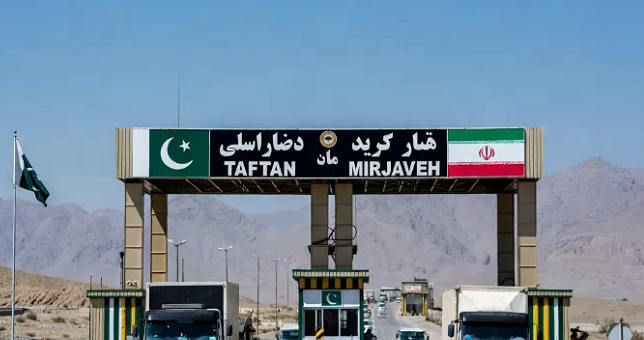
After the Strait of Hormuz was blocked, countries along the strait actively sought ways to break the deadlock.
Pakistan has opened six land routes to facilitate the transshipment of goods from third countries, and is leveraging Gwadar Port to create an efficient transportation route to Iran.
Iran has instead turned to the Caspian Sea route to establish a logistics channel connecting Russia, Central Asia, and the Caucasus region.
Cross-border rail freight volume between major Asian countries and Aplin, Iran, is steadily increasing. The line passes through several Central Asian countries, not only opening up new sea routes for landlocked countries but also reducing the geopolitical risks associated with relying on a single shipping route.
Saudi Arabia and Turkey are also planning transnational railway lines to accommodate both freight and passenger traffic, and existing international transport corridors are beginning to be re-planned. Red Sea shipping, already impacted by previous conflicts, has seen its volume halved, leading to a growing awareness of the risks of relying on a single shipping route and a comprehensive adjustment of cargo transport routes.
Pakistan plays a mediating role between the US and Iran. Heavily reliant on the Gulf region for energy, Pakistan hopes to push for the lifting of sanctions on the Iran-Pakistan pipeline, but has struggled to gain US approval. In response, Pakistan is increasing its crude oil imports from Russia and planning to build new cross-border pipelines to deepen its cooperation with Eurasian countries.
Major Asian powers actively mediated the conflict between Pakistan and Afghanistan, Russia and Afghanistan established a comprehensive partnership, and the two major powers joined hands to promote regional peace and infrastructure cooperation.
Many countries are also planning to form a new regional alliance, initially focusing on military cooperation, and later planning to intervene in the management of strategic channels such as waterways and energy pipelines, and to try to reach a cooperation with Iran on navigation management in the Strait of Hormuz.
The changing situation has transformed Pakistan from an ordinary regional country into an important node in the Eurasian connection, resulting in a significant increase in cargo volume at the Port of Karachi.
Historically, Pakistan has repeatedly benefited from its geographical advantages, but its short-sighted development planning has prevented it from achieving lasting prosperity. To maintain its pivotal position, the country must adjust its fiscal structure, increase investment in education, and cultivate skilled professionals.
Pakistan's education spending continues to decline, its salary system is rigid, and its national literacy rate is low. These problems are hindering the long-term operation of infrastructure and connectivity networks. Whether the country's leadership can seize the opportunity and address these shortcomings remains to be seen.
This regional conflict has completely disrupted the existing trade and logistics system in the Gulf region, prompting countries to build diversified transportation and energy corridors, ushering in a new stage of development for Eurasian connectivity. Geopolitical competition and regional cooperation are progressing simultaneously, with route planning and alliance formation continuing. Pakistan, with its geographical advantages, has seized a development opportunity, but internal issues such as human resources and finances have become significant obstacles. The future transportation and energy landscape of the entire Eurasian and Middle Eastern region will continue to evolve through risk hedging and collaborative development.
The Gulf trade rules are undergoing long-term changes, and Pakistan is seizing the opportunity for transformation due to its geographical advantages. However, its own shortcomings are also becoming a constraint on its development path.
The conflict has been costly, and the progress of existing China Unicom projects has been hampered.
This conflict, dubbed the Ramadan War, has already caused enormous economic damage. The International Labour Organization predicts that global real labor income may cumulatively decrease by $3 trillion by 2027. The US military operation has already cost taxpayers $29 billion, and domestic fuel expenditures have reached an additional $35 billion.
Before the conflict erupted, major Eurasian connectivity projects were already struggling. The border conflict between Pakistan and Afghanistan delayed the construction of the Uzbekistan-Afghanistan-Pakistan railway and the Turkmenistan-Afghanistan-Pakistan-India gas pipeline. The Iraq-Pakistan gas pipeline was also stalled due to the threat of US sanctions. Only the China-Kyrgyzstan-Uzbekistan railway started construction smoothly. At the same time, cross-border projects such as the Middle East Corridor, the India-Middle East-Europe Economic Corridor, and the Iraq Development Road also faced their own challenges, including high costs, complex political situations, and funding shortages.
Opening up alternative routes and restructuring and upgrading regional transportation networks
After the Strait of Hormuz was blocked, countries along the strait actively sought ways to break the deadlock.
Pakistan has opened six land routes to facilitate the transshipment of goods from third countries, and is leveraging Gwadar Port to create an efficient transportation route to Iran.
Iran has instead turned to the Caspian Sea route to establish a logistics channel connecting Russia, Central Asia, and the Caucasus region.
Cross-border rail freight volume between major Asian countries and Aplin, Iran, is steadily increasing. The line passes through several Central Asian countries, not only opening up new sea routes for landlocked countries but also reducing the geopolitical risks associated with relying on a single shipping route.
Saudi Arabia and Turkey are also planning transnational railway lines to accommodate both freight and passenger traffic, and existing international transport corridors are beginning to be re-planned. Red Sea shipping, already impacted by previous conflicts, has seen its volume halved, leading to a growing awareness of the risks of relying on a single shipping route and a comprehensive adjustment of cargo transport routes.
Multi-party competition intensifies geopolitical cooperation, leading to new trends.
Pakistan plays a mediating role between the US and Iran. Heavily reliant on the Gulf region for energy, Pakistan hopes to push for the lifting of sanctions on the Iran-Pakistan pipeline, but has struggled to gain US approval. In response, Pakistan is increasing its crude oil imports from Russia and planning to build new cross-border pipelines to deepen its cooperation with Eurasian countries.
Major Asian powers actively mediated the conflict between Pakistan and Afghanistan, Russia and Afghanistan established a comprehensive partnership, and the two major powers joined hands to promote regional peace and infrastructure cooperation.
Many countries are also planning to form a new regional alliance, initially focusing on military cooperation, and later planning to intervene in the management of strategic channels such as waterways and energy pipelines, and to try to reach a cooperation with Iran on navigation management in the Strait of Hormuz.
Pakistan is facing an opportunity to address its development shortcomings.
The changing situation has transformed Pakistan from an ordinary regional country into an important node in the Eurasian connection, resulting in a significant increase in cargo volume at the Port of Karachi.
Historically, Pakistan has repeatedly benefited from its geographical advantages, but its short-sighted development planning has prevented it from achieving lasting prosperity. To maintain its pivotal position, the country must adjust its fiscal structure, increase investment in education, and cultivate skilled professionals.
Pakistan's education spending continues to decline, its salary system is rigid, and its national literacy rate is low. These problems are hindering the long-term operation of infrastructure and connectivity networks. Whether the country's leadership can seize the opportunity and address these shortcomings remains to be seen.
Summarize
This regional conflict has completely disrupted the existing trade and logistics system in the Gulf region, prompting countries to build diversified transportation and energy corridors, ushering in a new stage of development for Eurasian connectivity. Geopolitical competition and regional cooperation are progressing simultaneously, with route planning and alliance formation continuing. Pakistan, with its geographical advantages, has seized a development opportunity, but internal issues such as human resources and finances have become significant obstacles. The future transportation and energy landscape of the entire Eurasian and Middle Eastern region will continue to evolve through risk hedging and collaborative development.
- Risk Warning and Disclaimer
- The market involves risk, and trading may not be suitable for all investors. This article is for reference only and does not constitute personal investment advice, nor does it take into account certain users’ specific investment objectives, financial situation, or other needs. Any investment decisions made based on this information are at your own risk.