Escalating tensions in the Middle East fuel inflation concerns, while expectations of higher interest rates from the Federal Reserve keep silver prices fluctuating at low levels.
2026-05-27 13:34:06
Spot silver (XAG/USD) continued to trade under pressure during Asian trading hours on Wednesday, with prices hovering around $76.90, marking the second consecutive day of weakness. While escalating tensions in the Middle East continued to strengthen safe-haven demand, market concerns about rising global inflationary pressures and the Federal Reserve maintaining high interest rates for an extended period are weighing on silver prices.
The military conflict between the United States and Iran has recently escalated again. The US military confirmed that it launched a "self-defense" military strike against southern Iran, while the Iranian Revolutionary Guard stated that it retaliated against US warplanes and drones suspected of violating Iranian airspace. Meanwhile, the Iranian Foreign Ministry condemned the US airstrikes in Hormozgan province, calling them a serious violation of the fragile ceasefire agreement. Subsequently, explosions were heard in the region, further exacerbating market concerns about the situation spiraling out of control in the Middle East.
The Strait of Hormuz handles approximately 20% of global seaborne crude oil transport. Therefore, market concerns exist that disruptions to shipping in the region could further tighten global energy supplies, driving up international oil prices. For the silver market, the impact of the Middle East situation is more complex. On one hand, escalating geopolitical risks typically drive some safe-haven funds into the precious metals market; on the other hand, high oil prices could reignite global inflationary pressures, forcing major central banks to maintain high interest rate policies, which puts pressure on non-yielding assets such as silver.
The market is currently concerned about a resurgence of "energy-driven inflation." With international oil prices remaining high, the market anticipates that the room for future interest rate cuts by major central banks worldwide may be limited. The market also expects the Federal Reserve to maintain high interest rates for an extended period. This has led to a generally strong US dollar index and US Treasury yields, thus suppressing the upside potential for silver.
Meanwhile, the latest US economic data shows that the US consumer confidence index fell to 93.1 in May from 93.8 in the previous month. The data indicates that US households remain pessimistic about the current job market outlook, and inflation concerns stemming from the Middle East situation have also significantly impacted consumer confidence. However, some households still expect the US economic environment to improve by the end of the year, meaning that market concerns about the risk of an economic recession have not yet worsened significantly.
The market's focus has now shifted to the outlook for Federal Reserve policy. Investors are awaiting further speeches from Fed Vice Chairman Philip Jefferson and Governor Lisa Cook for more clues about the future path of interest rates.
In addition, the market is also paying close attention to the upcoming release of the US April Personal Consumption Expenditures (PCE) price index data. Since the PCE is a core inflation indicator closely monitored by the Federal Reserve, the data results could directly influence market judgments on future policy direction.
From a market perspective, if the US PCE data continues to be strong, market expectations for the Federal Reserve to maintain high interest rates may further intensify, which will continue to suppress silver prices. However, if inflation data shows signs of cooling, it may alleviate pressure on the dollar and help silver stabilize and rebound.
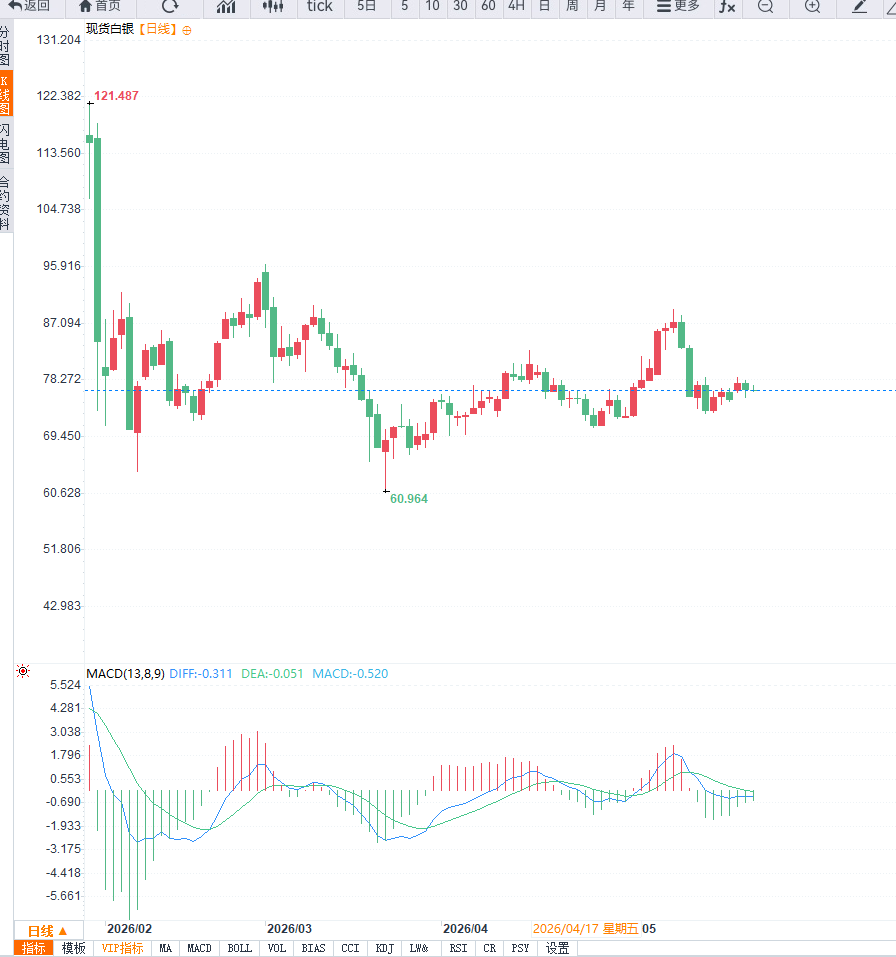
From a technical perspective, the daily chart for silver maintains an overall medium- to long-term bullish structure, but has entered a short-term consolidation phase at high levels. Prices continue to trade above major moving averages, but the MACD indicator shows increasingly clear signs of a bearish crossover at high levels, indicating weakening upward momentum. The RSI indicator has also clearly retreated from overbought territory, reflecting a short-term technical correction in the market. Key resistance levels to watch are the $77.80 and $79.20 areas; a break above these levels could see silver prices challenge previous highs. Important support levels are located around $75.80 and $74.50.
The 4-hour chart shows that silver is trending weakly in the short term, with prices fluctuating around short-term moving averages. The MACD indicator is below the zero line, indicating that bearish momentum currently dominates. Meanwhile, the RSI indicator remains below 50, suggesting a cautious short-term market sentiment. If the US dollar continues to strengthen, silver may further test the support level around $75; however, if US inflation data cools down, or if the escalating situation in the Middle East drives up safe-haven demand, silver prices could potentially rebound.
Investors are currently focusing on US PCE data, speeches by Federal Reserve officials, and developments in the US-Iran situation. The market is also closely monitoring international oil price trends, as changes in energy prices directly impact global inflation expectations and future monetary policy.
Editor's Summary : The current silver market is influenced by both "safe-haven demand" and "high interest rate pressure." Escalating tensions in the Middle East continue to support safe-haven demand for precious metals, but rising international oil prices and inflation concerns have reinforced market expectations that the Federal Reserve will maintain its high-interest-rate policy. From an overall market perspective, silver is likely to continue its high-level consolidation in the short term. On the one hand, global geopolitical risks continue to support precious metals; on the other hand, the high levels of the US dollar and US Treasury yields limit further upside potential for silver. Future market direction will largely depend on US inflation data, changes in Federal Reserve policy, and the evolution of the Middle East situation. In the short term, silver volatility may continue to increase, and investors should pay close attention to the dollar's performance and changes in global risk sentiment.
The military conflict between the United States and Iran has recently escalated again. The US military confirmed that it launched a "self-defense" military strike against southern Iran, while the Iranian Revolutionary Guard stated that it retaliated against US warplanes and drones suspected of violating Iranian airspace. Meanwhile, the Iranian Foreign Ministry condemned the US airstrikes in Hormozgan province, calling them a serious violation of the fragile ceasefire agreement. Subsequently, explosions were heard in the region, further exacerbating market concerns about the situation spiraling out of control in the Middle East.
The Strait of Hormuz handles approximately 20% of global seaborne crude oil transport. Therefore, market concerns exist that disruptions to shipping in the region could further tighten global energy supplies, driving up international oil prices. For the silver market, the impact of the Middle East situation is more complex. On one hand, escalating geopolitical risks typically drive some safe-haven funds into the precious metals market; on the other hand, high oil prices could reignite global inflationary pressures, forcing major central banks to maintain high interest rate policies, which puts pressure on non-yielding assets such as silver.
The market is currently concerned about a resurgence of "energy-driven inflation." With international oil prices remaining high, the market anticipates that the room for future interest rate cuts by major central banks worldwide may be limited. The market also expects the Federal Reserve to maintain high interest rates for an extended period. This has led to a generally strong US dollar index and US Treasury yields, thus suppressing the upside potential for silver.
Meanwhile, the latest US economic data shows that the US consumer confidence index fell to 93.1 in May from 93.8 in the previous month. The data indicates that US households remain pessimistic about the current job market outlook, and inflation concerns stemming from the Middle East situation have also significantly impacted consumer confidence. However, some households still expect the US economic environment to improve by the end of the year, meaning that market concerns about the risk of an economic recession have not yet worsened significantly.
The market's focus has now shifted to the outlook for Federal Reserve policy. Investors are awaiting further speeches from Fed Vice Chairman Philip Jefferson and Governor Lisa Cook for more clues about the future path of interest rates.
In addition, the market is also paying close attention to the upcoming release of the US April Personal Consumption Expenditures (PCE) price index data. Since the PCE is a core inflation indicator closely monitored by the Federal Reserve, the data results could directly influence market judgments on future policy direction.
From a market perspective, if the US PCE data continues to be strong, market expectations for the Federal Reserve to maintain high interest rates may further intensify, which will continue to suppress silver prices. However, if inflation data shows signs of cooling, it may alleviate pressure on the dollar and help silver stabilize and rebound.
From a technical perspective, the daily chart for silver maintains an overall medium- to long-term bullish structure, but has entered a short-term consolidation phase at high levels. Prices continue to trade above major moving averages, but the MACD indicator shows increasingly clear signs of a bearish crossover at high levels, indicating weakening upward momentum. The RSI indicator has also clearly retreated from overbought territory, reflecting a short-term technical correction in the market. Key resistance levels to watch are the $77.80 and $79.20 areas; a break above these levels could see silver prices challenge previous highs. Important support levels are located around $75.80 and $74.50.
The 4-hour chart shows that silver is trending weakly in the short term, with prices fluctuating around short-term moving averages. The MACD indicator is below the zero line, indicating that bearish momentum currently dominates. Meanwhile, the RSI indicator remains below 50, suggesting a cautious short-term market sentiment. If the US dollar continues to strengthen, silver may further test the support level around $75; however, if US inflation data cools down, or if the escalating situation in the Middle East drives up safe-haven demand, silver prices could potentially rebound.
Investors are currently focusing on US PCE data, speeches by Federal Reserve officials, and developments in the US-Iran situation. The market is also closely monitoring international oil price trends, as changes in energy prices directly impact global inflation expectations and future monetary policy.
Editor's Summary : The current silver market is influenced by both "safe-haven demand" and "high interest rate pressure." Escalating tensions in the Middle East continue to support safe-haven demand for precious metals, but rising international oil prices and inflation concerns have reinforced market expectations that the Federal Reserve will maintain its high-interest-rate policy. From an overall market perspective, silver is likely to continue its high-level consolidation in the short term. On the one hand, global geopolitical risks continue to support precious metals; on the other hand, the high levels of the US dollar and US Treasury yields limit further upside potential for silver. Future market direction will largely depend on US inflation data, changes in Federal Reserve policy, and the evolution of the Middle East situation. In the short term, silver volatility may continue to increase, and investors should pay close attention to the dollar's performance and changes in global risk sentiment.
- Risk Warning and Disclaimer
- The market involves risk, and trading may not be suitable for all investors. This article is for reference only and does not constitute personal investment advice, nor does it take into account certain users’ specific investment objectives, financial situation, or other needs. Any investment decisions made based on this information are at your own risk.