The pound continues to weaken against the dollar and may retest previous highs.
2026-05-28 13:58:13
The British pound fell against the US dollar (GBP/USD) during Thursday's Asian trading session, breaking below 1.3400. As tensions between the US and Iran escalated again, global market risk appetite declined significantly, and demand for the US dollar as a safe haven increased rapidly, putting selling pressure on risk-sensitive currencies such as the pound.
The U.S. military recently launched another military strike against Iranian targets, including facilities deemed to threaten the safety of U.S. troops and commercial transport. The U.S. stated that the operation was "defensive" in nature and aimed at maintaining the ceasefire and ensuring the safety of shipping in the Strait of Hormuz.
Meanwhile, US President Trump stated his hope for a "favorable agreement" to end the conflict with Iran, and warned that Iran's strategy of stalling for time to force a US compromise would not work. The market believes that the differences between the US and Iran remain significant, and the situation in the Middle East is unlikely to ease quickly in the short term.
The Strait of Hormuz handles approximately 20% of global seaborne crude oil transport, so any military risks involving the region can quickly impact risk appetite in global energy and financial markets. With international oil prices rising again, market concerns about a resurgence in global inflation have intensified significantly.
Against this backdrop, the US dollar index (DXY) continued to strengthen and remained high around 99.50. Given the US dollar's status as a global reserve currency and a safe-haven asset, international funds typically flow back into dollar assets when market risk sentiment deteriorates.
Meanwhile, persistently high US Treasury yields have further enhanced the attractiveness of dollar-denominated assets. The market is currently awaiting the release of the US April PCE price index data later tonight to determine the Federal Reserve's future policy direction.
The market expects the US PCE inflation rate to rise to 3.8% annually, up from the previous 3.5%; the core PCE rate is expected to rise to 3.3% annually. Since PCE is one of the Federal Reserve's most closely watched inflation indicators, this data could directly influence the market's repricing of future interest rate paths.
If US inflation continues to exceed expectations, market bets on the Federal Reserve maintaining high interest rates or even raising them further may intensify, thereby further supporting the rise of the US dollar and putting greater pressure on GBP/USD.
On the other hand, the pound's own fundamentals have also weakened recently. Previously released UK inflation data came in below market expectations, while the unemployment rate unexpectedly rose to 5.0%, indicating that the UK labor market is beginning to show signs of cooling.
Amid weakening economic data, the market has significantly lowered its expectations for further interest rate hikes by the Bank of England. Analysts point out that traders have already reduced their bets on the number of rate hikes by the Bank of England in 2026, while UK government bond yields have seen one of their biggest weekly declines since the end of 2023.
Market research firm Pantheon Macroeconomics stated that the decline in UK government bond yields was mainly driven by factors such as the previous drop in international oil prices, easing of political uncertainty in the UK, and stable expectations for fiscal policy.
As the yield advantage of the UK weakens, the attractiveness of the pound against the dollar also declines. Furthermore, if UK economic growth continues to slow, the Bank of England's future policy space may be further constrained.
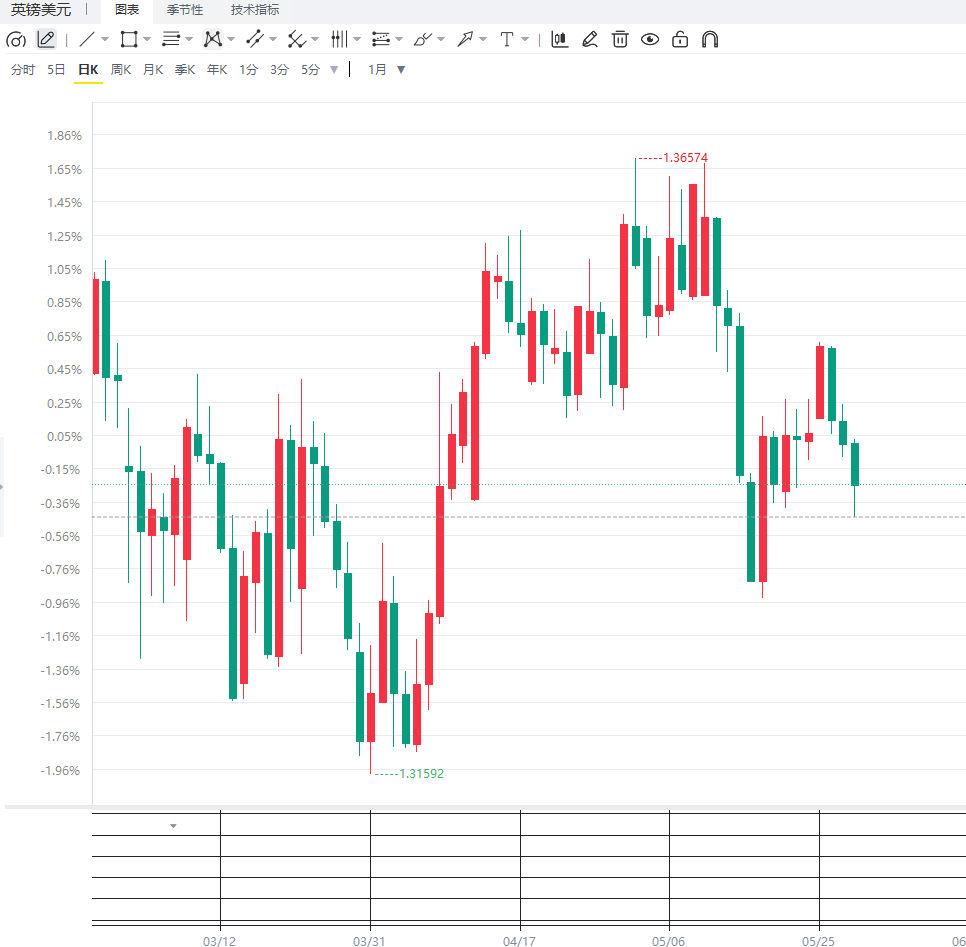
From a daily chart perspective, GBP/USD has recently retreated from its recent highs and is gradually declining towards a key support area. The MACD indicator has formed a death cross at a high level and continues to fall, indicating that the medium- to long-term upward momentum is weakening. The current exchange rate has broken below short-term moving average support, and the overall technical structure is becoming bearish.
The first key support level is located in the 1.3350 area. A break below this level could see the exchange rate test the 1.3300 psychological level further. Resistance levels to watch are 1.3450 and 1.3500. Only a retest of these areas could allow the pound to regain upward momentum in the short term. However, given the recent decline over several trading days, weaker-than-expected US PCE data could lead to a temporary pullback in the dollar, potentially triggering a technical rebound in the pound.
In addition, changes in global market risk sentiment are also worth noting. If the situation in the Middle East deteriorates further, the safe-haven US dollar may continue to receive inflows; conversely, if geopolitical risks ease and market risk appetite improves, it could help alleviate some of the pressure on the pound.
Overall, GBP/USD is currently under dual pressure from a strengthening safe-haven dollar and weak UK economic data. The US PCE data and changes in the Middle East situation will be important factors in determining the exchange rate's next move.
Editor's Summary : The current decline in GBP/USD is mainly due to a combination of factors: increased demand for the safe-haven dollar and waning expectations of a Bank of England rate hike. Escalating tensions in the Middle East have driven the dollar index higher, while weak UK economic data has weakened market confidence in further tightening by the Bank of England. Technically, GBP/USD has broken below a key short-term support level, indicating a bearish short-term structure. If US PCE data continues to exceed expectations, the dollar index may strengthen further, and GBP/USD risks further declines towards the 1.33 area. However, given that UK inflation remains above its long-term target, the Bank of England is unlikely to fully shift to an easing policy in the short term. Therefore, the medium- to long-term trend of the pound will depend on the UK economic performance, global risk sentiment, and the policy differences between the Federal Reserve and the Bank of England.
The U.S. military recently launched another military strike against Iranian targets, including facilities deemed to threaten the safety of U.S. troops and commercial transport. The U.S. stated that the operation was "defensive" in nature and aimed at maintaining the ceasefire and ensuring the safety of shipping in the Strait of Hormuz.
Meanwhile, US President Trump stated his hope for a "favorable agreement" to end the conflict with Iran, and warned that Iran's strategy of stalling for time to force a US compromise would not work. The market believes that the differences between the US and Iran remain significant, and the situation in the Middle East is unlikely to ease quickly in the short term.
The Strait of Hormuz handles approximately 20% of global seaborne crude oil transport, so any military risks involving the region can quickly impact risk appetite in global energy and financial markets. With international oil prices rising again, market concerns about a resurgence in global inflation have intensified significantly.
Against this backdrop, the US dollar index (DXY) continued to strengthen and remained high around 99.50. Given the US dollar's status as a global reserve currency and a safe-haven asset, international funds typically flow back into dollar assets when market risk sentiment deteriorates.
Meanwhile, persistently high US Treasury yields have further enhanced the attractiveness of dollar-denominated assets. The market is currently awaiting the release of the US April PCE price index data later tonight to determine the Federal Reserve's future policy direction.
The market expects the US PCE inflation rate to rise to 3.8% annually, up from the previous 3.5%; the core PCE rate is expected to rise to 3.3% annually. Since PCE is one of the Federal Reserve's most closely watched inflation indicators, this data could directly influence the market's repricing of future interest rate paths.
If US inflation continues to exceed expectations, market bets on the Federal Reserve maintaining high interest rates or even raising them further may intensify, thereby further supporting the rise of the US dollar and putting greater pressure on GBP/USD.
On the other hand, the pound's own fundamentals have also weakened recently. Previously released UK inflation data came in below market expectations, while the unemployment rate unexpectedly rose to 5.0%, indicating that the UK labor market is beginning to show signs of cooling.
Amid weakening economic data, the market has significantly lowered its expectations for further interest rate hikes by the Bank of England. Analysts point out that traders have already reduced their bets on the number of rate hikes by the Bank of England in 2026, while UK government bond yields have seen one of their biggest weekly declines since the end of 2023.
Market research firm Pantheon Macroeconomics stated that the decline in UK government bond yields was mainly driven by factors such as the previous drop in international oil prices, easing of political uncertainty in the UK, and stable expectations for fiscal policy.
As the yield advantage of the UK weakens, the attractiveness of the pound against the dollar also declines. Furthermore, if UK economic growth continues to slow, the Bank of England's future policy space may be further constrained.
From a daily chart perspective, GBP/USD has recently retreated from its recent highs and is gradually declining towards a key support area. The MACD indicator has formed a death cross at a high level and continues to fall, indicating that the medium- to long-term upward momentum is weakening. The current exchange rate has broken below short-term moving average support, and the overall technical structure is becoming bearish.
The first key support level is located in the 1.3350 area. A break below this level could see the exchange rate test the 1.3300 psychological level further. Resistance levels to watch are 1.3450 and 1.3500. Only a retest of these areas could allow the pound to regain upward momentum in the short term. However, given the recent decline over several trading days, weaker-than-expected US PCE data could lead to a temporary pullback in the dollar, potentially triggering a technical rebound in the pound.
In addition, changes in global market risk sentiment are also worth noting. If the situation in the Middle East deteriorates further, the safe-haven US dollar may continue to receive inflows; conversely, if geopolitical risks ease and market risk appetite improves, it could help alleviate some of the pressure on the pound.
Overall, GBP/USD is currently under dual pressure from a strengthening safe-haven dollar and weak UK economic data. The US PCE data and changes in the Middle East situation will be important factors in determining the exchange rate's next move.
Editor's Summary : The current decline in GBP/USD is mainly due to a combination of factors: increased demand for the safe-haven dollar and waning expectations of a Bank of England rate hike. Escalating tensions in the Middle East have driven the dollar index higher, while weak UK economic data has weakened market confidence in further tightening by the Bank of England. Technically, GBP/USD has broken below a key short-term support level, indicating a bearish short-term structure. If US PCE data continues to exceed expectations, the dollar index may strengthen further, and GBP/USD risks further declines towards the 1.33 area. However, given that UK inflation remains above its long-term target, the Bank of England is unlikely to fully shift to an easing policy in the short term. Therefore, the medium- to long-term trend of the pound will depend on the UK economic performance, global risk sentiment, and the policy differences between the Federal Reserve and the Bank of England.
- Risk Warning and Disclaimer
- The market involves risk, and trading may not be suitable for all investors. This article is for reference only and does not constitute personal investment advice, nor does it take into account certain users’ specific investment objectives, financial situation, or other needs. Any investment decisions made based on this information are at your own risk.