As risk aversion eases, the US dollar index has fallen back to around the 99 level; caution is advised against a potential break below this level.
2026-05-29 15:10:25
The US dollar index remained cautiously range-bound during Asian trading hours on Friday, trading around 99.00. As expectations of a ceasefire agreement between the US and Iran increased, market risk aversion eased significantly, and some of the safe-haven buying that the dollar had previously gained due to the Middle East situation began to recede.

The US dollar index had previously risen to 99.54, a new high in more than seven weeks, but then quickly retreated. The core reason for the change in market sentiment is that the US and Iran have reached a framework agreement on a 60-day memorandum of understanding (MoU), although it is still awaiting final approval from US President Trump.
The agreement includes ensuring unimpeded energy transport through the Strait of Hormuz and pushing the United States to lift some restrictions on Iranian ports. The Strait of Hormuz is one of the world's most important energy transport routes, handling approximately 20% of global maritime energy supplies; therefore, changes in the situation there have a significant impact on international financial markets.
International oil prices have recently fallen significantly as the market perceives a decline in Middle East energy supply risks. WTI crude oil prices have fallen to around $87, while the energy risk premium previously driven by the Middle East situation is rapidly receding.
One of the key reasons for the dollar's previous sustained strength was that rising international oil prices fueled market concerns about a resurgence of inflation in the United States. As rising energy prices could further stimulate US inflation, expectations that the Federal Reserve would be forced to maintain high interest rates for an extended period have clearly increased, thus supporting the dollar.
However, as international oil prices have fallen, market concerns about persistently high inflation in the United States have begun to cool, and the demand for the US dollar as a safe haven has also weakened. Analysts believe that the current trend of the US dollar is gradually shifting from being driven by geopolitical risk aversion to being driven by economic data and interest rate expectations.
Despite a short-term correction in the US dollar, market expectations for the Federal Reserve to maintain high interest rates remain strong. According to the CME FedWatch tool, the market anticipates a 52.9% probability that the Fed will keep current interest rates unchanged by the end of the year, while the remaining investors tend to believe the Fed will raise rates at least once more.
Market expectations have changed significantly compared to before the outbreak of the Middle East conflict. Before the escalation of the conflict, the market anticipated two possible rate cuts by the Federal Reserve this year, but now the market has largely abandoned any expectation of rate cuts this year. Changes in international energy prices have also reshaped market assessments of the Fed's policy path. As long as US inflation remains resilient, it will be difficult for the Fed to quickly shift to an easing policy.
Meanwhile, the US economy as a whole remains relatively robust, providing support for the dollar. Although the US job market has slowed slightly, the overall unemployment rate remains low, consumer spending remains stable, and business activity has not shown any significant signs of deterioration. From a global market structure perspective, the dollar is currently in a balance between "high interest rate support" and "declining safe-haven demand." In the short term, changes in the Middle East situation may continue to cause dollar volatility, but the medium- to long-term direction still depends on the performance of the US economy and inflation.
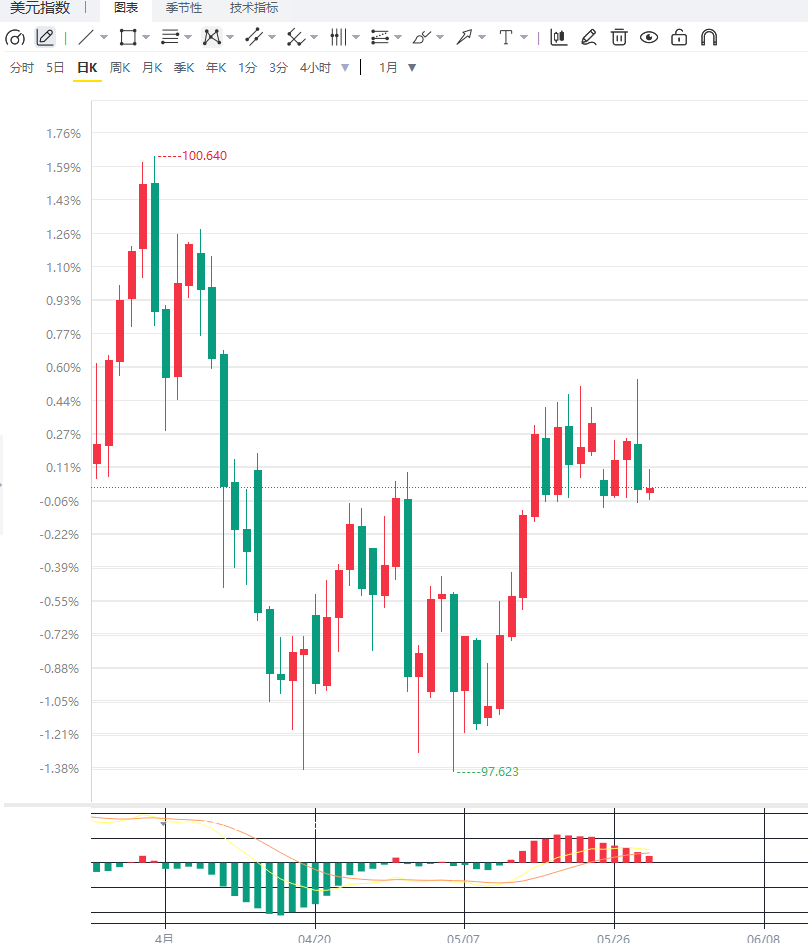
From a technical perspective, the US dollar index is currently maintaining a slightly bullish, oscillating pattern on the daily chart. Although the index has retreated from its high of 99.54, it remains above the 20-day exponential moving average (EMA) at 98.91 and is also significantly higher than the previous trendline breakout area around 98.15. If subsequent US economic data continues to be strong and the situation in the Middle East deteriorates again, the US dollar index may break through 99.54 again and further challenge the 100 level. Currently, the US dollar index is mainly trading between 98.84 and 99.54. If it breaks through 99.54, the dollar may reopen upside potential; conversely, if it falls below 98.84, it may further test the 98.50 or even 98.15 area in the short term.
Overall, the US dollar index is currently at a critical juncture, choosing its direction. Future US economic data, Federal Reserve policy expectations, and developments in the Middle East will remain the core variables influencing the dollar's trajectory.
Editor's Summary : The US dollar index has recently retreated from its highs, primarily due to expectations of a US-Iran ceasefire agreement and falling international oil prices, leading to a significant cooling of market risk aversion. However, the high-interest-rate environment and relatively robust US economic fundamentals continue to provide strong support for the dollar. The core market logic has gradually shifted from simple "geopolitical safe-haven trading" to "US economic and interest rate trading." Future ISM data and non-farm payroll reports will be crucial factors determining the dollar's next direction.
The US dollar index had previously risen to 99.54, a new high in more than seven weeks, but then quickly retreated. The core reason for the change in market sentiment is that the US and Iran have reached a framework agreement on a 60-day memorandum of understanding (MoU), although it is still awaiting final approval from US President Trump.
The agreement includes ensuring unimpeded energy transport through the Strait of Hormuz and pushing the United States to lift some restrictions on Iranian ports. The Strait of Hormuz is one of the world's most important energy transport routes, handling approximately 20% of global maritime energy supplies; therefore, changes in the situation there have a significant impact on international financial markets.
International oil prices have recently fallen significantly as the market perceives a decline in Middle East energy supply risks. WTI crude oil prices have fallen to around $87, while the energy risk premium previously driven by the Middle East situation is rapidly receding.
One of the key reasons for the dollar's previous sustained strength was that rising international oil prices fueled market concerns about a resurgence of inflation in the United States. As rising energy prices could further stimulate US inflation, expectations that the Federal Reserve would be forced to maintain high interest rates for an extended period have clearly increased, thus supporting the dollar.
However, as international oil prices have fallen, market concerns about persistently high inflation in the United States have begun to cool, and the demand for the US dollar as a safe haven has also weakened. Analysts believe that the current trend of the US dollar is gradually shifting from being driven by geopolitical risk aversion to being driven by economic data and interest rate expectations.
Despite a short-term correction in the US dollar, market expectations for the Federal Reserve to maintain high interest rates remain strong. According to the CME FedWatch tool, the market anticipates a 52.9% probability that the Fed will keep current interest rates unchanged by the end of the year, while the remaining investors tend to believe the Fed will raise rates at least once more.
Market expectations have changed significantly compared to before the outbreak of the Middle East conflict. Before the escalation of the conflict, the market anticipated two possible rate cuts by the Federal Reserve this year, but now the market has largely abandoned any expectation of rate cuts this year. Changes in international energy prices have also reshaped market assessments of the Fed's policy path. As long as US inflation remains resilient, it will be difficult for the Fed to quickly shift to an easing policy.
Meanwhile, the US economy as a whole remains relatively robust, providing support for the dollar. Although the US job market has slowed slightly, the overall unemployment rate remains low, consumer spending remains stable, and business activity has not shown any significant signs of deterioration. From a global market structure perspective, the dollar is currently in a balance between "high interest rate support" and "declining safe-haven demand." In the short term, changes in the Middle East situation may continue to cause dollar volatility, but the medium- to long-term direction still depends on the performance of the US economy and inflation.
From a technical perspective, the US dollar index is currently maintaining a slightly bullish, oscillating pattern on the daily chart. Although the index has retreated from its high of 99.54, it remains above the 20-day exponential moving average (EMA) at 98.91 and is also significantly higher than the previous trendline breakout area around 98.15. If subsequent US economic data continues to be strong and the situation in the Middle East deteriorates again, the US dollar index may break through 99.54 again and further challenge the 100 level. Currently, the US dollar index is mainly trading between 98.84 and 99.54. If it breaks through 99.54, the dollar may reopen upside potential; conversely, if it falls below 98.84, it may further test the 98.50 or even 98.15 area in the short term.
Overall, the US dollar index is currently at a critical juncture, choosing its direction. Future US economic data, Federal Reserve policy expectations, and developments in the Middle East will remain the core variables influencing the dollar's trajectory.
Editor's Summary : The US dollar index has recently retreated from its highs, primarily due to expectations of a US-Iran ceasefire agreement and falling international oil prices, leading to a significant cooling of market risk aversion. However, the high-interest-rate environment and relatively robust US economic fundamentals continue to provide strong support for the dollar. The core market logic has gradually shifted from simple "geopolitical safe-haven trading" to "US economic and interest rate trading." Future ISM data and non-farm payroll reports will be crucial factors determining the dollar's next direction.
- Risk Warning and Disclaimer
- The market involves risk, and trading may not be suitable for all investors. This article is for reference only and does not constitute personal investment advice, nor does it take into account certain users’ specific investment objectives, financial situation, or other needs. Any investment decisions made based on this information are at your own risk.