Rising expectations of a European Central Bank interest rate hike supported the euro, leading to a rebound in the euro against the pound.
2026-05-29 15:26:13
The euro edged higher against the pound in European trading on Friday, trading around 0.8660. Market focus remains on expectations of a European Central Bank interest rate hike, the risk of a UK economic slowdown, and developments in the Middle East, with the euro generally outperforming the pound.

The recent expectation of a ceasefire agreement between the US and Iran has boosted risk sentiment in global markets, but market volatility remains high as the agreement has not yet been formally implemented. The US and Iran have reached a preliminary framework for a 60-day Memorandum of Understanding (MoU), but it still awaits final approval from US President Trump.
Although the situation in the Middle East has eased somewhat, the market remains concerned about potential recurring risks to energy supply, especially given the Strait of Hormuz's crucial role as a global energy transport route; its stability directly impacts the European economic and inflation outlook. For the euro, the biggest support currently comes from expectations of a continuously strengthening hawkish policy stance from the European Central Bank. Market pricing indicates that investors currently expect a 91% probability of a 25 basis point rate hike by the ECB at its June 11 meeting, potentially pushing the ECB deposit rate to 2.25%.
Meanwhile, the market also expects a roughly 50% probability of the European Central Bank raising interest rates again this year. This expectation has significantly enhanced the attractiveness of euro-denominated assets. ECB Executive Board member Schnabel recently stated that even if the situation in the Middle East eases rapidly, the ECB should continue raising interest rates because the previous rise in energy prices has begun to spread to the overall economy.
The European Central Bank's biggest concern has shifted from energy prices themselves to the "double-dip inflation effect." In other words, rising energy costs are gradually pushing up service sector costs, wages, and business operating costs, leading to increased inflation stickiness in the Eurozone.
Analysts believe that the European Central Bank's current policy stance is significantly more hawkish than the market had previously expected. Given that core inflation in the Eurozone remains high and the risk of persistently high energy prices has not been completely eliminated, it is unlikely that the ECB will quickly shift to an easing policy in the short term.
In contrast, the pound sterling has faced more pressure recently. The latest UK economic data shows that overall economic activity is slowing, the labor market is cooling, and consumer demand is showing signs of weakness. Markets are concerned that if international energy prices rise again, it will further reduce the purchasing power of British residents. The UK is one of the economies most dependent on energy imports, so changes in international oil and gas prices have a significant impact on the UK economy. The market believes that energy cost pressures from the situation in the Middle East could further weaken the UK's economic growth prospects.
Meanwhile, investor expectations for future interest rate hikes by the Bank of England have also begun to decline. Analysts point out that the market has reduced its bets on the number of rate hikes by the Bank of England in 2026, and UK government bond yields have recently seen a significant decline. UK government bond yields recorded one of their largest weekly drops since the end of 2023, reflecting a growing sense of caution in the market regarding the UK economic outlook and the future path of monetary policy.
Furthermore, improved expectations of political stability in the UK have reduced some market risk premiums. The market believes that UK fiscal policy is likely to remain relatively stable in the future, which, while beneficial to the bond market, also implies limited room for fiscal stimulus. Going forward, the market will focus on speeches by Bank of England Governor Bailey and policymakers such as Mann and Green. If the Bank of England maintains a hawkish stance, it may help stabilize the pound temporarily; however, if officials further emphasize the risks of an economic slowdown, the pound may continue to face downward pressure.
Meanwhile, Germany's upcoming preliminary inflation data is also a key market focus. As the Eurozone's largest economy, Germany's inflation data will directly influence market expectations regarding the European Central Bank's future policy path. If German inflation continues to exceed market expectations, it could further strengthen expectations of an ECB interest rate hike, thereby driving the euro higher against the pound.
From a daily chart perspective, the EUR/GBP pair maintains an overall upward-biased structure. The exchange rate has consistently traded above the 20-day and 50-day moving averages, indicating a continued bullish medium-term trend. The 0.8640 area has become a key support level. Previous attempts to break through this area have yielded buying support, suggesting that bullish sentiment remains dominant in the medium term. If subsequent German inflation data is strong while UK economic data continues to be weak, the EUR/GBP pair could potentially break through 0.8700.
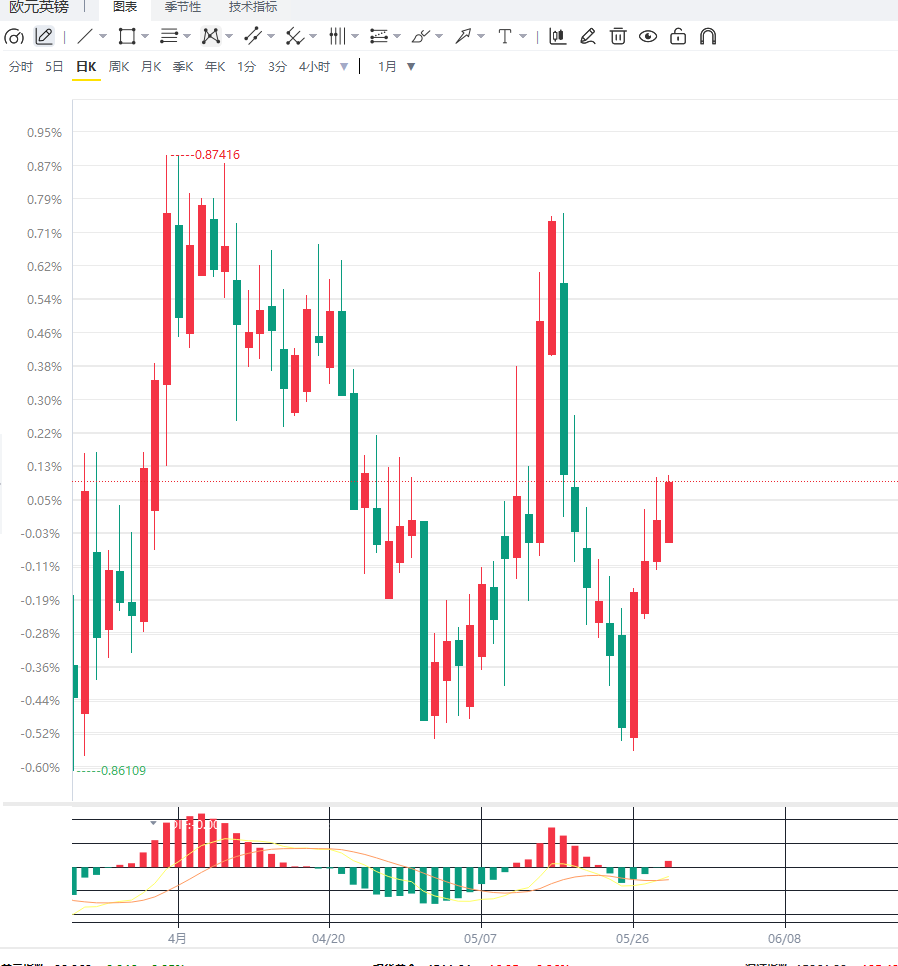
However, the exchange rate has recently encountered resistance multiple times in the 0.8665-0.8680 range, indicating that selling pressure remains. If it fails to break through effectively, it may retest the 0.8640 support level in the short term. Overall, the core logic behind the current EUR/GBP exchange rate movement remains the policy divergence trading between the "ECB's hawkish stance" and the "UK economic slowdown." Going forward, German inflation data, Bank of England speeches, and international energy price trends will remain key factors determining the exchange rate's next direction.
Editor's Summary : The euro has maintained a generally strong trend against the pound recently. The European Central Bank's continued strengthening of interest rate hike expectations is a key factor supporting the euro, while the UK's economic slowdown and energy cost concerns continue to suppress the pound's performance. Currently, the market has significantly increased its bets on further interest rate hikes by the ECB, while the Bank of England's policy space is limited by slowing economic growth. From a technical perspective, the euro/pound pair remains bullish in the medium term, but is approaching a key resistance area in the short term. Future German inflation data, UK economic performance, and changes in global energy prices may determine whether the euro/pound pair can further break through the 0.87 level.
The recent expectation of a ceasefire agreement between the US and Iran has boosted risk sentiment in global markets, but market volatility remains high as the agreement has not yet been formally implemented. The US and Iran have reached a preliminary framework for a 60-day Memorandum of Understanding (MoU), but it still awaits final approval from US President Trump.
Although the situation in the Middle East has eased somewhat, the market remains concerned about potential recurring risks to energy supply, especially given the Strait of Hormuz's crucial role as a global energy transport route; its stability directly impacts the European economic and inflation outlook. For the euro, the biggest support currently comes from expectations of a continuously strengthening hawkish policy stance from the European Central Bank. Market pricing indicates that investors currently expect a 91% probability of a 25 basis point rate hike by the ECB at its June 11 meeting, potentially pushing the ECB deposit rate to 2.25%.
Meanwhile, the market also expects a roughly 50% probability of the European Central Bank raising interest rates again this year. This expectation has significantly enhanced the attractiveness of euro-denominated assets. ECB Executive Board member Schnabel recently stated that even if the situation in the Middle East eases rapidly, the ECB should continue raising interest rates because the previous rise in energy prices has begun to spread to the overall economy.
The European Central Bank's biggest concern has shifted from energy prices themselves to the "double-dip inflation effect." In other words, rising energy costs are gradually pushing up service sector costs, wages, and business operating costs, leading to increased inflation stickiness in the Eurozone.
Analysts believe that the European Central Bank's current policy stance is significantly more hawkish than the market had previously expected. Given that core inflation in the Eurozone remains high and the risk of persistently high energy prices has not been completely eliminated, it is unlikely that the ECB will quickly shift to an easing policy in the short term.
In contrast, the pound sterling has faced more pressure recently. The latest UK economic data shows that overall economic activity is slowing, the labor market is cooling, and consumer demand is showing signs of weakness. Markets are concerned that if international energy prices rise again, it will further reduce the purchasing power of British residents. The UK is one of the economies most dependent on energy imports, so changes in international oil and gas prices have a significant impact on the UK economy. The market believes that energy cost pressures from the situation in the Middle East could further weaken the UK's economic growth prospects.
Meanwhile, investor expectations for future interest rate hikes by the Bank of England have also begun to decline. Analysts point out that the market has reduced its bets on the number of rate hikes by the Bank of England in 2026, and UK government bond yields have recently seen a significant decline. UK government bond yields recorded one of their largest weekly drops since the end of 2023, reflecting a growing sense of caution in the market regarding the UK economic outlook and the future path of monetary policy.
Furthermore, improved expectations of political stability in the UK have reduced some market risk premiums. The market believes that UK fiscal policy is likely to remain relatively stable in the future, which, while beneficial to the bond market, also implies limited room for fiscal stimulus. Going forward, the market will focus on speeches by Bank of England Governor Bailey and policymakers such as Mann and Green. If the Bank of England maintains a hawkish stance, it may help stabilize the pound temporarily; however, if officials further emphasize the risks of an economic slowdown, the pound may continue to face downward pressure.
Meanwhile, Germany's upcoming preliminary inflation data is also a key market focus. As the Eurozone's largest economy, Germany's inflation data will directly influence market expectations regarding the European Central Bank's future policy path. If German inflation continues to exceed market expectations, it could further strengthen expectations of an ECB interest rate hike, thereby driving the euro higher against the pound.
From a daily chart perspective, the EUR/GBP pair maintains an overall upward-biased structure. The exchange rate has consistently traded above the 20-day and 50-day moving averages, indicating a continued bullish medium-term trend. The 0.8640 area has become a key support level. Previous attempts to break through this area have yielded buying support, suggesting that bullish sentiment remains dominant in the medium term. If subsequent German inflation data is strong while UK economic data continues to be weak, the EUR/GBP pair could potentially break through 0.8700.
However, the exchange rate has recently encountered resistance multiple times in the 0.8665-0.8680 range, indicating that selling pressure remains. If it fails to break through effectively, it may retest the 0.8640 support level in the short term. Overall, the core logic behind the current EUR/GBP exchange rate movement remains the policy divergence trading between the "ECB's hawkish stance" and the "UK economic slowdown." Going forward, German inflation data, Bank of England speeches, and international energy price trends will remain key factors determining the exchange rate's next direction.
Editor's Summary : The euro has maintained a generally strong trend against the pound recently. The European Central Bank's continued strengthening of interest rate hike expectations is a key factor supporting the euro, while the UK's economic slowdown and energy cost concerns continue to suppress the pound's performance. Currently, the market has significantly increased its bets on further interest rate hikes by the ECB, while the Bank of England's policy space is limited by slowing economic growth. From a technical perspective, the euro/pound pair remains bullish in the medium term, but is approaching a key resistance area in the short term. Future German inflation data, UK economic performance, and changes in global energy prices may determine whether the euro/pound pair can further break through the 0.87 level.
- Risk Warning and Disclaimer
- The market involves risk, and trading may not be suitable for all investors. This article is for reference only and does not constitute personal investment advice, nor does it take into account certain users’ specific investment objectives, financial situation, or other needs. Any investment decisions made based on this information are at your own risk.