Oil prices rebound from a six-week low to $93: Geopolitical premiums and demand risks coexist in oil prices; how long can Trump's optimistic outlook last?
2026-06-01 16:29:30
On Monday (June 1) during Asian trading hours, oil prices rebounded from a six-week low due to uncertainty surrounding the prospects of a US-Iran peace agreement. Brent crude is currently above $93 per barrel, after closing at its lowest level since mid-April on Friday; WTI crude has risen above $90 per barrel.
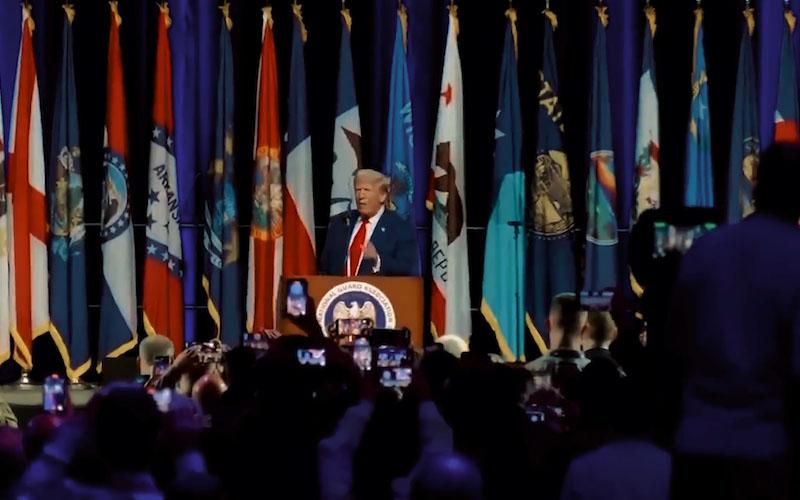
Trump stated that day that despite renewed clashes between US and Iranian forces near the Strait of Hormuz, negotiations with Iran on a provisional peace agreement would "result very well." This was Trump's first comment on the negotiations since Friday's White House Situation Room meeting, when he indicated he would make a "final decision." However, he postponed this decision due to ongoing discussions on details such as Iran's highly enriched uranium stockpile and how to reopen the Strait (which may require mine clearance first).
Earlier optimism—that some form of peace agreement was imminent and energy flows would resume—had led to the first monthly drop in crude oil prices this year. Brent crude has risen more than a quarter since the outbreak of war in late February, as the near-complete closure of this vital waterway has brought unprecedented volatility to the oil market.
"Neither Iran nor the United States has yielded or compromised on the red lines of the agreement," said Hamzeh Al Gaaod, an independent economist for the Middle East and North Africa. He added that oil prices may continue to experience a "statement cycle," oscillating between optimism and caution as new headlines emerge.
On June 1, Trump said that despite renewed clashes between U.S. and Iranian forces near the Strait of Hormuz, negotiations with Iran on a provisional peace agreement would "go very well." This was Trump's first comment on the negotiations since a White House situation room meeting on Friday, when he stated that a "final decision" would be made.
However, he postponed the decision because the two sides were still discussing details such as Iran's highly enriched uranium stockpile and how to reopen the Strait of Hormuz (which may require mine clearance first).
The semi-official Tasnim News Agency, which has close ties to the Iranian Revolutionary Guard, said on Sunday that both sides continued to propose amendments, but noted that the United States and Iran might ultimately reject these changes, leading to the breakdown of the agreement.
Haris Khurshid, chief investment officer at Karobaar Capital LP, said: “Even after the recent sell-off, oil prices remain at fairly high levels. This suggests that the market has not yet priced in peace, but rather a reduced probability of the worst-case scenario.”
In addition, the Iranian Islamic Revolutionary Guard Corps confirmed on June 1 that the US military recently attacked a communications tower on Sirik Island in Hormozgan Province. The Revolutionary Guard's Aerospace Force subsequently struck a US Air Force base that carried out the attack, destroying the intended target. The Revolutionary Guard warned that if such acts of aggression were to occur again, Iran's response would be "drastically different."
Meanwhile, Israel launched its largest invasion of Lebanon in 25 years, while Hezbollah, Iran's most powerful ally in the region, intensified its attacks on northern Israel.
Tel Aviv is not a party to the negotiations between Washington and Tehran, and it remains unclear whether it will agree to halt its war in Lebanon.
Chevron CEO Mike Worth said last Friday that about a quarter of the large non-Iranian oil tankers that were trapped in the Persian Gulf when the war with Iran broke out have quietly and slowly slipped out.
However, the recent attacks on several ships transiting the Strait of Hormuz highlight the “very real” risks faced by ship owners.
Goldman Sachs believes that oil prices face two-way risks as weak demand competes with supply losses caused by the Middle East wars.
According to a report dated May 31, weak oil sales in China and Western Europe in April added about $10 to the bank’s fourth-quarter forecast of $90 per barrel for Brent crude.
Brent crude oil is currently in a correction phase after an upward move on the daily chart. The price has fallen from a high of $119.45 and recently broke below several short-term moving averages. It is currently trading around $93.93, and the downward trend is obvious.
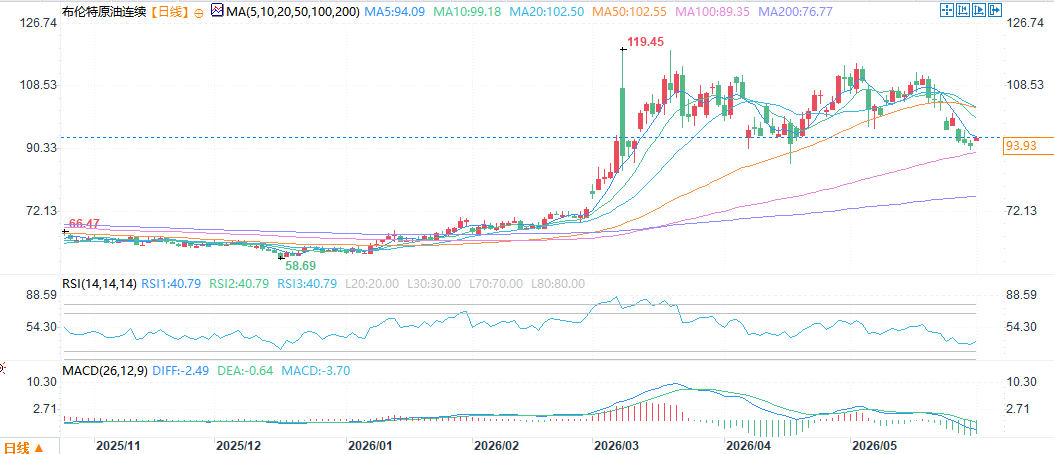
(Brent crude oil futures daily chart, source: FX678)
On the moving average system, the price has broken below the short- and medium-term moving averages such as MA5, MA10, MA20, and MA50, and is currently finding support near MA100. The short-term moving averages are in a bearish alignment, indicating strong resistance above. In terms of indicators, the RSI is currently at 40.79, having fallen back into the neutral-to-weak range but not yet entering oversold territory, suggesting that pullback momentum is still releasing. The MACD's DIFF and DEA lines continue to decline, with the histogram showing negative momentum and increasing strength, indicating that bearish forces are still dominating the market.
Overall, Brent crude oil faces significant short-term downward pressure. Key support levels to watch are the 100-day moving average (MA100) ($89.35) and the previous low, while resistance lies at the 20-day moving average (MA20) ($102.50). If it fails to quickly recover above the short-term moving averages, the downward trend is likely to continue, and further downside risks should be anticipated.
At 15:24 Beijing time on June 1, Brent crude oil futures were trading at $93.95 per barrel.
Trump stated that day that despite renewed clashes between US and Iranian forces near the Strait of Hormuz, negotiations with Iran on a provisional peace agreement would "result very well." This was Trump's first comment on the negotiations since Friday's White House Situation Room meeting, when he indicated he would make a "final decision." However, he postponed this decision due to ongoing discussions on details such as Iran's highly enriched uranium stockpile and how to reopen the Strait (which may require mine clearance first).
Optimism fades: "segmentation cycle" dominates price fluctuations
Earlier optimism—that some form of peace agreement was imminent and energy flows would resume—had led to the first monthly drop in crude oil prices this year. Brent crude has risen more than a quarter since the outbreak of war in late February, as the near-complete closure of this vital waterway has brought unprecedented volatility to the oil market.
"Neither Iran nor the United States has yielded or compromised on the red lines of the agreement," said Hamzeh Al Gaaod, an independent economist for the Middle East and North Africa. He added that oil prices may continue to experience a "statement cycle," oscillating between optimism and caution as new headlines emerge.
Trump is optimistic about peace talks.
On June 1, Trump said that despite renewed clashes between U.S. and Iranian forces near the Strait of Hormuz, negotiations with Iran on a provisional peace agreement would "go very well." This was Trump's first comment on the negotiations since a White House situation room meeting on Friday, when he stated that a "final decision" would be made.
However, he postponed the decision because the two sides were still discussing details such as Iran's highly enriched uranium stockpile and how to reopen the Strait of Hormuz (which may require mine clearance first).
Iran's position: Amendments are still being exchanged, and the agreement may collapse.
The semi-official Tasnim News Agency, which has close ties to the Iranian Revolutionary Guard, said on Sunday that both sides continued to propose amendments, but noted that the United States and Iran might ultimately reject these changes, leading to the breakdown of the agreement.
Haris Khurshid, chief investment officer at Karobaar Capital LP, said: “Even after the recent sell-off, oil prices remain at fairly high levels. This suggests that the market has not yet priced in peace, but rather a reduced probability of the worst-case scenario.”
In addition, the Iranian Islamic Revolutionary Guard Corps confirmed on June 1 that the US military recently attacked a communications tower on Sirik Island in Hormozgan Province. The Revolutionary Guard's Aerospace Force subsequently struck a US Air Force base that carried out the attack, destroying the intended target. The Revolutionary Guard warned that if such acts of aggression were to occur again, Iran's response would be "drastically different."
The Israeli factor: the deepest invasion of Lebanon in 25 years
Meanwhile, Israel launched its largest invasion of Lebanon in 25 years, while Hezbollah, Iran's most powerful ally in the region, intensified its attacks on northern Israel.
Tel Aviv is not a party to the negotiations between Washington and Tehran, and it remains unclear whether it will agree to halt its war in Lebanon.
Shipping risks: Tankers are still quietly leaving, but attacks continue.
Chevron CEO Mike Worth said last Friday that about a quarter of the large non-Iranian oil tankers that were trapped in the Persian Gulf when the war with Iran broke out have quietly and slowly slipped out.
However, the recent attacks on several ships transiting the Strait of Hormuz highlight the “very real” risks faced by ship owners.
Goldman Sachs' view: Two-way risks of weak demand and supply losses
Goldman Sachs believes that oil prices face two-way risks as weak demand competes with supply losses caused by the Middle East wars.
According to a report dated May 31, weak oil sales in China and Western Europe in April added about $10 to the bank’s fourth-quarter forecast of $90 per barrel for Brent crude.
Brent crude oil is currently in a correction phase after an upward move on the daily chart. The price has fallen from a high of $119.45 and recently broke below several short-term moving averages. It is currently trading around $93.93, and the downward trend is obvious.
(Brent crude oil futures daily chart, source: FX678)
On the moving average system, the price has broken below the short- and medium-term moving averages such as MA5, MA10, MA20, and MA50, and is currently finding support near MA100. The short-term moving averages are in a bearish alignment, indicating strong resistance above. In terms of indicators, the RSI is currently at 40.79, having fallen back into the neutral-to-weak range but not yet entering oversold territory, suggesting that pullback momentum is still releasing. The MACD's DIFF and DEA lines continue to decline, with the histogram showing negative momentum and increasing strength, indicating that bearish forces are still dominating the market.
Overall, Brent crude oil faces significant short-term downward pressure. Key support levels to watch are the 100-day moving average (MA100) ($89.35) and the previous low, while resistance lies at the 20-day moving average (MA20) ($102.50). If it fails to quickly recover above the short-term moving averages, the downward trend is likely to continue, and further downside risks should be anticipated.
At 15:24 Beijing time on June 1, Brent crude oil futures were trading at $93.95 per barrel.
- Risk Warning and Disclaimer
- The market involves risk, and trading may not be suitable for all investors. This article is for reference only and does not constitute personal investment advice, nor does it take into account certain users’ specific investment objectives, financial situation, or other needs. Any investment decisions made based on this information are at your own risk.