The US dollar is nearing a one-month high against the Japanese yen, approaching the 160 level. However, caution is advised as a potential pullback could occur.
2026-06-02 09:54:12
The foreign exchange market continued its recent strong dollar trend in Asian trading on Tuesday, with the USD/JPY pair consolidating around 159.70, just shy of a one-month high reached in the previous session. The pair has maintained an upward trend for the past four weeks, with bullish sentiment continuing to dominate the market, supported by safe-haven buying of the dollar and interest rate advantages.

The recent surge in the US dollar has been primarily driven by uncertainty surrounding the Middle East situation. Although US President Trump stated that the US and Iran remain in communication and anticipate a new agreement within the coming week on extending the ceasefire and restoring navigation in the Strait of Hormuz, significant uncertainty remains. Iran, on the other hand, has warned that it will suspend negotiations with the US should it suffer a new military strike.
Market concerns are growing that a further escalation of the conflict could impact global energy transport security. As one of the world's most important energy transport routes, the Strait of Hormuz handles approximately 20% of global seaborne crude oil shipments. Any news regarding a deterioration in the region quickly triggers increased risk aversion in the market and drives demand for traditional safe-haven assets such as the US dollar.
Meanwhile, the ongoing tensions in the Middle East are reigniting market concerns about global inflation. Rising energy prices not only increase production costs for businesses but may also slow the pace of inflation decline in major economies. Against this backdrop, markets are beginning to reassess the path of US monetary policy.
Market pricing data suggests that investors currently believe the Federal Reserve may maintain high interest rates for longer than previously expected. Some traders are even betting on the possibility of further policy tightening by the Fed in 2026. As a result, US Treasury yields have remained high, providing continued support for the US dollar.
Market analysts point out that if energy prices remain high, the decline in US inflation may be disrupted, and the Federal Reserve may extend its restrictive policy stance. However, the rise of the US dollar against the Japanese yen is not without its challenges. As the exchange rate approaches the 160 mark again, market concerns about potential intervention by the Japanese government have intensified. Looking back over the past two years, the Japanese Ministry of Finance has intervened in the market multiple times after the exchange rate approached or broke through key psychological levels to stabilize the yen. Therefore, some investors are choosing to remain cautious at the current price level.
Furthermore, the Bank of Japan's policy outlook also provides some support for the yen. The market widely expects the Bank of Japan to discuss the possibility of further interest rate hikes at its monetary policy meeting in mid-June. If the Bank of Japan signals further steps towards exiting its ultra-loose policy, the Japan-US interest rate differential may narrow marginally, thereby easing downward pressure on the yen.
From the perspective of global capital flows, the market is currently seeking a balance between the safe-haven appeal of the US dollar and the normalization of the Bank of Japan's policy. On the one hand, the situation in the Middle East and global economic uncertainty are driving capital inflows into the US dollar; on the other hand, the improved interest rate environment in Japan is helping to attract some capital back to the Japanese market.
This week, market focus will be on US labor market data. The Job Openings Survey (JOLTS) will be released first, while Friday's non-farm payroll report is considered a crucial event determining the short-term direction of the US dollar. If the job market continues to show resilience, it could further strengthen market expectations that the Federal Reserve will maintain high interest rates; conversely, it could trigger some dollar bulls to take profits.
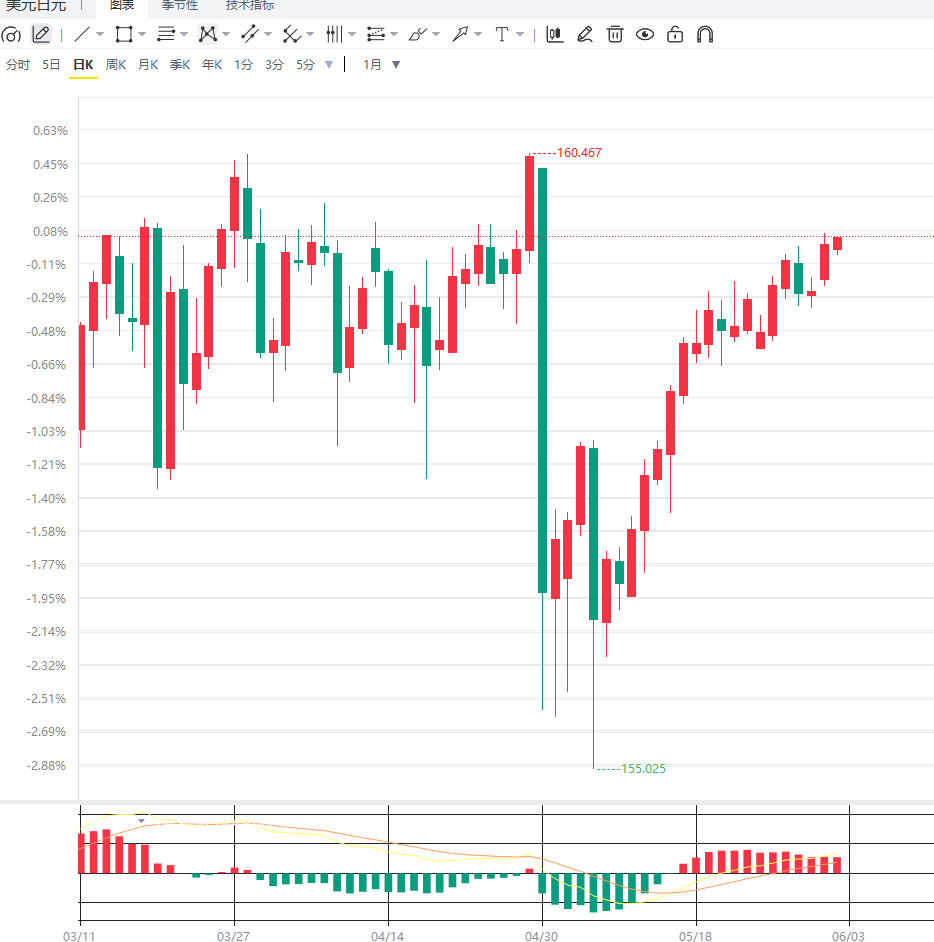
From the daily chart, the USD/JPY pair has maintained an upward structure since rebounding from around 154, and has now successfully broken through the key resistance area of 158. The MACD indicator remains in a golden cross state, with the red bars continuing to expand, indicating that the medium- to long-term upward momentum remains strong. The RSI indicator is running around 68, approaching the overbought zone but has not yet issued a clear reversal signal. Currently, the important resistance levels are located in the 160.00, 161.50, and 163.00 area; the support levels to watch are around 158.50, 157.20, and 155.80. Overall, the daily trend remains bullish.
Observing the 4-hour chart, USD/JPY has maintained a steady upward trend along an ascending channel recently, with the short-term moving average system remaining in a bullish alignment. The MACD histogram has slightly contracted, indicating that short-term upward momentum has slowed. The RSI indicator is around 65, showing that the market is still in a relatively strong range. If the price can effectively break through the 160 level, it is expected to further test the 161.50 area; if it falls below the 158.50 support due to expectations of intervention by the Japanese authorities, it may trigger a phase of pullback, but the overall upward trend will not be broken in the short term.
Editor's Note:
The current USD/JPY exchange rate is primarily driven by two main factors. Firstly, escalating tensions in the Middle East are boosting global safe-haven demand and reinforcing market expectations of a prolonged period of high US interest rates, thus supporting a stronger dollar. Secondly, the Bank of Japan's policy normalization and potential foreign exchange market intervention risks are limiting the exchange rate's upside potential. In the short term, the 160 level will be a key point of observation. If US employment data remains strong and Middle East risks do not ease, USD/JPY may have further upside potential; however, if the Bank of Japan releases a more hawkish signal or expectations of official intervention rise, market volatility could increase significantly.
The recent surge in the US dollar has been primarily driven by uncertainty surrounding the Middle East situation. Although US President Trump stated that the US and Iran remain in communication and anticipate a new agreement within the coming week on extending the ceasefire and restoring navigation in the Strait of Hormuz, significant uncertainty remains. Iran, on the other hand, has warned that it will suspend negotiations with the US should it suffer a new military strike.
Market concerns are growing that a further escalation of the conflict could impact global energy transport security. As one of the world's most important energy transport routes, the Strait of Hormuz handles approximately 20% of global seaborne crude oil shipments. Any news regarding a deterioration in the region quickly triggers increased risk aversion in the market and drives demand for traditional safe-haven assets such as the US dollar.
Meanwhile, the ongoing tensions in the Middle East are reigniting market concerns about global inflation. Rising energy prices not only increase production costs for businesses but may also slow the pace of inflation decline in major economies. Against this backdrop, markets are beginning to reassess the path of US monetary policy.
Market pricing data suggests that investors currently believe the Federal Reserve may maintain high interest rates for longer than previously expected. Some traders are even betting on the possibility of further policy tightening by the Fed in 2026. As a result, US Treasury yields have remained high, providing continued support for the US dollar.
Market analysts point out that if energy prices remain high, the decline in US inflation may be disrupted, and the Federal Reserve may extend its restrictive policy stance. However, the rise of the US dollar against the Japanese yen is not without its challenges. As the exchange rate approaches the 160 mark again, market concerns about potential intervention by the Japanese government have intensified. Looking back over the past two years, the Japanese Ministry of Finance has intervened in the market multiple times after the exchange rate approached or broke through key psychological levels to stabilize the yen. Therefore, some investors are choosing to remain cautious at the current price level.
Furthermore, the Bank of Japan's policy outlook also provides some support for the yen. The market widely expects the Bank of Japan to discuss the possibility of further interest rate hikes at its monetary policy meeting in mid-June. If the Bank of Japan signals further steps towards exiting its ultra-loose policy, the Japan-US interest rate differential may narrow marginally, thereby easing downward pressure on the yen.
From the perspective of global capital flows, the market is currently seeking a balance between the safe-haven appeal of the US dollar and the normalization of the Bank of Japan's policy. On the one hand, the situation in the Middle East and global economic uncertainty are driving capital inflows into the US dollar; on the other hand, the improved interest rate environment in Japan is helping to attract some capital back to the Japanese market.
This week, market focus will be on US labor market data. The Job Openings Survey (JOLTS) will be released first, while Friday's non-farm payroll report is considered a crucial event determining the short-term direction of the US dollar. If the job market continues to show resilience, it could further strengthen market expectations that the Federal Reserve will maintain high interest rates; conversely, it could trigger some dollar bulls to take profits.
From the daily chart, the USD/JPY pair has maintained an upward structure since rebounding from around 154, and has now successfully broken through the key resistance area of 158. The MACD indicator remains in a golden cross state, with the red bars continuing to expand, indicating that the medium- to long-term upward momentum remains strong. The RSI indicator is running around 68, approaching the overbought zone but has not yet issued a clear reversal signal. Currently, the important resistance levels are located in the 160.00, 161.50, and 163.00 area; the support levels to watch are around 158.50, 157.20, and 155.80. Overall, the daily trend remains bullish.
Observing the 4-hour chart, USD/JPY has maintained a steady upward trend along an ascending channel recently, with the short-term moving average system remaining in a bullish alignment. The MACD histogram has slightly contracted, indicating that short-term upward momentum has slowed. The RSI indicator is around 65, showing that the market is still in a relatively strong range. If the price can effectively break through the 160 level, it is expected to further test the 161.50 area; if it falls below the 158.50 support due to expectations of intervention by the Japanese authorities, it may trigger a phase of pullback, but the overall upward trend will not be broken in the short term.
Editor's Note:
The current USD/JPY exchange rate is primarily driven by two main factors. Firstly, escalating tensions in the Middle East are boosting global safe-haven demand and reinforcing market expectations of a prolonged period of high US interest rates, thus supporting a stronger dollar. Secondly, the Bank of Japan's policy normalization and potential foreign exchange market intervention risks are limiting the exchange rate's upside potential. In the short term, the 160 level will be a key point of observation. If US employment data remains strong and Middle East risks do not ease, USD/JPY may have further upside potential; however, if the Bank of Japan releases a more hawkish signal or expectations of official intervention rise, market volatility could increase significantly.
- Risk Warning and Disclaimer
- The market involves risk, and trading may not be suitable for all investors. This article is for reference only and does not constitute personal investment advice, nor does it take into account certain users’ specific investment objectives, financial situation, or other needs. Any investment decisions made based on this information are at your own risk.