Rising expectations of a Fed rate hike have dragged gold back to the lower end of its trading range, awaiting a directional move.
2026-06-02 10:06:27
International gold prices continued their downward trend in Asian trading on Tuesday, with spot gold (XAU/USD) falling back to around $4480. Despite persistent high geopolitical risks in the Middle East, gold failed to maintain its previous strong performance, instead experiencing a pullback due to a stronger dollar and a market reassessment of the Federal Reserve's policy path.

The core contradictions in the gold market are currently shifting. Previously, escalating tensions in the Middle East drove a large influx of safe-haven funds into the gold market, pushing gold prices to new historical highs. However, with rapidly rising energy prices, market focus is gradually shifting from safe-haven demand to inflation risks, putting new pressure on gold.
Latest reports indicate that Iran has decided to cease exchanging information with the United States through third parties and plans to take stronger measures in response to the ongoing ceasefire dispute. Meanwhile, tensions surrounding the Strait of Hormuz have escalated again, significantly increasing market concerns about the security of the global energy supply chain.
The Strait of Hormuz handles approximately 20% of global seaborne crude oil transport and a significant amount of liquefied natural gas exports; any potential disruption to it could rapidly drive up international energy prices. The energy market has reacted significantly. International oil prices previously rose by more than 4% in a single day, prompting a reassessment of global energy supply risks in the coming months. Against the backdrop of rebounding energy prices, investors are beginning to worry that the downward trend in global inflation may be disrupted.
Market analysts point out that rising energy costs are reigniting concerns about imported inflation, a key reason for the recent pressure on gold prices. Typically, increased geopolitical risks favor gold, but the current market logic has shifted. When rising energy prices threaten to drive inflation, the probability of the Federal Reserve maintaining high interest rates or even further tightening policy also increases. Rising interest rates typically increase the opportunity cost of holding gold, a non-interest-bearing asset, thus putting downward pressure on gold prices.
Financial markets are currently readjusting their expectations for Federal Reserve policy. The market believes that if inflation recurs in the coming months, the Fed may postpone rate cuts or even reconsider its rate hike path. Some market pricing indicates that investors expect a rate hike to remain possible before the end of the year. As rate hike expectations rise, US Treasury yields remain high, supporting the US dollar index. Since gold is priced in US dollars, a stronger dollar often reduces the attractiveness of gold for holders of other currencies, thus limiting the upside potential for gold.
However, the gold market is not entirely without support. The global economic outlook remains highly uncertain, and the situation in the Middle East has not shown any clear signs of easing, thus maintaining safe-haven demand. Furthermore, the US labor market data to be released this week could be a significant catalyst for gold's price movement. The market is widely focused on Friday's US non-farm payroll report. If the data shows signs of a slowdown in the job market, it could weaken market expectations for further tightening by the Federal Reserve, thereby putting downward pressure on the dollar and driving a gold rebound. Conversely, if the employment data continues to be strong, it could reinforce expectations of high interest rates, further suppressing gold prices.
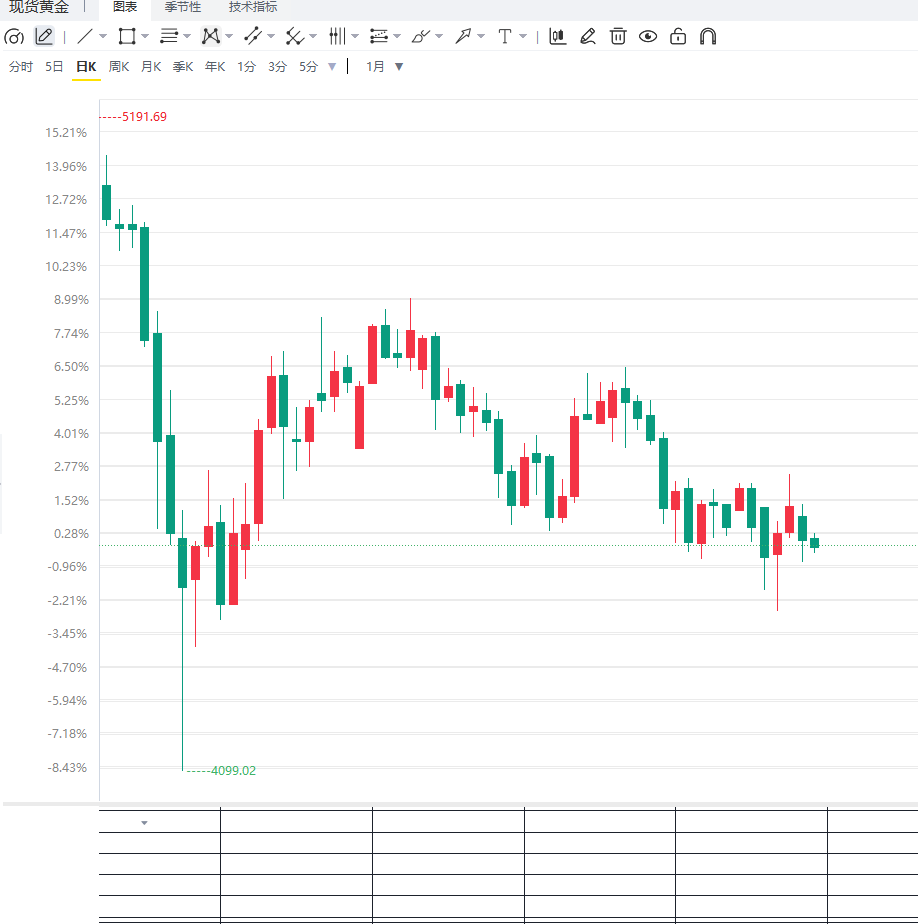
From the daily chart, gold has undergone a technical correction after reaching a record high, but the overall medium-to-long-term uptrend remains unchanged. The price is currently trading above the major moving average system, indicating that the bullish pattern remains intact. Although the MACD indicator shows signs of overbought conditions, a clear death cross signal has not yet formed. The RSI indicator has fallen from the overbought zone to around 65, suggesting that short-term market overheating is gradually dissipating. Key support levels to watch are $4450, $4380, and $4300; resistance levels are around $4520, $4580, and $4650. As long as the price remains above $4450, the medium-term uptrend will continue.
From the 4-hour chart, gold has recently entered a consolidation phase at higher levels. The MACD histogram continues to shrink, indicating a weakening of short-term upward momentum. The RSI indicator is hovering around 50, suggesting the market is in a state of equilibrium between bulls and bears. If the price breaks below the $4450 support area, it may further retrace to test the $4380 area in the short term; if it can regain a foothold above $4520, it is expected to resume its upward trend and challenge historical highs again. Overall, gold has entered a short-term consolidation phase, but the long-term structure remains bullish.
Editor's Note:
The gold market is currently at a critical juncture, balancing safe-haven demand and interest rate pressures. While the escalating tensions in the Middle East should have been beneficial for gold, rising energy prices and inflationary concerns have instead reinforced market expectations that the Federal Reserve will maintain high interest rates, becoming a significant reason for the recent gold price correction. From a medium- to long-term perspective, global geopolitical risks, central bank gold purchases, and slowing economic growth will continue to support gold. However, in the short term, expectations regarding Federal Reserve policy and US economic data may dominate market direction. This week's non-farm payroll report may be a crucial turning point in determining whether gold can return to an upward trend; investors should pay close attention to changes in employment, wages, and inflation expectations.
The core contradictions in the gold market are currently shifting. Previously, escalating tensions in the Middle East drove a large influx of safe-haven funds into the gold market, pushing gold prices to new historical highs. However, with rapidly rising energy prices, market focus is gradually shifting from safe-haven demand to inflation risks, putting new pressure on gold.
Latest reports indicate that Iran has decided to cease exchanging information with the United States through third parties and plans to take stronger measures in response to the ongoing ceasefire dispute. Meanwhile, tensions surrounding the Strait of Hormuz have escalated again, significantly increasing market concerns about the security of the global energy supply chain.
The Strait of Hormuz handles approximately 20% of global seaborne crude oil transport and a significant amount of liquefied natural gas exports; any potential disruption to it could rapidly drive up international energy prices. The energy market has reacted significantly. International oil prices previously rose by more than 4% in a single day, prompting a reassessment of global energy supply risks in the coming months. Against the backdrop of rebounding energy prices, investors are beginning to worry that the downward trend in global inflation may be disrupted.
Market analysts point out that rising energy costs are reigniting concerns about imported inflation, a key reason for the recent pressure on gold prices. Typically, increased geopolitical risks favor gold, but the current market logic has shifted. When rising energy prices threaten to drive inflation, the probability of the Federal Reserve maintaining high interest rates or even further tightening policy also increases. Rising interest rates typically increase the opportunity cost of holding gold, a non-interest-bearing asset, thus putting downward pressure on gold prices.
Financial markets are currently readjusting their expectations for Federal Reserve policy. The market believes that if inflation recurs in the coming months, the Fed may postpone rate cuts or even reconsider its rate hike path. Some market pricing indicates that investors expect a rate hike to remain possible before the end of the year. As rate hike expectations rise, US Treasury yields remain high, supporting the US dollar index. Since gold is priced in US dollars, a stronger dollar often reduces the attractiveness of gold for holders of other currencies, thus limiting the upside potential for gold.
However, the gold market is not entirely without support. The global economic outlook remains highly uncertain, and the situation in the Middle East has not shown any clear signs of easing, thus maintaining safe-haven demand. Furthermore, the US labor market data to be released this week could be a significant catalyst for gold's price movement. The market is widely focused on Friday's US non-farm payroll report. If the data shows signs of a slowdown in the job market, it could weaken market expectations for further tightening by the Federal Reserve, thereby putting downward pressure on the dollar and driving a gold rebound. Conversely, if the employment data continues to be strong, it could reinforce expectations of high interest rates, further suppressing gold prices.
From the daily chart, gold has undergone a technical correction after reaching a record high, but the overall medium-to-long-term uptrend remains unchanged. The price is currently trading above the major moving average system, indicating that the bullish pattern remains intact. Although the MACD indicator shows signs of overbought conditions, a clear death cross signal has not yet formed. The RSI indicator has fallen from the overbought zone to around 65, suggesting that short-term market overheating is gradually dissipating. Key support levels to watch are $4450, $4380, and $4300; resistance levels are around $4520, $4580, and $4650. As long as the price remains above $4450, the medium-term uptrend will continue.
From the 4-hour chart, gold has recently entered a consolidation phase at higher levels. The MACD histogram continues to shrink, indicating a weakening of short-term upward momentum. The RSI indicator is hovering around 50, suggesting the market is in a state of equilibrium between bulls and bears. If the price breaks below the $4450 support area, it may further retrace to test the $4380 area in the short term; if it can regain a foothold above $4520, it is expected to resume its upward trend and challenge historical highs again. Overall, gold has entered a short-term consolidation phase, but the long-term structure remains bullish.
Editor's Note:
The gold market is currently at a critical juncture, balancing safe-haven demand and interest rate pressures. While the escalating tensions in the Middle East should have been beneficial for gold, rising energy prices and inflationary concerns have instead reinforced market expectations that the Federal Reserve will maintain high interest rates, becoming a significant reason for the recent gold price correction. From a medium- to long-term perspective, global geopolitical risks, central bank gold purchases, and slowing economic growth will continue to support gold. However, in the short term, expectations regarding Federal Reserve policy and US economic data may dominate market direction. This week's non-farm payroll report may be a crucial turning point in determining whether gold can return to an upward trend; investors should pay close attention to changes in employment, wages, and inflation expectations.
- Risk Warning and Disclaimer
- The market involves risk, and trading may not be suitable for all investors. This article is for reference only and does not constitute personal investment advice, nor does it take into account certain users’ specific investment objectives, financial situation, or other needs. Any investment decisions made based on this information are at your own risk.