Crude oil trading alert: Geopolitical tensions are fluctuating, and oil prices are testing a range of resistance levels; be wary of another pullback.
2026-06-03 09:52:12
International crude oil prices continued their strong upward trend in Asian trading on Wednesday, with West Texas Intermediate (WTI) crude rising to around $95 per barrel, marking its third consecutive day of gains. The core factor driving this round of price increases was the renewed deterioration of the situation in the Middle East, leading to rapidly escalating concerns about global energy supply security.

Iran's ballistic missile launches toward neighboring Kuwait and Bahrain have further escalated regional tensions. Although the US military stated that the missiles missed their targets, the US subsequently retaliated against Iran's Qeshm Island. With the escalation of military confrontation, market concerns about the security of energy transport routes have increased significantly.
Meanwhile, peace talks between the United States and Iran have yet to make a breakthrough. US President Donald Trump continues to state that communication channels remain open, but information from Iran suggests that the prospects for negotiations remain uncertain. The main points of contention lie in issues related to Iran's nuclear program; the US demands legally binding written commitments from Iran, while Iran has previously only offered partial verbal assurances. This has significantly lowered market expectations for a ceasefire or a comprehensive agreement in the short term.
For the global energy market, the biggest risk at present is not simply military conflict, but the continued disruption of energy transportation systems. The market generally believes that if diplomatic negotiations remain deadlocked, global crude oil inventories may be forced into a phase of sustained depletion. Energy analysis agencies point out that although global commercial crude oil inventories are currently at a relatively safe level, if supply disruptions last for several months, the rate of inventory decline could be significantly faster than market expectations.
It is noteworthy that the Persian Gulf region remains one of the world's most important energy export hubs. Market estimates suggest that approximately 20% of global seaborne crude oil shipments and nearly 20% of liquefied natural gas trade flow through shipping lanes in the Persian Gulf. Any disruption to these shipments could have a profound impact on the global energy supply chain.
The market is also concerned about the simultaneous rise in shipping insurance costs, transportation costs, and energy companies' operating costs. Some international shipping companies have already begun adjusting their shipping routes, further exacerbating supply chain tensions. As transportation costs increase, refineries' procurement costs will also rise accordingly, potentially passing on to end-consumer markets.
From a macroeconomic perspective, the current surge in oil prices is reigniting market concerns about a global inflation rebound. While inflation levels in several major economies had previously begun to decline, the renewed rise in energy prices could delay this improvement. If oil prices remain above $90, several sectors, including transportation, manufacturing, and aviation, will face cost pressures.
Meanwhile, market assessments of the future monetary policy paths of major central banks are also shifting. Rising energy prices typically increase overall inflation, thus limiting the room for central banks to cut interest rates. Some investment institutions have begun to reassess their interest rate expectations for the next few quarters, believing that the high-interest-rate environment may persist longer than previously predicted.
Observing fund flows, both safe-haven and speculative funds are entering the energy market simultaneously. The recent significant increase in crude oil futures open interest indicates that investors are betting on further escalation of supply risks. Some large institutions believe that oil prices still have room for further upward movement in the short term, until geopolitical risks are resolved.
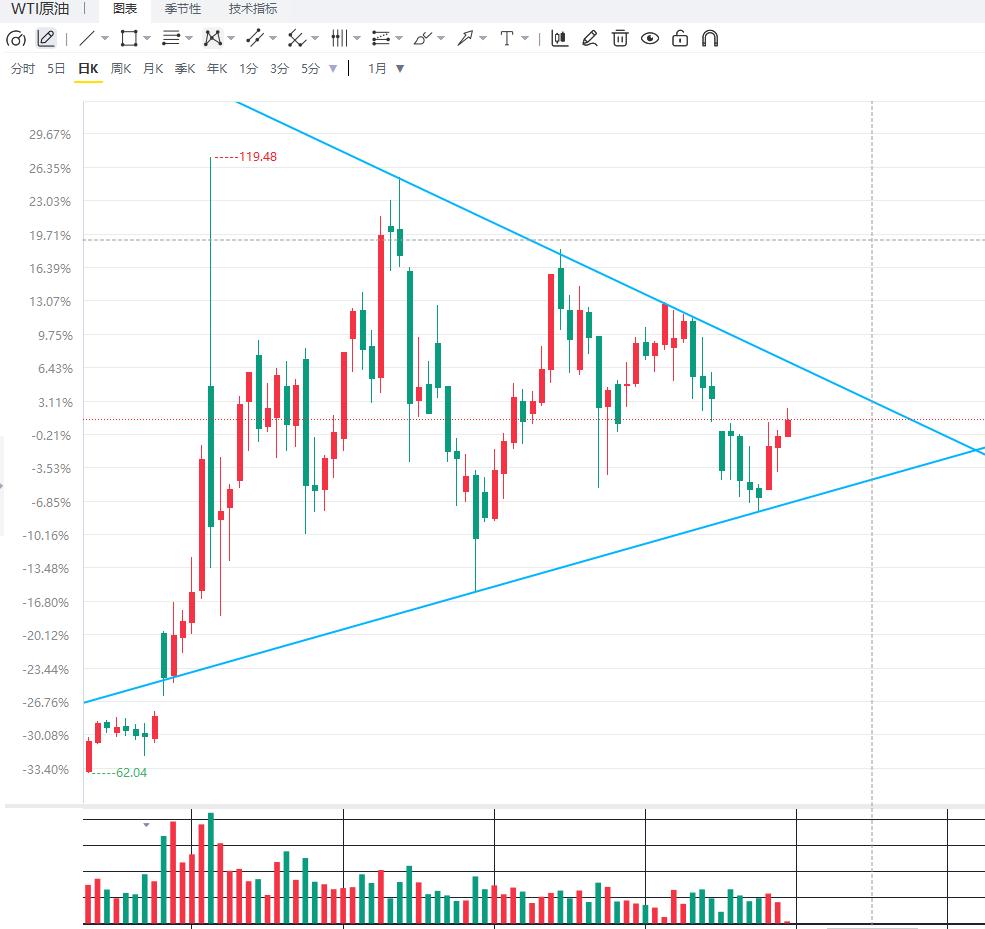
From a technical perspective, WTI crude oil has successfully broken through the key resistance area of $90 on the daily chart, and the price has returned to above the major moving average system, indicating that the medium-term uptrend has further strengthened. The MACD indicator continues to expand above the zero line, indicating that bullish momentum is still increasing. The $90 level has now become an important support area, while the short-term targets are pointing to the $98 and $100 psychological levels.
From a 4-hour chart perspective, prices maintain a clear upward channel structure. Although the RSI indicator has entered a relatively high range, no clear top divergence signal has yet appeared, indicating that market sentiment remains optimistic. If geopolitical risks continue to escalate, oil prices may challenge the area above $98; if negotiations make positive progress, a price pullback to test the $90 support level cannot be ruled out. However, in the current environment, the market as a whole still maintains expectations of tight supply.
Editor's Summary:
The current crude oil market has shifted its focus from simply demand growth to supply security risks. Escalating tensions in the Middle East have introduced new uncertainties into global energy transportation, while the lack of substantial progress in US-Iran negotiations has further amplified market anxieties. From a fundamental perspective, the supply risk premium has become the core driver of rising oil prices. In the coming weeks, shipping conditions in the Persian Gulf, global inventory changes, and the progress of diplomatic negotiations will determine the direction of oil prices. If supply disruptions last longer than the market expects, the probability of WTI crude oil challenging the $100 mark will significantly increase; however, the risk of a demand decline due to high oil prices dragging down global economic growth should also be noted.
Iran's ballistic missile launches toward neighboring Kuwait and Bahrain have further escalated regional tensions. Although the US military stated that the missiles missed their targets, the US subsequently retaliated against Iran's Qeshm Island. With the escalation of military confrontation, market concerns about the security of energy transport routes have increased significantly.
Meanwhile, peace talks between the United States and Iran have yet to make a breakthrough. US President Donald Trump continues to state that communication channels remain open, but information from Iran suggests that the prospects for negotiations remain uncertain. The main points of contention lie in issues related to Iran's nuclear program; the US demands legally binding written commitments from Iran, while Iran has previously only offered partial verbal assurances. This has significantly lowered market expectations for a ceasefire or a comprehensive agreement in the short term.
For the global energy market, the biggest risk at present is not simply military conflict, but the continued disruption of energy transportation systems. The market generally believes that if diplomatic negotiations remain deadlocked, global crude oil inventories may be forced into a phase of sustained depletion. Energy analysis agencies point out that although global commercial crude oil inventories are currently at a relatively safe level, if supply disruptions last for several months, the rate of inventory decline could be significantly faster than market expectations.
It is noteworthy that the Persian Gulf region remains one of the world's most important energy export hubs. Market estimates suggest that approximately 20% of global seaborne crude oil shipments and nearly 20% of liquefied natural gas trade flow through shipping lanes in the Persian Gulf. Any disruption to these shipments could have a profound impact on the global energy supply chain.
The market is also concerned about the simultaneous rise in shipping insurance costs, transportation costs, and energy companies' operating costs. Some international shipping companies have already begun adjusting their shipping routes, further exacerbating supply chain tensions. As transportation costs increase, refineries' procurement costs will also rise accordingly, potentially passing on to end-consumer markets.
From a macroeconomic perspective, the current surge in oil prices is reigniting market concerns about a global inflation rebound. While inflation levels in several major economies had previously begun to decline, the renewed rise in energy prices could delay this improvement. If oil prices remain above $90, several sectors, including transportation, manufacturing, and aviation, will face cost pressures.
Meanwhile, market assessments of the future monetary policy paths of major central banks are also shifting. Rising energy prices typically increase overall inflation, thus limiting the room for central banks to cut interest rates. Some investment institutions have begun to reassess their interest rate expectations for the next few quarters, believing that the high-interest-rate environment may persist longer than previously predicted.
Observing fund flows, both safe-haven and speculative funds are entering the energy market simultaneously. The recent significant increase in crude oil futures open interest indicates that investors are betting on further escalation of supply risks. Some large institutions believe that oil prices still have room for further upward movement in the short term, until geopolitical risks are resolved.
From a technical perspective, WTI crude oil has successfully broken through the key resistance area of $90 on the daily chart, and the price has returned to above the major moving average system, indicating that the medium-term uptrend has further strengthened. The MACD indicator continues to expand above the zero line, indicating that bullish momentum is still increasing. The $90 level has now become an important support area, while the short-term targets are pointing to the $98 and $100 psychological levels.
From a 4-hour chart perspective, prices maintain a clear upward channel structure. Although the RSI indicator has entered a relatively high range, no clear top divergence signal has yet appeared, indicating that market sentiment remains optimistic. If geopolitical risks continue to escalate, oil prices may challenge the area above $98; if negotiations make positive progress, a price pullback to test the $90 support level cannot be ruled out. However, in the current environment, the market as a whole still maintains expectations of tight supply.
Editor's Summary:
The current crude oil market has shifted its focus from simply demand growth to supply security risks. Escalating tensions in the Middle East have introduced new uncertainties into global energy transportation, while the lack of substantial progress in US-Iran negotiations has further amplified market anxieties. From a fundamental perspective, the supply risk premium has become the core driver of rising oil prices. In the coming weeks, shipping conditions in the Persian Gulf, global inventory changes, and the progress of diplomatic negotiations will determine the direction of oil prices. If supply disruptions last longer than the market expects, the probability of WTI crude oil challenging the $100 mark will significantly increase; however, the risk of a demand decline due to high oil prices dragging down global economic growth should also be noted.
- Risk Warning and Disclaimer
- The market involves risk, and trading may not be suitable for all investors. This article is for reference only and does not constitute personal investment advice, nor does it take into account certain users’ specific investment objectives, financial situation, or other needs. Any investment decisions made based on this information are at your own risk.