Expectations of higher interest rates from the Federal Reserve continue to rise, pushing the US dollar up to around 1.3850 against the Canadian dollar.
2026-06-03 13:42:02
The US dollar rose slightly against the Canadian dollar (USD/CAD) to around 1.3850 during Wednesday's Asian trading session, recovering some of the losses from the previous session. Although international oil prices continued to rise, the Canadian dollar, as a commodity currency, failed to benefit significantly. Increased market risk aversion and the overall strength of the US dollar were the core factors driving the exchange rate movement.

From an energy market perspective, WTI crude oil prices have risen for the third consecutive trading day, currently trading around $92.60. The main driver of the price increase is the further deterioration of the situation in the Middle East, with market concerns about global energy supply security continuing to escalate. Iran launched missiles towards Kuwait and Bahrain, which were subsequently intercepted by the US Central Command, which also launched countermeasures against Iran's Qeshm Island. As regional tensions escalate, investors' focus on the security of shipping in the Strait of Hormuz has increased significantly.
The market generally believes that if shipping through the Strait of Hormuz continues to be disrupted, the global energy supply chain will face greater pressure. Market estimates suggest that approximately 20% of global seaborne crude oil shipments and a significant amount of liquefied natural gas (LNG) shipments pass through this waterway. Any sustained disruption could drive up energy prices and increase global inflation risks. Theoretically, rising oil prices usually benefit the Canadian dollar. As one of the world's major energy exporters, high oil prices typically translate to increased export revenue and support for the Canadian economy. However, current market trends show that the Canadian dollar has not fully followed the upward trend of oil prices.
Analysts point out that the market is currently more focused on risk aversion and the outlook for US monetary policy than on simple energy price fluctuations. As the situation in the Middle East escalates, international capital continues to flow into dollar assets for safety, weakening the positive impact of rising oil prices on the Canadian dollar. Meanwhile, continued strong resilience in US economic data is further supporting the dollar. Latest data shows that the US ISM Manufacturing Purchasing Managers' Index rose to 54.0 in May, up from 52.7, marking the strongest expansion since May 2022.
Continued improvement in manufacturing activity indicates that the US economy remains robust. Increased business orders and expanded production provide important evidence that the US economy can withstand a high-interest-rate environment. In the labor market, JOLTS job openings in the US rose to 7.61 million in April, the highest level in nearly two years, while layoffs continued to decline. This shows that US businesses' demand for labor remains strong, and the labor market remains stable.
Strong manufacturing and employment data have prompted markets to reassess the future path of monetary policy. Investors generally believe that rising energy prices coupled with robust economic growth may slow the decline in US inflation, thus prompting the Federal Reserve to maintain high interest rates for a longer period. For the US dollar, high interest rate expectations mean that dollar-denominated assets will maintain an advantageous yield profile, thereby attracting international capital inflows. The recent continued support for the US dollar index is also a significant reason for the strength of the US dollar against the Canadian dollar.
The market is currently focusing on the upcoming US non-farm payrolls report. As a key indicator of the health of the US labor market, the non-farm payrolls data will directly influence market expectations regarding future interest rate policy. If job growth continues to be strong, it could further reinforce market expectations that the Federal Reserve will maintain a hawkish stance, driving the dollar higher. Conversely, if there are clear signs of a cooling job market, it could alleviate the recent dollar rally.
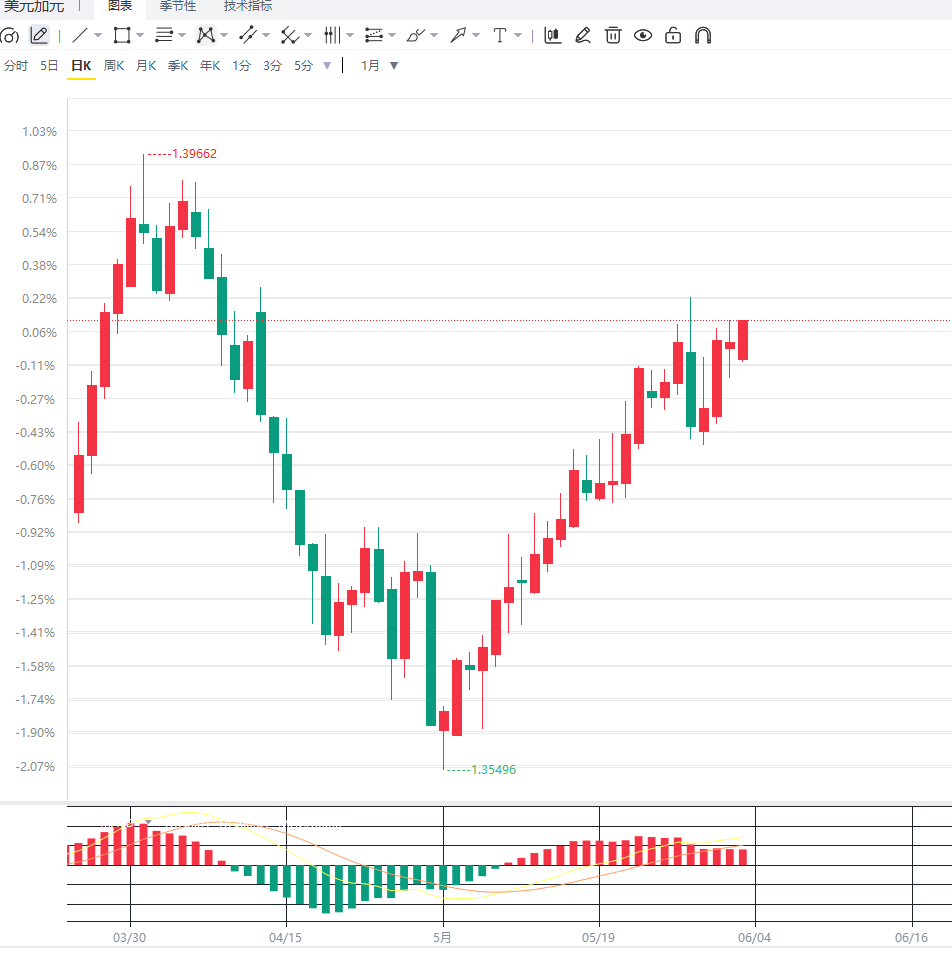
From a technical perspective, the USD/CAD daily chart maintains a slightly bullish bias. The price is currently trading steadily above major moving averages, indicating that the overall market trend remains bullish. In the short term, the 1.3800 area has become a key support level. Technical indicators show that the MACD remains above the zero line, and the bullish momentum has not shown any significant signs of weakening. If the price breaks through the resistance area near 1.3900, it may further challenge the 1.4000 level. Looking at the 4-hour chart, the exchange rate maintains an upward channel structure. The RSI indicator is in the neutral-to-bullish zone, indicating that there is still room for upward momentum to continue. Support levels to watch are 1.3800 and 1.3750, while key resistance levels are 1.3900 and 1.4000.
Editor's Summary:
The current USD/CAD exchange rate is driven by two main factors. Firstly, the escalating tensions in the Middle East have pushed up international oil prices, which should have supported the Canadian dollar. Secondly, strong US economic performance and rising expectations of higher interest rates from the Federal Reserve have provided stronger buying support for the US dollar. Currently, the US dollar's advantage outweighs the benefits to the Canadian dollar from rising oil prices. Going forward, market focus will be on US non-farm payroll data and developments in the Middle East. If the US economy continues to show resilience, the USD/CAD exchange rate may have further upside potential.
From an energy market perspective, WTI crude oil prices have risen for the third consecutive trading day, currently trading around $92.60. The main driver of the price increase is the further deterioration of the situation in the Middle East, with market concerns about global energy supply security continuing to escalate. Iran launched missiles towards Kuwait and Bahrain, which were subsequently intercepted by the US Central Command, which also launched countermeasures against Iran's Qeshm Island. As regional tensions escalate, investors' focus on the security of shipping in the Strait of Hormuz has increased significantly.
The market generally believes that if shipping through the Strait of Hormuz continues to be disrupted, the global energy supply chain will face greater pressure. Market estimates suggest that approximately 20% of global seaborne crude oil shipments and a significant amount of liquefied natural gas (LNG) shipments pass through this waterway. Any sustained disruption could drive up energy prices and increase global inflation risks. Theoretically, rising oil prices usually benefit the Canadian dollar. As one of the world's major energy exporters, high oil prices typically translate to increased export revenue and support for the Canadian economy. However, current market trends show that the Canadian dollar has not fully followed the upward trend of oil prices.
Analysts point out that the market is currently more focused on risk aversion and the outlook for US monetary policy than on simple energy price fluctuations. As the situation in the Middle East escalates, international capital continues to flow into dollar assets for safety, weakening the positive impact of rising oil prices on the Canadian dollar. Meanwhile, continued strong resilience in US economic data is further supporting the dollar. Latest data shows that the US ISM Manufacturing Purchasing Managers' Index rose to 54.0 in May, up from 52.7, marking the strongest expansion since May 2022.
Continued improvement in manufacturing activity indicates that the US economy remains robust. Increased business orders and expanded production provide important evidence that the US economy can withstand a high-interest-rate environment. In the labor market, JOLTS job openings in the US rose to 7.61 million in April, the highest level in nearly two years, while layoffs continued to decline. This shows that US businesses' demand for labor remains strong, and the labor market remains stable.
Strong manufacturing and employment data have prompted markets to reassess the future path of monetary policy. Investors generally believe that rising energy prices coupled with robust economic growth may slow the decline in US inflation, thus prompting the Federal Reserve to maintain high interest rates for a longer period. For the US dollar, high interest rate expectations mean that dollar-denominated assets will maintain an advantageous yield profile, thereby attracting international capital inflows. The recent continued support for the US dollar index is also a significant reason for the strength of the US dollar against the Canadian dollar.
The market is currently focusing on the upcoming US non-farm payrolls report. As a key indicator of the health of the US labor market, the non-farm payrolls data will directly influence market expectations regarding future interest rate policy. If job growth continues to be strong, it could further reinforce market expectations that the Federal Reserve will maintain a hawkish stance, driving the dollar higher. Conversely, if there are clear signs of a cooling job market, it could alleviate the recent dollar rally.
From a technical perspective, the USD/CAD daily chart maintains a slightly bullish bias. The price is currently trading steadily above major moving averages, indicating that the overall market trend remains bullish. In the short term, the 1.3800 area has become a key support level. Technical indicators show that the MACD remains above the zero line, and the bullish momentum has not shown any significant signs of weakening. If the price breaks through the resistance area near 1.3900, it may further challenge the 1.4000 level. Looking at the 4-hour chart, the exchange rate maintains an upward channel structure. The RSI indicator is in the neutral-to-bullish zone, indicating that there is still room for upward momentum to continue. Support levels to watch are 1.3800 and 1.3750, while key resistance levels are 1.3900 and 1.4000.
Editor's Summary:
The current USD/CAD exchange rate is driven by two main factors. Firstly, the escalating tensions in the Middle East have pushed up international oil prices, which should have supported the Canadian dollar. Secondly, strong US economic performance and rising expectations of higher interest rates from the Federal Reserve have provided stronger buying support for the US dollar. Currently, the US dollar's advantage outweighs the benefits to the Canadian dollar from rising oil prices. Going forward, market focus will be on US non-farm payroll data and developments in the Middle East. If the US economy continues to show resilience, the USD/CAD exchange rate may have further upside potential.
- Risk Warning and Disclaimer
- The market involves risk, and trading may not be suitable for all investors. This article is for reference only and does not constitute personal investment advice, nor does it take into account certain users’ specific investment objectives, financial situation, or other needs. Any investment decisions made based on this information are at your own risk.