Gold Trading Alert: Resurgence of Conflict in the Middle East Drives Up Inflation! Gold Prices Continue to Fall, Approaching the 200-Day Moving Average – Is This a "Reversal to Rebound" or the Start of a Bear Market?
2026-06-04 07:36:51
On Wednesday (June 3), the international gold market saw a significant pullback. Spot gold fell 1.2% to close at $4,434.25 per ounce, with the 200-day moving average currently providing support around $4,422.42 per ounce. US gold futures also fell 1.2% to $4,466.90. This decline is particularly striking given the recent high-level consolidation in gold prices. The core force driving the price decline was not a waning of safe-haven demand, but rather the "reverse logic" of the escalating conflict in the Middle East: war pushes up energy prices, exacerbates inflation expectations, and thus strengthens market bets that the Federal Reserve will maintain high interest rates or even raise them.
As a non-interest-bearing asset, gold is naturally under pressure in a high-interest-rate environment. When the US dollar strengthens and real yields rise, the opportunity cost of holding it increases significantly. This time, geopolitical conflicts have not only failed to bring traditional safe-haven buying, but have also exerted additional downward pressure on gold prices through the inflation transmission path.

Tensions in the Middle East have once again become a market focus. The United States conducted airstrikes near the Strait of Hormuz, while Iran launched an attack on Kuwait, damaging the local airport and causing casualties. Diplomatic efforts aimed at de-escalating the conflict have made limited progress, with negotiations between Iran and the United States stalled. Iranian Foreign Minister Araqchi stated explicitly that if Israel continues its actions against Beirut, Iran will resume hostilities.
David Meger, director of precious metals trading at High Ridge Futures, pointed out that volatility in the gold market is primarily driven by US-Iran tensions. As the conflict escalates, rising energy prices are inevitable, which will significantly push up global inflation expectations. Oil prices rebounded sharply on Wednesday, with US crude futures rising 2.4% to $96 a barrel and Brent crude reaching $97.77 a barrel. This energy shock is rapidly spreading to the service and manufacturing sectors.
In addition to geopolitical factors, strong domestic economic data in the United States has further solidified expectations of high interest rates.
Data from the Institute for Supply Management (ISM) shows that the service sector input price index rose to a near four-year high in May, with companies widely reporting soaring costs for oil-related products. Several companies cited increased fuel surcharges and resin costs, and planned to pass these costs on to consumers. The war, now three months old, has disrupted commodity supply chains far more than expected, a stark contrast to the "peace dividend" anticipated by the market before the conflict.
The ADP National Employment Report released Wednesday showed that U.S. private sector jobs increased by 122,000 in May, exceeding market expectations of 117,000. April data also showed a significant increase in job openings. The services PMI rose to 54.5 from 53.6, higher than expected, with both new orders and inventory indicators rebounding sharply. Factory orders surged 4.8% month-over-month, marking the largest increase in a considerable period.
New York Fed President Williams stated that current monetary policy is "just right," and the upside risks to inflation triggered by the Middle East conflict are not expected to be persistent, therefore there is no need to adjust interest rates immediately. However, the market did not fully buy into this. The dollar index rose 0.32% to 99.55 on Wednesday, hitting a near two-month high. The market has fully priced in the expectation of a Fed rate hike of about 19 basis points before December, and the probability of a 25 basis point rate hike before March next year has also been fully reflected.
SEB macro strategist Gustav Helgesson believes the upcoming May non-farm payroll data will be a key indicator. Strong data could prompt the Federal Reserve to shift from its current accommodative stance and begin discussions on a new rate hike cycle. This would support the US dollar while exerting continued downward pressure on gold.
On the other hand, the market also detected a glimmer of easing tensions. Following their latest talks, Lebanon and Israel issued a joint statement agreeing to restart dialogue, establish pilot zones for a ceasefire, and push for Hezbollah's withdrawal from south of the Litani River. If this process makes substantial progress, it could alleviate some energy supply concerns and provide temporary support for gold prices. In early Asian trading on June 4th, spot gold had already rebounded slightly to around $4450, indicating that some bargain hunters were beginning to enter the market.
In summary, gold is currently facing an unfavorable combination of factors: war driving up inflation → high interest rates → a stronger dollar, leading to continued pressure in the short term. The 10-year US Treasury yield rose to 4.489%, and the 2-year yield also increased, resulting in a steeper yield curve, reflecting the market's dual pricing of economic resilience and inflationary pressures.
However, from a longer-term perspective, gold's safe-haven and inflation-hedging properties have not disappeared. The protracted nature of the Middle East situation remains uncertain, and gold could regain favor should energy prices remain high or the conflict escalates further. Furthermore, medium- to long-term positive factors such as global central bank gold purchases and geopolitical fragmentation continue to play a role.
For investors, it's crucial to closely monitor Friday's US non-farm payroll data, Middle East diplomatic developments, and oil price movements. If the non-farm payroll data is stronger than expected and there's no substantial breakthrough in ceasefire negotiations, gold prices may continue to test lower support levels; conversely, if geopolitical tensions ease, gold is expected to experience a technical rebound.
The gold market is currently embroiled in a fierce interplay of geopolitical forces, inflation expectations, and monetary policy. Short-term volatility is intensifying, but its strategic allocation value remains significant. Investors should remain cautious and dynamically monitor key data and events.
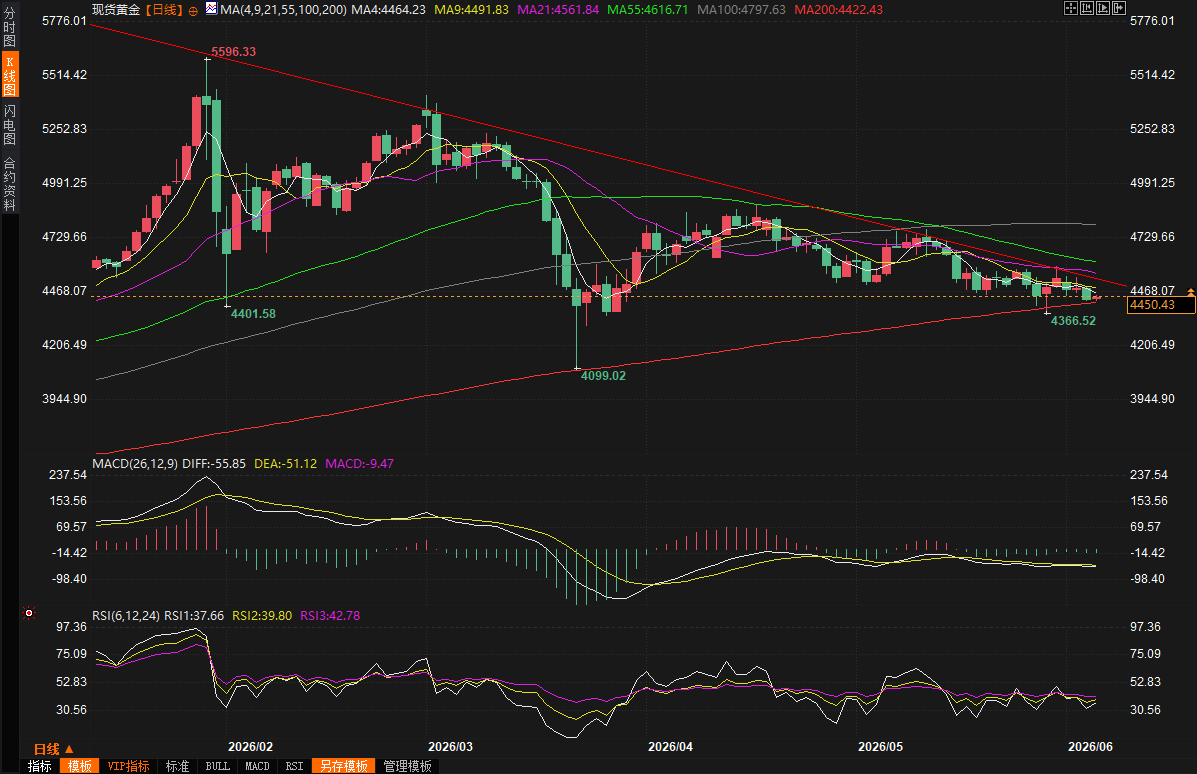
(Spot gold daily chart, source: FX678)
At 07:34 Beijing time, spot gold was trading at $4449.90 per ounce.
As a non-interest-bearing asset, gold is naturally under pressure in a high-interest-rate environment. When the US dollar strengthens and real yields rise, the opportunity cost of holding it increases significantly. This time, geopolitical conflicts have not only failed to bring traditional safe-haven buying, but have also exerted additional downward pressure on gold prices through the inflation transmission path.
Escalating tensions in the Middle East: The energy crisis and the specter of inflation return.
Tensions in the Middle East have once again become a market focus. The United States conducted airstrikes near the Strait of Hormuz, while Iran launched an attack on Kuwait, damaging the local airport and causing casualties. Diplomatic efforts aimed at de-escalating the conflict have made limited progress, with negotiations between Iran and the United States stalled. Iranian Foreign Minister Araqchi stated explicitly that if Israel continues its actions against Beirut, Iran will resume hostilities.
David Meger, director of precious metals trading at High Ridge Futures, pointed out that volatility in the gold market is primarily driven by US-Iran tensions. As the conflict escalates, rising energy prices are inevitable, which will significantly push up global inflation expectations. Oil prices rebounded sharply on Wednesday, with US crude futures rising 2.4% to $96 a barrel and Brent crude reaching $97.77 a barrel. This energy shock is rapidly spreading to the service and manufacturing sectors.
Strong US economic data: Expectations for a Fed rate cut reversed across the board.
In addition to geopolitical factors, strong domestic economic data in the United States has further solidified expectations of high interest rates.
Data from the Institute for Supply Management (ISM) shows that the service sector input price index rose to a near four-year high in May, with companies widely reporting soaring costs for oil-related products. Several companies cited increased fuel surcharges and resin costs, and planned to pass these costs on to consumers. The war, now three months old, has disrupted commodity supply chains far more than expected, a stark contrast to the "peace dividend" anticipated by the market before the conflict.
The ADP National Employment Report released Wednesday showed that U.S. private sector jobs increased by 122,000 in May, exceeding market expectations of 117,000. April data also showed a significant increase in job openings. The services PMI rose to 54.5 from 53.6, higher than expected, with both new orders and inventory indicators rebounding sharply. Factory orders surged 4.8% month-over-month, marking the largest increase in a considerable period.
New York Fed President Williams stated that current monetary policy is "just right," and the upside risks to inflation triggered by the Middle East conflict are not expected to be persistent, therefore there is no need to adjust interest rates immediately. However, the market did not fully buy into this. The dollar index rose 0.32% to 99.55 on Wednesday, hitting a near two-month high. The market has fully priced in the expectation of a Fed rate hike of about 19 basis points before December, and the probability of a 25 basis point rate hike before March next year has also been fully reflected.
SEB macro strategist Gustav Helgesson believes the upcoming May non-farm payroll data will be a key indicator. Strong data could prompt the Federal Reserve to shift from its current accommodative stance and begin discussions on a new rate hike cycle. This would support the US dollar while exerting continued downward pressure on gold.
Political variables: Congressional obstruction and the dawn of a ceasefire
Domestically, the Trump administration faces congressional resistance. On Wednesday, the House of Representatives passed a Democratic-led resolution by a vote of 215 to 208, requiring that military action against Iran cease without congressional approval. While the resolution is more symbolic than practically effective (it requires Senate approval and a two-thirds majority to overcome a veto), it reflects growing concerns within Congress about the continuation of the war.On the other hand, the market also detected a glimmer of easing tensions. Following their latest talks, Lebanon and Israel issued a joint statement agreeing to restart dialogue, establish pilot zones for a ceasefire, and push for Hezbollah's withdrawal from south of the Litani River. If this process makes substantial progress, it could alleviate some energy supply concerns and provide temporary support for gold prices. In early Asian trading on June 4th, spot gold had already rebounded slightly to around $4450, indicating that some bargain hunters were beginning to enter the market.
Gold Market Outlook: Short-term pressure, but still has investment value in the medium to long term.
In summary, gold is currently facing an unfavorable combination of factors: war driving up inflation → high interest rates → a stronger dollar, leading to continued pressure in the short term. The 10-year US Treasury yield rose to 4.489%, and the 2-year yield also increased, resulting in a steeper yield curve, reflecting the market's dual pricing of economic resilience and inflationary pressures.
However, from a longer-term perspective, gold's safe-haven and inflation-hedging properties have not disappeared. The protracted nature of the Middle East situation remains uncertain, and gold could regain favor should energy prices remain high or the conflict escalates further. Furthermore, medium- to long-term positive factors such as global central bank gold purchases and geopolitical fragmentation continue to play a role.
For investors, it's crucial to closely monitor Friday's US non-farm payroll data, Middle East diplomatic developments, and oil price movements. If the non-farm payroll data is stronger than expected and there's no substantial breakthrough in ceasefire negotiations, gold prices may continue to test lower support levels; conversely, if geopolitical tensions ease, gold is expected to experience a technical rebound.
The gold market is currently embroiled in a fierce interplay of geopolitical forces, inflation expectations, and monetary policy. Short-term volatility is intensifying, but its strategic allocation value remains significant. Investors should remain cautious and dynamically monitor key data and events.
(Spot gold daily chart, source: FX678)
At 07:34 Beijing time, spot gold was trading at $4449.90 per ounce.
- Risk Warning and Disclaimer
- The market involves risk, and trading may not be suitable for all investors. This article is for reference only and does not constitute personal investment advice, nor does it take into account certain users’ specific investment objectives, financial situation, or other needs. Any investment decisions made based on this information are at your own risk.