Gold continues to decline as US non-farm payroll data is released; be wary of a breakout.
2026-06-05 09:57:36
The international gold market was weak during Friday's Asian trading session. Spot gold (XAU/USD) retreated slightly after previous sharp fluctuations, currently trading around $4450 per ounce. The market is digesting safe-haven demand stemming from the Middle East situation, while closely watching the impact of the US non-farm payroll report on expectations for Federal Reserve policy.

The core factor driving recent volatility in the gold market remains the evolving situation in the Middle East. US President Trump stated that ceasefire negotiations between the US and Iran have entered the "final stage," raising market expectations for a potential agreement. However, Iranian Foreign Minister Araqchi stated that negotiations are currently stalled, with no breakthroughs achieved on key issues.
Meanwhile, tensions in the Middle East have escalated further. The US military action against an oil tanker bound for Iran further exacerbated regional tensions. Although the market remains hopeful for a diplomatic solution, the reality indicates that the risk of conflict has not been completely eliminated. For the gold market, geopolitical risks typically enhance the appeal of safe-haven assets. However, the market reaction this time has been relatively complex. Investors are beginning to worry that a persistently tight energy supply environment could push up global inflation, thereby prompting major central banks to maintain high interest rate policies for an extended period.
As a non-fixed-income asset, gold's price movements are often influenced by changes in real interest rates. When the market expects interest rates to remain high or even rise further, the opportunity cost of holding gold increases, thereby weakening its appeal. Therefore, although safe-haven demand remains, high interest rate expectations are partially offsetting the support gold has received.
Market analyst Bart Melek stated that market inflation expectations have risen significantly due to increased inflationary pressures stemming from supply shocks. As a result, US Treasury yields have risen across the board, the US dollar has remained strong, and the market has begun discussing the possibility of the Federal Reserve tightening policy again by the end of 2026.
Currently, US Treasury yields remain at relatively high levels. Rising yields not only enhance the attractiveness of dollar-denominated assets but also cause some funds to flow from the gold market to the fixed-income market. At the same time, the strong dollar index also puts downward pressure on dollar-denominated gold.
Aside from geopolitical factors, investors are currently focused on the upcoming US May employment data. The market expects US non-farm payrolls to increase by approximately 85,000 in May, significantly lower than in previous months; meanwhile, the unemployment rate is expected to remain around 4.3%.
Employment market data is considered a crucial indicator of the health of the US economy and a key reference for the Federal Reserve in formulating monetary policy. If job growth significantly falls short of expectations, it could intensify market concerns about an economic slowdown, thereby weakening the dollar and driving a gold rebound. Conversely, if the job market continues to show resilience, it could further strengthen expectations of prolonged high interest rates, creating new downward pressure on gold.
From a market sentiment perspective, the gold market is currently in a phase of mixed bullish and bearish factors. On the one hand, the escalating situation in the Middle East continues to stimulate safe-haven demand; on the other hand, rising inflation risks and interest rate expectations in the United States are putting downward pressure on gold. Therefore, the market is generally in a cautious wait-and-see state ahead of important data releases.
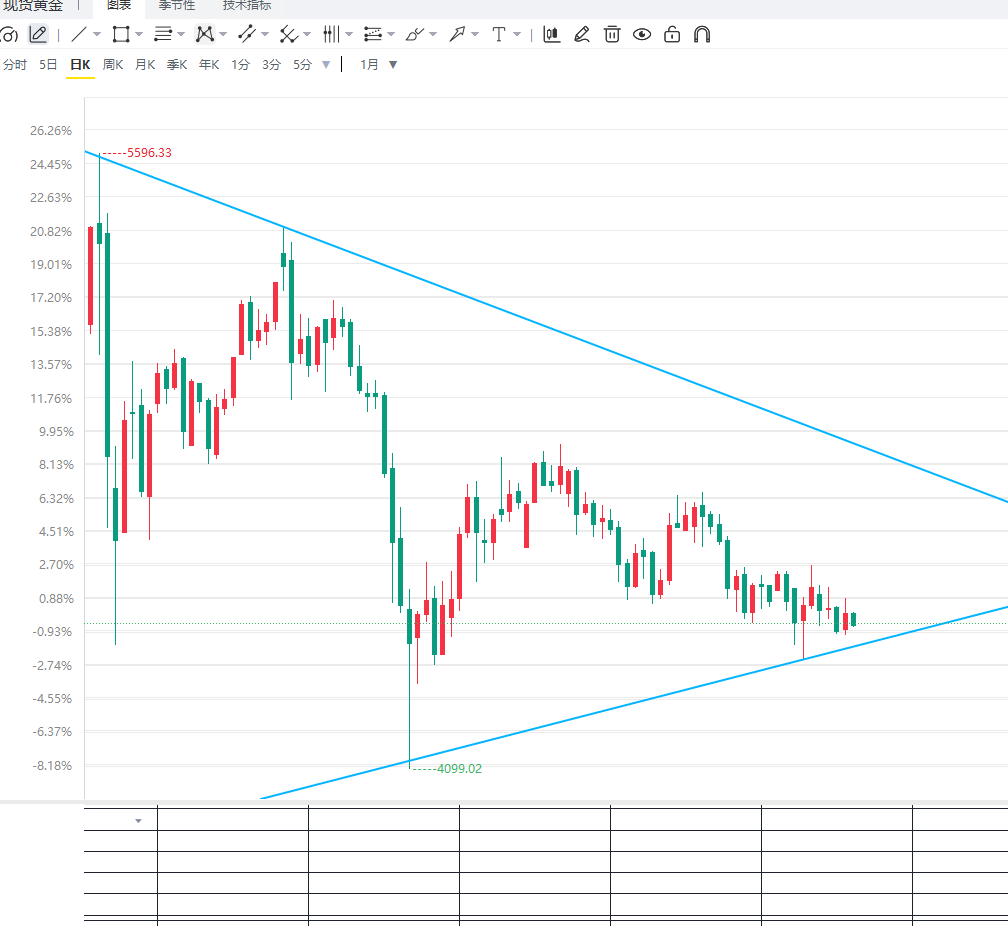
From a daily chart perspective, gold maintains its medium-term bullish trend, but has entered a short-term consolidation phase at higher levels. The price remains above major moving averages, indicating that the medium-to-long-term bullish pattern remains intact. Currently, the key support level is around $4420, with a secondary support zone at $4380; key resistance levels are at the psychological level of $4500 and around $4550. While the MACD indicator remains positive, the red bars are shortening, indicating weakening upward momentum. The RSI indicator is in the mid-to-high range, suggesting the market remains relatively strong, but short-term upward momentum is insufficient.
From a 4-hour chart perspective, gold prices have recently formed a wide-range consolidation pattern. The short-term moving average system is gradually flattening, indicating that the market direction is still unclear. If a sustained break above the $4500 resistance area occurs, there is a chance to further challenge the highs near $4550 or even $4600; conversely, a break below the $4420 support could trigger a technical pullback, further testing the $4380-$4350 area. The 4-hour MACD indicator shows signs of overbought conditions, suggesting that short-term volatility is expected to remain high.
Editor's Summary : The current gold market is simultaneously influenced by both safe-haven demand and high interest rate expectations. Uncertainty surrounding the Middle East situation provides continued support for gold, but market expectations of rising inflation and the Federal Reserve maintaining high interest rates limit further price increases. In the short term, the US non-farm payroll report will be a crucial catalyst for market direction. If the employment data is significantly weaker than expected, the dollar may face downward pressure, and gold could potentially retest the $4,500 level; conversely, if the job market remains strong, the high interest rate environment may further suppress gold's performance. From a medium- to long-term perspective, global geopolitical risks, central bank gold purchases, and expectations of a global economic slowdown remain important supports for the gold market, but short-term volatility is expected to increase significantly. Investors should pay close attention to the market impact of US economic data and changes in the Middle East situation.
The core factor driving recent volatility in the gold market remains the evolving situation in the Middle East. US President Trump stated that ceasefire negotiations between the US and Iran have entered the "final stage," raising market expectations for a potential agreement. However, Iranian Foreign Minister Araqchi stated that negotiations are currently stalled, with no breakthroughs achieved on key issues.
Meanwhile, tensions in the Middle East have escalated further. The US military action against an oil tanker bound for Iran further exacerbated regional tensions. Although the market remains hopeful for a diplomatic solution, the reality indicates that the risk of conflict has not been completely eliminated. For the gold market, geopolitical risks typically enhance the appeal of safe-haven assets. However, the market reaction this time has been relatively complex. Investors are beginning to worry that a persistently tight energy supply environment could push up global inflation, thereby prompting major central banks to maintain high interest rate policies for an extended period.
As a non-fixed-income asset, gold's price movements are often influenced by changes in real interest rates. When the market expects interest rates to remain high or even rise further, the opportunity cost of holding gold increases, thereby weakening its appeal. Therefore, although safe-haven demand remains, high interest rate expectations are partially offsetting the support gold has received.
Market analyst Bart Melek stated that market inflation expectations have risen significantly due to increased inflationary pressures stemming from supply shocks. As a result, US Treasury yields have risen across the board, the US dollar has remained strong, and the market has begun discussing the possibility of the Federal Reserve tightening policy again by the end of 2026.
Currently, US Treasury yields remain at relatively high levels. Rising yields not only enhance the attractiveness of dollar-denominated assets but also cause some funds to flow from the gold market to the fixed-income market. At the same time, the strong dollar index also puts downward pressure on dollar-denominated gold.
Aside from geopolitical factors, investors are currently focused on the upcoming US May employment data. The market expects US non-farm payrolls to increase by approximately 85,000 in May, significantly lower than in previous months; meanwhile, the unemployment rate is expected to remain around 4.3%.
Employment market data is considered a crucial indicator of the health of the US economy and a key reference for the Federal Reserve in formulating monetary policy. If job growth significantly falls short of expectations, it could intensify market concerns about an economic slowdown, thereby weakening the dollar and driving a gold rebound. Conversely, if the job market continues to show resilience, it could further strengthen expectations of prolonged high interest rates, creating new downward pressure on gold.
From a market sentiment perspective, the gold market is currently in a phase of mixed bullish and bearish factors. On the one hand, the escalating situation in the Middle East continues to stimulate safe-haven demand; on the other hand, rising inflation risks and interest rate expectations in the United States are putting downward pressure on gold. Therefore, the market is generally in a cautious wait-and-see state ahead of important data releases.
From a daily chart perspective, gold maintains its medium-term bullish trend, but has entered a short-term consolidation phase at higher levels. The price remains above major moving averages, indicating that the medium-to-long-term bullish pattern remains intact. Currently, the key support level is around $4420, with a secondary support zone at $4380; key resistance levels are at the psychological level of $4500 and around $4550. While the MACD indicator remains positive, the red bars are shortening, indicating weakening upward momentum. The RSI indicator is in the mid-to-high range, suggesting the market remains relatively strong, but short-term upward momentum is insufficient.
From a 4-hour chart perspective, gold prices have recently formed a wide-range consolidation pattern. The short-term moving average system is gradually flattening, indicating that the market direction is still unclear. If a sustained break above the $4500 resistance area occurs, there is a chance to further challenge the highs near $4550 or even $4600; conversely, a break below the $4420 support could trigger a technical pullback, further testing the $4380-$4350 area. The 4-hour MACD indicator shows signs of overbought conditions, suggesting that short-term volatility is expected to remain high.
Editor's Summary : The current gold market is simultaneously influenced by both safe-haven demand and high interest rate expectations. Uncertainty surrounding the Middle East situation provides continued support for gold, but market expectations of rising inflation and the Federal Reserve maintaining high interest rates limit further price increases. In the short term, the US non-farm payroll report will be a crucial catalyst for market direction. If the employment data is significantly weaker than expected, the dollar may face downward pressure, and gold could potentially retest the $4,500 level; conversely, if the job market remains strong, the high interest rate environment may further suppress gold's performance. From a medium- to long-term perspective, global geopolitical risks, central bank gold purchases, and expectations of a global economic slowdown remain important supports for the gold market, but short-term volatility is expected to increase significantly. Investors should pay close attention to the market impact of US economic data and changes in the Middle East situation.
- Risk Warning and Disclaimer
- The market involves risk, and trading may not be suitable for all investors. This article is for reference only and does not constitute personal investment advice, nor does it take into account certain users’ specific investment objectives, financial situation, or other needs. Any investment decisions made based on this information are at your own risk.