The Fed's hawkish stance reinforces expectations of high interest rates, causing silver to decline continuously; be wary of a breakout.
2026-06-05 14:22:02
On Friday during Asian trading hours, spot silver (XAG/USD) continued its downward trend, falling by about 3% to around $71.80. As the market reassessed the future policy path of the Federal Reserve, and expectations of high interest rates continued to rise, the silver market faced significant selling pressure.
The core factor influencing the precious metals market recently has been the outlook for US monetary policy. With persistent inflationary pressures in the US, several Federal Reserve officials have recently been sending hawkish signals, reinforcing market expectations that interest rates will remain high for an extended period.
Speaking at the Kansas City Economic Forum, Kansas City Federal Reserve President Schmid stated that the biggest risk facing the U.S. economy remains inflation. He pointed out that the Fed's key choices are to continue its patient observation or to further raise interest rates to ensure inflation returns to its target level.
This statement has sparked market concerns about further tightening of policies. For silver, a high-interest-rate environment is generally detrimental to price performance. Since silver itself does not generate interest income, when market interest rates remain high, investors tend to allocate to higher-yielding bonds and money market instruments, thus reducing the attractiveness of precious metals.
Meanwhile, persistently high U.S. Treasury yields have further increased the opportunity cost of holding silver. Rising yields typically enhance the attractiveness of dollar-denominated assets, putting significant pressure on the precious metals market, including silver. Besides interest rate factors, the market's current focus is on the upcoming U.S. May non-farm payroll report. As a crucial indicator of the U.S. economic and labor market conditions, the non-farm payroll data will directly influence market expectations regarding the Federal Reserve's policy path.
The market generally expects the US to add approximately 85,000 non-farm payroll jobs in May, down from 115,000 in April; the unemployment rate is expected to remain unchanged at 4.3%. Meanwhile, the annualized rate of increase in average hourly earnings is expected to fall to 3.4% from the previous 3.6%. Analysts believe that if the employment data continues to be strong, it will further strengthen expectations of the resilience of the US economy and drive the market to increase bets on the Federal Reserve maintaining high interest rates or even further tightening policy. In this scenario, the US dollar index and US Treasury yields may continue to receive support, thus putting new pressure on silver.
However, even if the employment data is slightly weaker than expected, the market's room for adjustment in its expectations regarding Federal Reserve policy may be relatively limited. This is because Fed officials are currently more focused on inflation risks than on a slowdown in economic growth. Therefore, unless there is a significant deterioration in the job market, the market is likely to maintain its assessment of a high-interest-rate environment. From a market sentiment perspective, the silver market is currently in a phase dominated by interest rate expectations. Investors are highly sensitive to future policy directions, and any changes in data related to inflation and employment could trigger significant price fluctuations.
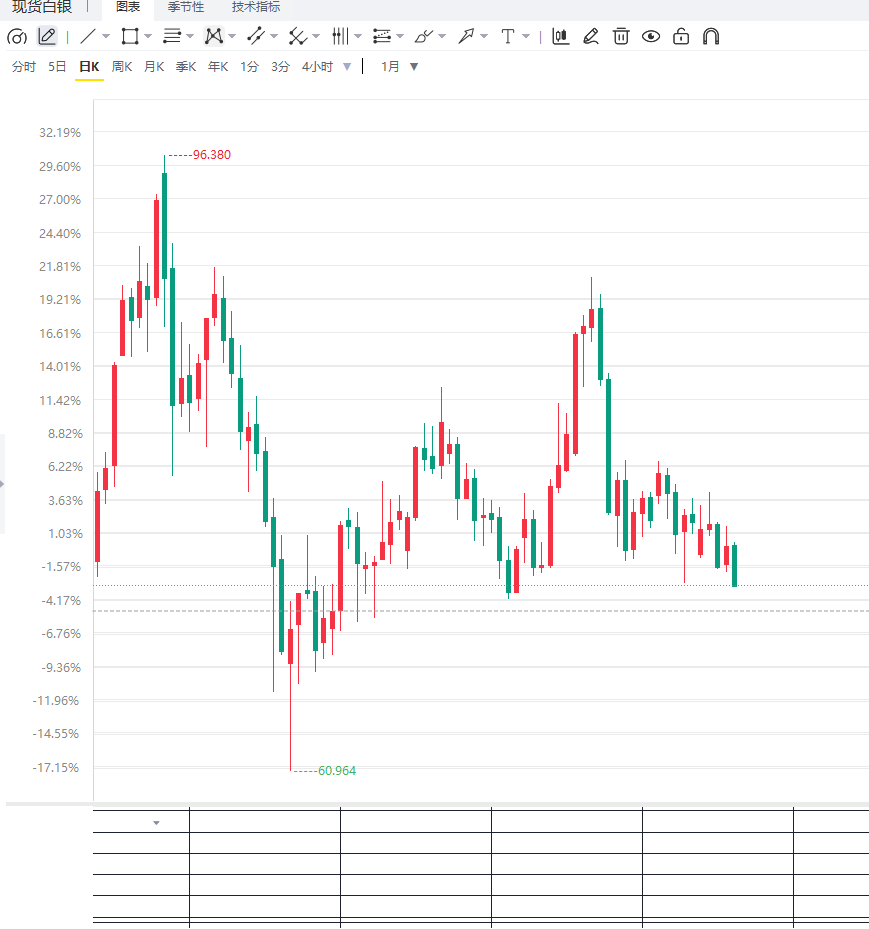
From a daily chart perspective, silver experienced a significant technical correction after its previous rapid rise, with prices breaking below short-term moving average support and entering a high-level correction phase. Currently, the area around 71.50 forms a crucial support zone; a break below this level could lead to a further test of the 70.00 psychological level. On the upside, key resistance areas to watch are around 74.50 and 76.00. The MACD indicator shows signs of a bearish crossover at high levels, with the red bars continuously shortening, indicating a significant weakening of bullish momentum. The RSI indicator has rapidly retreated from overbought territory, reflecting increased short-term downward pressure in the market.
From a 4-hour chart perspective, silver has formed a phase of pullback, and the short-term moving average system is beginning to weaken. Currently, the price is fluctuating around $72. If it breaks below the $71.50 support level, it could open up further downside potential; conversely, if it regains a foothold above $74.50, it could alleviate the downward pressure and retest the $76 area. The short-term MACD remains bearish, indicating that the short-term trend remains weak and consolidating.
Editor's Viewpoint : The silver market is currently facing significant pressure from the Federal Reserve's hawkish stance and high interest rate expectations. As inflation risks regain market focus, investors are reassessing the future path of monetary policy, putting overall pressure on the precious metals market. Meanwhile, the continued strength of US Treasury yields and the US dollar further diminishes the attractiveness of silver. In the short term, the US non-farm payroll report will be a crucial catalyst for the market's next phase. If the job market continues to be strong, market expectations for a prolonged period of high interest rates may intensify, thus creating new pressure on silver; conversely, if the employment data weakens significantly, it may provide a chance for a short-term rebound in silver prices. From a medium- to long-term perspective, changes in interest rate expectations, the global economic growth outlook, and industrial demand will continue to jointly determine the future direction of silver prices.
The core factor influencing the precious metals market recently has been the outlook for US monetary policy. With persistent inflationary pressures in the US, several Federal Reserve officials have recently been sending hawkish signals, reinforcing market expectations that interest rates will remain high for an extended period.
Speaking at the Kansas City Economic Forum, Kansas City Federal Reserve President Schmid stated that the biggest risk facing the U.S. economy remains inflation. He pointed out that the Fed's key choices are to continue its patient observation or to further raise interest rates to ensure inflation returns to its target level.
This statement has sparked market concerns about further tightening of policies. For silver, a high-interest-rate environment is generally detrimental to price performance. Since silver itself does not generate interest income, when market interest rates remain high, investors tend to allocate to higher-yielding bonds and money market instruments, thus reducing the attractiveness of precious metals.
Meanwhile, persistently high U.S. Treasury yields have further increased the opportunity cost of holding silver. Rising yields typically enhance the attractiveness of dollar-denominated assets, putting significant pressure on the precious metals market, including silver. Besides interest rate factors, the market's current focus is on the upcoming U.S. May non-farm payroll report. As a crucial indicator of the U.S. economic and labor market conditions, the non-farm payroll data will directly influence market expectations regarding the Federal Reserve's policy path.
The market generally expects the US to add approximately 85,000 non-farm payroll jobs in May, down from 115,000 in April; the unemployment rate is expected to remain unchanged at 4.3%. Meanwhile, the annualized rate of increase in average hourly earnings is expected to fall to 3.4% from the previous 3.6%. Analysts believe that if the employment data continues to be strong, it will further strengthen expectations of the resilience of the US economy and drive the market to increase bets on the Federal Reserve maintaining high interest rates or even further tightening policy. In this scenario, the US dollar index and US Treasury yields may continue to receive support, thus putting new pressure on silver.
However, even if the employment data is slightly weaker than expected, the market's room for adjustment in its expectations regarding Federal Reserve policy may be relatively limited. This is because Fed officials are currently more focused on inflation risks than on a slowdown in economic growth. Therefore, unless there is a significant deterioration in the job market, the market is likely to maintain its assessment of a high-interest-rate environment. From a market sentiment perspective, the silver market is currently in a phase dominated by interest rate expectations. Investors are highly sensitive to future policy directions, and any changes in data related to inflation and employment could trigger significant price fluctuations.
From a daily chart perspective, silver experienced a significant technical correction after its previous rapid rise, with prices breaking below short-term moving average support and entering a high-level correction phase. Currently, the area around 71.50 forms a crucial support zone; a break below this level could lead to a further test of the 70.00 psychological level. On the upside, key resistance areas to watch are around 74.50 and 76.00. The MACD indicator shows signs of a bearish crossover at high levels, with the red bars continuously shortening, indicating a significant weakening of bullish momentum. The RSI indicator has rapidly retreated from overbought territory, reflecting increased short-term downward pressure in the market.
From a 4-hour chart perspective, silver has formed a phase of pullback, and the short-term moving average system is beginning to weaken. Currently, the price is fluctuating around $72. If it breaks below the $71.50 support level, it could open up further downside potential; conversely, if it regains a foothold above $74.50, it could alleviate the downward pressure and retest the $76 area. The short-term MACD remains bearish, indicating that the short-term trend remains weak and consolidating.
Editor's Viewpoint : The silver market is currently facing significant pressure from the Federal Reserve's hawkish stance and high interest rate expectations. As inflation risks regain market focus, investors are reassessing the future path of monetary policy, putting overall pressure on the precious metals market. Meanwhile, the continued strength of US Treasury yields and the US dollar further diminishes the attractiveness of silver. In the short term, the US non-farm payroll report will be a crucial catalyst for the market's next phase. If the job market continues to be strong, market expectations for a prolonged period of high interest rates may intensify, thus creating new pressure on silver; conversely, if the employment data weakens significantly, it may provide a chance for a short-term rebound in silver prices. From a medium- to long-term perspective, changes in interest rate expectations, the global economic growth outlook, and industrial demand will continue to jointly determine the future direction of silver prices.
- Risk Warning and Disclaimer
- The market involves risk, and trading may not be suitable for all investors. This article is for reference only and does not constitute personal investment advice, nor does it take into account certain users’ specific investment objectives, financial situation, or other needs. Any investment decisions made based on this information are at your own risk.