In-depth analysis of gold and silver market trends: Short-term plunge does not change the long-term bull market.
2026-06-08 11:05:46
Last Friday (June 5th), the gold and silver markets were under pressure, with most precious metal investors experiencing reduced returns on their holdings, and market pessimism spreading in the short term. This round of precious metal price movements saw a significant correction, with gold prices falling below key technical support levels, and short-term trading risks continuing to rise. However, from a macroeconomic and long-term perspective, the core fundamental logic supporting higher gold and silver prices remains unchanged, and the long-term positive market outlook remains solid.
The US non-farm payroll data for May, released last Friday, far exceeded expectations, completely reversing expectations of a Fed rate cut. The precious metals market experienced a concentrated sell-off, with spot gold prices breaking through the key support level of the 200-day moving average, which is closely watched by the industry. The technical trend weakened completely, with a drop of 3.3% on the day, closing at $4,327.46 per ounce.
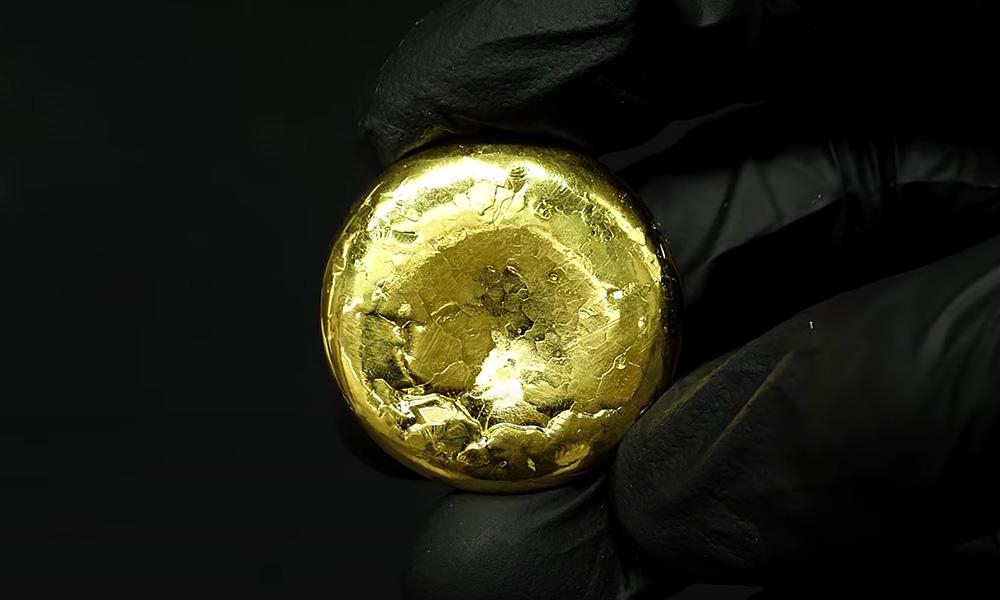
From a short-term trading perspective, the downside risks in the gold and silver markets have become fully apparent. Bullish momentum has completely dissipated, and the overall trading sentiment has turned bearish. Institutional and individual investors continue to reduce their precious metal holdings, further amplifying downward pressure on prices. The market is highly likely to continue its weak and volatile downward trend in the short term, and conditions for bottom-fishing are not currently present.
The core reason for this round of precious metal price correction lies in the shift in expectations regarding the Federal Reserve's monetary policy. The market widely anticipates that the Fed will continue to adopt a hawkish monetary policy stance to curb persistently high inflation. This expectation has driven up US Treasury yields and simultaneously boosted the US dollar index. Since gold and silver are non-interest-bearing assets, rising market interest rates significantly increased the opportunity cost of holding precious metals, while a strong dollar further exerted downward pressure. This combination of negative factors directly triggered the current decline in gold and silver prices.
Although this sharp drop in prices may seem like a reversal of the trend, it has not shaken the core logic of the long-term operation of precious metals.
The underlying drivers that have supported the steady rise in gold and silver prices for many years remain, and some of these positive factors continue to strengthen. Industry analysts generally believe that this round of concentrated selling is merely a normal correction within a bull market, not a trend reversal. The long-term upward trend of the market will not change, and most institutions predict that gold prices are likely to regain the $5,000 per ounce mark within a year.
The recent Thorne Investment Conference in Montreal released important macroeconomic signals, indicating that the global economy will remain in a state of divergence for a long time to come. The traditional globalization development model, which is based on low cost and high efficiency, is gradually coming to an end, and the focus of global development is shifting to economic resilience, supply chain security, and strategic resource management.
At the conference, Sander Gerber, CEO of Hudson Bay Capital, stated that the decision-making logic of governments and businesses around the world has undergone a fundamental shift. They no longer solely pursue economic benefits but prioritize geopolitical situations and supply chain security. This industry transformation has brought about continuous market uncertainty and structural inflationary pressures, and traditional financial models are no longer effectively adapted to the current market environment.
Gold and silver, as classic safe-haven assets, have historically possessed outstanding advantages in preserving and increasing value in environments of heightened market uncertainty. Even if short-term inflation data shows a slight decline, the structural problems of high global fiscal spending and high deficits persist, and central banks will continue to support government financing needs, making it difficult to completely eliminate potential inflationary pressures in the market.
Against this backdrop, gold and silver remain core high-quality assets for hedging against inflation risks and resisting market volatility.
Overall , bull markets in precious metals are never characterized by a one-way, straight upward trend; short-term technical corrections are normal market fluctuations.
In the short term, gold and silver prices may continue to be under slight pressure due to expectations of interest rate hikes by the Federal Reserve. However, from a medium- to long-term perspective, multiple positive factors such as geopolitical risks, structural inflation, and global economic restructuring continue to exert their influence, and the core investment logic for gold and silver remains unchanged, with the long-term upward trend still solid and reliable.
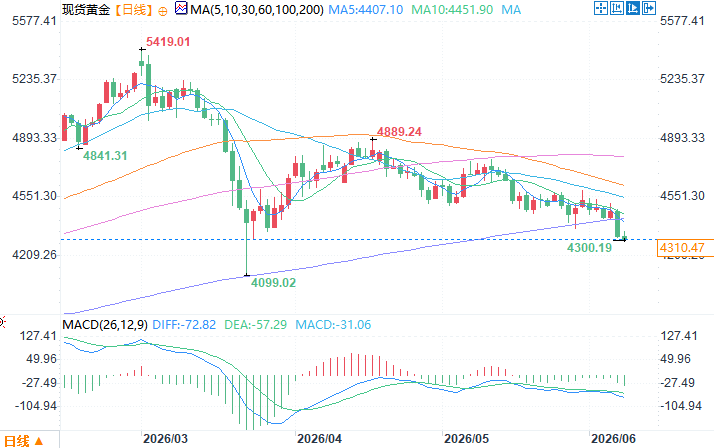
Spot gold daily chart source: EasyForex
At 11:05 AM Beijing time on June 8, spot gold was trading at $4310.07 per ounce.
The market has weakened significantly in the short term, and downward pressure on the market is becoming increasingly apparent.
The US non-farm payroll data for May, released last Friday, far exceeded expectations, completely reversing expectations of a Fed rate cut. The precious metals market experienced a concentrated sell-off, with spot gold prices breaking through the key support level of the 200-day moving average, which is closely watched by the industry. The technical trend weakened completely, with a drop of 3.3% on the day, closing at $4,327.46 per ounce.
From a short-term trading perspective, the downside risks in the gold and silver markets have become fully apparent. Bullish momentum has completely dissipated, and the overall trading sentiment has turned bearish. Institutional and individual investors continue to reduce their precious metal holdings, further amplifying downward pressure on prices. The market is highly likely to continue its weak and volatile downward trend in the short term, and conditions for bottom-fishing are not currently present.
The core reason for this round of precious metal price correction lies in the shift in expectations regarding the Federal Reserve's monetary policy. The market widely anticipates that the Fed will continue to adopt a hawkish monetary policy stance to curb persistently high inflation. This expectation has driven up US Treasury yields and simultaneously boosted the US dollar index. Since gold and silver are non-interest-bearing assets, rising market interest rates significantly increased the opportunity cost of holding precious metals, while a strong dollar further exerted downward pressure. This combination of negative factors directly triggered the current decline in gold and silver prices.
Multiple strong positive factors support the long-term fundamentals, which have not reversed.
Although this sharp drop in prices may seem like a reversal of the trend, it has not shaken the core logic of the long-term operation of precious metals.
The underlying drivers that have supported the steady rise in gold and silver prices for many years remain, and some of these positive factors continue to strengthen. Industry analysts generally believe that this round of concentrated selling is merely a normal correction within a bull market, not a trend reversal. The long-term upward trend of the market will not change, and most institutions predict that gold prices are likely to regain the $5,000 per ounce mark within a year.
The recent Thorne Investment Conference in Montreal released important macroeconomic signals, indicating that the global economy will remain in a state of divergence for a long time to come. The traditional globalization development model, which is based on low cost and high efficiency, is gradually coming to an end, and the focus of global development is shifting to economic resilience, supply chain security, and strategic resource management.
At the conference, Sander Gerber, CEO of Hudson Bay Capital, stated that the decision-making logic of governments and businesses around the world has undergone a fundamental shift. They no longer solely pursue economic benefits but prioritize geopolitical situations and supply chain security. This industry transformation has brought about continuous market uncertainty and structural inflationary pressures, and traditional financial models are no longer effectively adapted to the current market environment.
Hard assets are showing strong safe-haven appeal, making gold and silver investments more stable.
Gold and silver, as classic safe-haven assets, have historically possessed outstanding advantages in preserving and increasing value in environments of heightened market uncertainty. Even if short-term inflation data shows a slight decline, the structural problems of high global fiscal spending and high deficits persist, and central banks will continue to support government financing needs, making it difficult to completely eliminate potential inflationary pressures in the market.
Against this backdrop, gold and silver remain core high-quality assets for hedging against inflation risks and resisting market volatility.
Overall , bull markets in precious metals are never characterized by a one-way, straight upward trend; short-term technical corrections are normal market fluctuations.
In the short term, gold and silver prices may continue to be under slight pressure due to expectations of interest rate hikes by the Federal Reserve. However, from a medium- to long-term perspective, multiple positive factors such as geopolitical risks, structural inflation, and global economic restructuring continue to exert their influence, and the core investment logic for gold and silver remains unchanged, with the long-term upward trend still solid and reliable.
Spot gold daily chart source: EasyForex
At 11:05 AM Beijing time on June 8, spot gold was trading at $4310.07 per ounce.
- Risk Warning and Disclaimer
- The market involves risk, and trading may not be suitable for all investors. This article is for reference only and does not constitute personal investment advice, nor does it take into account certain users’ specific investment objectives, financial situation, or other needs. Any investment decisions made based on this information are at your own risk.