Gold fell more than 2% ahead of the CPI release; what underlying concerns is the market trading?
2026-06-10 17:56:45
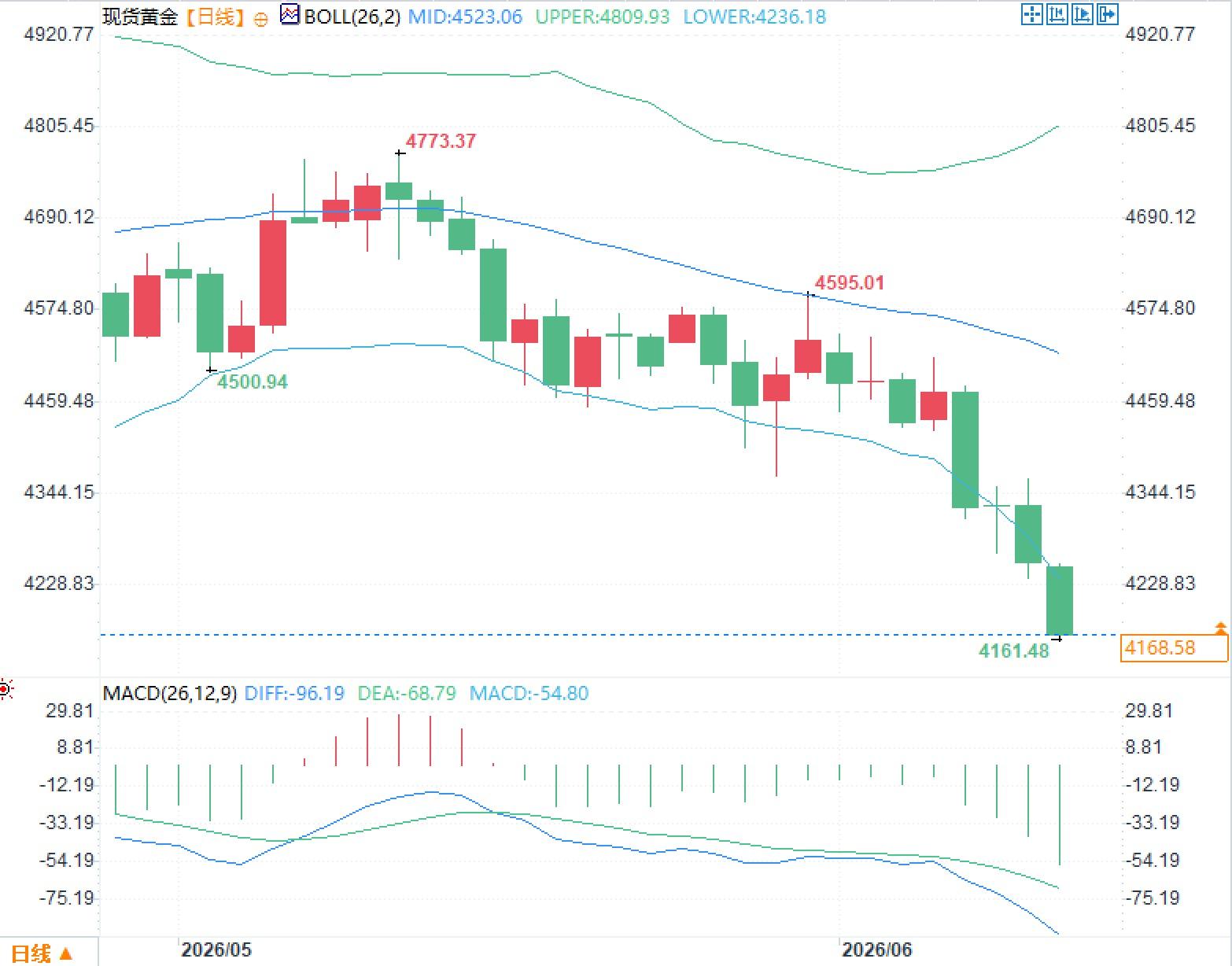
On Wednesday, June 10th, spot gold continued to be under pressure ahead of the release of US inflation data, trading around $4170 during the European session, down approximately 2.05% on the day and 11.87% over the past month, though still 24.39% higher than the same period last year. The US May Consumer Price Index will be released at 20:30 today, with the market expecting the overall annual inflation rate to rise to 4.2% and the core annual inflation rate to rise to 2.9%. This means that gold is currently facing not just a simple safe-haven logic, but rather repricing pressure from inflation, real interest rates, the US dollar index, and energy prices.
The recent pullback in gold prices could easily be misinterpreted as a decline in safe-haven demand, but a more accurate explanation is that the market is reassessing the opportunity cost of holding non-interest-bearing assets. The conflicts in the Middle East have not subsided, and energy prices remain volatile at high levels, which should theoretically support safe-haven assets. However, when energy prices drive up inflation expectations, thereby raising interest rate paths, gold will face more direct pressure.
US April data showed that the overall Consumer Price Index (CPI) rose 3.8% year-on-year, the core index rose 2.8% year-on-year, the energy component rose 17.9% year-on-year, and the gasoline component rose 28.4% year-on-year. This data indicates that price pressures are not limited to the overall level; the energy shock has begun to influence market expectations regarding the stickiness of medium-term inflation. If May's data continues to rise, gold's safe-haven appeal will remain, but pricing will primarily follow real interest rates.
Gold does not generate coupon income, making it extremely sensitive to real interest rates. Currently, the 10-year US Treasury yield is around 4.53%, and the 10-year Treasury Inflation-Protected Securities (TIPS) yield is around 2.19%, indicating that real yields remain high. For traders, this is not a sentiment indicator, but a core variable within the gold discount framework.
In recent weeks, market expectations for rapid easing by the Federal Reserve have cooled significantly, and interest rate futures no longer use a rate cut this year as the benchmark scenario. The US dollar index is currently trading around 99.85, having risen by about 2.00% over the past month, further increasing external pressure on dollar-denominated gold. This pullback in gold does not indicate a breakdown in long-term demand, but rather that short-term valuations must be recalibrated to match higher real yields and more cautious policy expectations.
Brent crude oil was around $91.02 per barrel on June 10th, a slight decrease from a month ago, but still 30.45% higher than the same period last year. Oil prices have a dual impact on gold. Firstly, it acts as an inflation hedge; rising energy prices increase nominal inflation, which typically helps boost gold's appeal. Secondly, it's a policy response; if inflationary pressures force the Federal Reserve to maintain restrictive interest rates for longer, or even renegotiate rate hikes, gold will actually come under pressure. Currently, the market is clearly focusing more on the second factor.
Therefore, the key to the May Consumer Price Index (CPI) is not just whether the 4.2% figure is achieved, but also whether prices for services, rents, insurance, and transportation beyond energy continue to spread. If the core components remain moderate, the market may view the energy shock as a one-off disturbance; if the core components rise in tandem, the pressure on gold will come from the repricing of policy credibility, rather than simply changes in risk appetite.
In the medium to long term, gold still has structural support. Global gold demand reached 1,231 tons in the first quarter, a 2% year-on-year increase, rising to a quarterly record of $193 billion in value. Demand for gold bars and coins reached 474 tons, a 42% year-on-year increase; central banks made net purchases of 244 tons of gold in the first quarter, a 3% year-on-year increase. This indicates that official reserves and physical investment still constitute bottom-line demand.
However, structural buying does not equate to a one-way upward price trend. High gold prices will suppress some jewelry demand and make investors more focused on volatility and funding costs. When gold retreats from record highs, the market is not denying its reserve value, but rather re-evaluating long-term allocation needs from short-term interest rate shocks.
Question 1: Why did gold prices fall when the conflict in the Middle East escalated?
A: Rising energy prices will increase inflation expectations, which in turn will push up interest rates and real yields. While there is demand for safe-haven assets, the opportunity cost of non-interest-bearing assets is rising even faster, putting downward pressure on gold in the short term.
Question 2: What is the most crucial aspect of the US inflation data for May?
A: We can't just look at the overall annual rate; it's more important to consider whether core services, rents, transportation, and insurance are spreading. If core inflation remains strong, the market will reprice the Fed's policy space.
Question 3: Can central bank buying stabilize gold prices?
A: Central bank buying provides long-term support, but cannot fully offset short-term yield shocks. The core contradiction for gold at present is the tug-of-war between structural demand and high real interest rates.
The core reason for the decline in gold prices is not the failure of safe-haven demand.
The recent pullback in gold prices could easily be misinterpreted as a decline in safe-haven demand, but a more accurate explanation is that the market is reassessing the opportunity cost of holding non-interest-bearing assets. The conflicts in the Middle East have not subsided, and energy prices remain volatile at high levels, which should theoretically support safe-haven assets. However, when energy prices drive up inflation expectations, thereby raising interest rate paths, gold will face more direct pressure.
US April data showed that the overall Consumer Price Index (CPI) rose 3.8% year-on-year, the core index rose 2.8% year-on-year, the energy component rose 17.9% year-on-year, and the gasoline component rose 28.4% year-on-year. This data indicates that price pressures are not limited to the overall level; the energy shock has begun to influence market expectations regarding the stickiness of medium-term inflation. If May's data continues to rise, gold's safe-haven appeal will remain, but pricing will primarily follow real interest rates.
Real interest rates have once again become the pricing anchor.
Gold does not generate coupon income, making it extremely sensitive to real interest rates. Currently, the 10-year US Treasury yield is around 4.53%, and the 10-year Treasury Inflation-Protected Securities (TIPS) yield is around 2.19%, indicating that real yields remain high. For traders, this is not a sentiment indicator, but a core variable within the gold discount framework.
In recent weeks, market expectations for rapid easing by the Federal Reserve have cooled significantly, and interest rate futures no longer use a rate cut this year as the benchmark scenario. The US dollar index is currently trading around 99.85, having risen by about 2.00% over the past month, further increasing external pressure on dollar-denominated gold. This pullback in gold does not indicate a breakdown in long-term demand, but rather that short-term valuations must be recalibrated to match higher real yields and more cautious policy expectations.
Energy shocks make inflation data more insightful.
Brent crude oil was around $91.02 per barrel on June 10th, a slight decrease from a month ago, but still 30.45% higher than the same period last year. Oil prices have a dual impact on gold. Firstly, it acts as an inflation hedge; rising energy prices increase nominal inflation, which typically helps boost gold's appeal. Secondly, it's a policy response; if inflationary pressures force the Federal Reserve to maintain restrictive interest rates for longer, or even renegotiate rate hikes, gold will actually come under pressure. Currently, the market is clearly focusing more on the second factor.
Therefore, the key to the May Consumer Price Index (CPI) is not just whether the 4.2% figure is achieved, but also whether prices for services, rents, insurance, and transportation beyond energy continue to spread. If the core components remain moderate, the market may view the energy shock as a one-off disturbance; if the core components rise in tandem, the pressure on gold will come from the repricing of policy credibility, rather than simply changes in risk appetite.
Structural buying persists, but it cannot offset the short-term macroeconomic shock.
In the medium to long term, gold still has structural support. Global gold demand reached 1,231 tons in the first quarter, a 2% year-on-year increase, rising to a quarterly record of $193 billion in value. Demand for gold bars and coins reached 474 tons, a 42% year-on-year increase; central banks made net purchases of 244 tons of gold in the first quarter, a 3% year-on-year increase. This indicates that official reserves and physical investment still constitute bottom-line demand.
However, structural buying does not equate to a one-way upward price trend. High gold prices will suppress some jewelry demand and make investors more focused on volatility and funding costs. When gold retreats from record highs, the market is not denying its reserve value, but rather re-evaluating long-term allocation needs from short-term interest rate shocks.
Frequently Asked Questions
Question 1: Why did gold prices fall when the conflict in the Middle East escalated?
A: Rising energy prices will increase inflation expectations, which in turn will push up interest rates and real yields. While there is demand for safe-haven assets, the opportunity cost of non-interest-bearing assets is rising even faster, putting downward pressure on gold in the short term.
Question 2: What is the most crucial aspect of the US inflation data for May?
A: We can't just look at the overall annual rate; it's more important to consider whether core services, rents, transportation, and insurance are spreading. If core inflation remains strong, the market will reprice the Fed's policy space.
Question 3: Can central bank buying stabilize gold prices?
A: Central bank buying provides long-term support, but cannot fully offset short-term yield shocks. The core contradiction for gold at present is the tug-of-war between structural demand and high real interest rates.
- Risk Warning and Disclaimer
- The market involves risk, and trading may not be suitable for all investors. This article is for reference only and does not constitute personal investment advice, nor does it take into account certain users’ specific investment objectives, financial situation, or other needs. Any investment decisions made based on this information are at your own risk.