Crude Oil Trading Alert: Escalating US-Iran conflict triggers supply disruption concerns, oil prices return to range-bound trading.
2026-06-11 09:24:12
International crude oil markets continued their strong performance in Asian trading on Thursday, with West Texas Intermediate (WTI) crude oil prices rising for the second consecutive session, holding near $91.70 per barrel. The market was primarily driven by escalating tensions in the Middle East, with investors concerned that the continued spread of regional conflict could threaten the security of global oil transportation and supply, thus pushing risk premiums further up.

US President Trump stated that the US might take stronger military action against Iran if a temporary peace agreement is not ultimately reached, and accused Iran of stalling the negotiations. Iran, on the other hand, stated that it will continue to respond to external pressure. This comes after the US launched a so-called "self-defense" military strike following the downing of a US military helicopter, which subsequently triggered retaliatory actions by Iran against US military facilities in Bahrain, Jordan, and Kuwait, further exacerbating market concerns about disruptions to the Middle East energy supply chain.
The market is particularly focused on the security situation in the Strait of Hormuz. This strait is one of the world's most important energy transport routes, handling approximately 20% of global seaborne crude oil shipments. Trump revealed that the U.S. military secretly escorted over 100 million barrels of crude oil through the Strait of Hormuz, a volume equivalent to one day's global oil consumption. He believes that without such action to stabilize supply expectations, international oil prices could surge to $250 per barrel, while currently prices remain around $85 to $90.
Beyond geopolitical factors, the significant decline in US domestic inventories has further strengthened bullish market sentiment. The latest data released by the US Energy Information Administration (EIA) shows that as of last week, US commercial crude oil inventories decreased by approximately 7.2 million barrels, significantly higher than the approximately 4 million barrel decrease previously expected by analysts in market surveys. The rapid decline in inventories indicates that refiners are actively increasing purchases to compensate for potential supply gaps caused by the situation in the Middle East. Meanwhile, the US Strategic Petroleum Reserve has fallen to its lowest level since August 2023, and the US Department of Energy plans to provide energy companies with up to approximately 40 million barrels of crude oil in loans to alleviate pressure from rising fuel prices.
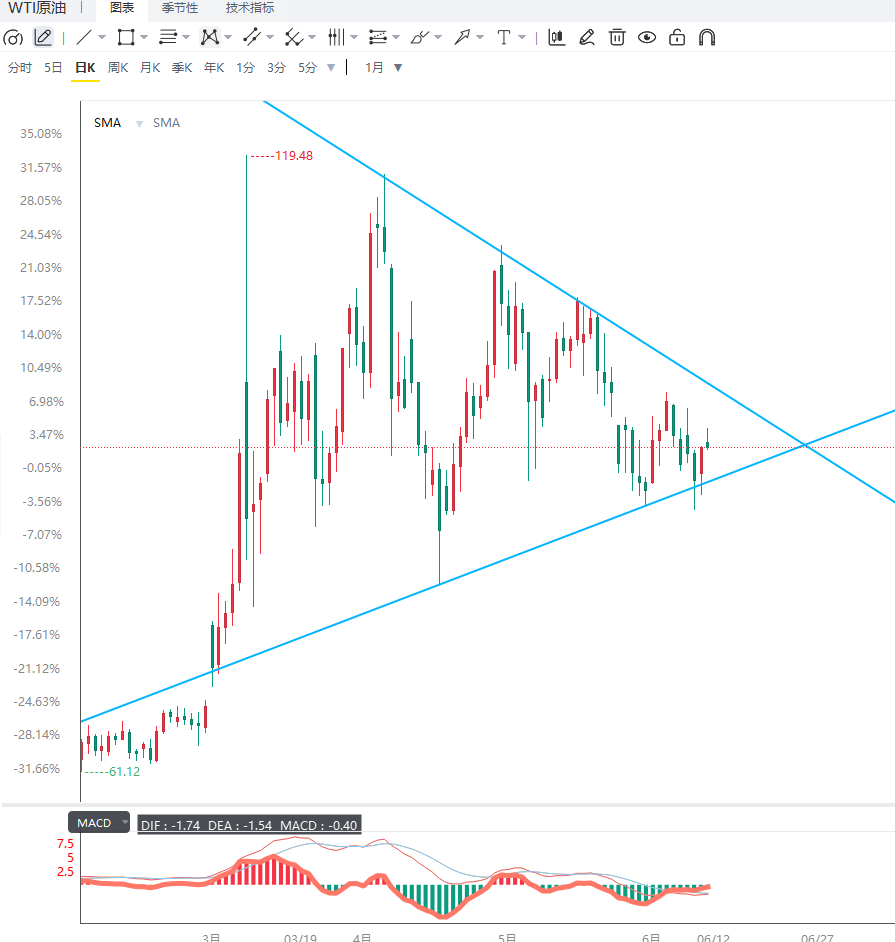
From a technical perspective, the daily chart shows WTI crude oil has returned to a consolidation range, maintaining an overall rebound structure. Prices are steadily trading above major moving averages, indicating that bullish forces remain dominant. If oil prices retrace but do not break the $90 mark, they may test the $93-$95 area. Conversely, if geopolitical risks ease or profit-taking occurs, initial support is seen around $88, with more crucial support at the $85 area. In terms of momentum indicators, the RSI remains in overbought territory, while the MACD maintains a golden cross, indicating that the medium- to long-term upward momentum has not weakened significantly.
From a 4-hour chart perspective, oil prices are maintaining a slightly bullish trend in the short term. Although technical indicators suggest the market is somewhat overbought after the recent rise, as long as prices remain above the $89-$90 range, bulls may still push prices higher. If a short-term pullback occurs, the market will focus on whether the $88 level can provide effective support. A break below this level could trigger a deeper technical correction.
Editor's Summary : The current international crude oil market is driven by both geopolitical risks and tightening supply. Uncertainty surrounding the Middle East situation provides a significant risk premium for oil prices, while a sharp decline in US inventories further strengthens expectations of tight short-term supply. The market focus will remain on developments in the Middle East, shipping security in the Strait of Hormuz, and changes in US strategic reserve policy. In the short term, WTI crude oil still has the foundation to maintain high levels, but with the rapid rise in oil prices, investors also need to be wary of the risk of a phased correction due to easing tensions, changes in demand prospects, and profit-taking.
US President Trump stated that the US might take stronger military action against Iran if a temporary peace agreement is not ultimately reached, and accused Iran of stalling the negotiations. Iran, on the other hand, stated that it will continue to respond to external pressure. This comes after the US launched a so-called "self-defense" military strike following the downing of a US military helicopter, which subsequently triggered retaliatory actions by Iran against US military facilities in Bahrain, Jordan, and Kuwait, further exacerbating market concerns about disruptions to the Middle East energy supply chain.
The market is particularly focused on the security situation in the Strait of Hormuz. This strait is one of the world's most important energy transport routes, handling approximately 20% of global seaborne crude oil shipments. Trump revealed that the U.S. military secretly escorted over 100 million barrels of crude oil through the Strait of Hormuz, a volume equivalent to one day's global oil consumption. He believes that without such action to stabilize supply expectations, international oil prices could surge to $250 per barrel, while currently prices remain around $85 to $90.
Beyond geopolitical factors, the significant decline in US domestic inventories has further strengthened bullish market sentiment. The latest data released by the US Energy Information Administration (EIA) shows that as of last week, US commercial crude oil inventories decreased by approximately 7.2 million barrels, significantly higher than the approximately 4 million barrel decrease previously expected by analysts in market surveys. The rapid decline in inventories indicates that refiners are actively increasing purchases to compensate for potential supply gaps caused by the situation in the Middle East. Meanwhile, the US Strategic Petroleum Reserve has fallen to its lowest level since August 2023, and the US Department of Energy plans to provide energy companies with up to approximately 40 million barrels of crude oil in loans to alleviate pressure from rising fuel prices.
From a technical perspective, the daily chart shows WTI crude oil has returned to a consolidation range, maintaining an overall rebound structure. Prices are steadily trading above major moving averages, indicating that bullish forces remain dominant. If oil prices retrace but do not break the $90 mark, they may test the $93-$95 area. Conversely, if geopolitical risks ease or profit-taking occurs, initial support is seen around $88, with more crucial support at the $85 area. In terms of momentum indicators, the RSI remains in overbought territory, while the MACD maintains a golden cross, indicating that the medium- to long-term upward momentum has not weakened significantly.
From a 4-hour chart perspective, oil prices are maintaining a slightly bullish trend in the short term. Although technical indicators suggest the market is somewhat overbought after the recent rise, as long as prices remain above the $89-$90 range, bulls may still push prices higher. If a short-term pullback occurs, the market will focus on whether the $88 level can provide effective support. A break below this level could trigger a deeper technical correction.
Editor's Summary : The current international crude oil market is driven by both geopolitical risks and tightening supply. Uncertainty surrounding the Middle East situation provides a significant risk premium for oil prices, while a sharp decline in US inventories further strengthens expectations of tight short-term supply. The market focus will remain on developments in the Middle East, shipping security in the Strait of Hormuz, and changes in US strategic reserve policy. In the short term, WTI crude oil still has the foundation to maintain high levels, but with the rapid rise in oil prices, investors also need to be wary of the risk of a phased correction due to easing tensions, changes in demand prospects, and profit-taking.
- Risk Warning and Disclaimer
- The market involves risk, and trading may not be suitable for all investors. This article is for reference only and does not constitute personal investment advice, nor does it take into account certain users’ specific investment objectives, financial situation, or other needs. Any investment decisions made based on this information are at your own risk.