The absence of the Bank of Japan governor from the meeting has drawn attention to policy communication, with markets expecting that hawkish signals are unlikely to change the easing path in the short term.
2026-06-11 14:51:43
According to Yoshimasa Maruyama, an economist at Sumitomo Mitsui Nikko Securities, the biggest focus at the Bank of Japan's policy meeting next week is not the policy decision itself, but rather the subtle changes that may occur in the central bank's communication style following Governor Kazuo Ueda's absence. The market expects any significant differences to likely only appear in the post-meeting press conference, rather than in major adjustments to the monetary policy framework or policy statement.
In the past, the market has generally believed that Kazuo Ueda's public speeches, compared to the Bank of Japan's economic outlook reports and meeting summaries, tend to show a more dovish policy stance. Therefore, if Deputy Governor Shinichi Uchida hosts the post-meeting press conference this time and uses relatively neutral or even less emphasis on dovish policy language, investors may interpret it as a signal of a more hawkish stance compared to Ueda's previous style.
However, analysts believe the market should not overinterpret this short-term change in communication. Since Kazuo Ueda is expected to return at the July policy meeting, the central bank's overall policy guidance will remain consistent, and this brief change in wording is insufficient to indicate that the Bank of Japan has shifted to a more aggressive monetary tightening path.
The Bank of Japan still needs to strike a balance between addressing inflationary pressures from rising energy prices and maintaining economic recovery. While the market is watching the possibility of further interest rate adjustments, policymakers will remain highly dependent on economic data, inflation trends, and changes in financial markets; therefore, any future policy adjustments are likely to be gradual.
From a market impact perspective, if Shinichi Uchida's speech is interpreted as slightly hawkish, it may push Japanese government bond yields up moderately in the short term and provide some support for the yen. However, since this change mainly stems from a difference in communication style rather than a policy direction adjustment, the market impact may be relatively limited. Investors will continue to focus on policy signals following Kazuo Ueda's return in July to determine the Bank of Japan's next monetary policy path.
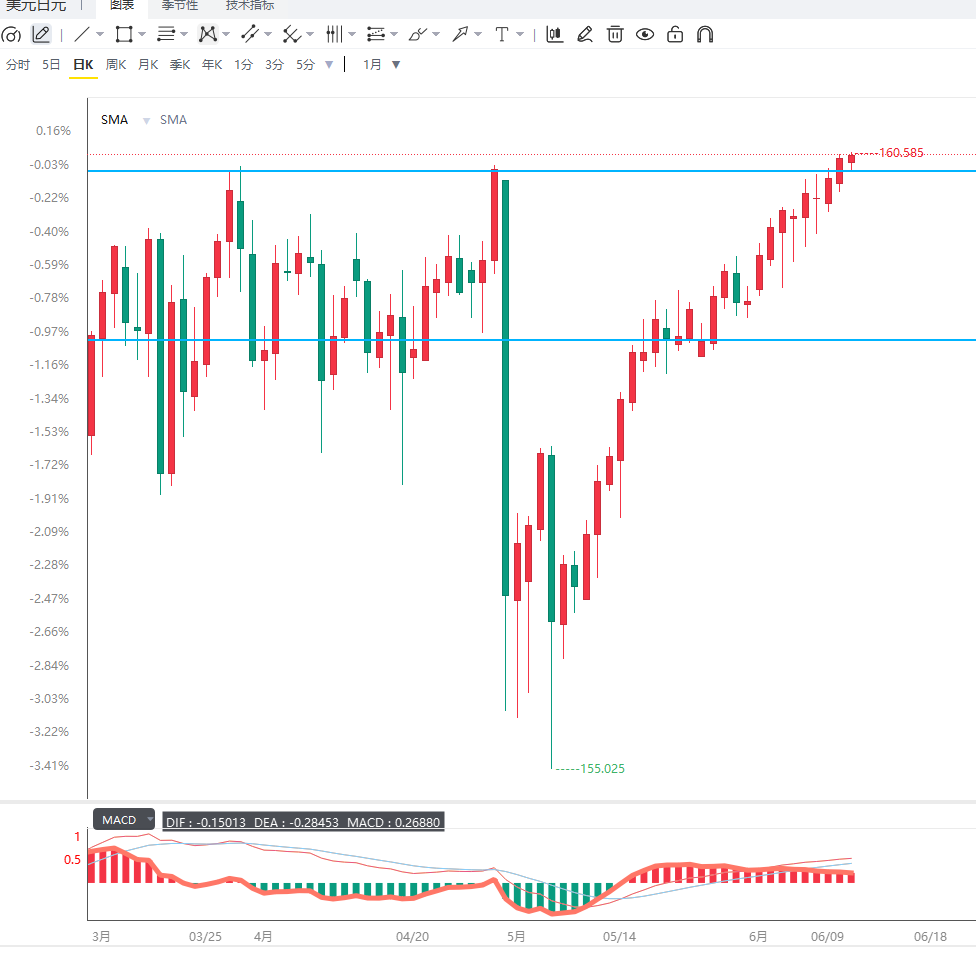
From a market trading perspective, the short-term trend of the Japanese yen remains influenced by expectations of the Bank of Japan's policy, the USD/JPY interest rate differential, and global risk aversion. On the daily chart, USD/JPY is still trading at high levels. If it retraces but doesn't break the 160 level, it will maintain its bullish structure and await further upward acceleration. The market is assessing the impact of potential interest rate hikes by the Bank of Japan and the risk of Japanese government intervention in the foreign exchange market on the exchange rate. The 4-hour chart shows that USD/JPY is maintaining a high-level consolidation pattern in the short term. If the Bank of Japan releases clearer tightening signals, the yen may experience a phase of rebound; conversely, if the Federal Reserve maintains a hawkish stance and the USD/JPY interest rate differential continues to widen, USD/JPY may remain strong.
Editor's Summary : The absence of Bank of Japan Governor Kazuo Ueda from the meeting increased market attention to changes in policy communication, but the short-term hawkish tone does not indicate a shift in monetary policy direction. Given Ueda's expected return in July, the market is more likely to view this meeting as a transitional phase. Whether the Bank of Japan will further adjust its policy in the future will still depend on the persistence of inflation, economic performance, and changes in the global financial environment. Investors should pay close attention to the longer-term policy signals released at the July meeting.
In the past, the market has generally believed that Kazuo Ueda's public speeches, compared to the Bank of Japan's economic outlook reports and meeting summaries, tend to show a more dovish policy stance. Therefore, if Deputy Governor Shinichi Uchida hosts the post-meeting press conference this time and uses relatively neutral or even less emphasis on dovish policy language, investors may interpret it as a signal of a more hawkish stance compared to Ueda's previous style.
However, analysts believe the market should not overinterpret this short-term change in communication. Since Kazuo Ueda is expected to return at the July policy meeting, the central bank's overall policy guidance will remain consistent, and this brief change in wording is insufficient to indicate that the Bank of Japan has shifted to a more aggressive monetary tightening path.
The Bank of Japan still needs to strike a balance between addressing inflationary pressures from rising energy prices and maintaining economic recovery. While the market is watching the possibility of further interest rate adjustments, policymakers will remain highly dependent on economic data, inflation trends, and changes in financial markets; therefore, any future policy adjustments are likely to be gradual.
From a market impact perspective, if Shinichi Uchida's speech is interpreted as slightly hawkish, it may push Japanese government bond yields up moderately in the short term and provide some support for the yen. However, since this change mainly stems from a difference in communication style rather than a policy direction adjustment, the market impact may be relatively limited. Investors will continue to focus on policy signals following Kazuo Ueda's return in July to determine the Bank of Japan's next monetary policy path.
From a market trading perspective, the short-term trend of the Japanese yen remains influenced by expectations of the Bank of Japan's policy, the USD/JPY interest rate differential, and global risk aversion. On the daily chart, USD/JPY is still trading at high levels. If it retraces but doesn't break the 160 level, it will maintain its bullish structure and await further upward acceleration. The market is assessing the impact of potential interest rate hikes by the Bank of Japan and the risk of Japanese government intervention in the foreign exchange market on the exchange rate. The 4-hour chart shows that USD/JPY is maintaining a high-level consolidation pattern in the short term. If the Bank of Japan releases clearer tightening signals, the yen may experience a phase of rebound; conversely, if the Federal Reserve maintains a hawkish stance and the USD/JPY interest rate differential continues to widen, USD/JPY may remain strong.
Editor's Summary : The absence of Bank of Japan Governor Kazuo Ueda from the meeting increased market attention to changes in policy communication, but the short-term hawkish tone does not indicate a shift in monetary policy direction. Given Ueda's expected return in July, the market is more likely to view this meeting as a transitional phase. Whether the Bank of Japan will further adjust its policy in the future will still depend on the persistence of inflation, economic performance, and changes in the global financial environment. Investors should pay close attention to the longer-term policy signals released at the July meeting.
- Risk Warning and Disclaimer
- The market involves risk, and trading may not be suitable for all investors. This article is for reference only and does not constitute personal investment advice, nor does it take into account certain users’ specific investment objectives, financial situation, or other needs. Any investment decisions made based on this information are at your own risk.