The US dollar index has rebounded after a sharp decline and is expected to remain in a high-level consolidation phase in the short term.
2026-06-12 15:30:22
The US dollar index remained strong during Friday's European trading session, trading around 99.80. Despite a slight pullback in the previous session, recent developments in the Middle East have renewed risk aversion in the market, coupled with strong US inflation data, which has boosted buying support for the dollar.

The situation in the Middle East remains highly uncertain. The US military intercepted and shot down two Iranian one-way attack drones near the Strait of Hormuz that attempted to strike commercial vessels. Meanwhile, explosions were heard in the Sirik region linked to a vessel violating local navigation regulations, and it was reported that the Islamic Revolutionary Guard Corps had warned an oil tanker, forcing it to comply with relevant navigation restrictions. This indicates that despite ongoing diplomatic negotiations, the security risks in the Strait of Hormuz have not been completely eliminated.
However, US President Trump previously stated that the US and Iran could reach a comprehensive peace agreement as early as this weekend. According to reports, the text of the agreement still requires formal approval from both sides, but Iran's Fars News Agency indicated that Iran is highly likely to accept the agreement. The market expects that if the final agreement is implemented, shipping through the Strait of Hormuz is likely to return to normal, and the risks to Middle Eastern energy supplies will significantly decrease, thereby weakening the attractiveness of the US dollar as a safe-haven asset.
Besides geopolitical factors, the latest US inflation data has become a significant factor supporting the US dollar. Data released by the US Bureau of Labor Statistics shows that the Producer Price Index (PPI) rose 6.5% year-on-year in May, higher than April's 5.7% and exceeding market expectations of 6.4%, reaching its highest level since November 2022; the month-on-month increase was 1.1%, also significantly higher than market expectations of 0.7%. Persistent price pressures have strengthened market expectations that the Federal Reserve will maintain its high-interest-rate policy.
Market participants believe that US inflation remains significantly below the Federal Reserve's target, and recent strong producer price data may further strengthen calls within the Federal Open Market Committee for another rate hike this year. Against this backdrop, the short-term fundamentals of the US dollar remain supported.
In addition, investors will also be watching the upcoming preliminary reading of the University of Michigan Consumer Sentiment Index for June, which will reflect U.S. consumers’ latest views on the economic outlook and inflation environment and may influence market judgments on the future path of monetary policy.
From a daily chart perspective, the US dollar index has stabilized after its previous correction, with prices oscillating around the key 99.50 to 100.00 range, indicating significant market divergence near this important psychological level. If the bulls break through and hold above 100.00, the dollar index could retest the 100.80 and 101.50 areas. On the downside, key support levels to watch are 99.20 and 98.50; a break below these levels could extend the correction further.
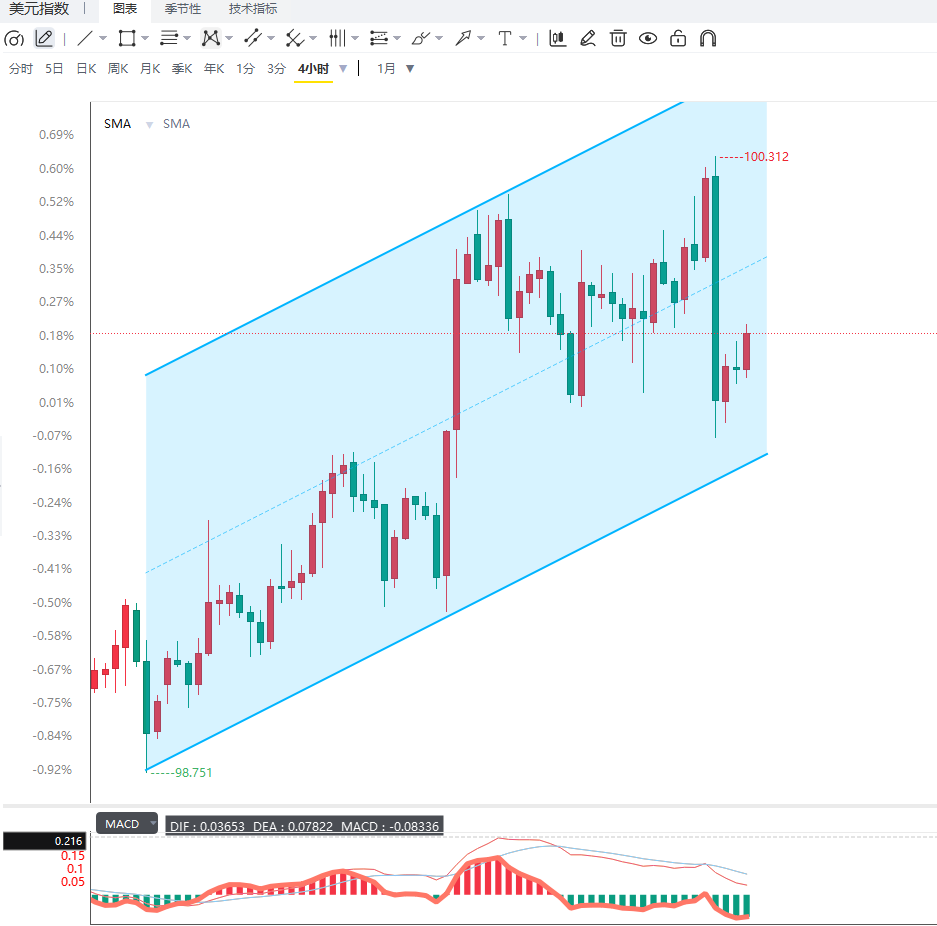
From a 4-hour chart perspective, the US dollar index maintains a short-term low-level rebound structure, with the price returning to near the short-term moving average, indicating improved market momentum. If risk aversion in the Middle East continues to rise, and US economic data remains resilient, the dollar index is expected to further challenge the 100 level. However, if substantial progress is made on the US-Iran agreement and market risk appetite improves, the dollar may face renewed downward pressure. In the short term, attention should be paid to the support level around 99.20 and the resistance level above 100.00.
Editor's Summary : The current trend of the US dollar index is influenced by both geopolitical risks and US inflationary pressures. On the one hand, the escalating situation in the Middle East is increasing market demand for safe-haven assets, providing temporary support for the dollar. On the other hand, the better-than-expected US PPI strengthens expectations that the Federal Reserve will maintain high interest rates for a longer period, enhancing the attractiveness of dollar assets. However, the possibility of a US-Iran peace agreement still exists, and if regional tensions significantly ease, the dollar's safe-haven premium may decline. In the short term, the 100 level will be a crucial test for further strengthening of the dollar index, while US consumer confidence data and developments in the Middle East will determine the dollar's future direction.
The situation in the Middle East remains highly uncertain. The US military intercepted and shot down two Iranian one-way attack drones near the Strait of Hormuz that attempted to strike commercial vessels. Meanwhile, explosions were heard in the Sirik region linked to a vessel violating local navigation regulations, and it was reported that the Islamic Revolutionary Guard Corps had warned an oil tanker, forcing it to comply with relevant navigation restrictions. This indicates that despite ongoing diplomatic negotiations, the security risks in the Strait of Hormuz have not been completely eliminated.
However, US President Trump previously stated that the US and Iran could reach a comprehensive peace agreement as early as this weekend. According to reports, the text of the agreement still requires formal approval from both sides, but Iran's Fars News Agency indicated that Iran is highly likely to accept the agreement. The market expects that if the final agreement is implemented, shipping through the Strait of Hormuz is likely to return to normal, and the risks to Middle Eastern energy supplies will significantly decrease, thereby weakening the attractiveness of the US dollar as a safe-haven asset.
Besides geopolitical factors, the latest US inflation data has become a significant factor supporting the US dollar. Data released by the US Bureau of Labor Statistics shows that the Producer Price Index (PPI) rose 6.5% year-on-year in May, higher than April's 5.7% and exceeding market expectations of 6.4%, reaching its highest level since November 2022; the month-on-month increase was 1.1%, also significantly higher than market expectations of 0.7%. Persistent price pressures have strengthened market expectations that the Federal Reserve will maintain its high-interest-rate policy.
Market participants believe that US inflation remains significantly below the Federal Reserve's target, and recent strong producer price data may further strengthen calls within the Federal Open Market Committee for another rate hike this year. Against this backdrop, the short-term fundamentals of the US dollar remain supported.
In addition, investors will also be watching the upcoming preliminary reading of the University of Michigan Consumer Sentiment Index for June, which will reflect U.S. consumers’ latest views on the economic outlook and inflation environment and may influence market judgments on the future path of monetary policy.
From a daily chart perspective, the US dollar index has stabilized after its previous correction, with prices oscillating around the key 99.50 to 100.00 range, indicating significant market divergence near this important psychological level. If the bulls break through and hold above 100.00, the dollar index could retest the 100.80 and 101.50 areas. On the downside, key support levels to watch are 99.20 and 98.50; a break below these levels could extend the correction further.
From a 4-hour chart perspective, the US dollar index maintains a short-term low-level rebound structure, with the price returning to near the short-term moving average, indicating improved market momentum. If risk aversion in the Middle East continues to rise, and US economic data remains resilient, the dollar index is expected to further challenge the 100 level. However, if substantial progress is made on the US-Iran agreement and market risk appetite improves, the dollar may face renewed downward pressure. In the short term, attention should be paid to the support level around 99.20 and the resistance level above 100.00.
Editor's Summary : The current trend of the US dollar index is influenced by both geopolitical risks and US inflationary pressures. On the one hand, the escalating situation in the Middle East is increasing market demand for safe-haven assets, providing temporary support for the dollar. On the other hand, the better-than-expected US PPI strengthens expectations that the Federal Reserve will maintain high interest rates for a longer period, enhancing the attractiveness of dollar assets. However, the possibility of a US-Iran peace agreement still exists, and if regional tensions significantly ease, the dollar's safe-haven premium may decline. In the short term, the 100 level will be a crucial test for further strengthening of the dollar index, while US consumer confidence data and developments in the Middle East will determine the dollar's future direction.
- Risk Warning and Disclaimer
- The market involves risk, and trading may not be suitable for all investors. This article is for reference only and does not constitute personal investment advice, nor does it take into account certain users’ specific investment objectives, financial situation, or other needs. Any investment decisions made based on this information are at your own risk.