Don't worry, Warsh won't let the Fed remain in a "communication silence" forever.
2026-06-13 00:47:56
Richard Clarda, former vice chairman of the Federal Reserve Board of Governors and president of Pimco, stated unequivocally, "The First Amendment to the U.S. Constitution guarantees freedom of speech." This view has set the tone for the Fed's new communication landscape. Newly appointed Fed Chairman Kevin Warsh will hold his first Fed policy meeting next week, and the market is closely watching the policy paradigm shift brought about by this change in leadership.
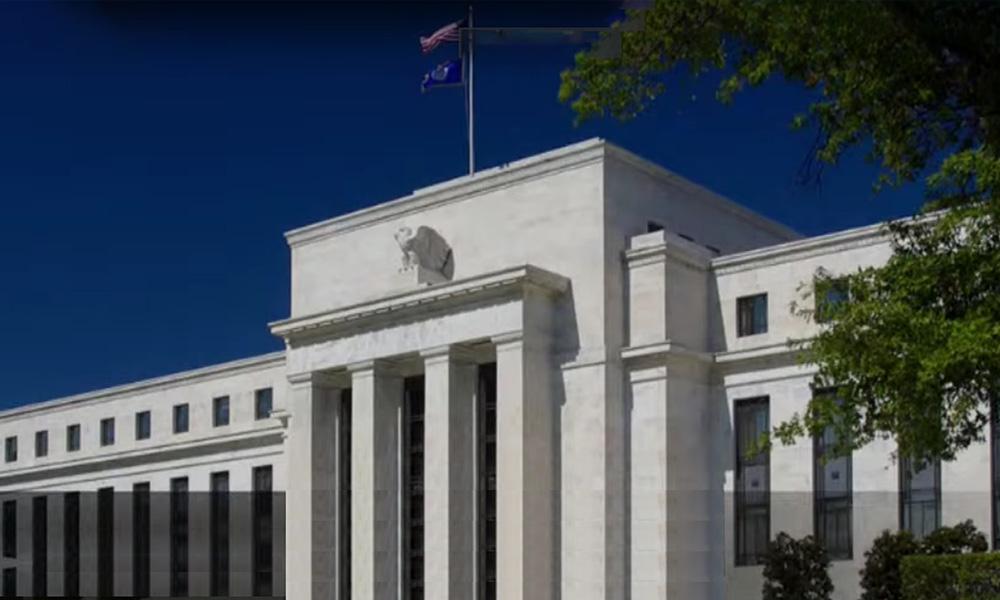
With Warsh officially taking the helm of the Federal Reserve, global financial markets remain on edge, with widespread curiosity about how this leadership change will reshape the Fed's operational system. A common concern is that Warsh may reduce or streamline the Fed's existing diversified policy communication channels. These channels have long been the core basis for academic analysts and senior Fed observers to assess monetary policy. Currently, with global inflationary pressures, persistently high borrowing costs, and the intertwined uncertainties of the artificial intelligence industry's development and macroeconomic trends, a significant tightening of information output by the Fed would undoubtedly further confuse the market and the public regarding policy direction.
According to Warsh's testimony at his nomination hearing in April, he does not endorse frequent public speeches by Federal Reserve officials, nor does he approve of the routine mechanism of holding special press conferences after each interest rate decision. He also criticized the Fed's communication method of using the "dot plot" to communicate interest rate expectations to the market in recent years. As scheduled, the Fed's policy meeting on June 16-17 will update the latest dot plot data, and Warsh will most likely make statements on various policy communication issues of concern to the market on Wednesday, the closing day of the meeting.
This anticipated policy shift has raised concerns in Wall Street's financial markets, with investors worried that market interest rate volatility will significantly increase. Over the past thirty years, the Federal Reserve has gradually established a transparent and frequent policy communication system. If the new Warsh policy drastically reduces public communication, the market will lose a stable source of policy information and will be forced to rely on subjective speculation to predict policy trends, further amplifying market volatility risks. Currently, inflation continues to rise, and the bond market has already priced in the Fed's interest rate hike expectations, a clear departure from former President Trump's desire for interest rate cuts.
Industry insiders say that market volatility caused by changes in the core leadership of central banks is quite normal. Clarda, who served as Vice Chairman of the Federal Reserve from 2018 to 2022 and is now a global economic advisor at Pimco, points out that after a central bank completes a change in its core leadership, the market often needs weeks or even months to fully adapt to the new policy style and operating system. Therefore, the current market anxiety is entirely reasonable.
However, even if Warsh prefers to tighten official unified communication channels, the market does not need to worry that the Federal Reserve will completely fall into "communication silence," as a key factor will ensure that the Federal Reserve continues to output information to the outside world.
At a Pimco press briefing this Thursday, Clarda emphasized that "the First Amendment guarantees the right to free speech." The presidents of the 12 regional Federal Reserve Banks and the seven members of the Board of Governors all have the right to speak independently, including giving media interviews and sharing their views on public platforms. The Fed's market communication will not be completely interrupted.
What might truly change is not the frequency of the Federal Reserve's overall pronouncements, but rather the policy unification that Warsh will push for. He will attempt to coordinate the Federal Reserve Board to form a unified and standardized forward guidance on interest rates, abandoning the previous fragmented and diverse pronouncements. Based on his four years of experience at the Federal Reserve, Cladda frankly admitted that achieving unified policy forward guidance across the board will be significantly more difficult to implement than the market anticipates.
Goldman Sachs' latest research data confirms the market value of policy communication: every increase in uncertainty surrounding short-term interest rate trends leads to a rise in market term premiums, directly causing the yield on the benchmark 10-year US Treasury bond to rise by approximately 5 basis points. In a client research report released Thursday, Goldman Sachs economist Friedrich Schapper analyzed that the Federal Reserve's continuous optimization of its policy communication mechanism since 2004 has been a highly efficient and low-cost core measure to reduce overall borrowing costs and stabilize market expectations.
He further added that during major market shocks such as the global financial crisis and the COVID-19 pandemic, the Federal Reserve's transparent and timely policy communication played a crucial role in stabilizing financial markets and hedging risks, with the benefits of policy communication being particularly prominent during crisis periods. The two new communication mechanisms introduced by the Federal Reserve in 2012—the post-meeting press conference and the dot plot—have had mixed results and are subject to much ambiguity and controversy, leaving ample room for subsequent optimization and reform of the Fed's communication mechanisms.
Frequent interest rate fluctuations can trigger a series of negative chain reactions. They not only weaken liquidity in financial markets and increase financing costs for ordinary households and businesses, but also continue to impact the stock market, causing market volatility. Recently, the US stock market has experienced significant fluctuations, with the S&P 500, Dow Jones Industrial Average, and Nasdaq Composite all experiencing sharp swings. Popular sectors like artificial intelligence have seen sell-offs, one of the core reasons being market concerns about a prolonged high-interest-rate environment suppressing investment enthusiasm.
Daniel Evans, chief investment officer of Pimco Group, offered a new perspective at a media briefing on Thursday: compared to the period in previous years when the federal funds rate was at an extremely low level, the Federal Reserve's forward guidance on interest rates has had a weaker impact on the market in the current environment.
Evans explained, "From the current market perspective, the reference value of forward guidance has decreased significantly after the federal funds rate returned to its normal range." Currently, the upper limit of the US federal funds rate remains at 3.75%, while the yield on the 2-year US Treasury bond, which is highly sensitive to monetary policy, has reached 4.06%. The difference between the two sets of data directly reflects the obvious divergence between the Fed's policy expectations and the market's actual pricing.
Former Federal Reserve Chairman Jerome Powell admitted at his farewell press conference in April that he had never been a staunch supporter of the dot plot mechanism for interest rates, but he also acknowledged that "the existing mechanism cannot be replaced by a blank space," and that even with its shortcomings, the dot plot remains an indispensable policy communication tool.
Looking back, the Federal Reserve has been heavily criticized for its delayed policy communication. From 2022 to 2023, the Fed failed to send a clear and strong signal of a significant interest rate hike to the market in advance. This delayed policy guidance triggered a severe interest rate shock, ultimately igniting a regional banking crisis in the United States. Several small and medium-sized financial institutions, including Silicon Valley Bank, collapsed one after another, causing a significant impact on the US financial system.
Regarding the limitations of forward guidance on interest rates, Evans stated that the macroeconomic market environment is constantly changing, with various unforeseen circumstances emerging one after another. Once unexpected events such as war or geopolitical conflicts occur, the market often anticipates and adjusts pricing in advance, far exceeding the pace of central bank policy updates. This makes fixed forward guidance extremely prone to becoming ineffective.
Clada concluded that after Warsh takes office, he will inevitably reshape the Fed's policy communication style according to his own governing philosophy and create a unique governing imprint. However, what is certain is that the Fed will never completely close communication channels, and the market and the public will still be able to continuously obtain the Fed's policy voice. The so-called "communication silence period" will not come.
With Warsh officially taking the helm of the Federal Reserve, global financial markets remain on edge, with widespread curiosity about how this leadership change will reshape the Fed's operational system. A common concern is that Warsh may reduce or streamline the Fed's existing diversified policy communication channels. These channels have long been the core basis for academic analysts and senior Fed observers to assess monetary policy. Currently, with global inflationary pressures, persistently high borrowing costs, and the intertwined uncertainties of the artificial intelligence industry's development and macroeconomic trends, a significant tightening of information output by the Fed would undoubtedly further confuse the market and the public regarding policy direction.
According to Warsh's testimony at his nomination hearing in April, he does not endorse frequent public speeches by Federal Reserve officials, nor does he approve of the routine mechanism of holding special press conferences after each interest rate decision. He also criticized the Fed's communication method of using the "dot plot" to communicate interest rate expectations to the market in recent years. As scheduled, the Fed's policy meeting on June 16-17 will update the latest dot plot data, and Warsh will most likely make statements on various policy communication issues of concern to the market on Wednesday, the closing day of the meeting.
This anticipated policy shift has raised concerns in Wall Street's financial markets, with investors worried that market interest rate volatility will significantly increase. Over the past thirty years, the Federal Reserve has gradually established a transparent and frequent policy communication system. If the new Warsh policy drastically reduces public communication, the market will lose a stable source of policy information and will be forced to rely on subjective speculation to predict policy trends, further amplifying market volatility risks. Currently, inflation continues to rise, and the bond market has already priced in the Fed's interest rate hike expectations, a clear departure from former President Trump's desire for interest rate cuts.
Industry insiders say that market volatility caused by changes in the core leadership of central banks is quite normal. Clarda, who served as Vice Chairman of the Federal Reserve from 2018 to 2022 and is now a global economic advisor at Pimco, points out that after a central bank completes a change in its core leadership, the market often needs weeks or even months to fully adapt to the new policy style and operating system. Therefore, the current market anxiety is entirely reasonable.
However, even if Warsh prefers to tighten official unified communication channels, the market does not need to worry that the Federal Reserve will completely fall into "communication silence," as a key factor will ensure that the Federal Reserve continues to output information to the outside world.
At a Pimco press briefing this Thursday, Clarda emphasized that "the First Amendment guarantees the right to free speech." The presidents of the 12 regional Federal Reserve Banks and the seven members of the Board of Governors all have the right to speak independently, including giving media interviews and sharing their views on public platforms. The Fed's market communication will not be completely interrupted.
What might truly change is not the frequency of the Federal Reserve's overall pronouncements, but rather the policy unification that Warsh will push for. He will attempt to coordinate the Federal Reserve Board to form a unified and standardized forward guidance on interest rates, abandoning the previous fragmented and diverse pronouncements. Based on his four years of experience at the Federal Reserve, Cladda frankly admitted that achieving unified policy forward guidance across the board will be significantly more difficult to implement than the market anticipates.
Goldman Sachs' latest research data confirms the market value of policy communication: every increase in uncertainty surrounding short-term interest rate trends leads to a rise in market term premiums, directly causing the yield on the benchmark 10-year US Treasury bond to rise by approximately 5 basis points. In a client research report released Thursday, Goldman Sachs economist Friedrich Schapper analyzed that the Federal Reserve's continuous optimization of its policy communication mechanism since 2004 has been a highly efficient and low-cost core measure to reduce overall borrowing costs and stabilize market expectations.
He further added that during major market shocks such as the global financial crisis and the COVID-19 pandemic, the Federal Reserve's transparent and timely policy communication played a crucial role in stabilizing financial markets and hedging risks, with the benefits of policy communication being particularly prominent during crisis periods. The two new communication mechanisms introduced by the Federal Reserve in 2012—the post-meeting press conference and the dot plot—have had mixed results and are subject to much ambiguity and controversy, leaving ample room for subsequent optimization and reform of the Fed's communication mechanisms.
Frequent interest rate fluctuations can trigger a series of negative chain reactions. They not only weaken liquidity in financial markets and increase financing costs for ordinary households and businesses, but also continue to impact the stock market, causing market volatility. Recently, the US stock market has experienced significant fluctuations, with the S&P 500, Dow Jones Industrial Average, and Nasdaq Composite all experiencing sharp swings. Popular sectors like artificial intelligence have seen sell-offs, one of the core reasons being market concerns about a prolonged high-interest-rate environment suppressing investment enthusiasm.
Daniel Evans, chief investment officer of Pimco Group, offered a new perspective at a media briefing on Thursday: compared to the period in previous years when the federal funds rate was at an extremely low level, the Federal Reserve's forward guidance on interest rates has had a weaker impact on the market in the current environment.
Evans explained, "From the current market perspective, the reference value of forward guidance has decreased significantly after the federal funds rate returned to its normal range." Currently, the upper limit of the US federal funds rate remains at 3.75%, while the yield on the 2-year US Treasury bond, which is highly sensitive to monetary policy, has reached 4.06%. The difference between the two sets of data directly reflects the obvious divergence between the Fed's policy expectations and the market's actual pricing.
Former Federal Reserve Chairman Jerome Powell admitted at his farewell press conference in April that he had never been a staunch supporter of the dot plot mechanism for interest rates, but he also acknowledged that "the existing mechanism cannot be replaced by a blank space," and that even with its shortcomings, the dot plot remains an indispensable policy communication tool.
Looking back, the Federal Reserve has been heavily criticized for its delayed policy communication. From 2022 to 2023, the Fed failed to send a clear and strong signal of a significant interest rate hike to the market in advance. This delayed policy guidance triggered a severe interest rate shock, ultimately igniting a regional banking crisis in the United States. Several small and medium-sized financial institutions, including Silicon Valley Bank, collapsed one after another, causing a significant impact on the US financial system.
Regarding the limitations of forward guidance on interest rates, Evans stated that the macroeconomic market environment is constantly changing, with various unforeseen circumstances emerging one after another. Once unexpected events such as war or geopolitical conflicts occur, the market often anticipates and adjusts pricing in advance, far exceeding the pace of central bank policy updates. This makes fixed forward guidance extremely prone to becoming ineffective.
Clada concluded that after Warsh takes office, he will inevitably reshape the Fed's policy communication style according to his own governing philosophy and create a unique governing imprint. However, what is certain is that the Fed will never completely close communication channels, and the market and the public will still be able to continuously obtain the Fed's policy voice. The so-called "communication silence period" will not come.
- Risk Warning and Disclaimer
- The market involves risk, and trading may not be suitable for all investors. This article is for reference only and does not constitute personal investment advice, nor does it take into account certain users’ specific investment objectives, financial situation, or other needs. Any investment decisions made based on this information are at your own risk.