A flurry of pronouncements from Japanese high-ranking officials have deterred short sellers, giving the yen a much-needed respite, but the threat of further depreciation remains.
2026-06-18 13:14:18
On Thursday (June 18), Japanese officials publicly signaled intervention in the foreign exchange market, adopting a tough stance against the rapid weakening of the yen. This, coupled with profit-taking by dollar bulls following the US-Iran ceasefire agreement, significantly slowed the pace of the dollar's rise against the yen. However, the large interest rate differential between the US and Japan is unlikely to narrow in the short term, carry trade remains active, and the medium- to long-term depreciation pressure on the yen has not been completely eliminated. The battle between bulls and bears in the foreign exchange market has entered a heated phase.
At a regular press conference on Thursday, Chief Cabinet Secretary Minoru Kihara was asked by the media about the current market situation of the yen's continued rapid decline. He clearly stated that the Japanese government is fully prepared and will take corresponding measures at any appropriate time to moderately regulate the exchange rate should abnormal exchange rate fluctuations occur in the market.
Minoru Kihara stated that exchange rate fluctuations will be transmitted to the real economy from multiple dimensions, including import and export prices, domestic consumption, and business operations. Regulators must comprehensively and meticulously assess the chain reaction caused by exchange rate anomalies. The government team will closely monitor every round of price changes in the foreign exchange market around the clock and will not allow the yen to depreciate in a disorderly manner.
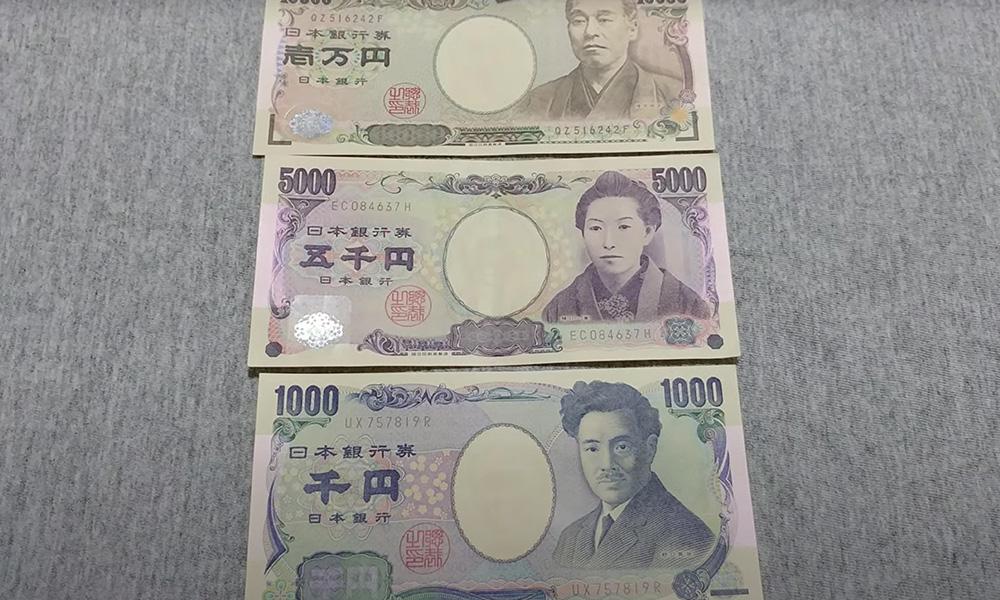
In addition to the Chief Cabinet Secretary, Atsushi Mimura, the top foreign exchange official at the Ministry of Finance, and Satsuki Katayama, the Finance Minister, have repeatedly warned that there is a large amount of speculative capital shorting the yen in the market. The Japanese Ministry of Finance is closely monitoring speculative trading activities and has sufficient policy tools to curb further yen depreciation. Coupled with the Bank of Japan's historic interest rate hike, which pushed rates to their highest level since 1995, these multiple policy expectations have limited the upside potential of the USD/JPY exchange rate, making those shorting the yen more cautious.
The USD/JPY pair traded range-bound above 160.50 during Thursday's Asian session, after rising for four consecutive days to reach its highest level since July 2024. New Federal Reserve Chairman Warsh's hawkish comments at his first policy meeting fueled market bets on a stronger dollar, pushing it to its highest level since the end of March.
The subsequent news of a reconciliation between the US and Iran completely altered the dollar's trajectory. US President Trump and Iranian President Pezechkiyan signed a memorandum of understanding online, agreeing to end hostile conflict and restore navigation through the Strait of Hormuz. Trump further stated that the 60-day deadline for finalizing the Iran nuclear deal was not a hard deadline, easing market demand for geopolitical safe-haven assets. Many investors chose to close their long dollar positions to realize profits, directly dragging down the dollar's performance and becoming the core factor suppressing further gains in the USD/JPY pair.
Despite the Bank of Japan's interest rate hike and frequent warnings of intervention from the government, which may slow the yen's depreciation in the short term, a significant gap remains in financing costs between the two countries. The Federal Reserve kept its benchmark interest rate unchanged at 3.5%-3.75% on Wednesday, and the dot plot showed that half of its officials support at least one rate hike this year, indicating that US interest rates still have room to rise in the medium to long term.
The significant interest rate differential between the US and Japan provides a stable profit margin for yen carry trades. Market funds continue to borrow low-interest yen to exchange for dollar assets to profit from the interest rate differential, which underpins the overall upward trend of the USD/JPY exchange rate.
Industry analysts generally believe that this round of exchange rate correction is only a short-term technical adjustment. Every round of price decline presents a buying opportunity to buy USD/JPY. As long as the divergence in monetary policy between the US and Japan remains unchanged, the yen is unlikely to experience a sustained appreciation.
In summary , multiple positive factors are providing short-term support for the yen, while expectations of official intervention and profit-taking in the dollar are limiting the yen's gains, deterring short sellers from aggressively increasing their positions. However, the divergence in US-Japan monetary policy remains a key long-term variable, with continued active carry trades. The fundamental pressure on the yen has not changed, and the exchange rate is expected to maintain a wide range of fluctuations, with an upward bias. Investors need to continue to monitor actual intervention actions by the Japanese government and subsequent interest rate guidance from the Federal Reserve.
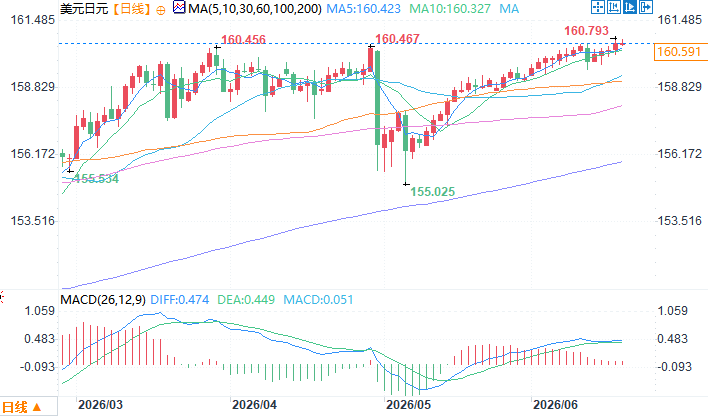
USD/JPY Daily Chart Source: EasyForex
At 13:05 Beijing time on June 18, the USD/JPY exchange rate was 160.59/59.
Japanese high-ranking officials collectively signaled intervention, closely monitoring speculative depreciation of the yen.
At a regular press conference on Thursday, Chief Cabinet Secretary Minoru Kihara was asked by the media about the current market situation of the yen's continued rapid decline. He clearly stated that the Japanese government is fully prepared and will take corresponding measures at any appropriate time to moderately regulate the exchange rate should abnormal exchange rate fluctuations occur in the market.
Minoru Kihara stated that exchange rate fluctuations will be transmitted to the real economy from multiple dimensions, including import and export prices, domestic consumption, and business operations. Regulators must comprehensively and meticulously assess the chain reaction caused by exchange rate anomalies. The government team will closely monitor every round of price changes in the foreign exchange market around the clock and will not allow the yen to depreciate in a disorderly manner.
In addition to the Chief Cabinet Secretary, Atsushi Mimura, the top foreign exchange official at the Ministry of Finance, and Satsuki Katayama, the Finance Minister, have repeatedly warned that there is a large amount of speculative capital shorting the yen in the market. The Japanese Ministry of Finance is closely monitoring speculative trading activities and has sufficient policy tools to curb further yen depreciation. Coupled with the Bank of Japan's historic interest rate hike, which pushed rates to their highest level since 1995, these multiple policy expectations have limited the upside potential of the USD/JPY exchange rate, making those shorting the yen more cautious.
With the US-Iran armistice agreement finalized, a mass exodus of dollar bulls put downward pressure on the USD/JPY exchange rate.
The USD/JPY pair traded range-bound above 160.50 during Thursday's Asian session, after rising for four consecutive days to reach its highest level since July 2024. New Federal Reserve Chairman Warsh's hawkish comments at his first policy meeting fueled market bets on a stronger dollar, pushing it to its highest level since the end of March.
The subsequent news of a reconciliation between the US and Iran completely altered the dollar's trajectory. US President Trump and Iranian President Pezechkiyan signed a memorandum of understanding online, agreeing to end hostile conflict and restore navigation through the Strait of Hormuz. Trump further stated that the 60-day deadline for finalizing the Iran nuclear deal was not a hard deadline, easing market demand for geopolitical safe-haven assets. Many investors chose to close their long dollar positions to realize profits, directly dragging down the dollar's performance and becoming the core factor suppressing further gains in the USD/JPY pair.
The interest rate differential between the US and Japan is difficult to bridge, and the overall trend of yen depreciation has not been reversed.
Despite the Bank of Japan's interest rate hike and frequent warnings of intervention from the government, which may slow the yen's depreciation in the short term, a significant gap remains in financing costs between the two countries. The Federal Reserve kept its benchmark interest rate unchanged at 3.5%-3.75% on Wednesday, and the dot plot showed that half of its officials support at least one rate hike this year, indicating that US interest rates still have room to rise in the medium to long term.
The significant interest rate differential between the US and Japan provides a stable profit margin for yen carry trades. Market funds continue to borrow low-interest yen to exchange for dollar assets to profit from the interest rate differential, which underpins the overall upward trend of the USD/JPY exchange rate.
Industry analysts generally believe that this round of exchange rate correction is only a short-term technical adjustment. Every round of price decline presents a buying opportunity to buy USD/JPY. As long as the divergence in monetary policy between the US and Japan remains unchanged, the yen is unlikely to experience a sustained appreciation.
In summary , multiple positive factors are providing short-term support for the yen, while expectations of official intervention and profit-taking in the dollar are limiting the yen's gains, deterring short sellers from aggressively increasing their positions. However, the divergence in US-Japan monetary policy remains a key long-term variable, with continued active carry trades. The fundamental pressure on the yen has not changed, and the exchange rate is expected to maintain a wide range of fluctuations, with an upward bias. Investors need to continue to monitor actual intervention actions by the Japanese government and subsequent interest rate guidance from the Federal Reserve.
USD/JPY Daily Chart Source: EasyForex
At 13:05 Beijing time on June 18, the USD/JPY exchange rate was 160.59/59.
- Risk Warning and Disclaimer
- The market involves risk, and trading may not be suitable for all investors. This article is for reference only and does not constitute personal investment advice, nor does it take into account certain users’ specific investment objectives, financial situation, or other needs. Any investment decisions made based on this information are at your own risk.