Crude oil prices plummeted by 30%, yet supermarkets are "secretly raising prices"? The harsh truth behind the lag in the food supply chain.
2026-06-18 15:20:04
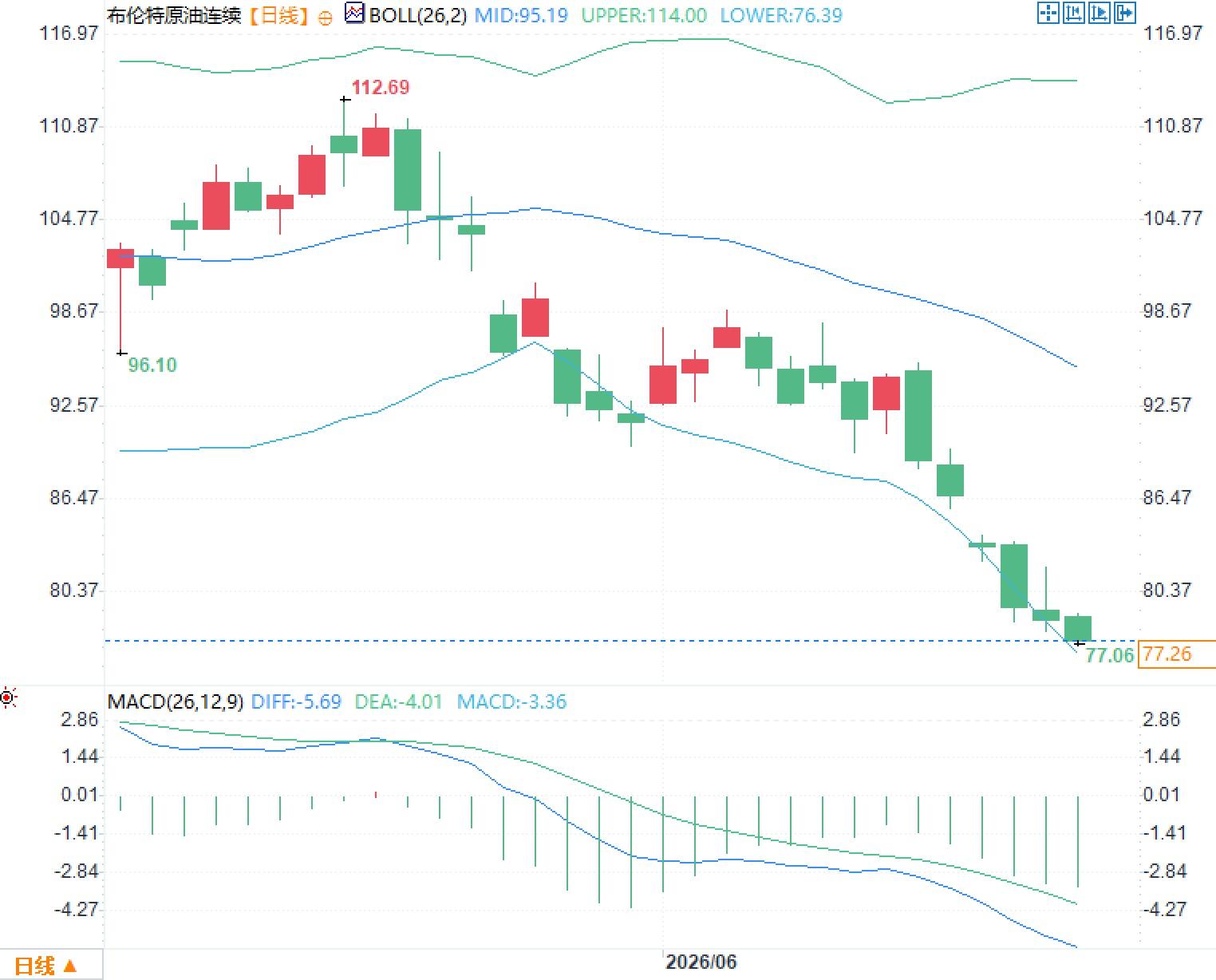
On Thursday, June 18, Brent crude oil fell to around $77.30 a barrel, a drop of about 30% from a month ago, indicating a significant easing of the most extreme supply concerns in the energy market. However, the food supply chain did not recover in tandem. The UK's Consumer Price Index (CPI) rose 2.8% year-on-year in May, with food and non-alcoholic beverage prices rising by 2.2%, but producer input prices rose 8.7% year-on-year during the same period, the largest increase since February 2023. This temporary slowdown in end-user inflation is a clear divergence from the continued rise in business costs.
Costs of energy, nitrogen fertilizer, shipping, and road transport are accumulating at each level of the supply chain. Even if key shipping lanes reopen, the costs already etched into inventory, contracts, and production plans for food will not disappear immediately.
The rapid decline in crude oil prices from their recent highs primarily corrected for market pricing in immediate supply disruptions, rather than the actual costs already paid by food companies. Agricultural, grinding, baking, and cold chain companies typically purchase fuel, electricity, and transportation services monthly or quarterly, with some locking in prices through fixed contracts. The drop in oil prices only becomes apparent in the profit and loss statement after contract repricing, inventory depletion, and the elimination of surcharges.
More concerning is the diffusion of cost structures. UK chemical input prices rose 5.6% year-on-year in May, up from 2.4% in April, with primary plastic products being a significant driver. Food packaging relies on naphtha, aluminum, glass, pulp, and chemical additives, so energy shocks are impacting not only truck fuel tanks but also pallets, plastic boxes, cartons, and waste disposal costs.
This means that while falling crude oil prices may reduce future new costs, they are unlikely to offset previously incurred procurement premiums. For baking and catering companies with limited gross margins, cost reductions will take time, and price reductions will depend on demand elasticity and channel bargaining power.
Wheat is a nitrogen-intensive crop. Fertilizer prices rose during the spring planting window, and even if they subsequently fell significantly, farmers may have already made high-priced purchases or reduced fertilizer application, adjusted crop rotation, and decreased planting area due to supply uncertainty. In early June, the price of 46% urea in the European market was around €765 to €775 per ton, down from the April high, but still at a level sufficient to influence farmers' input decisions.
The key to this shock is not an immediate shortage of wheat in the spot market, but rather the risk of downward revisions to yield and protein content. Flour mills are not only purchasing in tons, but also needing wheat with the gluten strength, stability, and water absorption required for baking. If the supply of high-quality milling wheat tightens, its premium may be significantly higher than changes in the price of ordinary grains.
Fertilizer prices therefore exhibit a strong lag effect. Spring input costs affect autumn harvests, autumn grain prices in turn influence winter flour and feed contracts, ultimately impacting products such as butter, cheese, and pastries. The current decline in food inflation largely reflects previous raw material prices and retail promotions, and does not fully represent the next cost cycle.
Shipping prices are declining from their peak, but remain significantly higher than a year ago. The dry bulk freight index stood at 2653 points on June 17, down 14.2% over the past month, but still at a relatively high level year-on-year. Meanwhile, the European road freight contract price index rose to 140.1 points in the first quarter, up 3.2 points quarter-on-quarter and 8.9 points year-on-year; however, the spot price index fell to 132.3 points.
The rise in contract freight rates and the weakening of spot freight rates reflect two different pricing logics. The spot market is more influenced by short-term cargo volume and capacity, while the contract market needs to cover fuel, wages, insurance, vehicle maintenance, and future volatility risks. Food producers rely on stable schedules, refrigeration equipment, and strict delivery windows, making it difficult for them to fully utilize low-priced spot freight capacity. Therefore, their actual logistics bills may consistently exceed publicly available spot freight rates.
Businesses typically respond not by simply raising prices, but by reducing product specifications, extending delivery windows, consolidating distribution, and cutting back on low-turnover categories. This reduces supply chain complexity, but also means consumers have fewer product choices. Food inflation may shift from overt, across-the-board price increases to smaller packaging, fewer promotions, and a shift towards lower-priced products.
The cocoa market provides another perspective. Cocoa prices have fallen from a record high of nearly $13,000 per ton in 2024 to around $3,800, a pullback of more than 60% from the peak. However, chocolate and pastry prices may not have fallen proportionally, as companies are still digesting previous high-priced inventory, financing costs, and long-term purchase contracts.
UK food inflation fell to 2.2% in May, seemingly indicating easing pressure on the retail side. However, producer input prices rose by 8.7%, suggesting that upstream costs have not yet been fully passed on. Businesses face a dilemma: continuing to absorb costs will compress cash flow and investment capacity, while a comprehensive price increase may push consumers to their limits.
Therefore, the market should not only observe the prices of crude oil or grains, but also pay attention to producer input prices, food company profit margins, contract freight rates, and the intensity of retail promotions. If input costs continue to grow faster than end-market prices, food inflation may first manifest as deteriorating corporate profits, and then reappear through concentrated price adjustments, specification changes, or supplier exits.
Costs of energy, nitrogen fertilizer, shipping, and road transport are accumulating at each level of the supply chain. Even if key shipping lanes reopen, the costs already etched into inventory, contracts, and production plans for food will not disappear immediately.
The decline in energy prices does not mean that the cost shock has been reversed.
The rapid decline in crude oil prices from their recent highs primarily corrected for market pricing in immediate supply disruptions, rather than the actual costs already paid by food companies. Agricultural, grinding, baking, and cold chain companies typically purchase fuel, electricity, and transportation services monthly or quarterly, with some locking in prices through fixed contracts. The drop in oil prices only becomes apparent in the profit and loss statement after contract repricing, inventory depletion, and the elimination of surcharges.
More concerning is the diffusion of cost structures. UK chemical input prices rose 5.6% year-on-year in May, up from 2.4% in April, with primary plastic products being a significant driver. Food packaging relies on naphtha, aluminum, glass, pulp, and chemical additives, so energy shocks are impacting not only truck fuel tanks but also pallets, plastic boxes, cartons, and waste disposal costs.
This means that while falling crude oil prices may reduce future new costs, they are unlikely to offset previously incurred procurement premiums. For baking and catering companies with limited gross margins, cost reductions will take time, and price reductions will depend on demand elasticity and channel bargaining power.
The impact of fertilizer shortages has already exceeded next quarter's production expectations.
Wheat is a nitrogen-intensive crop. Fertilizer prices rose during the spring planting window, and even if they subsequently fell significantly, farmers may have already made high-priced purchases or reduced fertilizer application, adjusted crop rotation, and decreased planting area due to supply uncertainty. In early June, the price of 46% urea in the European market was around €765 to €775 per ton, down from the April high, but still at a level sufficient to influence farmers' input decisions.
The key to this shock is not an immediate shortage of wheat in the spot market, but rather the risk of downward revisions to yield and protein content. Flour mills are not only purchasing in tons, but also needing wheat with the gluten strength, stability, and water absorption required for baking. If the supply of high-quality milling wheat tightens, its premium may be significantly higher than changes in the price of ordinary grains.
Fertilizer prices therefore exhibit a strong lag effect. Spring input costs affect autumn harvests, autumn grain prices in turn influence winter flour and feed contracts, ultimately impacting products such as butter, cheese, and pastries. The current decline in food inflation largely reflects previous raw material prices and retail promotions, and does not fully represent the next cost cycle.
Freight rate divergence reveals the real pressure points in the supply chain.
Shipping prices are declining from their peak, but remain significantly higher than a year ago. The dry bulk freight index stood at 2653 points on June 17, down 14.2% over the past month, but still at a relatively high level year-on-year. Meanwhile, the European road freight contract price index rose to 140.1 points in the first quarter, up 3.2 points quarter-on-quarter and 8.9 points year-on-year; however, the spot price index fell to 132.3 points.
The rise in contract freight rates and the weakening of spot freight rates reflect two different pricing logics. The spot market is more influenced by short-term cargo volume and capacity, while the contract market needs to cover fuel, wages, insurance, vehicle maintenance, and future volatility risks. Food producers rely on stable schedules, refrigeration equipment, and strict delivery windows, making it difficult for them to fully utilize low-priced spot freight capacity. Therefore, their actual logistics bills may consistently exceed publicly available spot freight rates.
Businesses typically respond not by simply raising prices, but by reducing product specifications, extending delivery windows, consolidating distribution, and cutting back on low-turnover categories. This reduces supply chain complexity, but also means consumers have fewer product choices. Food inflation may shift from overt, across-the-board price increases to smaller packaging, fewer promotions, and a shift towards lower-priced products.
The core contradiction in terminal prices lies in the lag in costs versus the upper limit of demand.
The cocoa market provides another perspective. Cocoa prices have fallen from a record high of nearly $13,000 per ton in 2024 to around $3,800, a pullback of more than 60% from the peak. However, chocolate and pastry prices may not have fallen proportionally, as companies are still digesting previous high-priced inventory, financing costs, and long-term purchase contracts.
UK food inflation fell to 2.2% in May, seemingly indicating easing pressure on the retail side. However, producer input prices rose by 8.7%, suggesting that upstream costs have not yet been fully passed on. Businesses face a dilemma: continuing to absorb costs will compress cash flow and investment capacity, while a comprehensive price increase may push consumers to their limits.
Therefore, the market should not only observe the prices of crude oil or grains, but also pay attention to producer input prices, food company profit margins, contract freight rates, and the intensity of retail promotions. If input costs continue to grow faster than end-market prices, food inflation may first manifest as deteriorating corporate profits, and then reappear through concentrated price adjustments, specification changes, or supplier exits.
- Risk Warning and Disclaimer
- The market involves risk, and trading may not be suitable for all investors. This article is for reference only and does not constitute personal investment advice, nor does it take into account certain users’ specific investment objectives, financial situation, or other needs. Any investment decisions made based on this information are at your own risk.