Gold ETFs continue to see outflows of funds, and institutions have lowered their gold price forecasts for the second half of the year.
2026-06-23 10:21:14
Morgan Stanley's commodities strategy team released its latest view, clearly stating that if gold ETFs fail to see a substantial inflow of funds, it will be difficult for gold prices to reach the bullish target of $5,200 per ounce in the second half of 2026.
Analysts Amy Gower and Martijn Rats wrote an industry research report on Monday, stating, "Central banks' gold purchases are relatively independent and are likely to continue increasing their gold holdings. However, the flow of funds into gold ETFs is more sensitive to fluctuations in market interest rate expectations. Currently, the gold market lacks a core driving force for upward movement, and changes in ETF investment demand will continue to be influenced by three major factors: the direction of the Federal Reserve's policy, the real yield of US Treasury bonds, and the US dollar index."
Despite the investment bank's long-standing optimistic outlook on gold, predicting that the gradual easing of geopolitical tensions in the Middle East and the decline in oil prices would effectively suppress market inflation expectations and create a favorable environment for gold prices, two analysts simultaneously issued a risk warning. Following the Federal Reserve Chairman's strong tightening signals at last Wednesday's policy meeting, the market has generally formed a consensus expectation of prolonged high interest rates, and the resumption of rate hikes has once again been incorporated into market pricing. Gold is a non-interest-bearing asset, and rising market interest rates will directly increase the opportunity cost of holding gold, continuously suppressing the upward momentum of gold prices.
Morgan Stanley's accompanying statistics show that market expectations of continued high interest rates have driven the US 10-year real yield to significantly exceed the level in February, directly triggering continuous net outflows of funds from gold ETFs recently, becoming an important driver of the continuous weakening of gold prices.
Back on May 6th, Gore stated publicly that the gold market was showing initial signs of upward momentum, and she reiterated that gold prices were expected to stabilize above $5200 per ounce for the year. She also acknowledged that even with the escalating global geopolitical risks stemming from the ongoing conflict with Iran, the recent weakness in gold prices was not surprising.
Gore stated, "The conflict in Iran has caused a severe shock to the energy supply side, significantly cooling the market's expectations for a Fed rate cut. Gold's inability to fulfill its traditional safe-haven and value-preserving functions is also in line with market logic. Currently, monetary policy expectations have replaced geopolitical crises as the core factor influencing gold price fluctuations. Gold's safe-haven hedging effect has been significantly weakened, and its value in hedging geopolitical and inflation risks has declined simultaneously. Gold price movements not only reflect the short-term impact of unexpected events but also depend on the corresponding monetary policy adjustments implemented by the Fed after the event."
Persistently high oil prices continue to amplify inflationary pressures across the United States, forcing the Federal Reserve Chairman to reconsider the loose monetary policy, and the market is gradually digesting expectations of a potential cancellation of interest rate cuts this year. Previously, Morgan Stanley still favored at least one round of interest rate cuts this year, believing that this rate-cutting cycle would provide stable support for gold prices.
Gore stated, "Gold prices will continue to closely follow changes in real yields, but from a medium- to long-term perspective, there is still room for gold to rise."
The baseline scenario forecast issued by institutions in May indicates that the Federal Reserve will initiate its first round of interest rate cuts in January 2027, followed by a second round in March of the same year. Gore stated, "The implementation of this rate-cutting cycle will significantly benefit the gold market. ETF institutional fund allocation is highly dependent on policy signals, and the current gold price trend has once again become linked to the real yield of US Treasury bonds."
Gore added that the longer the conflict in Iran continues, the greater the downward pressure on gold will be.
He warned: "Once the market forms an expectation that the Federal Reserve will maintain high interest rates for a long time or even restart interest rate hikes, gold prices will see a significant correction. Even if the conflict is resolved, the upside potential for gold prices will still be limited. At present, gold prices are relatively high, which will simultaneously suppress the demand for gold from gold ETFs, central banks around the world, and the physical consumer market."
According to Morgan Stanley's comprehensive analysis, in the short term, the combination of multiple negative factors, including the Fed's hawkish policy, outflows of funds from gold ETFs, and energy inflation driven by the Iranian conflict, significantly reduces the possibility of gold prices hitting $5,200/ounce in the second half of the year.
Short-term monetary policy expectations are driving gold price movements, rendering gold's traditional safe-haven function ineffective. However, institutions have not denied gold's long-term value; if the expected interest rate cut cycle of 2027 materializes, gold prices still have a basis for recovery. The key indicators for future gold price movements are the flow of funds into gold ETFs, the pace of the Federal Reserve's interest rate adjustments, and the evolution of geopolitical conflicts in the Middle East.
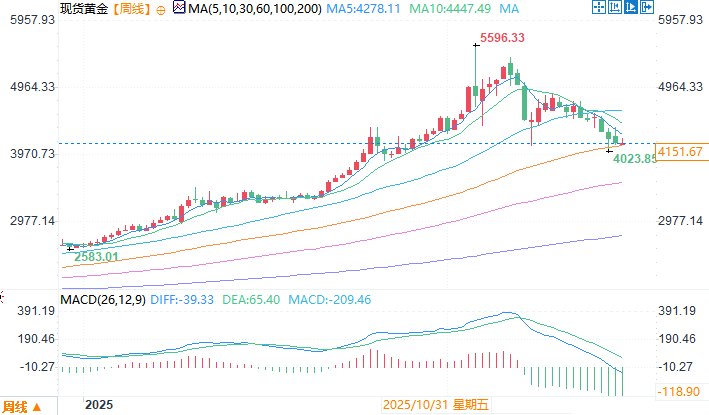
Spot gold weekly chart source: EasyForex
At 10:20 AM Beijing time on June 23, spot gold was trading at $4158.67 per ounce.
Key Forecast: Weak ETF inflows make achieving the $5,200 gold price target more difficult.
Analysts Amy Gower and Martijn Rats wrote an industry research report on Monday, stating, "Central banks' gold purchases are relatively independent and are likely to continue increasing their gold holdings. However, the flow of funds into gold ETFs is more sensitive to fluctuations in market interest rate expectations. Currently, the gold market lacks a core driving force for upward movement, and changes in ETF investment demand will continue to be influenced by three major factors: the direction of the Federal Reserve's policy, the real yield of US Treasury bonds, and the US dollar index."
Despite the investment bank's long-standing optimistic outlook on gold, predicting that the gradual easing of geopolitical tensions in the Middle East and the decline in oil prices would effectively suppress market inflation expectations and create a favorable environment for gold prices, two analysts simultaneously issued a risk warning. Following the Federal Reserve Chairman's strong tightening signals at last Wednesday's policy meeting, the market has generally formed a consensus expectation of prolonged high interest rates, and the resumption of rate hikes has once again been incorporated into market pricing. Gold is a non-interest-bearing asset, and rising market interest rates will directly increase the opportunity cost of holding gold, continuously suppressing the upward momentum of gold prices.
Morgan Stanley's accompanying statistics show that market expectations of continued high interest rates have driven the US 10-year real yield to significantly exceed the level in February, directly triggering continuous net outflows of funds from gold ETFs recently, becoming an important driver of the continuous weakening of gold prices.
Geopolitical conflicts disrupt the pace of interest rate cuts, significantly weakening gold's safe-haven appeal.
Back on May 6th, Gore stated publicly that the gold market was showing initial signs of upward momentum, and she reiterated that gold prices were expected to stabilize above $5200 per ounce for the year. She also acknowledged that even with the escalating global geopolitical risks stemming from the ongoing conflict with Iran, the recent weakness in gold prices was not surprising.
Gore stated, "The conflict in Iran has caused a severe shock to the energy supply side, significantly cooling the market's expectations for a Fed rate cut. Gold's inability to fulfill its traditional safe-haven and value-preserving functions is also in line with market logic. Currently, monetary policy expectations have replaced geopolitical crises as the core factor influencing gold price fluctuations. Gold's safe-haven hedging effect has been significantly weakened, and its value in hedging geopolitical and inflation risks has declined simultaneously. Gold price movements not only reflect the short-term impact of unexpected events but also depend on the corresponding monetary policy adjustments implemented by the Fed after the event."
Persistently high oil prices continue to amplify inflationary pressures across the United States, forcing the Federal Reserve Chairman to reconsider the loose monetary policy, and the market is gradually digesting expectations of a potential cancellation of interest rate cuts this year. Previously, Morgan Stanley still favored at least one round of interest rate cuts this year, believing that this rate-cutting cycle would provide stable support for gold prices.
Expectations for prolonged interest rate cuts remain, but continued geopolitical deterioration poses downside risks.
Gore stated, "Gold prices will continue to closely follow changes in real yields, but from a medium- to long-term perspective, there is still room for gold to rise."
The baseline scenario forecast issued by institutions in May indicates that the Federal Reserve will initiate its first round of interest rate cuts in January 2027, followed by a second round in March of the same year. Gore stated, "The implementation of this rate-cutting cycle will significantly benefit the gold market. ETF institutional fund allocation is highly dependent on policy signals, and the current gold price trend has once again become linked to the real yield of US Treasury bonds."
Gore added that the longer the conflict in Iran continues, the greater the downward pressure on gold will be.
He warned: "Once the market forms an expectation that the Federal Reserve will maintain high interest rates for a long time or even restart interest rate hikes, gold prices will see a significant correction. Even if the conflict is resolved, the upside potential for gold prices will still be limited. At present, gold prices are relatively high, which will simultaneously suppress the demand for gold from gold ETFs, central banks around the world, and the physical consumer market."
Summarize
According to Morgan Stanley's comprehensive analysis, in the short term, the combination of multiple negative factors, including the Fed's hawkish policy, outflows of funds from gold ETFs, and energy inflation driven by the Iranian conflict, significantly reduces the possibility of gold prices hitting $5,200/ounce in the second half of the year.
Short-term monetary policy expectations are driving gold price movements, rendering gold's traditional safe-haven function ineffective. However, institutions have not denied gold's long-term value; if the expected interest rate cut cycle of 2027 materializes, gold prices still have a basis for recovery. The key indicators for future gold price movements are the flow of funds into gold ETFs, the pace of the Federal Reserve's interest rate adjustments, and the evolution of geopolitical conflicts in the Middle East.
Spot gold weekly chart source: EasyForex
At 10:20 AM Beijing time on June 23, spot gold was trading at $4158.67 per ounce.
- Risk Warning and Disclaimer
- The market involves risk, and trading may not be suitable for all investors. This article is for reference only and does not constitute personal investment advice, nor does it take into account certain users’ specific investment objectives, financial situation, or other needs. Any investment decisions made based on this information are at your own risk.