Will short sellers in the US dollar face margin calls and gold bulls be about to face the most brutal revaluation?
2026-06-24 20:34:24
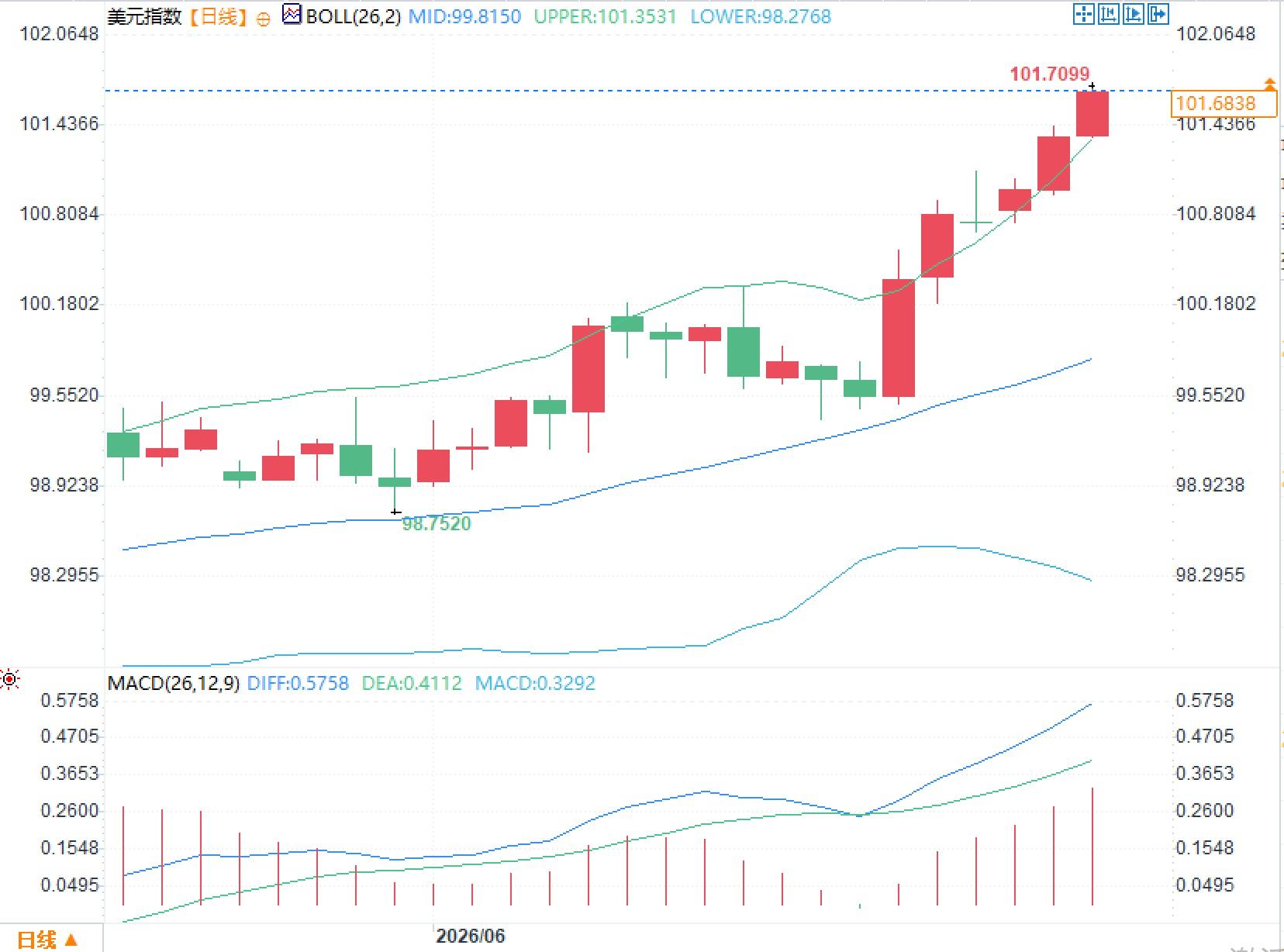
On Wednesday, June 24th, the main theme of global macro trading is shifting back from "currency purchasing power discounts" to "real interest rate pricing." The Federal Reserve maintained the target range for the federal funds rate at 3.50% to 3.75% on June 17th, but the core signal from new Chairman Warsh was not easing, but rather prioritizing the restoration of price stability. During the same period, the US dollar index rose to 101.68, up 2.47% in the past month, while gold fell to around $4020 per ounce, a monthly drop of over 11%. These price changes indicate that the market is reassessing the most crowded macroeconomic narrative of the past two years.
The strength of non-interest-bearing assets like gold over the past two years has largely stemmed from a shared assumption: high fiscal deficits, sticky inflation, and doubts about the independence of monetary policy will ultimately weaken the purchasing power of the US dollar. This logic is not absurd. According to budgetary agencies' February forecasts, the US fiscal deficit will be equivalent to 5.8% of GDP in fiscal year 2026, potentially rising to 6.7% by 2036, with interest payments remaining a significant source of fiscal pressure.
However, trading prices reflect marginal changes, not the long-term story itself. Warsh's first policy meeting reinforced the impression of "price stability first," making the market less inclined to assume the Fed would compromise on growth or asset prices. In other words, long-term fiscal issues remain, but the short-term monetary reaction function has changed. Previously, the strategy of buying gold and shorting the dollar began to undergo systemic deleveraging in the face of higher real interest rates and a stronger dollar.
The key contradiction for gold is not the disappearance of its safe-haven appeal, but rather the rising cost of holding it. The US 10-year real interest rate rose to approximately 2.27% on June 23, while the nominal 10-year yield was around 4.46% on June 24. When real yields are high, assets like gold that do not generate coupon income require stronger expectations of runaway inflation, concerns about fiscal credit, or geopolitical risk premiums to support their valuations.
The funding situation also confirms this. In May, inflows into global gold ETFs slowed significantly, with global gold ETF assets under management falling 2% month-on-month to $604 billion, and holdings dropping to 4,121 tons, down from the record high of 4,176 tons set on February 27. ETFs do not represent all demand, but they can quickly reflect the marginal attitudes of asset allocation accounts.
This means that gold has returned from being a "one-sided narrative asset" to a "multi-factor pricing asset." If inflation expectations cease to rise and real interest rates remain high, gold's hedging properties will remain, but its valuation elasticity will be compressed.
The recent strengthening of the US dollar cannot be explained solely by short-term safe-haven demand. More importantly, interest rate expectations have shifted back towards the dollar. Following the June meeting, discussions about the probability of a Fed rate hike this year have intensified, while expectations for rate cuts have been significantly postponed. The Federal Open Market Committee's schedule indicates that the next policy meeting will be held on July 28-29, at which time inflation and employment data will directly influence the market's repricing of the policy path.
For traders, the key issue isn't whether the dollar has re-entered a long-term bull market, but rather that the macroeconomic premise for dollar bears has been weakened. The previous linear logic that "widening fiscal deficits equal a weakening dollar" is easily reversed by a more aggressive policy response, leading to a squeeze. The dollar index's return to around 101 essentially reflects the market's repricing towards "longer periods of high interest rates, or even another rate hike."
Long-term structural risks and short-term trading directions. The US fiscal deficit, debt interest, and term premium issues have not disappeared and may continue to support demand for store-of-value assets such as gold. However, as long as the Federal Reserve maintains its credibility as an inflation fighter, it will be difficult for the market to sustain a one-sided expansion of the currency purchasing power discount trade.
Therefore, the current market contradiction is not whether the devaluation trade has completely ended, but rather its retreat from the dominant narrative to a backup narrative. The short-term dominant variables have become real interest rates, the dollar index, inflation data, and the Fed's communication style. If inflation rebounds and policy easing, the devaluation narrative may return. If inflation slowly declines but interest rates remain high, gold's upward momentum will still be limited. The market is shifting from trading on a grand narrative to trading on a more nuanced interest rate path.
Question 1: Does the decline in gold prices mean that its safe-haven value has disappeared?
A: No. Gold still possesses the attribute of hedging against fiscal and inflationary tail risks, but when real interest rates rise and the US dollar strengthens, the opportunity cost of holding gold increases, and the price will first reflect the pressure of capital rebalancing.
Question 2: Does the strengthening of the US dollar indicate that long-term fiscal problems have been resolved?
A: That's not the correct interpretation. While the fiscal deficit remains a long-term constraint, in the short term the market is more focused on whether the Federal Reserve is willing to maintain price stability. If policy credibility strengthens, the bearish logic for the dollar will be weakened.
Question 3: Has the devaluation transaction ended?
A: More accurately, it's a downgrade from a primary trading strategy to a structural alternative. It won't disappear, but for it to become a primary strategy again, stronger signals of pressure from inflation, fiscal policy, or policy credibility are needed.
Why did the narrative of devaluation suddenly lose momentum?
The strength of non-interest-bearing assets like gold over the past two years has largely stemmed from a shared assumption: high fiscal deficits, sticky inflation, and doubts about the independence of monetary policy will ultimately weaken the purchasing power of the US dollar. This logic is not absurd. According to budgetary agencies' February forecasts, the US fiscal deficit will be equivalent to 5.8% of GDP in fiscal year 2026, potentially rising to 6.7% by 2036, with interest payments remaining a significant source of fiscal pressure.
However, trading prices reflect marginal changes, not the long-term story itself. Warsh's first policy meeting reinforced the impression of "price stability first," making the market less inclined to assume the Fed would compromise on growth or asset prices. In other words, long-term fiscal issues remain, but the short-term monetary reaction function has changed. Previously, the strategy of buying gold and shorting the dollar began to undergo systemic deleveraging in the face of higher real interest rates and a stronger dollar.
Rising real interest rates lead to a revaluation of gold prices
The key contradiction for gold is not the disappearance of its safe-haven appeal, but rather the rising cost of holding it. The US 10-year real interest rate rose to approximately 2.27% on June 23, while the nominal 10-year yield was around 4.46% on June 24. When real yields are high, assets like gold that do not generate coupon income require stronger expectations of runaway inflation, concerns about fiscal credit, or geopolitical risk premiums to support their valuations.
The funding situation also confirms this. In May, inflows into global gold ETFs slowed significantly, with global gold ETF assets under management falling 2% month-on-month to $604 billion, and holdings dropping to 4,121 tons, down from the record high of 4,176 tons set on February 27. ETFs do not represent all demand, but they can quickly reflect the marginal attitudes of asset allocation accounts.
This means that gold has returned from being a "one-sided narrative asset" to a "multi-factor pricing asset." If inflation expectations cease to rise and real interest rates remain high, gold's hedging properties will remain, but its valuation elasticity will be compressed.
The dollar's rebound is not simply a safe-haven trade.
The recent strengthening of the US dollar cannot be explained solely by short-term safe-haven demand. More importantly, interest rate expectations have shifted back towards the dollar. Following the June meeting, discussions about the probability of a Fed rate hike this year have intensified, while expectations for rate cuts have been significantly postponed. The Federal Open Market Committee's schedule indicates that the next policy meeting will be held on July 28-29, at which time inflation and employment data will directly influence the market's repricing of the policy path.
For traders, the key issue isn't whether the dollar has re-entered a long-term bull market, but rather that the macroeconomic premise for dollar bears has been weakened. The previous linear logic that "widening fiscal deficits equal a weakening dollar" is easily reversed by a more aggressive policy response, leading to a squeeze. The dollar index's return to around 101 essentially reflects the market's repricing towards "longer periods of high interest rates, or even another rate hike."
Fiscal risks remain, but the pace of transactions has changed.
Long-term structural risks and short-term trading directions. The US fiscal deficit, debt interest, and term premium issues have not disappeared and may continue to support demand for store-of-value assets such as gold. However, as long as the Federal Reserve maintains its credibility as an inflation fighter, it will be difficult for the market to sustain a one-sided expansion of the currency purchasing power discount trade.
Therefore, the current market contradiction is not whether the devaluation trade has completely ended, but rather its retreat from the dominant narrative to a backup narrative. The short-term dominant variables have become real interest rates, the dollar index, inflation data, and the Fed's communication style. If inflation rebounds and policy easing, the devaluation narrative may return. If inflation slowly declines but interest rates remain high, gold's upward momentum will still be limited. The market is shifting from trading on a grand narrative to trading on a more nuanced interest rate path.
Frequently Asked Questions
Question 1: Does the decline in gold prices mean that its safe-haven value has disappeared?
A: No. Gold still possesses the attribute of hedging against fiscal and inflationary tail risks, but when real interest rates rise and the US dollar strengthens, the opportunity cost of holding gold increases, and the price will first reflect the pressure of capital rebalancing.
Question 2: Does the strengthening of the US dollar indicate that long-term fiscal problems have been resolved?
A: That's not the correct interpretation. While the fiscal deficit remains a long-term constraint, in the short term the market is more focused on whether the Federal Reserve is willing to maintain price stability. If policy credibility strengthens, the bearish logic for the dollar will be weakened.
Question 3: Has the devaluation transaction ended?
A: More accurately, it's a downgrade from a primary trading strategy to a structural alternative. It won't disappear, but for it to become a primary strategy again, stronger signals of pressure from inflation, fiscal policy, or policy credibility are needed.
- Risk Warning and Disclaimer
- The market involves risk, and trading may not be suitable for all investors. This article is for reference only and does not constitute personal investment advice, nor does it take into account certain users’ specific investment objectives, financial situation, or other needs. Any investment decisions made based on this information are at your own risk.