Gold fell below $4,000 and crude oil retreated from conflict premiums, indicating a shift in the main theme of the commodities market.
2026-06-24 22:01:02
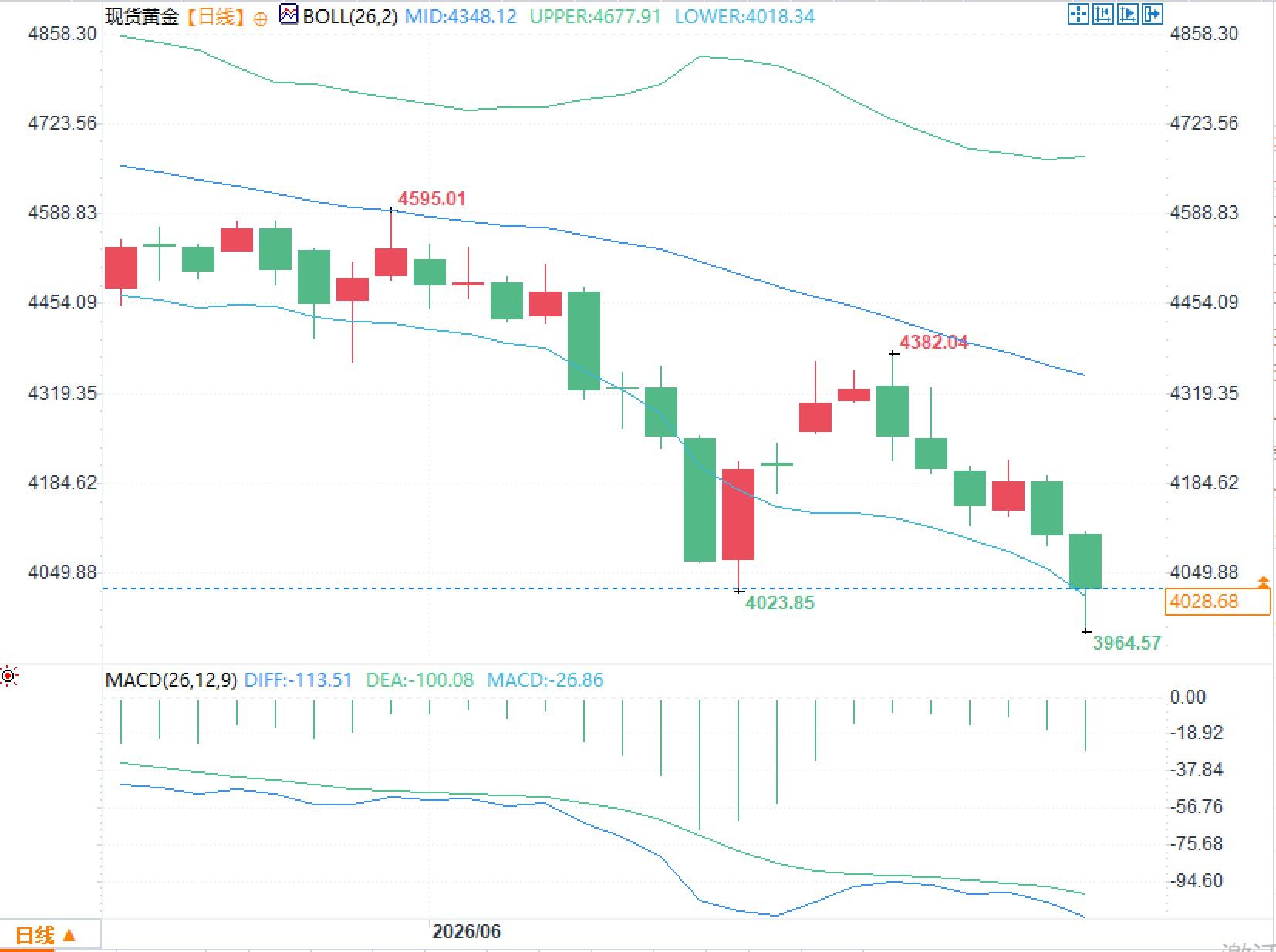
On Wednesday, June 24th, gold prices briefly fell to around $3965 per ounce, down from a January high of approximately $5596 per ounce; WTI crude oil fell to $70.07 per barrel, and Brent crude to around $73.70 per barrel. The Federal Reserve recently maintained its interest rate range at 3.50% to 3.75%, with Chairman Kevin Warsh emphasizing the commitment to achieving its 2% price stability target. On the surface, this appears to be a simultaneous cooling of safe-haven assets and energy prices, but in reality, traders are reassessing three variables: a stronger dollar, upward revisions to interest rate expectations, and the potential for a second wave of energy inflation.
Regarding gold ETFs, global gold ETF assets under management fell to $604 billion in May, with holdings decreasing to 4,121 tons. Official sector demand for gold remains strong, with the latest survey showing that 89% of respondents expect global central bank gold reserves to increase over the next 12 months.
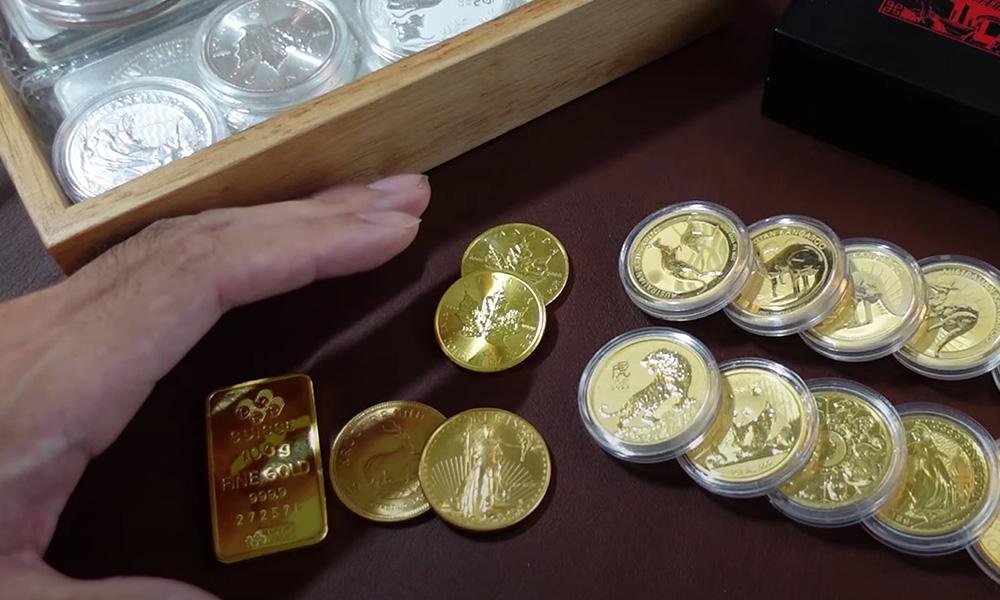
The most critical factor suppressing gold's recent pullback is the cost of holding it. After the Federal Reserve maintained its policy interest rate range of 3.50% to 3.75%, market pricing in further rate hikes intensified significantly, with the dollar index rising above 101 and approaching a 13-month high. For gold, which does not generate coupon income, rising nominal and real interest rates directly increase opportunity costs, especially after years of price increases, amplifying the sensitivity of funds to macroeconomic variables.
Following the June policy meeting, Kevin Warsh stated that the Federal Reserve has the capability and commitment to achieving its 2% price stability target. This statement sends a simple signal: until the energy shock fully subsides, the policy focus remains on suppressing inflation, rather than rushing to ease monetary policy. Gold had previously risen due to a confluence of factors including currency devaluation, central bank gold purchases, geopolitical risks, and ETF inflows. However, as interest rate expectations began to correct in the opposite direction, the first to loosen were those who had chased high prices.
Gold's drop below $4,000 per ounce is not merely a breach of a key psychological level, but also signifies a reassessment of the extreme premiums seen at the beginning of the year. When gold reached a high of nearly $5,600 per ounce in January, the price reflected multiple insurance factors: conflict risks, concerns about fiscal deficits, worries about currency purchasing power, and cross-market safe-haven demand. While these factors haven't entirely disappeared, their marginal strength has diminished, naturally causing prices to shift from a "comprehensive defense" stance back to one of "interest rate constraints."
It's worth noting that gold hasn't lost all its fundamental support. Global central bank gold purchases remain a structural foundation, and the latest survey shows that most monetary institutions surveyed still expect their gold reserves to increase. However, official purchases are typically long-term and diversified, and do not necessarily provide immediate support for short-term prices. On the contrary, gold ETFs saw net outflows in May, indicating that market funds are more concerned about catalyst gaps and a strong US dollar.
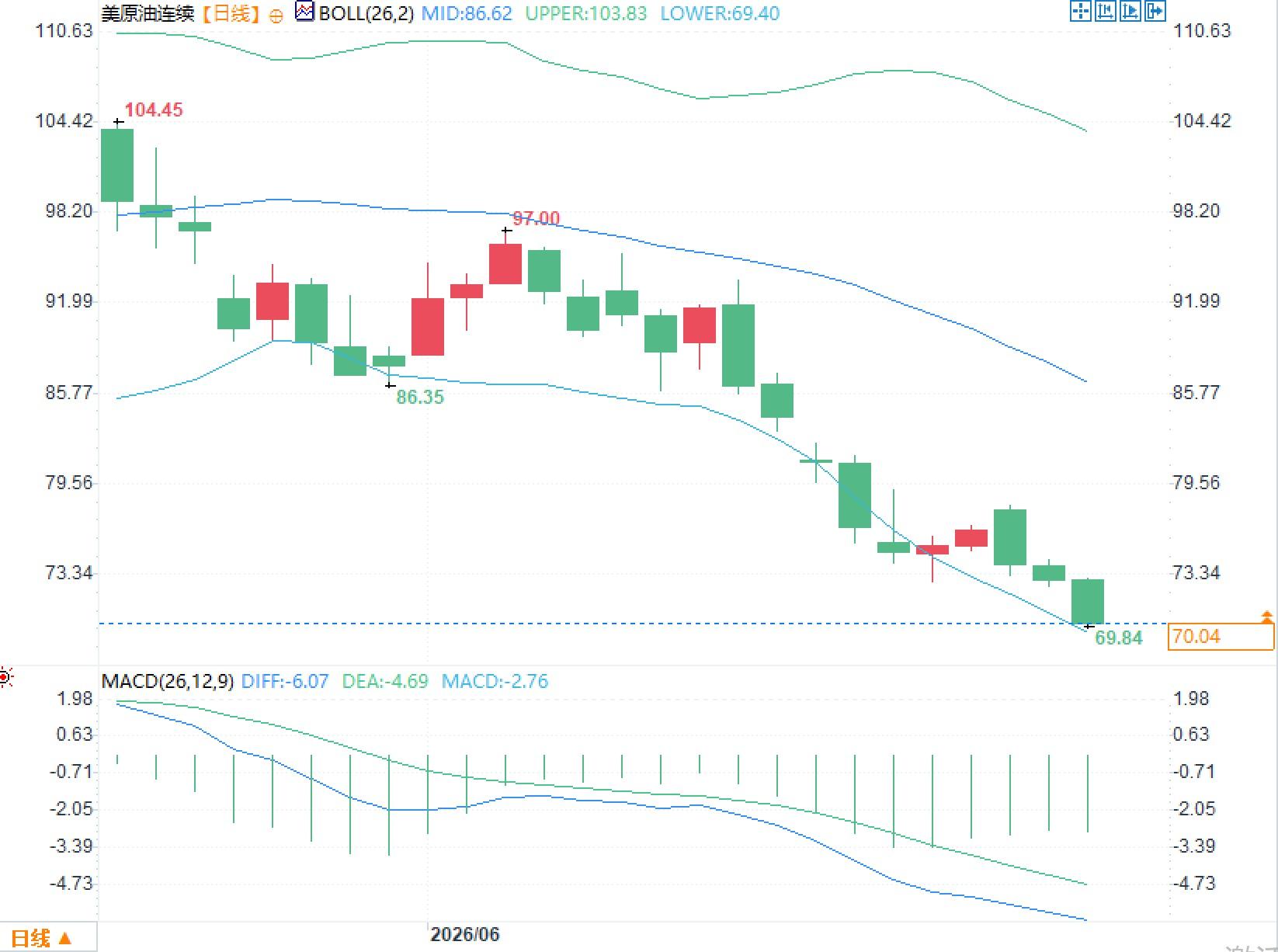
The rapid decline in crude oil prices is the most easily overlooked aspect of gold's price movement. The earlier conflict between the US and Iran pushed up energy prices, which, through inflation expectations, transmitted to the interest rate market, had a dual effect on gold: on the one hand, it increased safe-haven demand, and on the other hand, it increased the probability of interest rate hikes. As Brent crude fell back to around $74 per barrel and WTI crude approached $70 per barrel, the tail risk of inflation eased somewhat, but the safe-haven premium for gold also cooled simultaneously.
The decline in oil prices does not equate to the elimination of supply and demand risks. The resumption of shipping routes, improved regional supply expectations, inventory releases, and cooling demand have all contributed to lowering oil prices. However, global crude oil inventories were previously depleted rapidly, and refinery operations, refined product inventories, and transportation insurance costs may still cause temporary disruptions. For traders, continued weakness in oil prices could ease inflation expectations; a rebound could potentially push up interest rate expectations again. Neither path is necessarily directly bullish for gold; the key lies in whether the market interprets changes in oil prices as "cooling inflation" or "increasing risk."
The current correlation between gold and crude oil is not the traditional simultaneous rise and fall, but rather influenced by the interplay of interest rate and inflation expectations. A stronger dollar suppresses the dollar-denominated performance of gold and commodities, falling oil prices lower inflation premiums, and persistently high bond yields continue to diminish gold's attractiveness. For gold to regain upward momentum, we need to see a weakening of the dollar's momentum, a decline in real interest rates, or a significant resurgence of risk events.
Regarding crude oil, the market has shifted from "supply disruption panic" to a phase of verifying the "speed of supply recovery and demand resilience." If shipping recovers faster than demand recovers, oil prices may continue to reflect previous premiums; if inventories are too low or regional negotiations are protracted, price volatility will remain high. In other words, neither gold nor crude oil can be explained by a single safe-haven logic; the real pricing core has shifted to a triangular game involving macroeconomic interest rates, capital flows, and commodity inventories.
Regarding gold ETFs, global gold ETF assets under management fell to $604 billion in May, with holdings decreasing to 4,121 tons. Official sector demand for gold remains strong, with the latest survey showing that 89% of respondents expect global central bank gold reserves to increase over the next 12 months.
The core reason for the decline in gold prices is not the disappearance of safe-haven demand, but rather the repricing of real interest rates.
The most critical factor suppressing gold's recent pullback is the cost of holding it. After the Federal Reserve maintained its policy interest rate range of 3.50% to 3.75%, market pricing in further rate hikes intensified significantly, with the dollar index rising above 101 and approaching a 13-month high. For gold, which does not generate coupon income, rising nominal and real interest rates directly increase opportunity costs, especially after years of price increases, amplifying the sensitivity of funds to macroeconomic variables.
Following the June policy meeting, Kevin Warsh stated that the Federal Reserve has the capability and commitment to achieving its 2% price stability target. This statement sends a simple signal: until the energy shock fully subsides, the policy focus remains on suppressing inflation, rather than rushing to ease monetary policy. Gold had previously risen due to a confluence of factors including currency devaluation, central bank gold purchases, geopolitical risks, and ETF inflows. However, as interest rate expectations began to correct in the opposite direction, the first to loosen were those who had chased high prices.
The significance of the $4,000 mark lies in the fact that the risk premium is being re-discounted.
Gold's drop below $4,000 per ounce is not merely a breach of a key psychological level, but also signifies a reassessment of the extreme premiums seen at the beginning of the year. When gold reached a high of nearly $5,600 per ounce in January, the price reflected multiple insurance factors: conflict risks, concerns about fiscal deficits, worries about currency purchasing power, and cross-market safe-haven demand. While these factors haven't entirely disappeared, their marginal strength has diminished, naturally causing prices to shift from a "comprehensive defense" stance back to one of "interest rate constraints."
It's worth noting that gold hasn't lost all its fundamental support. Global central bank gold purchases remain a structural foundation, and the latest survey shows that most monetary institutions surveyed still expect their gold reserves to increase. However, official purchases are typically long-term and diversified, and do not necessarily provide immediate support for short-term prices. On the contrary, gold ETFs saw net outflows in May, indicating that market funds are more concerned about catalyst gaps and a strong US dollar.
The decline in crude oil prices eased inflationary pressures, but also lowered the safe-haven price of gold.
The rapid decline in crude oil prices is the most easily overlooked aspect of gold's price movement. The earlier conflict between the US and Iran pushed up energy prices, which, through inflation expectations, transmitted to the interest rate market, had a dual effect on gold: on the one hand, it increased safe-haven demand, and on the other hand, it increased the probability of interest rate hikes. As Brent crude fell back to around $74 per barrel and WTI crude approached $70 per barrel, the tail risk of inflation eased somewhat, but the safe-haven premium for gold also cooled simultaneously.
The decline in oil prices does not equate to the elimination of supply and demand risks. The resumption of shipping routes, improved regional supply expectations, inventory releases, and cooling demand have all contributed to lowering oil prices. However, global crude oil inventories were previously depleted rapidly, and refinery operations, refined product inventories, and transportation insurance costs may still cause temporary disruptions. For traders, continued weakness in oil prices could ease inflation expectations; a rebound could potentially push up interest rate expectations again. Neither path is necessarily directly bullish for gold; the key lies in whether the market interprets changes in oil prices as "cooling inflation" or "increasing risk."
The market's main theme has shifted from a one-sided narrative to multi-asset linkage.
The current correlation between gold and crude oil is not the traditional simultaneous rise and fall, but rather influenced by the interplay of interest rate and inflation expectations. A stronger dollar suppresses the dollar-denominated performance of gold and commodities, falling oil prices lower inflation premiums, and persistently high bond yields continue to diminish gold's attractiveness. For gold to regain upward momentum, we need to see a weakening of the dollar's momentum, a decline in real interest rates, or a significant resurgence of risk events.
Regarding crude oil, the market has shifted from "supply disruption panic" to a phase of verifying the "speed of supply recovery and demand resilience." If shipping recovers faster than demand recovers, oil prices may continue to reflect previous premiums; if inventories are too low or regional negotiations are protracted, price volatility will remain high. In other words, neither gold nor crude oil can be explained by a single safe-haven logic; the real pricing core has shifted to a triangular game involving macroeconomic interest rates, capital flows, and commodity inventories.
- Risk Warning and Disclaimer
- The market involves risk, and trading may not be suitable for all investors. This article is for reference only and does not constitute personal investment advice, nor does it take into account certain users’ specific investment objectives, financial situation, or other needs. Any investment decisions made based on this information are at your own risk.