Gold Trading Alert: Gold Prices Hit Seven-Month Low! A Double Blow from a Soaring Dollar and Fed Rate Hike Expectations Shatters Bulls' Dreams of Reaching $4,000?
2026-06-25 07:07:26
The global gold market is witnessing a dramatic turn of events. On Wednesday (June 24), spot gold prices plummeted 2.7%, closing at $3,998.95 per ounce, not only breaking below the key psychological level of $4,000 but also hitting a more than seven-month low. Earlier in the session, gold prices touched a low of $3,959.04 per ounce, the lowest level since November 2025. This sharp drop caught gold bulls off guard, who had seen prices reach historical highs at the beginning of the year, and has prompted a reassessment of the long-term trend of precious metals. With the US dollar index rebounding strongly, expectations of a Fed rate hike rising, and easing geopolitical tensions converging, gold's safe-haven appeal has temporarily faded. On Thursday (June 25) in early Asian trading, spot gold fluctuated narrowly around the $4,000 mark, currently trading around $3,995 per ounce.
The decline in gold prices has been exceptionally rapid. US gold futures also plunged 3.4%, closing at $4008.80. Just a few months ago, spot gold hit a record high of $5596 in late January, and has since fallen by more than $1600. This dramatic correction not only tests investors' nerves but also highlights the rapid shift in market sentiment. Other precious metals fared even worse, with spot silver plummeting 6.7% on the day, briefly hitting a new low since November 2025, indicating widespread selling pressure across the entire precious metals sector.
Investors quickly shifted their focus to the macro level. The strengthening of the US dollar became the direct driver of gold's decline—when the dollar index rose to a 13-month high and approached the 102 mark, dollar-denominated gold became more expensive for holders of other currencies, naturally suppressing demand.
The dollar's strength is no accident. Since the Federal Reserve's policy meeting last week released a clearly hawkish signal, market expectations for an interest rate hike this year have risen significantly. Traders are preparing for a possible rate hike by the Fed in July or September, with the probability of a September rate hike currently climbing to around 66%. Statements from Fed officials have further reinforced this expectation: against the backdrop of a seemingly solid economy, the policy focus is shifting towards curbing inflation rather than simply supporting growth.
Independent metals trader Tai Wong pointed out that the Federal Reserve's hawkish stance, the dollar's rise to a 13-month high, and declining inflation expectations have collectively put heavy pressure on precious metals. Rising interest rates directly diminish gold's appeal, as the cost of holding gold, a non-yielding asset, increases significantly in a high-interest-rate environment. Analysis from institutions like Barclays also indicates a mild buying signal for the dollar at the end of the month; although quarterly models have issued some sell signals, the dollar's strong trend is unlikely to reverse in the short term.
Meanwhile, the sell-off in US tech stocks has indirectly boosted the dollar's status as a safe-haven asset. Investors are awaiting Thursday's US Personal Consumption Expenditures (PCE) inflation data, the Federal Reserve's preferred inflation gauge. Stronger-than-expected data could further support interest rate hikes, and the downside risks for gold prices will continue to mount.
The collapse in gold prices is also closely related to the unexpected easing of geopolitical tensions. The preliminary peace agreement reached between the United States and Iran is gradually releasing oil supplies that had been pent up due to tensions in the Strait of Hormuz. More oil tankers are leaving the strait, causing Brent crude prices to fall by more than 3%, and U.S. crude to drop below $70 a barrel, hitting its lowest level since the outbreak of the war. The decline in oil prices has eased market concerns about inflation and weakened gold's appeal as an inflation hedge.
US Secretary of State Marco Rubio's shuttle diplomacy in the Middle East is an attempt to reassure Gulf allies, while technical negotiations are scheduled to resume in Switzerland at the end of the month. Despite Israel's insistence on maintaining its military presence in southern Lebanon and continued criticism from Iran, the overall easing of regional tensions has significantly reduced gold's safe-haven premium. Market concerns about a potential war with Iran driving up inflation are fading, replaced by optimistic expectations of a supply recovery.
Despite short-term pressure, the market is not entirely pessimistic. Tai Wong believes that gold prices have some support below $3,900, and the trend of global central banks continuing to buy gold is unlikely to change easily. This makes a catastrophic drop in gold prices unlikely, but a prolonged consolidation phase is possible. Standard Chartered Bank's analysis of silver is similar; although short-term capital outflows have increased volatility, supply shortages suggest a possible rebound in the coming months.
ING analysts have lowered their gold price forecasts, reducing the average price for the third quarter of 2026 from $4,850 to $4,300, and for the fourth quarter from $5,000 to $4,600. This adjustment reflects the institution's rapid response to changes in the macroeconomic environment. However, US inventory data still shows that crude oil inventories are at historically low levels, and refining demand is strong, which may provide some support for inflation in the future, indirectly affecting gold prices.
In summary, the gold market is at a critical turning point. Uncertainty surrounding the Federal Reserve's policies, the continued strength of the US dollar, and the supply release resulting from geopolitical easing are all contributing to short-term downward pressure. Thursday's PCE data will be a key indicator; moderate inflation data could temporarily ease expectations of interest rate hikes, while strong data could put further downward pressure on gold prices.
From a medium- to long-term perspective, central bank gold purchases, potential recurring geopolitical risks, and global economic uncertainties continue to provide structural support for gold. Investors need to closely monitor the Federal Reserve's next move, the implementation of the Iran nuclear deal, and oil price trends. In the current environment, gold may find it difficult to quickly return to its highs, but it is not necessarily going to plummet either—a significant test may be imminent around $3,900.
This round of correction in gold prices is both an inevitable result of macroeconomic factors and a correction of previously overly optimistic expectations in the market. Regardless of short-term fluctuations, gold's strategic value as a crucial component of global asset allocation remains intact. Amidst the turbulence, investors need to remain rational and await clearer signals.
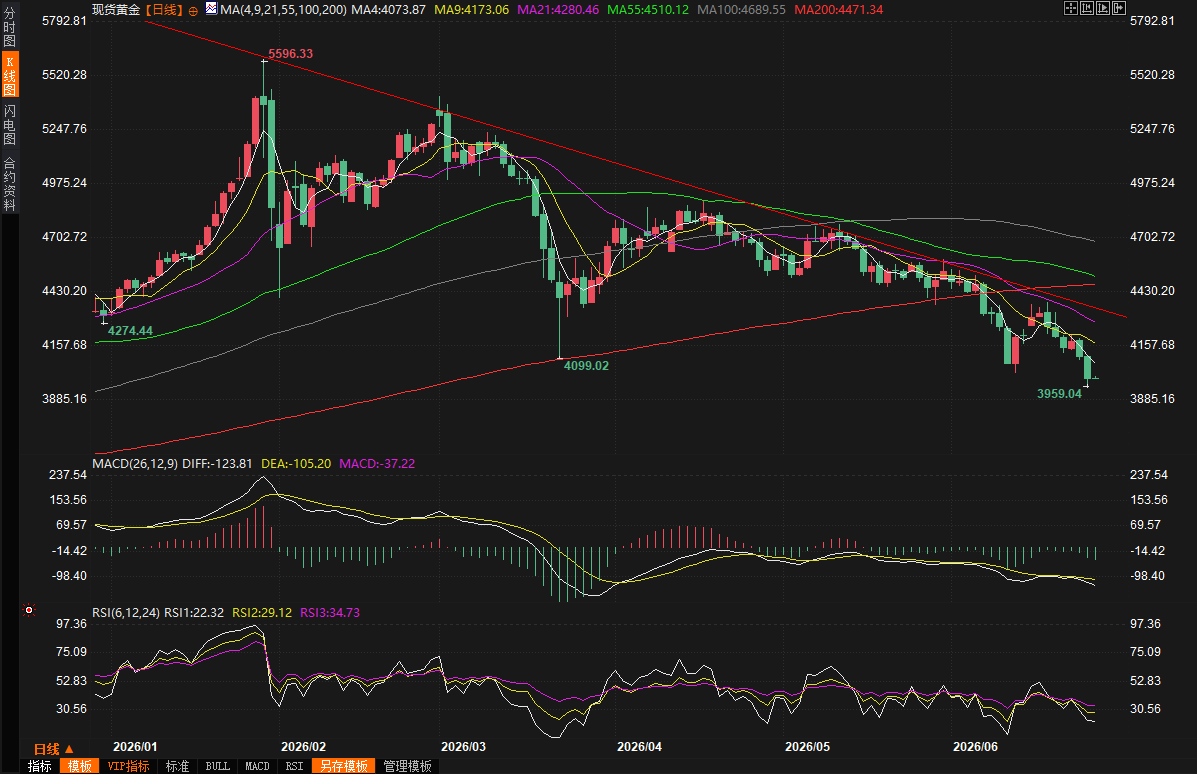
(Spot gold daily chart, source: FX678)
At 07:05 Beijing time, spot gold was trading at $3995.33 per ounce.
The current market's drastic decline: a rapid fall from its peak to its lowest point.
The decline in gold prices has been exceptionally rapid. US gold futures also plunged 3.4%, closing at $4008.80. Just a few months ago, spot gold hit a record high of $5596 in late January, and has since fallen by more than $1600. This dramatic correction not only tests investors' nerves but also highlights the rapid shift in market sentiment. Other precious metals fared even worse, with spot silver plummeting 6.7% on the day, briefly hitting a new low since November 2025, indicating widespread selling pressure across the entire precious metals sector.
Investors quickly shifted their focus to the macro level. The strengthening of the US dollar became the direct driver of gold's decline—when the dollar index rose to a 13-month high and approached the 102 mark, dollar-denominated gold became more expensive for holders of other currencies, naturally suppressing demand.
The US Dollar and Hawkish Signals from the Federal Reserve: The Biggest Killer of Gold
The dollar's strength is no accident. Since the Federal Reserve's policy meeting last week released a clearly hawkish signal, market expectations for an interest rate hike this year have risen significantly. Traders are preparing for a possible rate hike by the Fed in July or September, with the probability of a September rate hike currently climbing to around 66%. Statements from Fed officials have further reinforced this expectation: against the backdrop of a seemingly solid economy, the policy focus is shifting towards curbing inflation rather than simply supporting growth.
Independent metals trader Tai Wong pointed out that the Federal Reserve's hawkish stance, the dollar's rise to a 13-month high, and declining inflation expectations have collectively put heavy pressure on precious metals. Rising interest rates directly diminish gold's appeal, as the cost of holding gold, a non-yielding asset, increases significantly in a high-interest-rate environment. Analysis from institutions like Barclays also indicates a mild buying signal for the dollar at the end of the month; although quarterly models have issued some sell signals, the dollar's strong trend is unlikely to reverse in the short term.
Meanwhile, the sell-off in US tech stocks has indirectly boosted the dollar's status as a safe-haven asset. Investors are awaiting Thursday's US Personal Consumption Expenditures (PCE) inflation data, the Federal Reserve's preferred inflation gauge. Stronger-than-expected data could further support interest rate hikes, and the downside risks for gold prices will continue to mount.
Geopolitical easing coupled with a sharp drop in oil prices: Demand for safe-haven assets plummeted.
The collapse in gold prices is also closely related to the unexpected easing of geopolitical tensions. The preliminary peace agreement reached between the United States and Iran is gradually releasing oil supplies that had been pent up due to tensions in the Strait of Hormuz. More oil tankers are leaving the strait, causing Brent crude prices to fall by more than 3%, and U.S. crude to drop below $70 a barrel, hitting its lowest level since the outbreak of the war. The decline in oil prices has eased market concerns about inflation and weakened gold's appeal as an inflation hedge.
US Secretary of State Marco Rubio's shuttle diplomacy in the Middle East is an attempt to reassure Gulf allies, while technical negotiations are scheduled to resume in Switzerland at the end of the month. Despite Israel's insistence on maintaining its military presence in southern Lebanon and continued criticism from Iran, the overall easing of regional tensions has significantly reduced gold's safe-haven premium. Market concerns about a potential war with Iran driving up inflation are fading, replaced by optimistic expectations of a supply recovery.
Expert opinions and institutional adjustments: Support remains, but a rebound will take time.
Despite short-term pressure, the market is not entirely pessimistic. Tai Wong believes that gold prices have some support below $3,900, and the trend of global central banks continuing to buy gold is unlikely to change easily. This makes a catastrophic drop in gold prices unlikely, but a prolonged consolidation phase is possible. Standard Chartered Bank's analysis of silver is similar; although short-term capital outflows have increased volatility, supply shortages suggest a possible rebound in the coming months.
ING analysts have lowered their gold price forecasts, reducing the average price for the third quarter of 2026 from $4,850 to $4,300, and for the fourth quarter from $5,000 to $4,600. This adjustment reflects the institution's rapid response to changes in the macroeconomic environment. However, US inventory data still shows that crude oil inventories are at historically low levels, and refining demand is strong, which may provide some support for inflation in the future, indirectly affecting gold prices.
Looking ahead: Can gold regain its upward momentum?
In summary, the gold market is at a critical turning point. Uncertainty surrounding the Federal Reserve's policies, the continued strength of the US dollar, and the supply release resulting from geopolitical easing are all contributing to short-term downward pressure. Thursday's PCE data will be a key indicator; moderate inflation data could temporarily ease expectations of interest rate hikes, while strong data could put further downward pressure on gold prices.
From a medium- to long-term perspective, central bank gold purchases, potential recurring geopolitical risks, and global economic uncertainties continue to provide structural support for gold. Investors need to closely monitor the Federal Reserve's next move, the implementation of the Iran nuclear deal, and oil price trends. In the current environment, gold may find it difficult to quickly return to its highs, but it is not necessarily going to plummet either—a significant test may be imminent around $3,900.
This round of correction in gold prices is both an inevitable result of macroeconomic factors and a correction of previously overly optimistic expectations in the market. Regardless of short-term fluctuations, gold's strategic value as a crucial component of global asset allocation remains intact. Amidst the turbulence, investors need to remain rational and await clearer signals.
(Spot gold daily chart, source: FX678)
At 07:05 Beijing time, spot gold was trading at $3995.33 per ounce.
- Risk Warning and Disclaimer
- The market involves risk, and trading may not be suitable for all investors. This article is for reference only and does not constitute personal investment advice, nor does it take into account certain users’ specific investment objectives, financial situation, or other needs. Any investment decisions made based on this information are at your own risk.