US and Japanese officials signaled intervention in currency markets, causing the USD/JPY exchange rate to remain volatile at high levels.
2026-06-25 10:45:39
The US dollar traded in a narrow range against the Japanese yen during Thursday's Asian trading session, hovering around 161.75 , not far from its recent multi-decade high. While the dollar was supported by expectations of hawkish Federal Reserve policy, repeated warnings from the Japanese government regarding currency intervention were limiting further gains.
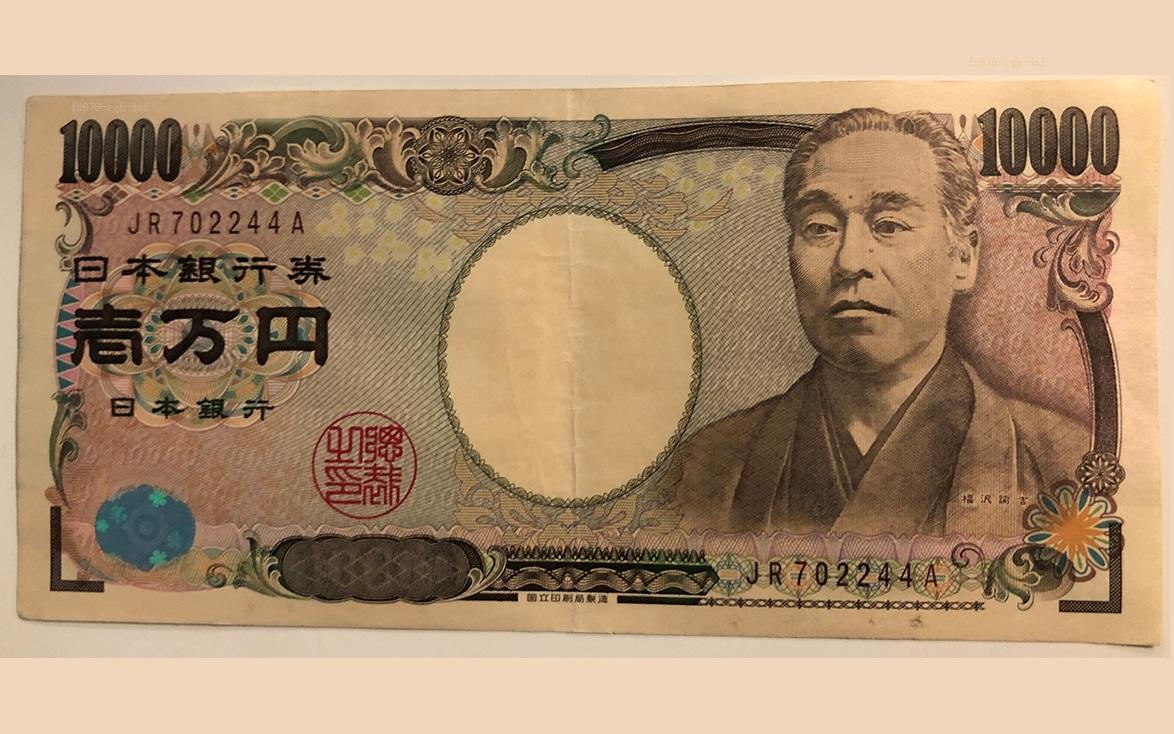
The recent continued depreciation of the Japanese yen has become a focus of attention in the global foreign exchange market. As the USD/JPY exchange rate approaches historical highs, the Japanese government's concerns about excessive exchange rate volatility have clearly intensified. Japanese Finance Minister Satsuki Katayama recently met with US Treasury Secretary Scott Bessenter, and both sides indicated they would take action on the exchange rate issue if necessary. This statement quickly sparked speculation in the market that the US and Japan might jointly intervene in the foreign exchange market.
Meanwhile, Chief Cabinet Secretary Minoru Kihara reiterated that the government is closely monitoring foreign exchange market dynamics and will take appropriate measures to address abnormal exchange rate fluctuations if necessary. The market generally believes that as the USD/JPY exchange rate has remained above 160 for an extended period, the Japanese authorities' tolerance for exchange rate movements is decreasing.
Historically, the Japanese government typically does not set specific targets for exchange rate levels, but it remains highly vigilant against rapid, one-sided fluctuations within a short period. Recent frequent verbal warnings from the government are seen by the market as a key signal of impending intervention, prompting some investors to reduce their long dollar positions.
However, factors supporting the dollar remain. The Federal Reserve decided at its June monetary policy meeting to keep the federal funds rate unchanged at 3.50%-3.75% , but the overall policy tone remained hawkish. Newly appointed Fed Chairman Kevin Warsh emphasized in his first press conference that "price stability" will continue to be a core objective of monetary policy, indicating that policymakers remain vigilant about inflation risks.
Changes in interest rate expectations have further strengthened the dollar's advantage. According to the CME FedWatch tool, the market now expects the probability of a 25 basis point rate hike by the Federal Reserve in July to rise to 34.2% , a significant increase from 8.5% a week earlier; the probability of a September rate hike has risen from 29.1% to 66.4% . This change reflects investors' continued strengthening expectations of high inflationary pressures and persistently high interest rates in the United States.
In the current environment, the interest rate differential between the US and Japan remains a significant factor driving the rise of the US dollar against the Japanese yen. Although the Bank of Japan is gradually normalizing its monetary policy, its interest rates are still significantly lower than those of the United States, leading to continued capital inflows into dollar assets and thus supporting the high level of the US dollar against the yen.
In terms of market sentiment, investors are caught in a tug-of-war between two forces. On one hand, hawkish expectations from the Federal Reserve and rising US yields continue to favor the US dollar; on the other hand, the increasing risk of Japanese government intervention is making the market hesitant to chase the rally excessively. If the Japanese authorities take actual intervention measures in the future, exchange rate volatility could intensify significantly.
In addition, investors will be watching upcoming U.S. employment, inflation, and consumer data to gauge the Federal Reserve's future policy direction. Meanwhile, the Japanese government's statements and actions regarding the exchange rate will also be a significant factor influencing the market.
From a daily chart perspective, the USD/JPY pair maintains a clear upward trend, trading within a long-term upward channel. Currently, the exchange rate is around 161.75 , close to previous highs, with bulls still in control. However, as the price approaches historical highs, the market faces significant risk of policy intervention, and upward momentum is beginning to slow. The first key support level is at the psychological level of 160.00 , with further support around 158.80 . Resistance levels to watch are 162.50 and 164.00 . A break above 162.50 could open up further upside potential, but a break below 160.00 could trigger profit-taking and a period of consolidation.
Observing the 4-hour chart, the USD/JPY pair has recently been consolidating at high levels, with short-term bullish momentum weakening. The price has repeatedly tested the 161.80-162.00 area but failed to break through effectively, indicating increasing selling pressure above. If the exchange rate can regain a foothold above 162.00, it is expected to continue its upward trend and challenge higher targets; conversely, if the Japanese government further strengthens its intervention warnings or even takes concrete action, the exchange rate may quickly fall back to around 160.00 to seek support. The market is currently at a critical juncture, and short-term volatility is expected to increase significantly.
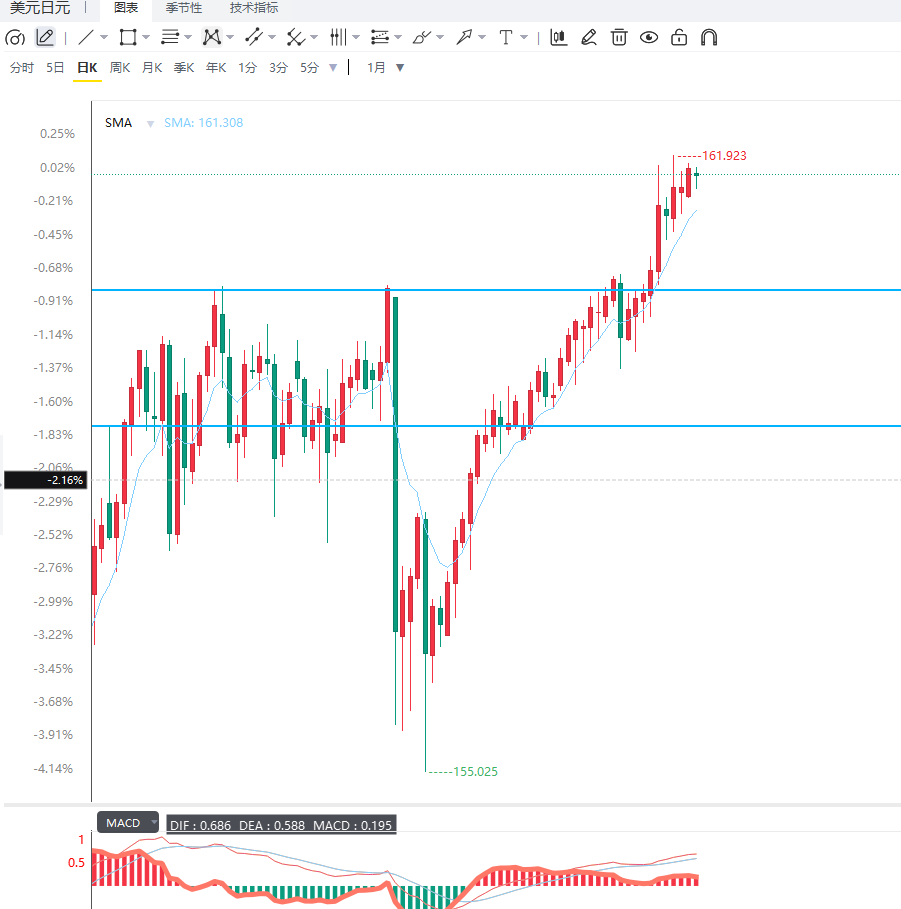
Editor's Summary : The USD/JPY exchange rate is currently at a critical juncture, intertwined with fundamental and policy risks. The Federal Reserve's hawkish stance and rising market expectations of interest rate hikes continue to support the dollar, while frequent intervention signals from the Japanese government are limiting further gains. In the short term, the USD/JPY interest rate advantage remains favorable for the dollar's strength, but as the exchange rate approaches historical highs, the risk of intervention from Japanese authorities is accumulating. The market's focus will shift to US economic data, changes in Federal Reserve policy expectations, and whether the Japanese government takes actual intervention measures; these factors will determine the direction of the USD/JPY exchange rate in the next phase.
The recent continued depreciation of the Japanese yen has become a focus of attention in the global foreign exchange market. As the USD/JPY exchange rate approaches historical highs, the Japanese government's concerns about excessive exchange rate volatility have clearly intensified. Japanese Finance Minister Satsuki Katayama recently met with US Treasury Secretary Scott Bessenter, and both sides indicated they would take action on the exchange rate issue if necessary. This statement quickly sparked speculation in the market that the US and Japan might jointly intervene in the foreign exchange market.
Meanwhile, Chief Cabinet Secretary Minoru Kihara reiterated that the government is closely monitoring foreign exchange market dynamics and will take appropriate measures to address abnormal exchange rate fluctuations if necessary. The market generally believes that as the USD/JPY exchange rate has remained above 160 for an extended period, the Japanese authorities' tolerance for exchange rate movements is decreasing.
Historically, the Japanese government typically does not set specific targets for exchange rate levels, but it remains highly vigilant against rapid, one-sided fluctuations within a short period. Recent frequent verbal warnings from the government are seen by the market as a key signal of impending intervention, prompting some investors to reduce their long dollar positions.
However, factors supporting the dollar remain. The Federal Reserve decided at its June monetary policy meeting to keep the federal funds rate unchanged at 3.50%-3.75% , but the overall policy tone remained hawkish. Newly appointed Fed Chairman Kevin Warsh emphasized in his first press conference that "price stability" will continue to be a core objective of monetary policy, indicating that policymakers remain vigilant about inflation risks.
Changes in interest rate expectations have further strengthened the dollar's advantage. According to the CME FedWatch tool, the market now expects the probability of a 25 basis point rate hike by the Federal Reserve in July to rise to 34.2% , a significant increase from 8.5% a week earlier; the probability of a September rate hike has risen from 29.1% to 66.4% . This change reflects investors' continued strengthening expectations of high inflationary pressures and persistently high interest rates in the United States.
In the current environment, the interest rate differential between the US and Japan remains a significant factor driving the rise of the US dollar against the Japanese yen. Although the Bank of Japan is gradually normalizing its monetary policy, its interest rates are still significantly lower than those of the United States, leading to continued capital inflows into dollar assets and thus supporting the high level of the US dollar against the yen.
In terms of market sentiment, investors are caught in a tug-of-war between two forces. On one hand, hawkish expectations from the Federal Reserve and rising US yields continue to favor the US dollar; on the other hand, the increasing risk of Japanese government intervention is making the market hesitant to chase the rally excessively. If the Japanese authorities take actual intervention measures in the future, exchange rate volatility could intensify significantly.
In addition, investors will be watching upcoming U.S. employment, inflation, and consumer data to gauge the Federal Reserve's future policy direction. Meanwhile, the Japanese government's statements and actions regarding the exchange rate will also be a significant factor influencing the market.
From a daily chart perspective, the USD/JPY pair maintains a clear upward trend, trading within a long-term upward channel. Currently, the exchange rate is around 161.75 , close to previous highs, with bulls still in control. However, as the price approaches historical highs, the market faces significant risk of policy intervention, and upward momentum is beginning to slow. The first key support level is at the psychological level of 160.00 , with further support around 158.80 . Resistance levels to watch are 162.50 and 164.00 . A break above 162.50 could open up further upside potential, but a break below 160.00 could trigger profit-taking and a period of consolidation.
Observing the 4-hour chart, the USD/JPY pair has recently been consolidating at high levels, with short-term bullish momentum weakening. The price has repeatedly tested the 161.80-162.00 area but failed to break through effectively, indicating increasing selling pressure above. If the exchange rate can regain a foothold above 162.00, it is expected to continue its upward trend and challenge higher targets; conversely, if the Japanese government further strengthens its intervention warnings or even takes concrete action, the exchange rate may quickly fall back to around 160.00 to seek support. The market is currently at a critical juncture, and short-term volatility is expected to increase significantly.
Editor's Summary : The USD/JPY exchange rate is currently at a critical juncture, intertwined with fundamental and policy risks. The Federal Reserve's hawkish stance and rising market expectations of interest rate hikes continue to support the dollar, while frequent intervention signals from the Japanese government are limiting further gains. In the short term, the USD/JPY interest rate advantage remains favorable for the dollar's strength, but as the exchange rate approaches historical highs, the risk of intervention from Japanese authorities is accumulating. The market's focus will shift to US economic data, changes in Federal Reserve policy expectations, and whether the Japanese government takes actual intervention measures; these factors will determine the direction of the USD/JPY exchange rate in the next phase.
- Risk Warning and Disclaimer
- The market involves risk, and trading may not be suitable for all investors. This article is for reference only and does not constitute personal investment advice, nor does it take into account certain users’ specific investment objectives, financial situation, or other needs. Any investment decisions made based on this information are at your own risk.