The euro continues its decline, with hawkish ECB officials warning that the energy shock is spreading and further interest rate hikes are needed.
2026-06-25 15:35:12
The euro traded in a narrow range against the dollar during the European session on Thursday (June 25), currently hovering around 1.1350. The exchange rate had previously fallen for three consecutive trading days.
Despite the euro's continued retreat in the face of a strong dollar, hawkish voices have not been abandoned within the ECB.
On Wednesday, European Central Bank (ECB) Executive Board member Isabel Schnabel stated explicitly that, given current economic conditions, the ECB may need to raise interest rates further in the medium term to ensure inflation steadily returns to its 2% target. This statement reinforced market expectations that the ECB will maintain its tightening policy.
The latest Eurozone data shows that the overall inflation rate rose to 3.2% in May 2026, up 0.2 percentage points from April, the highest level since September 2023. Energy prices rose 10.9% year-on-year, and core inflation (excluding energy and food) rose to 2.5%, indicating that price pressures continue to spread.
Schnabel emphasized that the inflation outlook remains concerning, and the European Central Bank must remain vigilant. She pointed out that the pace and magnitude of future interest rate hikes will depend heavily on the geopolitical situation in the Middle East, economic growth performance, and subsequent inflation data. If the data continues to support this, the next rate hike may be implemented after the summer. This statement contrasts with the ECB's previously relatively cautious tone, highlighting policymakers' concerns about sticky inflation.
The Eurozone's economic recovery is currently slow, compounded by external energy shocks, presenting policymakers with a dilemma: curbing inflation while avoiding excessive tightening that could drag down growth. Schnabel, a relatively hawkish figure within the European Central Bank, is often seen as a key market indicator, and his remarks are expected to influence pricing in future monetary policy paths.
Schnabel pointed out that although the initial peace agreement between the US and Iran has pushed oil prices down, Brent crude is currently trading around $72-73 per barrel, a significant decrease from the peak of the conflict. However, energy prices are still significantly higher than pre-conflict levels, and long-term energy contracts show continued cost pressures.
Disruptions to shipping in the Strait of Hormuz, rising insurance costs, damage to energy infrastructure, and the need to replenish strategic reserves and gas storage facilities in Europe before winter all constitute persistent risk factors.
She specifically warned that the initial energy shock has begun to spread to broader sectors of the economy, with significant upward pressure on prices for non-energy goods and services, and businesses passing on higher input costs to consumers. This significantly increases the risk of a second round of inflation, and although wage growth has not yet accelerated significantly, concerns about a potential wage-price spiral are rising.
Schnabel emphasized that the impact of energy price volatility on the European economy extends far beyond the short term, and supply chain disruptions and cost transmission mechanisms could alter inflation dynamics in the long term. Faced with this complex situation, the European Central Bank (ECB) cannot afford to be complacent and must proactively address the issue through monetary policy tools to prevent temporary shocks from escalating into structural inflation problems. This analysis provides strong justification for the ECB to maintain relatively high interest rates and also serves as a reminder that geopolitical factors remain a key variable influencing the Eurozone's inflation outlook.
Schnabel strongly defended the European Central Bank's recent interest rate hikes.
She argues that even in a mild scenario of rapid normalization in oil prices, raising interest rates remains an appropriate policy option to help prevent temporary energy shocks from taking root in medium-term inflation expectations. She explicitly refutes the view that current interest rates are already sufficiently restrictive, emphasizing that current interest rate levels have not yet reached a level sufficient to significantly suppress demand.
As a leading figure among the hawkish faction within the European Central Bank (ECB), Schnabel's statement suggests that, supported by data, the ECB may continue to tighten policy after the summer, with the specific pace and magnitude to be flexibly adjusted based on the situation in the Middle East, economic growth data, and the evolution of inflation. This stance reflects the ECB's high level of vigilance regarding the risk of a second round of inflation and also leaves room for future policy direction.
The market generally believes that Schnabel's remarks will support the euro's short-term exchange rate, but may also increase borrowing costs for eurozone businesses and residents, putting some pressure on economic growth. Investors need to closely monitor subsequent ECB meeting minutes and inflation data. If the energy shock continues, the ECB's tightening stance is likely to persist for a considerable period, thereby affecting eurozone asset pricing and cross-border capital flows.
Schnabel's hawkish remarks highlight the ECB's heightened vigilance regarding the risk of a second round of inflation. While geopolitical easing offers a short-term respite, the lingering effects of the energy shock and persistent inflation stickiness continue to constrain policy easing. The Eurozone's economic recovery prospects face challenges, and the market needs to pay close attention to subsequent inflation data and central bank meeting signals. Uncertainty surrounding the interest rate path will continue to impact the euro exchange rate and asset pricing.
Q1: Why does Schnabel believe that further interest rate hikes are necessary?
A: She emphasized that based on current conditions, the energy shock has gone beyond the temporary realm, and the initial rise in energy prices is spreading to non-energy goods and services, creating a second round of inflationary pressure. To prevent high inflation expectations from taking root in the medium term, the European Central Bank needs to take action to bring inflation back to its 2% target. Even if the US-Iran peace agreement progresses, raising interest rates remains a necessary measure.
Q2: What is the current inflation situation in the Eurozone?
A: The latest data shows that the Eurozone's overall inflation rate rose to 3.2% in May 2026, up from 3.0% in April, with the energy component rising 10.9% year-on-year and core inflation rising to 2.5%. This is far above the European Central Bank's 2% target, and the accelerating inflation in the services sector indicates that price pressures are spreading.
Q3: What are the specific risks of an energy shock?
A: These factors include shipping disruptions in the Strait of Hormuz, rising insurance costs, infrastructure damage, and winter gas storage demand. Even with lower oil prices, long-term contracts still show cost pressures, and supply chain disruptions could continue to drive up business input costs and be passed on to consumer prices.
Q4: What is Schnabel's view on interest rate constraints?
A: She believes that current interest rates are not yet sufficient to restrain demand and disagrees with the view that policy is already restrictive. This supports the ECB continuing to raise interest rates if necessary to address inflation stickiness and the risks of second-round effects.
Q5: What impact will this statement have on the Eurozone economy and markets?
A: Hawkish signals may support the euro's exchange rate in the short term, but they also increase borrowing cost pressures, dragging down economic growth. Investors need to pay attention to the policy path after summer. If inflation data remains high, the ECB's tightening bias will exacerbate financial conditions, affecting the stock market, bond market, and corporate financing environment. In the medium to long term, the outcome depends on the degree of easing geopolitical tensions and the recovery of domestic demand.
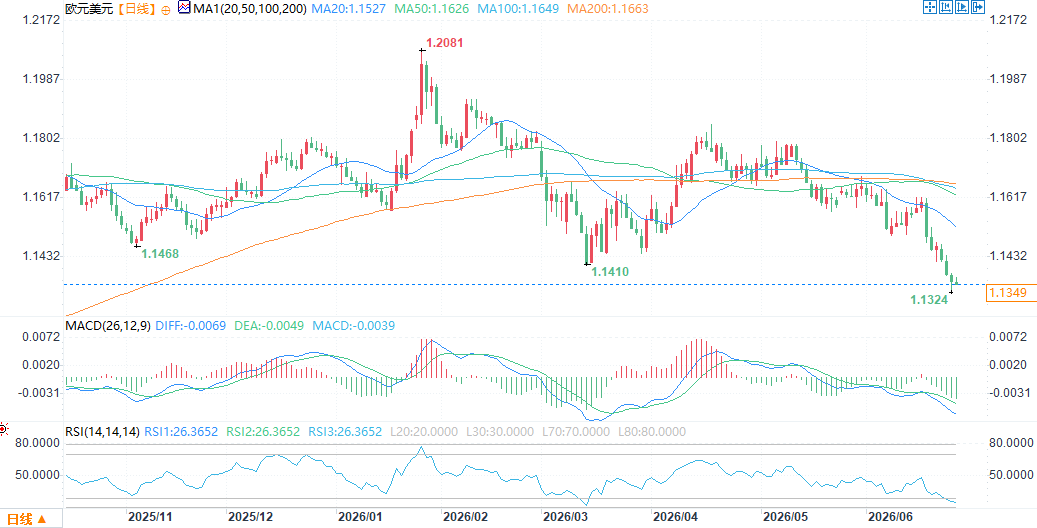
(Euro/USD daily chart, source: FX678)
At 15:34 Beijing time on June 25, the euro was trading at 1.1354/55 against the US dollar.
Despite the euro's continued retreat in the face of a strong dollar, hawkish voices have not been abandoned within the ECB.
Schnabel warns of the need for further interest rate hikes to control inflation.
On Wednesday, European Central Bank (ECB) Executive Board member Isabel Schnabel stated explicitly that, given current economic conditions, the ECB may need to raise interest rates further in the medium term to ensure inflation steadily returns to its 2% target. This statement reinforced market expectations that the ECB will maintain its tightening policy.
The latest Eurozone data shows that the overall inflation rate rose to 3.2% in May 2026, up 0.2 percentage points from April, the highest level since September 2023. Energy prices rose 10.9% year-on-year, and core inflation (excluding energy and food) rose to 2.5%, indicating that price pressures continue to spread.
Schnabel emphasized that the inflation outlook remains concerning, and the European Central Bank must remain vigilant. She pointed out that the pace and magnitude of future interest rate hikes will depend heavily on the geopolitical situation in the Middle East, economic growth performance, and subsequent inflation data. If the data continues to support this, the next rate hike may be implemented after the summer. This statement contrasts with the ECB's previously relatively cautious tone, highlighting policymakers' concerns about sticky inflation.
The Eurozone's economic recovery is currently slow, compounded by external energy shocks, presenting policymakers with a dilemma: curbing inflation while avoiding excessive tightening that could drag down growth. Schnabel, a relatively hawkish figure within the European Central Bank, is often seen as a key market indicator, and his remarks are expected to influence pricing in future monetary policy paths.
The continued spread of the energy shock exacerbates the risk of a second round of inflation.
Schnabel pointed out that although the initial peace agreement between the US and Iran has pushed oil prices down, Brent crude is currently trading around $72-73 per barrel, a significant decrease from the peak of the conflict. However, energy prices are still significantly higher than pre-conflict levels, and long-term energy contracts show continued cost pressures.
Disruptions to shipping in the Strait of Hormuz, rising insurance costs, damage to energy infrastructure, and the need to replenish strategic reserves and gas storage facilities in Europe before winter all constitute persistent risk factors.
She specifically warned that the initial energy shock has begun to spread to broader sectors of the economy, with significant upward pressure on prices for non-energy goods and services, and businesses passing on higher input costs to consumers. This significantly increases the risk of a second round of inflation, and although wage growth has not yet accelerated significantly, concerns about a potential wage-price spiral are rising.
Schnabel emphasized that the impact of energy price volatility on the European economy extends far beyond the short term, and supply chain disruptions and cost transmission mechanisms could alter inflation dynamics in the long term. Faced with this complex situation, the European Central Bank (ECB) cannot afford to be complacent and must proactively address the issue through monetary policy tools to prevent temporary shocks from escalating into structural inflation problems. This analysis provides strong justification for the ECB to maintain relatively high interest rates and also serves as a reminder that geopolitical factors remain a key variable influencing the Eurozone's inflation outlook.
Schnabel defended the recent interest rate hikes, emphasizing that the policy was not yet sufficiently restrictive.
Schnabel strongly defended the European Central Bank's recent interest rate hikes.
She argues that even in a mild scenario of rapid normalization in oil prices, raising interest rates remains an appropriate policy option to help prevent temporary energy shocks from taking root in medium-term inflation expectations. She explicitly refutes the view that current interest rates are already sufficiently restrictive, emphasizing that current interest rate levels have not yet reached a level sufficient to significantly suppress demand.
As a leading figure among the hawkish faction within the European Central Bank (ECB), Schnabel's statement suggests that, supported by data, the ECB may continue to tighten policy after the summer, with the specific pace and magnitude to be flexibly adjusted based on the situation in the Middle East, economic growth data, and the evolution of inflation. This stance reflects the ECB's high level of vigilance regarding the risk of a second round of inflation and also leaves room for future policy direction.
The market generally believes that Schnabel's remarks will support the euro's short-term exchange rate, but may also increase borrowing costs for eurozone businesses and residents, putting some pressure on economic growth. Investors need to closely monitor subsequent ECB meeting minutes and inflation data. If the energy shock continues, the ECB's tightening stance is likely to persist for a considerable period, thereby affecting eurozone asset pricing and cross-border capital flows.
Editor's Summary
Schnabel's hawkish remarks highlight the ECB's heightened vigilance regarding the risk of a second round of inflation. While geopolitical easing offers a short-term respite, the lingering effects of the energy shock and persistent inflation stickiness continue to constrain policy easing. The Eurozone's economic recovery prospects face challenges, and the market needs to pay close attention to subsequent inflation data and central bank meeting signals. Uncertainty surrounding the interest rate path will continue to impact the euro exchange rate and asset pricing.
Frequently Asked Questions
Q1: Why does Schnabel believe that further interest rate hikes are necessary?
A: She emphasized that based on current conditions, the energy shock has gone beyond the temporary realm, and the initial rise in energy prices is spreading to non-energy goods and services, creating a second round of inflationary pressure. To prevent high inflation expectations from taking root in the medium term, the European Central Bank needs to take action to bring inflation back to its 2% target. Even if the US-Iran peace agreement progresses, raising interest rates remains a necessary measure.
Q2: What is the current inflation situation in the Eurozone?
A: The latest data shows that the Eurozone's overall inflation rate rose to 3.2% in May 2026, up from 3.0% in April, with the energy component rising 10.9% year-on-year and core inflation rising to 2.5%. This is far above the European Central Bank's 2% target, and the accelerating inflation in the services sector indicates that price pressures are spreading.
Q3: What are the specific risks of an energy shock?
A: These factors include shipping disruptions in the Strait of Hormuz, rising insurance costs, infrastructure damage, and winter gas storage demand. Even with lower oil prices, long-term contracts still show cost pressures, and supply chain disruptions could continue to drive up business input costs and be passed on to consumer prices.
Q4: What is Schnabel's view on interest rate constraints?
A: She believes that current interest rates are not yet sufficient to restrain demand and disagrees with the view that policy is already restrictive. This supports the ECB continuing to raise interest rates if necessary to address inflation stickiness and the risks of second-round effects.
Q5: What impact will this statement have on the Eurozone economy and markets?
A: Hawkish signals may support the euro's exchange rate in the short term, but they also increase borrowing cost pressures, dragging down economic growth. Investors need to pay attention to the policy path after summer. If inflation data remains high, the ECB's tightening bias will exacerbate financial conditions, affecting the stock market, bond market, and corporate financing environment. In the medium to long term, the outcome depends on the degree of easing geopolitical tensions and the recovery of domestic demand.
(Euro/USD daily chart, source: FX678)
At 15:34 Beijing time on June 25, the euro was trading at 1.1354/55 against the US dollar.
- Risk Warning and Disclaimer
- The market involves risk, and trading may not be suitable for all investors. This article is for reference only and does not constitute personal investment advice, nor does it take into account certain users’ specific investment objectives, financial situation, or other needs. Any investment decisions made based on this information are at your own risk.