June Non-Farm Payrolls Preview: Overall Resilience Hides Fatal Structural Risks; AI-Driven Layoffs Torn Apart the Job Market
2026-07-01 17:52:46
At his first press conference since taking office on June 17, Federal Reserve Chairman Kevin Warsh stated that the overall trend of improvement in employment data is clear.
Looking ahead to the first half of 2026, the United States is expected to add 569,000 non-farm jobs, averaging 113,800 per month.
A senior economist warned in an employment outlook report that the current employment recovery is characterized by significant industry differentiation. Of all the new jobs created in May, a full 100,000 were concentrated in the catering services and local government sectors.
Even so, the steadily improving employment data since March has been sufficient to alleviate concerns within the Federal Reserve about a sharp economic downturn.
Currently, market economists predict that the US will add 110,000 to 130,000 jobs in June, with the unemployment rate remaining at 4.3%. This article briefly summarizes the mainstream market views recently.

Jason Pride, Chief Investment Strategist at Glenmead Investments, and Michael Reynolds, Vice President of Investment Strategy, believe that the market is pricing in an unchanged unemployment rate of 4.3% in June and an estimated 87,000 new non-farm payroll jobs. While this figure is significantly lower than May's 172,000, it remains relatively strong in the current labor market environment of sluggish hiring and layoffs.
The overall foundation of the job market has not been shaken; however, the Federal Reserve's policy balance has been completely tilted towards inflation. In the future, the pace of interest rate cuts will be influenced by inflation data far more than by the increase in non-farm payrolls.
Shruti Mishra, chief U.S. economist at Bank of America Securities, believes that with the previous three months of strong non-farm payroll data, we predict that the number of new jobs in June will remain resilient, reaching 110,000, with the private sector contributing 120,000; stable initial jobless claims and better-than-expected ADP employment data both provide support.
However, this data contains downside risks: the surge in employment in the leisure and hospitality industry in May was largely due to seasonal disruptions caused by the World Cup and Memorial Day holidays. If the holidays are the main driver, employment in this sector is likely to see a significant pullback in June; coupled with the short-term surge in local government employment in May, this sub-sector may weaken significantly in June.
In our baseline scenario, the unemployment rate remains at 4.3%, but continued improvement in the household employment survey could push it down to 4.2%. If this non-farm payrolls report significantly exceeds expectations, the market will further price in our baseline forecast of three Fed rate hikes in 2026.
Daniela Hathaway, senior market analyst at Capital.com, believes that the U.S. non-farm payrolls report is the most critical risk data this week, and the market needs this report to verify whether the resilience of the labor market will continue.
This is Kevin Warsh's first policy meeting since becoming Federal Reserve Chairman, and trading funds are becoming significantly more sensitive to high-frequency economic data, especially regarding signals of persistent inflation stickiness. A strong non-farm payroll report would solidify market expectations that the Fed will maintain a tight monetary policy for an extended period.
If the data significantly falls short of expectations, funds will reprice the likelihood of the Federal Reserve further tightening.
William Blair macro analyst Richard De Shazar and equity research assistant Louis Mokama believe that during this week of shortened trading hours due to Independence Day, the market's core focus is on the June jobs data. The current market consensus is for 113,000 new jobs, with overall data expected to remain robust. Federal Reserve officials generally believe that the job market's supply and demand equilibrium is nearing zero growth; if the current job increase targets are met, the unemployment rate is expected to fall to 4.2%. Another major unresolved issue remains: why are wages in the healthcare sector continuing to decline sharply? The healthcare sector has a high weighting in the wage index, which continues to suppress overall wage levels across the US.
Wells Fargo's team of economists believes that after a deep weakening of the labor market in 2025, it has now entered a phase of stabilization and recovery. Initial jobless claims remain low, and employment PMIs from various Federal Reserve banks show a slight recovery in corporate hiring intentions in June.
However, several leading indicators have recently weakened: online job postings and ADP weekly recruitment data have declined continuously since the beginning of spring, and the recruitment plans of small and medium-sized enterprises in May have hit a new low for this cycle.
Based on a comprehensive assessment of multiple high-frequency employment indicators, including ADP, initial jobless claims, and institutional forecasts, along with the Challenger layoff report, even if the overall non-farm payrolls increase in June is likely to exceed market neutral expectations and the labor market continues to show resilience in terms of total numbers, the trend of structural deterioration within the employment sector is still intensifying.
Although the overall number of layoffs has dropped significantly month-on-month, the scale of layoffs in the technology industry driven by AI replacement has soared year-on-year. High-paying white-collar jobs continue to shrink, and new employment is highly concentrated in low-end service sectors such as catering and local government. The polarization between the booming and bustling industries is becoming increasingly prominent. The impressive total number of layoffs cannot mask the deep-seated contradiction of the continued weakening of employment quality.
Based on all leading indicators, labor demand has only stabilized after a period of decline, and has not yet seen a substantial recovery.
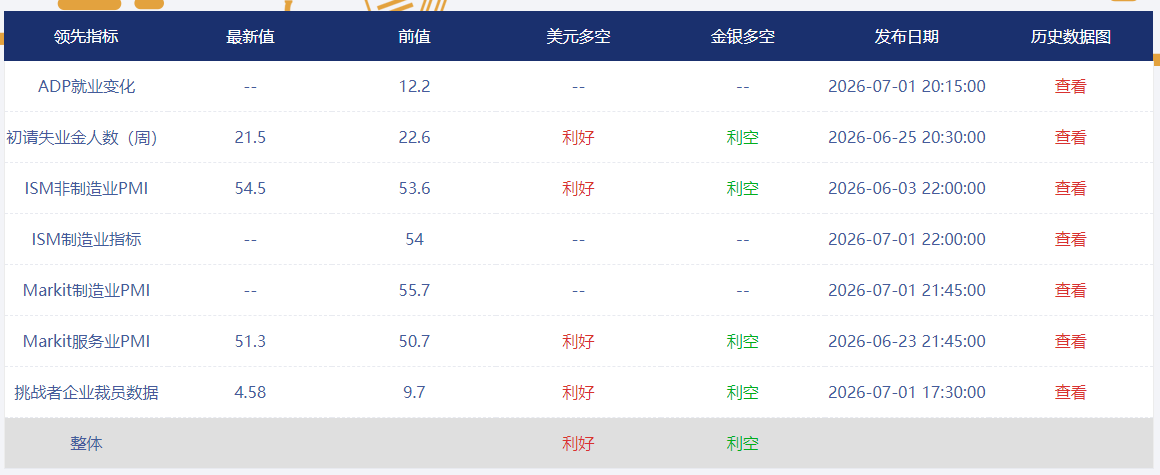
(A list of non-farm payroll related indicators, source: EasyTrade)
Looking ahead to the first half of 2026, the United States is expected to add 569,000 non-farm jobs, averaging 113,800 per month.
A senior economist warned in an employment outlook report that the current employment recovery is characterized by significant industry differentiation. Of all the new jobs created in May, a full 100,000 were concentrated in the catering services and local government sectors.
Even so, the steadily improving employment data since March has been sufficient to alleviate concerns within the Federal Reserve about a sharp economic downturn.
Currently, market economists predict that the US will add 110,000 to 130,000 jobs in June, with the unemployment rate remaining at 4.3%. This article briefly summarizes the mainstream market views recently.
Jason Pride, Chief Investment Strategist at Glenmead Investments, and Michael Reynolds, Vice President of Investment Strategy, believe that the market is pricing in an unchanged unemployment rate of 4.3% in June and an estimated 87,000 new non-farm payroll jobs. While this figure is significantly lower than May's 172,000, it remains relatively strong in the current labor market environment of sluggish hiring and layoffs.
The overall foundation of the job market has not been shaken; however, the Federal Reserve's policy balance has been completely tilted towards inflation. In the future, the pace of interest rate cuts will be influenced by inflation data far more than by the increase in non-farm payrolls.
Shruti Mishra, chief U.S. economist at Bank of America Securities, believes that with the previous three months of strong non-farm payroll data, we predict that the number of new jobs in June will remain resilient, reaching 110,000, with the private sector contributing 120,000; stable initial jobless claims and better-than-expected ADP employment data both provide support.
However, this data contains downside risks: the surge in employment in the leisure and hospitality industry in May was largely due to seasonal disruptions caused by the World Cup and Memorial Day holidays. If the holidays are the main driver, employment in this sector is likely to see a significant pullback in June; coupled with the short-term surge in local government employment in May, this sub-sector may weaken significantly in June.
In our baseline scenario, the unemployment rate remains at 4.3%, but continued improvement in the household employment survey could push it down to 4.2%. If this non-farm payrolls report significantly exceeds expectations, the market will further price in our baseline forecast of three Fed rate hikes in 2026.
Daniela Hathaway, senior market analyst at Capital.com, believes that the U.S. non-farm payrolls report is the most critical risk data this week, and the market needs this report to verify whether the resilience of the labor market will continue.
This is Kevin Warsh's first policy meeting since becoming Federal Reserve Chairman, and trading funds are becoming significantly more sensitive to high-frequency economic data, especially regarding signals of persistent inflation stickiness. A strong non-farm payroll report would solidify market expectations that the Fed will maintain a tight monetary policy for an extended period.
If the data significantly falls short of expectations, funds will reprice the likelihood of the Federal Reserve further tightening.
William Blair macro analyst Richard De Shazar and equity research assistant Louis Mokama believe that during this week of shortened trading hours due to Independence Day, the market's core focus is on the June jobs data. The current market consensus is for 113,000 new jobs, with overall data expected to remain robust. Federal Reserve officials generally believe that the job market's supply and demand equilibrium is nearing zero growth; if the current job increase targets are met, the unemployment rate is expected to fall to 4.2%. Another major unresolved issue remains: why are wages in the healthcare sector continuing to decline sharply? The healthcare sector has a high weighting in the wage index, which continues to suppress overall wage levels across the US.
Wells Fargo's team of economists believes that after a deep weakening of the labor market in 2025, it has now entered a phase of stabilization and recovery. Initial jobless claims remain low, and employment PMIs from various Federal Reserve banks show a slight recovery in corporate hiring intentions in June.
However, several leading indicators have recently weakened: online job postings and ADP weekly recruitment data have declined continuously since the beginning of spring, and the recruitment plans of small and medium-sized enterprises in May have hit a new low for this cycle.
Summarize:
Based on a comprehensive assessment of multiple high-frequency employment indicators, including ADP, initial jobless claims, and institutional forecasts, along with the Challenger layoff report, even if the overall non-farm payrolls increase in June is likely to exceed market neutral expectations and the labor market continues to show resilience in terms of total numbers, the trend of structural deterioration within the employment sector is still intensifying.
Although the overall number of layoffs has dropped significantly month-on-month, the scale of layoffs in the technology industry driven by AI replacement has soared year-on-year. High-paying white-collar jobs continue to shrink, and new employment is highly concentrated in low-end service sectors such as catering and local government. The polarization between the booming and bustling industries is becoming increasingly prominent. The impressive total number of layoffs cannot mask the deep-seated contradiction of the continued weakening of employment quality.
Based on all leading indicators, labor demand has only stabilized after a period of decline, and has not yet seen a substantial recovery.
(A list of non-farm payroll related indicators, source: EasyTrade)
- Risk Warning and Disclaimer
- The market involves risk, and trading may not be suitable for all investors. This article is for reference only and does not constitute personal investment advice, nor does it take into account certain users’ specific investment objectives, financial situation, or other needs. Any investment decisions made based on this information are at your own risk.