The six-year test of the USMCA begins: Trump reignites North American trade tensions, with friction on multiple fronts including labor, tariffs, and quotas.
2026-07-01 20:06:59
On Wednesday, July 1st, the USMCA (United States-Mexico-Canada Agreement) entered its first six-year joint review window. What the market is truly trading on is not the imminent expiration of the agreement, but whether the long-term discount rate for the North American supply chain will rise. The latest official merchandise figures show that as of April 2026, Mexico's annual merchandise trade with the United States will reach $317.3 billion, accounting for 16.4% of total US merchandise trade, while Canada's will reach $240.9 billion, accounting for 12.4%. Together, they approach 30% of US merchandise trade.
Meanwhile, the US dollar rose to around 17.5189 against the Mexican peso on July 1, up 0.18% from the previous trading day; the Canadian dollar fell to 1.4217 Canadian dollars per US dollar, weakening by 2.9% cumulatively in June. Trade uncertainty has begun to be reflected in exchange rate risk premiums, rather than remaining merely a topic of policy news.

The United States-Mexico-Canada Agreement (USMCA) took effect on July 1, 2020, replacing the previous North American Free Trade Framework (NAFTA). The agreement was designed for a 16-year term, with a theoretical expiration date of July 1, 2036, if the three parties do not agree to renew it in the current or subsequent annual reviews; if renewal is completed, it can be extended for another 16 years. The key to this mechanism is that it transforms trade agreements from long-term institutional arrangements into policy assets that can be periodically repriced.
The Trump administration's stance makes the review more of a "renegotiation" than a "routine check-up." Reports indicate that Washington is not expected to directly confirm an extension on July 1st, while still scheduling follow-up negotiations with Mexico. Canadian Prime Minister Mark Carney recently stated his goal is to secure a "new agreement" and expressed a willingness to negotiate an improved version; Mexican President Simbaum has already signed a letter requesting a 16-year extension. These differing positions mean that traders should focus not on the title-level termination risk, but rather on how the sub-rules for sectors such as automobiles, steel and aluminum, agriculture, energy, and digital services will alter cash flow expectations.
The most sensitive issue in this round remains the automotive industry. The US has proposed increasing the proportion of US-specific components in North American-made vehicles and hopes to further raise the regional component requirements. The market impact lies not in a single tax rate, but in whether OEMs and parts suppliers will need to recalculate country-of-origin compliance costs, cross-border logistics routes, and production capacity layout. If the rules tighten, the cost elasticity of low-value-added assembly will be compressed, and the profit margins of companies highly dependent on cross-border parts circulation will be the first to be pressured.
This is why the USMCA (United States-Mexico-Canada Agreement) still possesses a "policy insurance" attribute for North American assets. In 2025, the US-Mexico trade in goods reached $872.8 billion, with US exports at $338 billion and imports at $534.9 billion; the US-Canada trade in goods reached $719.5 billion, with US exports at $336.5 billion and imports at $383 billion. The combined trade volume between these two neighboring countries exceeds $1.59 trillion, which sufficiently explains why, even with strong political statements, the market has not yet considered a complete withdrawal as the baseline scenario.
The Mexican peso and the Canadian dollar reacted differently. The peso has remained relatively resilient this year, with the Mexican central bank previously maintaining its benchmark interest rate at 6.50%, providing some support for carry trades. However, the problem lies in the fact that if labor enforcement, rules of origin, and automobile tariffs are tightened simultaneously, interest rate protection may not be able to fully offset uncertainties under trade.
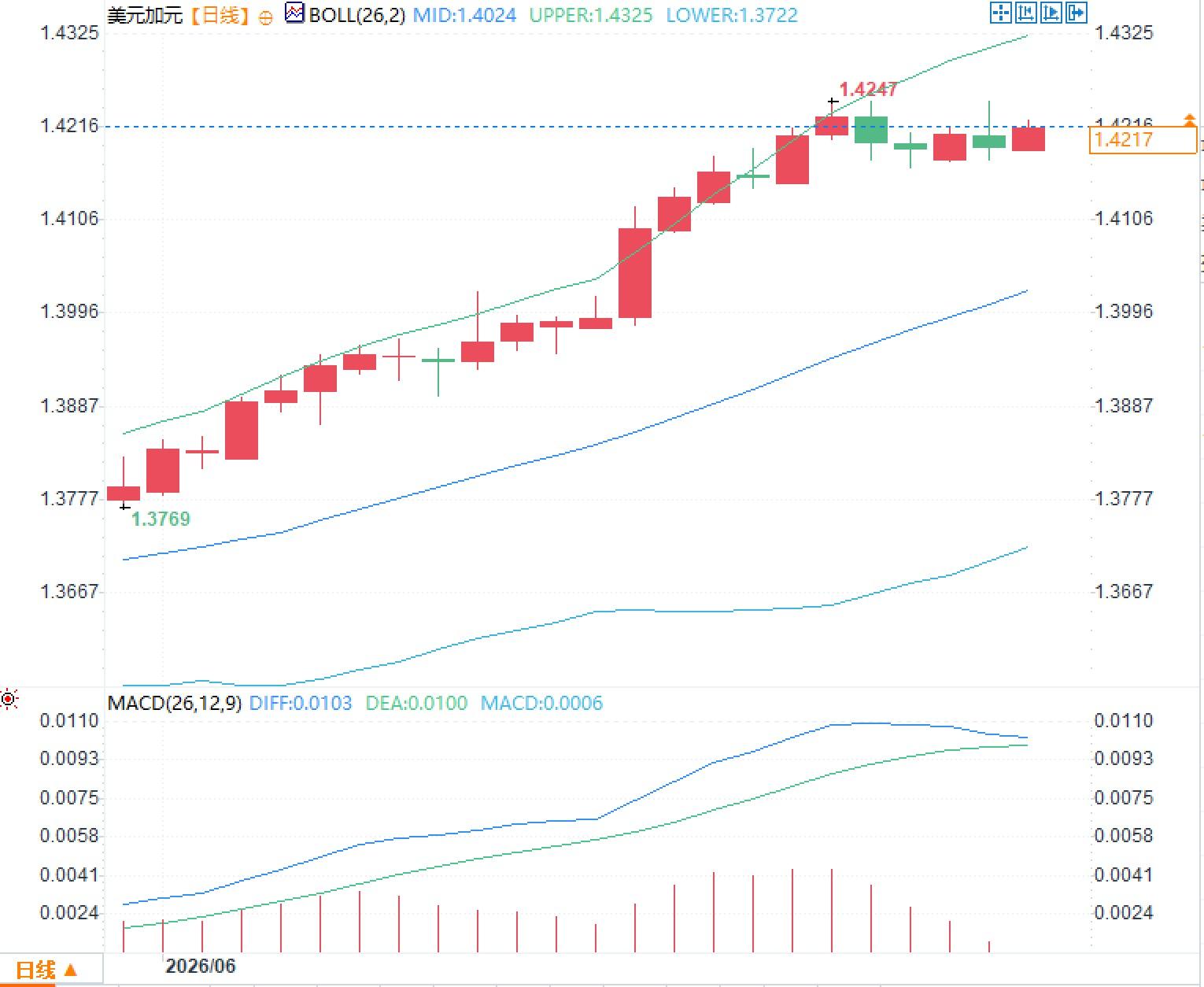
The pressure on the Canadian dollar is more direct. Canada is highly dependent on the US market and simultaneously faces multiple frictions, including dairy quotas, government procurement, local priority policies, alcohol distribution, digital services tax, and intellectual property. If negotiations drag on, the Canadian dollar is more likely to be priced within the combined framework of "interest rate differentials plus trade frictions." Tariffs on some over-quota imports under Canada's supply management system can exceed 200%, and these highly politicized sectors are unlikely to concede quickly, further amplifying the time costs of negotiations.
The estimated U.S. goods trade deficit widened to $105.8 billion in May, an increase of $22.7 billion from April; goods exports were $207.7 billion, a decrease of $11.8 billion month-over-month, while goods imports were $313.4 billion, an increase of $10.9 billion month-over-month. This data suggests that tariffs and supply chain disruptions have not eliminated import demand; on the contrary, they may have triggered early restocking and alternative purchases. For policymakers, a widening trade deficit can easily become a justification for raising domestic content requirements and pushing for itemized tariff negotiations.
However, from a market perspective, tariffs are not a free tool. If compliance costs are continuously increased in the automotive, steel, aluminum, agricultural, and energy chains, inflation transmission, corporate inventory cycles, and end-user demand will all be repriced. If the agreement retains the main framework but raises entry barriers, the result may be "nominal stability, but real tightening."
Meanwhile, the US dollar rose to around 17.5189 against the Mexican peso on July 1, up 0.18% from the previous trading day; the Canadian dollar fell to 1.4217 Canadian dollars per US dollar, weakening by 2.9% cumulatively in June. Trade uncertainty has begun to be reflected in exchange rate risk premiums, rather than remaining merely a topic of policy news.
The United States-Mexico-Canada Agreement (USMCA) took effect on July 1, 2020, replacing the previous North American Free Trade Framework (NAFTA). The agreement was designed for a 16-year term, with a theoretical expiration date of July 1, 2036, if the three parties do not agree to renew it in the current or subsequent annual reviews; if renewal is completed, it can be extended for another 16 years. The key to this mechanism is that it transforms trade agreements from long-term institutional arrangements into policy assets that can be periodically repriced.
The Trump administration's stance makes the review more of a "renegotiation" than a "routine check-up." Reports indicate that Washington is not expected to directly confirm an extension on July 1st, while still scheduling follow-up negotiations with Mexico. Canadian Prime Minister Mark Carney recently stated his goal is to secure a "new agreement" and expressed a willingness to negotiate an improved version; Mexican President Simbaum has already signed a letter requesting a 16-year extension. These differing positions mean that traders should focus not on the title-level termination risk, but rather on how the sub-rules for sectors such as automobiles, steel and aluminum, agriculture, energy, and digital services will alter cash flow expectations.
The most sensitive issue in this round remains the automotive industry. The US has proposed increasing the proportion of US-specific components in North American-made vehicles and hopes to further raise the regional component requirements. The market impact lies not in a single tax rate, but in whether OEMs and parts suppliers will need to recalculate country-of-origin compliance costs, cross-border logistics routes, and production capacity layout. If the rules tighten, the cost elasticity of low-value-added assembly will be compressed, and the profit margins of companies highly dependent on cross-border parts circulation will be the first to be pressured.
This is why the USMCA (United States-Mexico-Canada Agreement) still possesses a "policy insurance" attribute for North American assets. In 2025, the US-Mexico trade in goods reached $872.8 billion, with US exports at $338 billion and imports at $534.9 billion; the US-Canada trade in goods reached $719.5 billion, with US exports at $336.5 billion and imports at $383 billion. The combined trade volume between these two neighboring countries exceeds $1.59 trillion, which sufficiently explains why, even with strong political statements, the market has not yet considered a complete withdrawal as the baseline scenario.
The Mexican peso and the Canadian dollar reacted differently. The peso has remained relatively resilient this year, with the Mexican central bank previously maintaining its benchmark interest rate at 6.50%, providing some support for carry trades. However, the problem lies in the fact that if labor enforcement, rules of origin, and automobile tariffs are tightened simultaneously, interest rate protection may not be able to fully offset uncertainties under trade.
The pressure on the Canadian dollar is more direct. Canada is highly dependent on the US market and simultaneously faces multiple frictions, including dairy quotas, government procurement, local priority policies, alcohol distribution, digital services tax, and intellectual property. If negotiations drag on, the Canadian dollar is more likely to be priced within the combined framework of "interest rate differentials plus trade frictions." Tariffs on some over-quota imports under Canada's supply management system can exceed 200%, and these highly politicized sectors are unlikely to concede quickly, further amplifying the time costs of negotiations.
The estimated U.S. goods trade deficit widened to $105.8 billion in May, an increase of $22.7 billion from April; goods exports were $207.7 billion, a decrease of $11.8 billion month-over-month, while goods imports were $313.4 billion, an increase of $10.9 billion month-over-month. This data suggests that tariffs and supply chain disruptions have not eliminated import demand; on the contrary, they may have triggered early restocking and alternative purchases. For policymakers, a widening trade deficit can easily become a justification for raising domestic content requirements and pushing for itemized tariff negotiations.
However, from a market perspective, tariffs are not a free tool. If compliance costs are continuously increased in the automotive, steel, aluminum, agricultural, and energy chains, inflation transmission, corporate inventory cycles, and end-user demand will all be repriced. If the agreement retains the main framework but raises entry barriers, the result may be "nominal stability, but real tightening."
- Risk Warning and Disclaimer
- The market involves risk, and trading may not be suitable for all investors. This article is for reference only and does not constitute personal investment advice, nor does it take into account certain users’ specific investment objectives, financial situation, or other needs. Any investment decisions made based on this information are at your own risk.