Strait of Hormuz: A Historic Opportunity for Iran? Undercurrents simmer over the US-Iran Doha talks, with nuclear issue taking a backseat to control of the strait.
2026-07-02 09:14:09
On Wednesday (July 1), Iran and the United States concluded two days of indirect technical talks in Doha, the capital of Qatar. However, the talks failed to advance the crucial steps toward a lasting peace framework that many had anticipated. Instead, the focus remained firmly on shipping order in the Strait of Hormuz and financial incentives for Iran—two core pillars of the preliminary agreement signed in June, but not the more intractable issues that the agreement was supposed to pave the way for deeper negotiations. The negotiators did not meet face-to-face, instead conveying their positions through mediators in Qatar and Pakistan respectively, an arrangement that itself reveals a deep trust gap between them.
Despite President Trump's statements to the media in Washington that the denuclearization process in Iran was "progressing well" and that the two sides had held a "very good meeting," multiple anonymous sources revealed to the media that this round of talks was purely technical, and the nuclear program issue was not even on the table. Vice President Vance added that nuclear concerns would be addressed in subsequent discussions. This contrast between apparent optimism and actual lag makes the Doha summit seem more like a preparatory warm-up than a breakthrough.
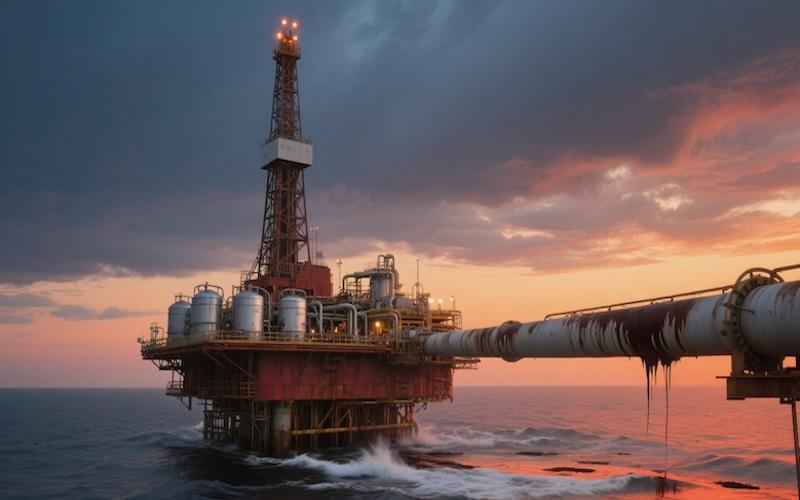
According to the interim memorandum of understanding reached on June 17, Iran agreed to allow ships to pass through the Strait of Hormuz free of charge for a 60-day period. This concession was seen as a key compromise to end the previous three months of military conflict. However, the Iranian leadership's interpretation of the clause differed significantly from that of the United States.
Two senior Iranian sources stated unequivocally that Tehran believes the wording of the agreement essentially recognizes Iran's right to decide which vessels are allowed passage and what routes they must follow. More importantly, Iran is determined to gain lasting formal recognition from the international community for its control of the Straits after the interim agreement expires in mid-August.
In response, the Iranian delegation led by Deputy Foreign Minister Haider al-Gharibabadi insisted at the Doha talks that Iran would not turn to other contentious issues until an agreement was reached on the administration of the Straits of Hormuz. A senior Iranian official even declared that having survived the war with the US and Israel, Iran was facing a "historic opportunity" to establish a long-term strategic advantage, the cornerstone of which was control of the world's energy chokepoint. Tehran was prepared to use force to enforce its demands if other countries refused to accept them, even if it might trigger a more intense renewed confrontation with the United States.
Iran has also clearly signaled that once the free passage period ends, starting in mid-August, it will begin charging tolls on passing vessels, although specific rates, charges, and procedures have not yet been announced. Looking back to the early stages of the war, Iran briefly closed the Strait of Hormuz, at which time it charged some vessels tolls or other fees before allowing them to leave the Persian Gulf. Now, Iran plans to institutionalize this practice, supplementing it with mandatory service charges, while reserving the right to refuse entry to any vessels suspected of threatening Iranian security.
This stance directly contradicts the US interpretation of the provisional memorandum and runs counter to Washington's design for the final postwar arrangements. The actual shipping situation is equally concerning: although the strait has partially reopened, the flow of traffic is highly unstable and lacks transparent rules.
Last weekend, Iran opened fire on four ships attempting to cross the Strait of Hormuz without permission from the Omani side, triggering a brief but intense exchange of fire between the US and Iran. On Wednesday, another foreign container ship ran aground after entering shallow waters outside Iran's designated shipping lanes, an incident reported by Iranian state media.
Vandana Hari, founder of oil market analysis firm Vanda Insights, pointed out that the Strait of Hormuz is still gradually reopening, but the situation is uneven, unpredictable, and lacks sufficient transparency. Affected by this, coupled with Trump's downplaying of the possibility of a full-scale war, international oil prices have fallen to their lowest level in four months, and analysts have lowered their oil price forecasts for the first time since the outbreak of war.
Faced with Iran's hardline stance, the US response has been subtly twofold. President Trump publicly emphasized progress on the nuclear issue and hinted that the possibility of a return to full-scale war was extremely low, his remarks aimed at reassuring markets and allies. However, Vice President Vance was more cautious, clearly stating that the nuclear issue would be the focus of future discussions.
It is worth noting that Trump's son-in-law Jared Kushner and U.S. senior envoy Sergei Vitkov did not attend the Doha talks. Although the White House had previously sent the two to the region and called it a "high-level" operation, this absence may reflect the limited actual importance that the U.S. attaches to the current stage of negotiations.
Meanwhile, some European countries have expressed their willingness to assist in clearing mines from the Strait of Hormuz, but German Defense Minister Pistorius stated bluntly that Germany is not expected to participate given Iran's unwillingness to cooperate with other countries. This highlights the divisions and dilemmas facing the international community in coordinating responses to Iran's demands. The United States and its allies currently seem more inclined to wait and see what concrete actions Iran will take after the interim agreement expires in mid-August, rather than making significant concessions in the current technical talks.
In summary, while the Doha technical talks did not break down, they failed to bridge the most fundamental differences between the US and Iran. Iran sees control of the Straits as a key to reshuffling the post-war world order and is willing to use force as a backing to compel the international community to accept its dominant position before the interim agreement expires. The US, on the other hand, is trying to prioritize the nuclear issue, remaining vigilant about Iran's regional hegemonic ambitions but exercising restraint in its actions.
The power struggle between the two sides in the Strait of Hormuz is not only crucial to the stability of the global energy supply chain, but also profoundly impacts the geopolitical landscape of the Middle East. In the coming weeks, as the deadline for free passage approaches, whether Iran will impose tolls as scheduled, how the United States will respond, and whether the international shipping industry can withstand this uncertainty will all be key variables determining whether the situation escalates or de-escalates. This struggle over a narrow waterway is far from over.
Question 1: What are the specific contents of the "interim agreement" reached between the US and Iran? Why was the nuclear issue not discussed in this round of talks?
A: The interim memorandum of understanding signed on June 17th this year essentially stipulated that Iran agreed to allow ships to pass through the Strait of Hormuz free of charge for 60 days in exchange for the United States ceasing military strikes and initiating diplomatic dialogue. This agreement was a transitional arrangement of a ceasefire nature, designed to create conditions for subsequent comprehensive negotiations. This round of Doha talks was positioned as a "technical" level meeting by both sides, with the task limited to discussing specific operational details of shipping through the Strait and the implementation details of financial incentives for Iran. Deeper security issues such as the nuclear program and missile projects were deliberately shelved, leaving them for further consultations at a higher level.
Question 2: What is the legal or historical basis for Iran's claim to "control the Strait of Hormuz"?
A: Iran's position is primarily based on geographical reality—the narrowest point of the Strait of Hormuz lies within Iranian territorial waters, and Iran believes it possesses sovereignty and corresponding administrative rights over a portion of the strait's waters. Before the war, approximately one-fifth of global oil trade passed through this waterway, but passage was historically free from any country's fees or mandatory controls. Iran emphasizes that the post-war order cannot return to the old one; a "new arrangement" must be established, with Iran determining ship routes, vetting ship safety qualifications, and charging service fees. This interpretation has not gained widespread international acceptance; the United States and most Western countries maintain that the strait should retain international freedom of navigation.
Question 3: Iran plans to start collecting tolls from mid-August. How will this be implemented? What impact will it have on global shipping?
A: As of now, Iran has not announced the toll rates, collection methods, or exemption clauses. Based on statements from Iranian officials, the toll may take the form of a "mandatory service fee," covering pilotage, security, and waterway maintenance. If implemented, all tankers and cargo ships entering and leaving the Persian Gulf via the Strait of Hormuz will face additional costs, time delays, and procedural uncertainties, requiring shipowners to reassess route risks and insurance costs. In the long term, this will drive up global energy transportation costs and may prompt some buyers to seek alternative supply routes.
Question 4: What is the US stance on Iran's claims to the Straits? Is there a possibility of a military response?
A: The official US position clearly opposes Iran unilaterally controlling or charging fees, believing it violates the principle of freedom of navigation. However, the Trump administration's current attitude is cautious, neither ruling out a diplomatic solution nor downplaying the risk of returning to a full-scale war. Vice President Vance has emphasized that the nuclear issue is a priority. In fact, the US and Iran had a brief exchange of fire in the Strait last weekend, indicating that the risk of military friction remains. The US is more likely to gradually escalate its pressure tactics based on Iran's actual actions after the interim agreement expires in August, rather than immediately launching a large-scale war.
Question 5: If Iran were to clash with the US and Israel again, how would the international community, especially European countries, intervene?
A: European countries are currently divided. Some countries are willing to provide technical support such as mine clearance, but Germany has explicitly refused to participate, fearing being drawn into a direct confrontation with Iran. The EU as a whole tends to de-escalate the situation through diplomatic mediation and economic incentives, rather than military intervention. However, if passage through the Strait of Hormuz is severely disrupted, triggering a surge in global oil prices and economic turmoil, Europe may be forced to adjust its stance, increasing support for the US or deploying its own escort forces. In any case, the threshold for direct military action against Iran by Europe is extremely high; it is more likely to play the role of mediator and post-disaster stabilizer.
Despite President Trump's statements to the media in Washington that the denuclearization process in Iran was "progressing well" and that the two sides had held a "very good meeting," multiple anonymous sources revealed to the media that this round of talks was purely technical, and the nuclear program issue was not even on the table. Vice President Vance added that nuclear concerns would be addressed in subsequent discussions. This contrast between apparent optimism and actual lag makes the Doha summit seem more like a preparatory warm-up than a breakthrough.
Control of the Straits – Iran’s bottom line that it will not yield an inch
According to the interim memorandum of understanding reached on June 17, Iran agreed to allow ships to pass through the Strait of Hormuz free of charge for a 60-day period. This concession was seen as a key compromise to end the previous three months of military conflict. However, the Iranian leadership's interpretation of the clause differed significantly from that of the United States.
Two senior Iranian sources stated unequivocally that Tehran believes the wording of the agreement essentially recognizes Iran's right to decide which vessels are allowed passage and what routes they must follow. More importantly, Iran is determined to gain lasting formal recognition from the international community for its control of the Straits after the interim agreement expires in mid-August.
In response, the Iranian delegation led by Deputy Foreign Minister Haider al-Gharibabadi insisted at the Doha talks that Iran would not turn to other contentious issues until an agreement was reached on the administration of the Straits of Hormuz. A senior Iranian official even declared that having survived the war with the US and Israel, Iran was facing a "historic opportunity" to establish a long-term strategic advantage, the cornerstone of which was control of the world's energy chokepoint. Tehran was prepared to use force to enforce its demands if other countries refused to accept them, even if it might trigger a more intense renewed confrontation with the United States.
The toll collection plan and the real dilemma of shipping recovery
Iran has also clearly signaled that once the free passage period ends, starting in mid-August, it will begin charging tolls on passing vessels, although specific rates, charges, and procedures have not yet been announced. Looking back to the early stages of the war, Iran briefly closed the Strait of Hormuz, at which time it charged some vessels tolls or other fees before allowing them to leave the Persian Gulf. Now, Iran plans to institutionalize this practice, supplementing it with mandatory service charges, while reserving the right to refuse entry to any vessels suspected of threatening Iranian security.
This stance directly contradicts the US interpretation of the provisional memorandum and runs counter to Washington's design for the final postwar arrangements. The actual shipping situation is equally concerning: although the strait has partially reopened, the flow of traffic is highly unstable and lacks transparent rules.
Last weekend, Iran opened fire on four ships attempting to cross the Strait of Hormuz without permission from the Omani side, triggering a brief but intense exchange of fire between the US and Iran. On Wednesday, another foreign container ship ran aground after entering shallow waters outside Iran's designated shipping lanes, an incident reported by Iranian state media.
Vandana Hari, founder of oil market analysis firm Vanda Insights, pointed out that the Strait of Hormuz is still gradually reopening, but the situation is uneven, unpredictable, and lacks sufficient transparency. Affected by this, coupled with Trump's downplaying of the possibility of a full-scale war, international oil prices have fallen to their lowest level in four months, and analysts have lowered their oil price forecasts for the first time since the outbreak of war.
The US attitude – a combination of restraint and observation
Faced with Iran's hardline stance, the US response has been subtly twofold. President Trump publicly emphasized progress on the nuclear issue and hinted that the possibility of a return to full-scale war was extremely low, his remarks aimed at reassuring markets and allies. However, Vice President Vance was more cautious, clearly stating that the nuclear issue would be the focus of future discussions.
It is worth noting that Trump's son-in-law Jared Kushner and U.S. senior envoy Sergei Vitkov did not attend the Doha talks. Although the White House had previously sent the two to the region and called it a "high-level" operation, this absence may reflect the limited actual importance that the U.S. attaches to the current stage of negotiations.
Meanwhile, some European countries have expressed their willingness to assist in clearing mines from the Strait of Hormuz, but German Defense Minister Pistorius stated bluntly that Germany is not expected to participate given Iran's unwillingness to cooperate with other countries. This highlights the divisions and dilemmas facing the international community in coordinating responses to Iran's demands. The United States and its allies currently seem more inclined to wait and see what concrete actions Iran will take after the interim agreement expires in mid-August, rather than making significant concessions in the current technical talks.
In conclusion: The game is far from over, and Hormuz has become the eye of the storm.
In summary, while the Doha technical talks did not break down, they failed to bridge the most fundamental differences between the US and Iran. Iran sees control of the Straits as a key to reshuffling the post-war world order and is willing to use force as a backing to compel the international community to accept its dominant position before the interim agreement expires. The US, on the other hand, is trying to prioritize the nuclear issue, remaining vigilant about Iran's regional hegemonic ambitions but exercising restraint in its actions.
The power struggle between the two sides in the Strait of Hormuz is not only crucial to the stability of the global energy supply chain, but also profoundly impacts the geopolitical landscape of the Middle East. In the coming weeks, as the deadline for free passage approaches, whether Iran will impose tolls as scheduled, how the United States will respond, and whether the international shipping industry can withstand this uncertainty will all be key variables determining whether the situation escalates or de-escalates. This struggle over a narrow waterway is far from over.
Frequently Asked Questions
Question 1: What are the specific contents of the "interim agreement" reached between the US and Iran? Why was the nuclear issue not discussed in this round of talks?
A: The interim memorandum of understanding signed on June 17th this year essentially stipulated that Iran agreed to allow ships to pass through the Strait of Hormuz free of charge for 60 days in exchange for the United States ceasing military strikes and initiating diplomatic dialogue. This agreement was a transitional arrangement of a ceasefire nature, designed to create conditions for subsequent comprehensive negotiations. This round of Doha talks was positioned as a "technical" level meeting by both sides, with the task limited to discussing specific operational details of shipping through the Strait and the implementation details of financial incentives for Iran. Deeper security issues such as the nuclear program and missile projects were deliberately shelved, leaving them for further consultations at a higher level.
Question 2: What is the legal or historical basis for Iran's claim to "control the Strait of Hormuz"?
A: Iran's position is primarily based on geographical reality—the narrowest point of the Strait of Hormuz lies within Iranian territorial waters, and Iran believes it possesses sovereignty and corresponding administrative rights over a portion of the strait's waters. Before the war, approximately one-fifth of global oil trade passed through this waterway, but passage was historically free from any country's fees or mandatory controls. Iran emphasizes that the post-war order cannot return to the old one; a "new arrangement" must be established, with Iran determining ship routes, vetting ship safety qualifications, and charging service fees. This interpretation has not gained widespread international acceptance; the United States and most Western countries maintain that the strait should retain international freedom of navigation.
Question 3: Iran plans to start collecting tolls from mid-August. How will this be implemented? What impact will it have on global shipping?
A: As of now, Iran has not announced the toll rates, collection methods, or exemption clauses. Based on statements from Iranian officials, the toll may take the form of a "mandatory service fee," covering pilotage, security, and waterway maintenance. If implemented, all tankers and cargo ships entering and leaving the Persian Gulf via the Strait of Hormuz will face additional costs, time delays, and procedural uncertainties, requiring shipowners to reassess route risks and insurance costs. In the long term, this will drive up global energy transportation costs and may prompt some buyers to seek alternative supply routes.
Question 4: What is the US stance on Iran's claims to the Straits? Is there a possibility of a military response?
A: The official US position clearly opposes Iran unilaterally controlling or charging fees, believing it violates the principle of freedom of navigation. However, the Trump administration's current attitude is cautious, neither ruling out a diplomatic solution nor downplaying the risk of returning to a full-scale war. Vice President Vance has emphasized that the nuclear issue is a priority. In fact, the US and Iran had a brief exchange of fire in the Strait last weekend, indicating that the risk of military friction remains. The US is more likely to gradually escalate its pressure tactics based on Iran's actual actions after the interim agreement expires in August, rather than immediately launching a large-scale war.
Question 5: If Iran were to clash with the US and Israel again, how would the international community, especially European countries, intervene?
A: European countries are currently divided. Some countries are willing to provide technical support such as mine clearance, but Germany has explicitly refused to participate, fearing being drawn into a direct confrontation with Iran. The EU as a whole tends to de-escalate the situation through diplomatic mediation and economic incentives, rather than military intervention. However, if passage through the Strait of Hormuz is severely disrupted, triggering a surge in global oil prices and economic turmoil, Europe may be forced to adjust its stance, increasing support for the US or deploying its own escort forces. In any case, the threshold for direct military action against Iran by Europe is extremely high; it is more likely to play the role of mediator and post-disaster stabilizer.
- Risk Warning and Disclaimer
- The market involves risk, and trading may not be suitable for all investors. This article is for reference only and does not constitute personal investment advice, nor does it take into account certain users’ specific investment objectives, financial situation, or other needs. Any investment decisions made based on this information are at your own risk.