Unexpected surprise! US June non-farm payrolls data halved from expectations, gold surged past $4,100, and the dollar collapsed?
2026-07-02 20:45:21
On Thursday (July 2nd) at 8:30 PM Beijing time, the U.S. Bureau of Labor Statistics released its June non-farm payrolls report. Data showed that only 57,000 non-farm jobs were added in June, far below the market expectation of 115,000; the combined downward revisions for April and May figures totaled 74,000. The private sector added 49,000 jobs, and the government sector added 8,000. The unemployment rate unexpectedly fell to 4.2%, lower than the expected 4.3%. The year-on-year growth rate of average hourly earnings met expectations, while the month-on-month rate remained unchanged.

Prior to the data release, the market had a roughly 30% chance of a rate hike at the Fed's July meeting, with the focus on whether the employment situation was strong enough to support potential tightening. Major institutions generally expected job growth to remain above 100,000, with some believing that factors such as the World Cup might provide additional support. On the dollar side, institutional accounts were mostly cautiously optimistic, emphasizing that the labor market had stabilized from its previous slump, and that data meeting or exceeding expectations would support the dollar. Retail investors' views were more divided, with some traders preemptively positioning themselves for long dollar positions or short gold positions, waiting for "strong data" to confirm the Fed's path.
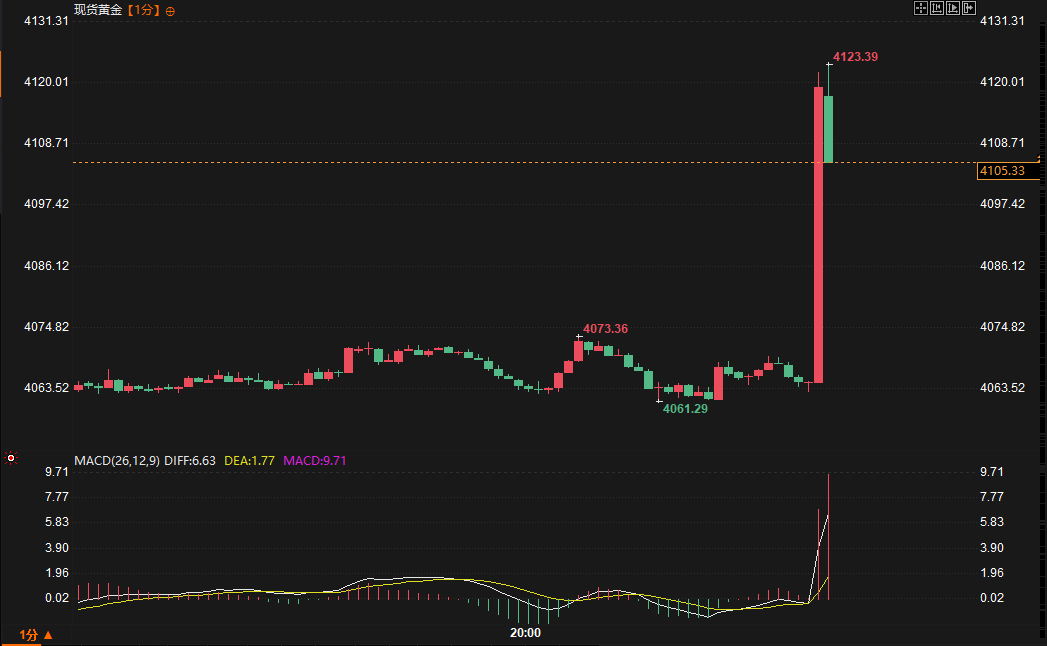
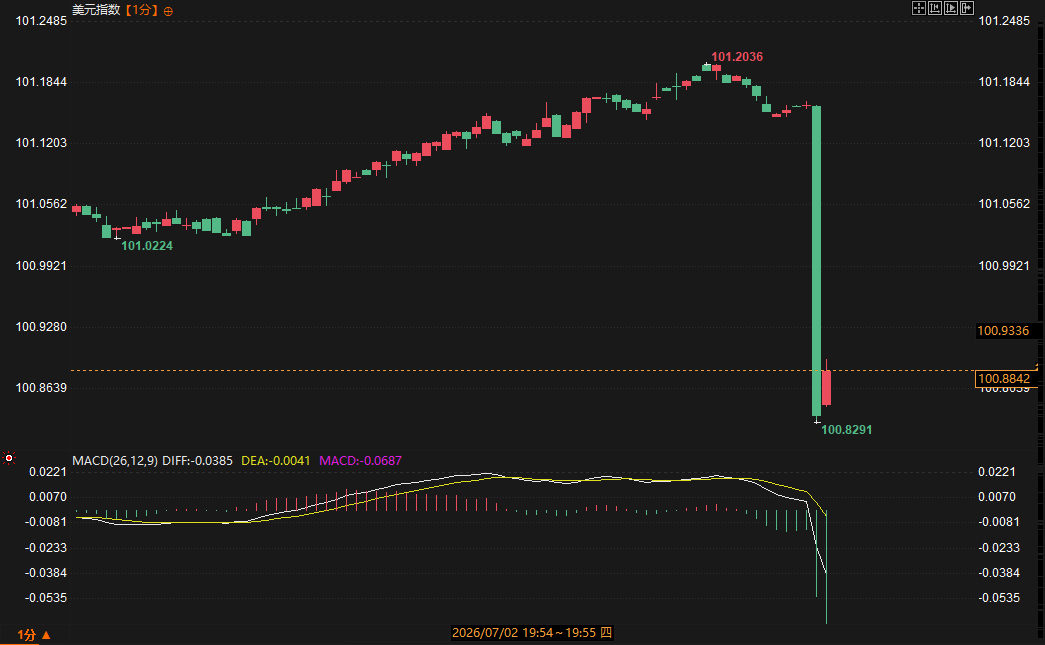
The market reacted sharply immediately after the announcement. The US dollar index fell by about 40 points, hitting a low of 100.82; the dollar fell by about 100 points against the yen; the euro and pound rose against the dollar. US Treasury yields declined, with the 10-year and 2-year yields falling by about 4-5 basis points each. Spot gold surged, breaking through the $4,100 mark and rising further, while silver saw even more significant gains; platinum and other precious metals also rose. Short-term interest rate futures indicated that market expectations for a Fed rate hike in December have been reduced, and the probability of a July rate hike has significantly decreased.
This month's non-farm payroll data showed a clear weakness, with job growth falling significantly short of expectations and the previous figure revised downwards, reflecting a faster-than-expected cooling in the labor market. Although the unemployment rate declined slightly, combined with the labor force participation rate falling to 61.5% and the weak performance of the private sector, the overall signal points to a slowdown in demand. The loss of 61,000 jobs in the leisure and hospitality industry further confirms the pressure on some service sectors.
Compared to historical trends, recent non-farm payroll data has shown greater volatility: May's figure was revised to 129,000, April's to 148,000, and this current figure of 57,000 forms a series of consecutive low increases. Compared to the stronger monthly average growth expected in the second half of 2025, the current employment trend has clearly slowed. At the latest quotes, the US dollar index has fallen back to around 100.7, lower than its pre-data high, while spot gold has risen rapidly from around $4060 to above $4120, reflecting the sensitive pricing of risk assets in response to expectations of further easing.
Fundamentals and technicals corroborated each other: weak employment data undermined the Fed's tightening narrative, negatively impacting the dollar and positively impacting safe-haven assets like gold and silver. Institutional views before the data release leaned towards "strong data supporting the dollar," but afterward, they quickly shifted to acknowledging a cooling labor market and emphasizing the need to monitor the Fed's subsequent data release path. Retail investors reacted more directly, with gold long positions quickly taking profits, and some accounts previously bearish on precious metals experiencing stop-loss orders. Significant discrepancies existed in expectations before and after the event: before the announcement, the market had priced in a July rate hike to some extent; after the announcement, this expectation was significantly reduced, leading to corresponding adjustments in short-term interest rate futures.
Overall, this non-farm payroll data reinforced the narrative of a soft landing for the economy but with slowing growth momentum, putting temporary pressure on the US dollar and providing support for precious metals and some non-US currencies. The decline in US Treasury yields also reflects a reassessment of expectations for policy easing.
In the short term, the US dollar index found initial support around 100.8, but weak employment data may continue its weak and volatile pattern, potentially allowing non-US currencies to maintain their rebound momentum. After breaking through the 4100-4120 area, spot gold's ability to hold and test higher resistance levels is worth watching, with volatility expected to remain high. The downward trend in US Treasury yields may continue, and further confirmation of a slowdown in economic data is needed.
In the medium term, if subsequent data continues to show a cooling labor market, market pricing in a shift in Fed policy will be pushed forward further; conversely, if inflation or consumption data rebounds, some easing expectations may be revised. The overall trend will revolve around data dependence, with attention focused on the mutual verification between employment, consumption, and inflation indicators.
Q: What was the biggest surprise in this non-farm payroll data?
A: The biggest surprise was that the job growth was only 57,000, far below the expected 115,000. Meanwhile, the combined downward revision for the first two months was 74,000, indicating that the cooling of labor demand exceeded market expectations. While the unemployment rate falling to 4.2% is a positive sign, combined with the decline in the participation rate, the overall picture still points to a cooling market.
Q: What is the immediate impact of the data on the US dollar and gold?
A: The US dollar index and the USD/JPY exchange rate fell rapidly, reflecting a reduction in expectations for interest rate hikes; spot gold surged, breaking through $4,100, while silver saw even more significant gains. Adjustments in short-term interest rate futures indicate a significant downward revision in market expectations for a July rate hike by the Federal Reserve.
Q: What are the differences in viewpoints between institutional investors and retail investors?
A: Before the data release, most institutions expected stable growth and focused on how the data would confirm the Fed's course of action; retail investors were clearly divided, with some having already positioned themselves as bullish on precious metals. After the data release, institutions shifted their stance, acknowledging a cooling trend, while retail investors quickly cashed out their gold-related positions, reflecting a more direct sentiment.
Q: Where does this data stand compared to historical non-farm payroll data?
A: This data is at a recent low, a further slowdown from the revised 129,000 in May and 148,000 in April. In contrast to the higher average monthly growth rate in the second half of 2025, it reflects a temporary weakening of the employment trend.
Q: Which indicators should we focus on to determine if the trend will continue?
A: We need to pay attention to July and subsequent employment data, consumer confidence, wage growth, and inflation indicators. The Federal Reserve will be highly data-dependent, as these indicators will collectively determine the magnitude of policy adjustments and the evolution of asset price trends.
Prior to the data release, the market had a roughly 30% chance of a rate hike at the Fed's July meeting, with the focus on whether the employment situation was strong enough to support potential tightening. Major institutions generally expected job growth to remain above 100,000, with some believing that factors such as the World Cup might provide additional support. On the dollar side, institutional accounts were mostly cautiously optimistic, emphasizing that the labor market had stabilized from its previous slump, and that data meeting or exceeding expectations would support the dollar. Retail investors' views were more divided, with some traders preemptively positioning themselves for long dollar positions or short gold positions, waiting for "strong data" to confirm the Fed's path.
The market reacted sharply immediately after the announcement. The US dollar index fell by about 40 points, hitting a low of 100.82; the dollar fell by about 100 points against the yen; the euro and pound rose against the dollar. US Treasury yields declined, with the 10-year and 2-year yields falling by about 4-5 basis points each. Spot gold surged, breaking through the $4,100 mark and rising further, while silver saw even more significant gains; platinum and other precious metals also rose. Short-term interest rate futures indicated that market expectations for a Fed rate hike in December have been reduced, and the probability of a July rate hike has significantly decreased.
Deep interconnect analysis
This month's non-farm payroll data showed a clear weakness, with job growth falling significantly short of expectations and the previous figure revised downwards, reflecting a faster-than-expected cooling in the labor market. Although the unemployment rate declined slightly, combined with the labor force participation rate falling to 61.5% and the weak performance of the private sector, the overall signal points to a slowdown in demand. The loss of 61,000 jobs in the leisure and hospitality industry further confirms the pressure on some service sectors.
Compared to historical trends, recent non-farm payroll data has shown greater volatility: May's figure was revised to 129,000, April's to 148,000, and this current figure of 57,000 forms a series of consecutive low increases. Compared to the stronger monthly average growth expected in the second half of 2025, the current employment trend has clearly slowed. At the latest quotes, the US dollar index has fallen back to around 100.7, lower than its pre-data high, while spot gold has risen rapidly from around $4060 to above $4120, reflecting the sensitive pricing of risk assets in response to expectations of further easing.
Fundamentals and technicals corroborated each other: weak employment data undermined the Fed's tightening narrative, negatively impacting the dollar and positively impacting safe-haven assets like gold and silver. Institutional views before the data release leaned towards "strong data supporting the dollar," but afterward, they quickly shifted to acknowledging a cooling labor market and emphasizing the need to monitor the Fed's subsequent data release path. Retail investors reacted more directly, with gold long positions quickly taking profits, and some accounts previously bearish on precious metals experiencing stop-loss orders. Significant discrepancies existed in expectations before and after the event: before the announcement, the market had priced in a July rate hike to some extent; after the announcement, this expectation was significantly reduced, leading to corresponding adjustments in short-term interest rate futures.
Overall, this non-farm payroll data reinforced the narrative of a soft landing for the economy but with slowing growth momentum, putting temporary pressure on the US dollar and providing support for precious metals and some non-US currencies. The decline in US Treasury yields also reflects a reassessment of expectations for policy easing.
Trend Outlook
In the short term, the US dollar index found initial support around 100.8, but weak employment data may continue its weak and volatile pattern, potentially allowing non-US currencies to maintain their rebound momentum. After breaking through the 4100-4120 area, spot gold's ability to hold and test higher resistance levels is worth watching, with volatility expected to remain high. The downward trend in US Treasury yields may continue, and further confirmation of a slowdown in economic data is needed.
In the medium term, if subsequent data continues to show a cooling labor market, market pricing in a shift in Fed policy will be pushed forward further; conversely, if inflation or consumption data rebounds, some easing expectations may be revised. The overall trend will revolve around data dependence, with attention focused on the mutual verification between employment, consumption, and inflation indicators.
Frequently Asked Questions
Q: What was the biggest surprise in this non-farm payroll data?
A: The biggest surprise was that the job growth was only 57,000, far below the expected 115,000. Meanwhile, the combined downward revision for the first two months was 74,000, indicating that the cooling of labor demand exceeded market expectations. While the unemployment rate falling to 4.2% is a positive sign, combined with the decline in the participation rate, the overall picture still points to a cooling market.
Q: What is the immediate impact of the data on the US dollar and gold?
A: The US dollar index and the USD/JPY exchange rate fell rapidly, reflecting a reduction in expectations for interest rate hikes; spot gold surged, breaking through $4,100, while silver saw even more significant gains. Adjustments in short-term interest rate futures indicate a significant downward revision in market expectations for a July rate hike by the Federal Reserve.
Q: What are the differences in viewpoints between institutional investors and retail investors?
A: Before the data release, most institutions expected stable growth and focused on how the data would confirm the Fed's course of action; retail investors were clearly divided, with some having already positioned themselves as bullish on precious metals. After the data release, institutions shifted their stance, acknowledging a cooling trend, while retail investors quickly cashed out their gold-related positions, reflecting a more direct sentiment.
Q: Where does this data stand compared to historical non-farm payroll data?
A: This data is at a recent low, a further slowdown from the revised 129,000 in May and 148,000 in April. In contrast to the higher average monthly growth rate in the second half of 2025, it reflects a temporary weakening of the employment trend.
Q: Which indicators should we focus on to determine if the trend will continue?
A: We need to pay attention to July and subsequent employment data, consumer confidence, wage growth, and inflation indicators. The Federal Reserve will be highly data-dependent, as these indicators will collectively determine the magnitude of policy adjustments and the evolution of asset price trends.
- Risk Warning and Disclaimer
- The market involves risk, and trading may not be suitable for all investors. This article is for reference only and does not constitute personal investment advice, nor does it take into account certain users’ specific investment objectives, financial situation, or other needs. Any investment decisions made based on this information are at your own risk.