OPEC's production recovery far exceeded expectations, but US crude oil barely closed flat for the week, with the market awaiting geopolitical signals during the "funeral week".
2026-07-04 07:01:47
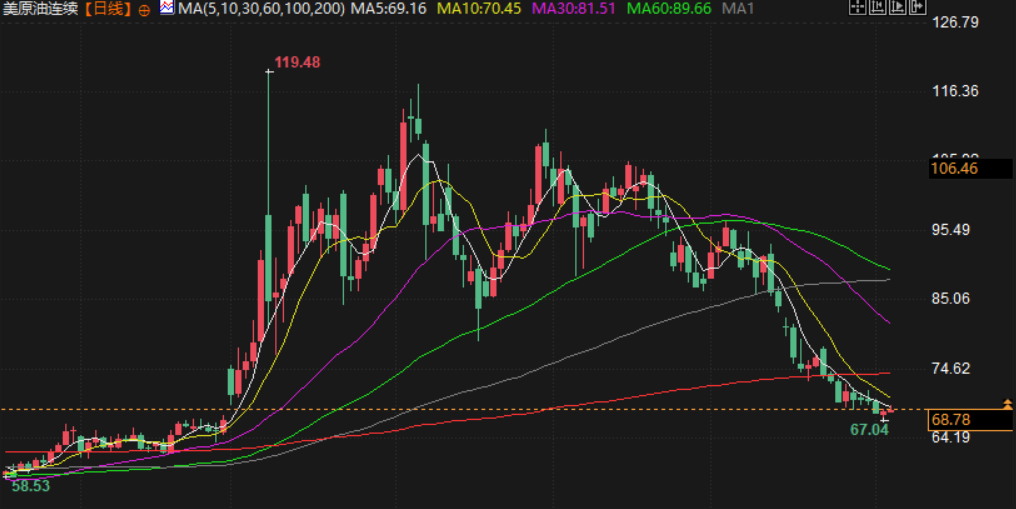
Oil prices saw little movement this week. Trading was thin on Friday due to the US Independence Day holiday, with Brent crude rising 0.54% to settle at $71.94 per barrel and WTI crude rising 0.47% to settle at $68.78 per barrel. Both benchmark contracts remained virtually unchanged for the week, primarily driven by traders' cautious bets on US-Iran peace talks.
Despite oil prices hitting their lowest level since the start of the US-Israel war against Iran in late February on Thursday, Friday's narrow trading range reflects a vacuum in the market awaiting signals—investors are unwilling to build large long positions before the holidays, nor are they willing to completely forgo the peace dividend.
Commerzbank explicitly pointed out that the negotiations boosted market expectations for a full reopening of the Strait of Hormuz, a key psychological factor providing support for oil prices. However, Citigroup analysts also warned that the negotiation process remains fragile, with the disputes over transit fees and administration far from resolved. This means that any sign of a breakdown in negotiations could quickly trigger a new round of price volatility. Overall, this week's "flatness" is not a stable state, but rather a temporary balance of power between bulls and bears during a period of news vacuum.
OPEC production rebounds sharply
Surveys show that OPEC (excluding the UAE, which has since withdrawn) crude oil production surged by 3.3 million barrels per day in June, reaching 19.43 million barrels per day, a strong rebound from the more than two-decade low hit in May. This increase far exceeded market expectations, mainly contributed by Kuwait (jumping from 580,000 barrels per day in May to 1.65 million barrels per day) and Iran—Iran was able to quickly restart its interrupted export capacity after the US lifted its blockade of Iranian ports.
Saudi Arabia, Iraq, Nigeria, and Libya have also followed suit by increasing production, indicating that Gulf oil-producing countries are seizing the window of opportunity presented by the supply gap to aggressively gain market share. It's noteworthy that although OPEC+ had previously agreed to increase production in June, the Iran war temporarily halted the plan. Now, with the temporary waivers from the US and Iran taking effect, pent-up production capacity is being released. This surge in supply is altering market expectations regarding the supply-demand balance: previously, the market worried about a prolonged supply disruption, but the current pace of production recovery suggests a rising risk of short-term oversupply, which is also the direct driver pushing the market structure from a backwardation to a forward spread.
It is reported that Iran has begun talks with Japanese companies to resume oil sales during the 60-day sanctions waiver period, marking the first time Japan has considered importing crude oil from Iran since 2019.
Market structure shifts to positive spread
A key technical signal emerged this week: Brent crude oil spot prices have fallen below futures contracts up to six months in advance, marking a formal shift in market structure from a backwardation (spot premium) to a forward premium (futures premium). This is the latest evidence of a short-term supply glut caused by increased oil transit through the Strait of Hormuz. A backwardation typically reflects tight spot supply and low inventories, while a forward premium suggests traders expect ample future supply and are even willing to pay storage costs. Combined with OPEC's June production figure of 3.3 million barrels per day, the market is rapidly absorbing the reality of supply recovery. Previously, the supply disruption panic triggered by the US-Israel conflict in late February pushed spot prices above longer-dated contracts. Now, with the partial reopening of Iranian export routes and Gulf oil-producing countries ramping up production, short-term glut expectations are replacing shortage anxieties. This structural shift is particularly crucial for arbitrageurs and hedge funds, as the strategy of shorting near-month contracts and going long on longer-dated contracts regains appeal in a forward premium environment. It may also prompt oil-producing countries to accelerate exports to lock in current prices, further pressuring near-term prices.
Geopolitics and Supply Outlook
The US-Iran negotiations are the central variable in all current logic. Citigroup analysts describe them as "fragile but still ongoing," emphasizing that the Memorandum of Understanding (MoU) is maintained not based on trust, but because the incentives for both sides to default are very weak—for Iran, obtaining temporary waivers and oil revenues to alleviate economic pressure are the real benefits.
For the United States, avoiding a complete blockade of the Strait of Hormuz that could trigger a runaway global oil price and a rebound in inflation is a political imperative. However, navigational safety in the Strait of Hormuz is far from guaranteed, and the strait's operational model remains highly uncertain should a lasting peace agreement fail to be reached. On the supply side, Gulf oil-producing countries are clearly racing against time to increase production, attempting to maximize export revenue during the exemption window. However, this "rush" could, in turn, weaken Iran's bargaining power in negotiations, as global market dependence on Iranian supplies is declining.
Looking ahead, the direction of oil prices depends on the speed of the evolution of a triple game: the progress of negotiations (fast or slow), the pace of production resumption (rapid or slow), and insurance/shipping bottlenecks (whether they can be overcome). If waivers are extended and commercial barriers are removed, Iranian exports may increase by another 500,000 to 1 million barrels per day, which will further suppress oil prices; conversely, if negotiations break down or the Strait of Hormuz is threatened again, the supply shock will instantly reverse the current positive price spread.
Iran began a state funeral for the late Supreme Leader Ayatollah Khamenei on July 4 and it will end on July 9. Markets remain cautious about geopolitical uncertainties during the funeral. Iran has warned the United States and Israel not to misjudge the situation during the funeral, saying that the Iranian armed forces will retaliate severely against any threats or aggression.
Meanwhile, the market is focused on whether the current Iranian Supreme Leader, Mojtaba Khamenei, will attend the funeral. If he attends, it will be his first public appearance since the war; if he does not attend, it will increase questions about his safety.
Despite oil prices hitting their lowest level since the start of the US-Israel war against Iran in late February on Thursday, Friday's narrow trading range reflects a vacuum in the market awaiting signals—investors are unwilling to build large long positions before the holidays, nor are they willing to completely forgo the peace dividend.
Commerzbank explicitly pointed out that the negotiations boosted market expectations for a full reopening of the Strait of Hormuz, a key psychological factor providing support for oil prices. However, Citigroup analysts also warned that the negotiation process remains fragile, with the disputes over transit fees and administration far from resolved. This means that any sign of a breakdown in negotiations could quickly trigger a new round of price volatility. Overall, this week's "flatness" is not a stable state, but rather a temporary balance of power between bulls and bears during a period of news vacuum.
OPEC production rebounds sharply
Surveys show that OPEC (excluding the UAE, which has since withdrawn) crude oil production surged by 3.3 million barrels per day in June, reaching 19.43 million barrels per day, a strong rebound from the more than two-decade low hit in May. This increase far exceeded market expectations, mainly contributed by Kuwait (jumping from 580,000 barrels per day in May to 1.65 million barrels per day) and Iran—Iran was able to quickly restart its interrupted export capacity after the US lifted its blockade of Iranian ports.
Saudi Arabia, Iraq, Nigeria, and Libya have also followed suit by increasing production, indicating that Gulf oil-producing countries are seizing the window of opportunity presented by the supply gap to aggressively gain market share. It's noteworthy that although OPEC+ had previously agreed to increase production in June, the Iran war temporarily halted the plan. Now, with the temporary waivers from the US and Iran taking effect, pent-up production capacity is being released. This surge in supply is altering market expectations regarding the supply-demand balance: previously, the market worried about a prolonged supply disruption, but the current pace of production recovery suggests a rising risk of short-term oversupply, which is also the direct driver pushing the market structure from a backwardation to a forward spread.
It is reported that Iran has begun talks with Japanese companies to resume oil sales during the 60-day sanctions waiver period, marking the first time Japan has considered importing crude oil from Iran since 2019.
Market structure shifts to positive spread
A key technical signal emerged this week: Brent crude oil spot prices have fallen below futures contracts up to six months in advance, marking a formal shift in market structure from a backwardation (spot premium) to a forward premium (futures premium). This is the latest evidence of a short-term supply glut caused by increased oil transit through the Strait of Hormuz. A backwardation typically reflects tight spot supply and low inventories, while a forward premium suggests traders expect ample future supply and are even willing to pay storage costs. Combined with OPEC's June production figure of 3.3 million barrels per day, the market is rapidly absorbing the reality of supply recovery. Previously, the supply disruption panic triggered by the US-Israel conflict in late February pushed spot prices above longer-dated contracts. Now, with the partial reopening of Iranian export routes and Gulf oil-producing countries ramping up production, short-term glut expectations are replacing shortage anxieties. This structural shift is particularly crucial for arbitrageurs and hedge funds, as the strategy of shorting near-month contracts and going long on longer-dated contracts regains appeal in a forward premium environment. It may also prompt oil-producing countries to accelerate exports to lock in current prices, further pressuring near-term prices.
Geopolitics and Supply Outlook
The US-Iran negotiations are the central variable in all current logic. Citigroup analysts describe them as "fragile but still ongoing," emphasizing that the Memorandum of Understanding (MoU) is maintained not based on trust, but because the incentives for both sides to default are very weak—for Iran, obtaining temporary waivers and oil revenues to alleviate economic pressure are the real benefits.
For the United States, avoiding a complete blockade of the Strait of Hormuz that could trigger a runaway global oil price and a rebound in inflation is a political imperative. However, navigational safety in the Strait of Hormuz is far from guaranteed, and the strait's operational model remains highly uncertain should a lasting peace agreement fail to be reached. On the supply side, Gulf oil-producing countries are clearly racing against time to increase production, attempting to maximize export revenue during the exemption window. However, this "rush" could, in turn, weaken Iran's bargaining power in negotiations, as global market dependence on Iranian supplies is declining.
Looking ahead, the direction of oil prices depends on the speed of the evolution of a triple game: the progress of negotiations (fast or slow), the pace of production resumption (rapid or slow), and insurance/shipping bottlenecks (whether they can be overcome). If waivers are extended and commercial barriers are removed, Iranian exports may increase by another 500,000 to 1 million barrels per day, which will further suppress oil prices; conversely, if negotiations break down or the Strait of Hormuz is threatened again, the supply shock will instantly reverse the current positive price spread.
Iran began a state funeral for the late Supreme Leader Ayatollah Khamenei on July 4 and it will end on July 9. Markets remain cautious about geopolitical uncertainties during the funeral. Iran has warned the United States and Israel not to misjudge the situation during the funeral, saying that the Iranian armed forces will retaliate severely against any threats or aggression.
Meanwhile, the market is focused on whether the current Iranian Supreme Leader, Mojtaba Khamenei, will attend the funeral. If he attends, it will be his first public appearance since the war; if he does not attend, it will increase questions about his safety.
- Risk Warning and Disclaimer
- The market involves risk, and trading may not be suitable for all investors. This article is for reference only and does not constitute personal investment advice, nor does it take into account certain users’ specific investment objectives, financial situation, or other needs. Any investment decisions made based on this information are at your own risk.