HSBC's key analysis: Gold prices have further upside potential before the end of the year.
2026-07-06 10:26:47
The gold market trend in 2026 showed a clear divergence. Suppressed by rising US Treasury yields and a stronger US dollar, gold prices fluctuated weakly in the short term, and deviated from the traditional safe-haven trend during periods of geopolitical conflict.
HSBC, through a comprehensive review of market logic and supply and demand fundamentals, has clearly stated its bullish outlook on gold in the medium to long term. It believes that short-term negative factors are temporary, and coupled with core support such as central bank gold purchases, asset allocation diversification, and continuous inflows of ETF funds, gold prices have clear upside potential before the end of 2026.
On March 30, HSBC Asset Management analysts stated that gold's attributes will change significantly in 2026, no longer consistently serving as a safe haven, and its price movement will be closer to that of risk assets.
Escalating geopolitical tensions in the Middle East, coupled with a stronger US dollar, led to a significant correction in gold prices, with a maximum drop of 15%, breaking the traditional market pattern that geopolitical risks benefit gold prices. Analysts pointed out that a strong dollar weakened the willingness of overseas buyers to purchase gold, and rising market expectations of interest rate hikes increased the opportunity cost of holding gold, which were the core reasons for the decline in gold prices. Compared to 2022, the impact of this round of interest rate and exchange rate fluctuations on gold prices is more significant.
On April 2nd, HSBC's Global Chief Investment Officer Willem Sels and Global Head of Wealth Insights Lucia Ku added in an article that the interconnectedness of various assets has significantly increased, making portfolio diversification more difficult and further highlighting gold's hedging value. The two analysts stated that market inflation concerns have led to interest rate volatility, and the pace of monetary policy adjustments has slowed, with little room for easing in the short term. However, the long-term allocation logic for gold remains unshaken, and institutions maintain their overweight gold investment strategy.
On May 11, HSBC's chief precious metals analyst, James Steel, interpreted the recent gold price fluctuations, stating that gold's movements were entirely in line with fundamental expectations. He noted that physical demand for gold in major Asian countries is currently very strong, with the Shanghai Gold Exchange's gold price maintaining a premium of $20 per ounce over international gold prices. Demand is shifting from traditional jewelry and small-scale investments to standardized gold bar purchases by large institutions.
This change is attributed to the optimization of regulatory policies in major Asian countries and India, with leading insurance institutions in major Asian countries and asset management institutions in India both being permitted to allocate physical gold. Meanwhile, central bank gold purchases continue to be strong, with the central bank of the major Asian country increasing its gold holdings by 8.1 tons in a single month. This dual buying by official and private institutions has solidified the bottom support for gold prices.
Regarding the gold price sell-off caused by geopolitical conflicts, James Steel explained that the market decline was not due to the failure of the safe-haven property, but rather to the overall pressure on the financial market, which led investors to sell gold to obtain liquidity. This is a normal market hedging behavior.
A review of historical market trends reveals that the correlation between gold and crude oil has undergone a fundamental shift.
In the 1970s and 80s, gold and oil prices showed a significant positive correlation, with fluctuations in oil prices in tandem with fluctuations in gold prices. However, after the 1990s, the global economic weight of crude oil declined, and the correlation gradually weakened. Currently, the correlation coefficient between gold and oil prices is only 0.15, showing a negative correlation in certain periods. The traditional logic of analyzing the correlation between commodities is no longer applicable to the current gold market.
Compared to other assets, gold combines the attributes of a hard asset for preserving value with high liquidity. Unlike physical assets such as farmland, which are difficult to liquidate, gold's price movements are also decoupled from those of riskier assets like stocks. Currently, many asset management institutions that previously did not allocate to gold are increasing their holdings, further opening up potential for medium- to long-term price increases.
According to HSBC's analysis, the short-term pressure from high US Treasury yields and a strong US dollar is temporary and cannot reverse the long-term upward trend of gold.
Amidst fluctuating geopolitical tensions and the ongoing global trend towards de-dollarization, central bank gold purchases, continuous ETF inflows, and demand for diversified asset allocation will continue to drive growth. HSBC explicitly predicts that gold prices will break out of their range-bound trading pattern and resume their upward trend by the end of 2026.
Overall, the short-term trend of gold in 2026 deviates from the traditional safe-haven logic and is a phase of adjustment under the impact of liquidity shocks, rather than a fundamental reversal. Strong institutional physical demand from the two major Asian countries, continued gold purchases by global central banks, and upgraded asset allocation demand have created a long-term positive environment for gold. After the short-term negative factors subside, gold prices are likely to see a recovery and rise by the end of the year.
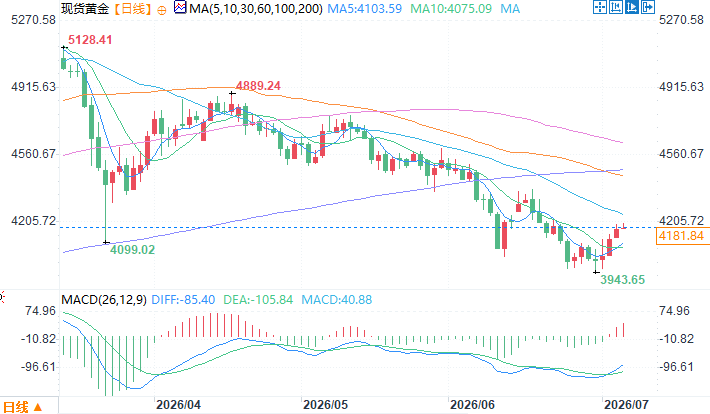
Spot gold daily chart source: EasyForex
At 10:26 AM Beijing time on July 6, spot gold was trading at $4178.84 per ounce.
HSBC, through a comprehensive review of market logic and supply and demand fundamentals, has clearly stated its bullish outlook on gold in the medium to long term. It believes that short-term negative factors are temporary, and coupled with core support such as central bank gold purchases, asset allocation diversification, and continuous inflows of ETF funds, gold prices have clear upside potential before the end of 2026.
The short-term downward pressure pattern is clear, and gold prices have deviated from the traditional safe-haven logic.
On March 30, HSBC Asset Management analysts stated that gold's attributes will change significantly in 2026, no longer consistently serving as a safe haven, and its price movement will be closer to that of risk assets.
Escalating geopolitical tensions in the Middle East, coupled with a stronger US dollar, led to a significant correction in gold prices, with a maximum drop of 15%, breaking the traditional market pattern that geopolitical risks benefit gold prices. Analysts pointed out that a strong dollar weakened the willingness of overseas buyers to purchase gold, and rising market expectations of interest rate hikes increased the opportunity cost of holding gold, which were the core reasons for the decline in gold prices. Compared to 2022, the impact of this round of interest rate and exchange rate fluctuations on gold prices is more significant.
On April 2nd, HSBC's Global Chief Investment Officer Willem Sels and Global Head of Wealth Insights Lucia Ku added in an article that the interconnectedness of various assets has significantly increased, making portfolio diversification more difficult and further highlighting gold's hedging value. The two analysts stated that market inflation concerns have led to interest rate volatility, and the pace of monetary policy adjustments has slowed, with little room for easing in the short term. However, the long-term allocation logic for gold remains unshaken, and institutions maintain their overweight gold investment strategy.
A strong rebound in physical demand has provided solid support for gold purchases by Chinese and Indian institutions.
On May 11, HSBC's chief precious metals analyst, James Steel, interpreted the recent gold price fluctuations, stating that gold's movements were entirely in line with fundamental expectations. He noted that physical demand for gold in major Asian countries is currently very strong, with the Shanghai Gold Exchange's gold price maintaining a premium of $20 per ounce over international gold prices. Demand is shifting from traditional jewelry and small-scale investments to standardized gold bar purchases by large institutions.
This change is attributed to the optimization of regulatory policies in major Asian countries and India, with leading insurance institutions in major Asian countries and asset management institutions in India both being permitted to allocate physical gold. Meanwhile, central bank gold purchases continue to be strong, with the central bank of the major Asian country increasing its gold holdings by 8.1 tons in a single month. This dual buying by official and private institutions has solidified the bottom support for gold prices.
Regarding the gold price sell-off caused by geopolitical conflicts, James Steel explained that the market decline was not due to the failure of the safe-haven property, but rather to the overall pressure on the financial market, which led investors to sell gold to obtain liquidity. This is a normal market hedging behavior.
The logic behind the correlation between gold and oil prices is being reshaped, highlighting the increasing scarcity of these assets.
A review of historical market trends reveals that the correlation between gold and crude oil has undergone a fundamental shift.
In the 1970s and 80s, gold and oil prices showed a significant positive correlation, with fluctuations in oil prices in tandem with fluctuations in gold prices. However, after the 1990s, the global economic weight of crude oil declined, and the correlation gradually weakened. Currently, the correlation coefficient between gold and oil prices is only 0.15, showing a negative correlation in certain periods. The traditional logic of analyzing the correlation between commodities is no longer applicable to the current gold market.
Compared to other assets, gold combines the attributes of a hard asset for preserving value with high liquidity. Unlike physical assets such as farmland, which are difficult to liquidate, gold's price movements are also decoupled from those of riskier assets like stocks. Currently, many asset management institutions that previously did not allocate to gold are increasing their holdings, further opening up potential for medium- to long-term price increases.
Negative factors are temporary, and a year-end rally is expected.
According to HSBC's analysis, the short-term pressure from high US Treasury yields and a strong US dollar is temporary and cannot reverse the long-term upward trend of gold.
Amidst fluctuating geopolitical tensions and the ongoing global trend towards de-dollarization, central bank gold purchases, continuous ETF inflows, and demand for diversified asset allocation will continue to drive growth. HSBC explicitly predicts that gold prices will break out of their range-bound trading pattern and resume their upward trend by the end of 2026.
Summarize
Overall, the short-term trend of gold in 2026 deviates from the traditional safe-haven logic and is a phase of adjustment under the impact of liquidity shocks, rather than a fundamental reversal. Strong institutional physical demand from the two major Asian countries, continued gold purchases by global central banks, and upgraded asset allocation demand have created a long-term positive environment for gold. After the short-term negative factors subside, gold prices are likely to see a recovery and rise by the end of the year.
Spot gold daily chart source: EasyForex
At 10:26 AM Beijing time on July 6, spot gold was trading at $4178.84 per ounce.
- Risk Warning and Disclaimer
- The market involves risk, and trading may not be suitable for all investors. This article is for reference only and does not constitute personal investment advice, nor does it take into account certain users’ specific investment objectives, financial situation, or other needs. Any investment decisions made based on this information are at your own risk.