The USD/JPY pair is approaching previous highs and may remain range-bound in the short term.
2026-07-07 11:12:58
The USD/JPY pair continued its decline from the previous day's close in Asian trading on Tuesday, falling further from above 162.00 to a low of around 161.70 to 161.65. However, the decline was limited, and no clear trend reversal signals emerged. Investors are still assessing the possibility of Japanese policy intervention, the USD/JPY interest rate differential, and the impact of global risk aversion on the exchange rate.

Earlier market rumors suggested that Japanese officials might change their traditional communication methods, ceasing to signal foreign exchange intervention in advance and instead focusing more directly on market speculation. This news briefly strengthened the yen, but as the Japanese authorities have not yet taken any concrete action, market tensions have gradually subsided, and the USD/JPY exchange rate has regained support.
Meanwhile, the persistent interest rate differential between the US and Japan remains a significant factor suppressing the yen. As Japanese interest rates have long been lower than those of major economies like the US, carry trade remains active, and investors borrowing low-cost yen to invest in high-yield assets continues to weaken yen demand. Given the pressure on the Japanese economy from energy costs and increasing external risks, the yen will continue to face considerable pressure in the short term.
Geopolitical risks also influence exchange rate movements. An oil tanker's attack by an unidentified object while transiting the Strait of Hormuz has raised concerns about energy transport security. Furthermore, disagreements between the US and Iran over passage through the Strait of Hormuz have also brought renewed focus to energy supply stability. Given Japan's high dependence on energy imports, disruptions to energy supplies could further increase pressure on the Japanese economy and limit the yen's upside potential.
Meanwhile, market concerns about the sustainability of the US-Iran ceasefire agreement have strengthened the safe-haven appeal of the US dollar. Amidst volatile global risk sentiment, the dollar remains a safe-haven asset for some investors, providing support for the USD/JPY exchange rate. Regarding domestic Japanese economic data, the latest figures show that nominal wages in Japan rose 3.2% year-on-year in May, lower than the revised 3.6% in the previous month. Although real wages rose 1.4% year-on-year, marking the fifth consecutive month of growth, the growth rate slowed due to renewed upward pressure on consumer prices. Furthermore, Japanese household spending fell 0.4% year-on-year in May, declining for the sixth consecutive month, indicating continued weakness in consumer spending.
Weak consumer spending could make it more difficult for the Bank of Japan to adjust its policy. The market believes that if economic growth lacks momentum, the Bank of Japan's room for further tightening may be limited, thus continuing to weaken the yen's attractiveness.
However, the dollar also faces some pressure. As the market lowers its expectations for further rate hikes by the Federal Reserve, the dollar's upward momentum is limited. Investors are currently awaiting the Fed meeting minutes for more clues about the future path of interest rates. If the policy signals lean towards easing, the dollar may come under pressure, limiting further gains against the yen.
Overall, the USD/JPY pair is currently in a tug-of-war between bullish and bearish factors. Although there has been a short-term correction, the market still tends to view the pullback as a buying opportunity due to factors such as the USD/JPY interest rate differential, safe-haven demand, and economic pressure in Japan. Unless there is sustained selling pressure, the short-term top of the exchange rate has not yet been fully confirmed.
From a daily chart perspective, the USD/JPY pair had been rising steadily and trading in a high-level area, and the current pullback is a technical correction within this uptrend. The exchange rate is currently holding above the 160 level, and the overall trend has not been significantly broken. In the short term, the area around 161.50 is a key support zone . If the price can hold this level, the bulls may launch a renewed counterattack, with resistance around 162.50. A further break above this level could lead to a retest of the 163.00 area. A break below 161.50 could see the market further retrace to around 160.50 to find support. While the daily momentum has weakened somewhat, the overall structure still leans towards a slightly bullish, albeit volatile, structure.
From a 4-hour chart perspective, the USD/JPY pair has entered a short-term pullback, with the price testing the 161.70 area after falling from around 162.50. Technical indicators show that short-term upward momentum has eased somewhat, with some indicators correcting, but no clear reversal signal has yet formed. If the exchange rate regains the 162.00 level, it may attract short-term buying and challenge the 162.50 resistance; conversely, a break below the 161.50 support could extend the correction. Currently, the market still needs to focus on the Fed meeting minutes and changes in Japanese policy signals; the short-term trend is likely to remain range-bound.
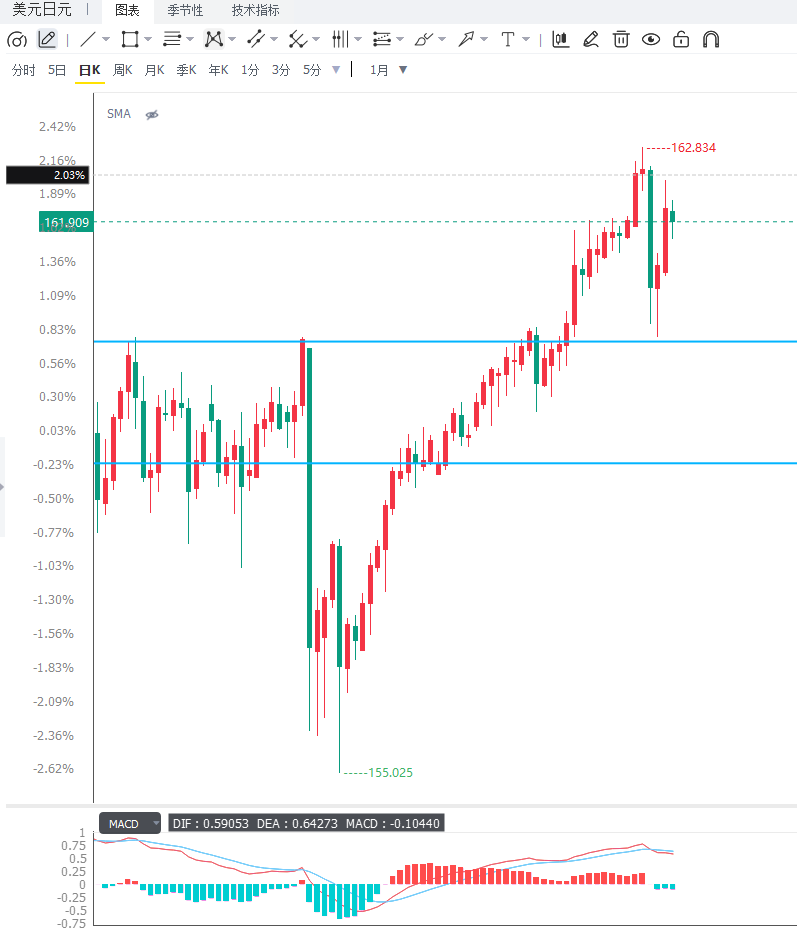
Editor's Summary : The recent USD/JPY exchange rate movement has been influenced by multiple factors, including expectations of Japanese intervention, the USD/JPY interest rate differential, energy supply risks, and expectations of Federal Reserve policy. Currently, the Japanese authorities have not taken any concrete action, making a rapid appreciation of the yen lack sustained momentum, while carry trades continue to exert downward pressure on the yen. However, rising expectations of a Fed rate cut limit the dollar's upside potential, and further gains in USD/JPY also face resistance. Going forward, the market will focus on the Fed meeting minutes, Japanese economic data, and changes in energy supply risks. If support around 161.50 holds, the exchange rate may maintain a slightly bullish trend; however, a break below key support could lead to a deeper correction. The market is currently in a directional decision-making phase, and investors should be wary of short-term volatility triggered by policy news.
Earlier market rumors suggested that Japanese officials might change their traditional communication methods, ceasing to signal foreign exchange intervention in advance and instead focusing more directly on market speculation. This news briefly strengthened the yen, but as the Japanese authorities have not yet taken any concrete action, market tensions have gradually subsided, and the USD/JPY exchange rate has regained support.
Meanwhile, the persistent interest rate differential between the US and Japan remains a significant factor suppressing the yen. As Japanese interest rates have long been lower than those of major economies like the US, carry trade remains active, and investors borrowing low-cost yen to invest in high-yield assets continues to weaken yen demand. Given the pressure on the Japanese economy from energy costs and increasing external risks, the yen will continue to face considerable pressure in the short term.
Geopolitical risks also influence exchange rate movements. An oil tanker's attack by an unidentified object while transiting the Strait of Hormuz has raised concerns about energy transport security. Furthermore, disagreements between the US and Iran over passage through the Strait of Hormuz have also brought renewed focus to energy supply stability. Given Japan's high dependence on energy imports, disruptions to energy supplies could further increase pressure on the Japanese economy and limit the yen's upside potential.
Meanwhile, market concerns about the sustainability of the US-Iran ceasefire agreement have strengthened the safe-haven appeal of the US dollar. Amidst volatile global risk sentiment, the dollar remains a safe-haven asset for some investors, providing support for the USD/JPY exchange rate. Regarding domestic Japanese economic data, the latest figures show that nominal wages in Japan rose 3.2% year-on-year in May, lower than the revised 3.6% in the previous month. Although real wages rose 1.4% year-on-year, marking the fifth consecutive month of growth, the growth rate slowed due to renewed upward pressure on consumer prices. Furthermore, Japanese household spending fell 0.4% year-on-year in May, declining for the sixth consecutive month, indicating continued weakness in consumer spending.
Weak consumer spending could make it more difficult for the Bank of Japan to adjust its policy. The market believes that if economic growth lacks momentum, the Bank of Japan's room for further tightening may be limited, thus continuing to weaken the yen's attractiveness.
However, the dollar also faces some pressure. As the market lowers its expectations for further rate hikes by the Federal Reserve, the dollar's upward momentum is limited. Investors are currently awaiting the Fed meeting minutes for more clues about the future path of interest rates. If the policy signals lean towards easing, the dollar may come under pressure, limiting further gains against the yen.
Overall, the USD/JPY pair is currently in a tug-of-war between bullish and bearish factors. Although there has been a short-term correction, the market still tends to view the pullback as a buying opportunity due to factors such as the USD/JPY interest rate differential, safe-haven demand, and economic pressure in Japan. Unless there is sustained selling pressure, the short-term top of the exchange rate has not yet been fully confirmed.
From a daily chart perspective, the USD/JPY pair had been rising steadily and trading in a high-level area, and the current pullback is a technical correction within this uptrend. The exchange rate is currently holding above the 160 level, and the overall trend has not been significantly broken. In the short term, the area around 161.50 is a key support zone . If the price can hold this level, the bulls may launch a renewed counterattack, with resistance around 162.50. A further break above this level could lead to a retest of the 163.00 area. A break below 161.50 could see the market further retrace to around 160.50 to find support. While the daily momentum has weakened somewhat, the overall structure still leans towards a slightly bullish, albeit volatile, structure.
From a 4-hour chart perspective, the USD/JPY pair has entered a short-term pullback, with the price testing the 161.70 area after falling from around 162.50. Technical indicators show that short-term upward momentum has eased somewhat, with some indicators correcting, but no clear reversal signal has yet formed. If the exchange rate regains the 162.00 level, it may attract short-term buying and challenge the 162.50 resistance; conversely, a break below the 161.50 support could extend the correction. Currently, the market still needs to focus on the Fed meeting minutes and changes in Japanese policy signals; the short-term trend is likely to remain range-bound.
Editor's Summary : The recent USD/JPY exchange rate movement has been influenced by multiple factors, including expectations of Japanese intervention, the USD/JPY interest rate differential, energy supply risks, and expectations of Federal Reserve policy. Currently, the Japanese authorities have not taken any concrete action, making a rapid appreciation of the yen lack sustained momentum, while carry trades continue to exert downward pressure on the yen. However, rising expectations of a Fed rate cut limit the dollar's upside potential, and further gains in USD/JPY also face resistance. Going forward, the market will focus on the Fed meeting minutes, Japanese economic data, and changes in energy supply risks. If support around 161.50 holds, the exchange rate may maintain a slightly bullish trend; however, a break below key support could lead to a deeper correction. The market is currently in a directional decision-making phase, and investors should be wary of short-term volatility triggered by policy news.
- Risk Warning and Disclaimer
- The market involves risk, and trading may not be suitable for all investors. This article is for reference only and does not constitute personal investment advice, nor does it take into account certain users’ specific investment objectives, financial situation, or other needs. Any investment decisions made based on this information are at your own risk.