Multiple negative factors continue to weigh on the yen; a slight pullback in USD/JPY is unlikely to reverse the overall trend of yen depreciation.
2026-07-07 13:48:25
The USD/JPY pair saw renewed selling pressure during Asian trading hours on Tuesday (July 7), briefly dipping to the 161.65-161.70 range. However, multiple fundamental supporting factors remained unchanged, and with Japanese monetary authorities yet to intervene in the foreign exchange market, there was a significant buffer against further downside for USD/JPY.
The long-term interest rate differential between the US and Japan supports carry trades that continue to short the yen. The shipping crisis in the Strait of Hormuz exacerbates Japan's energy import pressures, while instability between the US and Iran increases the safe-haven value of the dollar. Weak domestic wage and consumption data in Japan limit the Bank of Japan's room for tightening policy, with only rising expectations of a Fed rate cut slightly suppressing dollar bulls. The market is currently awaiting the Fed's meeting minutes on Wednesday; short-term pullbacks are seen merely as opportunities to establish long positions, and the medium- to long-term depreciation trend of the yen is unlikely to reverse quickly.
Earlier market news indicated that Japanese regulators were adjusting their previous approach of issuing early intervention warnings and planned to directly and precisely target speculative foreign exchange funds. This news briefly boosted the yen, but since no substantive intervention measures have been introduced so far, the market impact has completely dissipated.

The core underlying logic suppressing the yen remains the significant borrowing cost difference between the US and Japan. Investors continue to borrow low-cost yen to purchase high-yield dollar assets, resulting in persistently high levels of carry trades and sustained selling pressure on the yen. Coupled with energy risks stemming from Middle East geopolitical conflicts, the market's long-term bearish outlook on the yen remains unchanged. Even with temporary pullbacks in the exchange rate, buying USD/JPY on dips remains active.
The Strait of Hormuz, a critical global oil shipping route, faces another sudden risk, with maritime authorities reporting that an oil tanker was attacked by an unidentified flying object while en route. This comes after a prolonged standoff between the US and Iran over tolls for passage through the strait, casting doubt on the stability of shipping through the waterway. Japan, heavily reliant on Middle Eastern oil imports, will see its energy supply disrupted, significantly increasing imported inflation and further hindering its economic recovery, thus weakening the yen's fundamental support.
At the same time, the market is generally concerned about the lack of stability of the temporary easing agreement between the US and Iran. Geopolitical safe-haven demand continues to flow to the US dollar, strengthening the safe-haven attribute of the US dollar and indirectly supporting the exchange rate of the US dollar against the Japanese yen, forming a dual geopolitical logic that is bearish for the Japanese yen.
The latest economic data for May reveals concerns about domestic demand. Japan's nominal total cash income rose 3.2% year-on-year, a slower pace than the revised 3.6% in the previous month. Real wages rose 1.4% year-on-year, marking the fifth consecutive month of positive growth, but the rate of income growth slowed significantly due to renewed inflation in consumer goods.
Domestic consumer spending was even weaker, with household spending declining year-on-year for the sixth consecutive month, down 0.4% in May. This weak consumption data suggests insufficient domestic growth momentum in Japan, significantly limiting the Bank of Japan's room for maneuver in tightening monetary policy. Market expectations of a delayed interest rate hike are weighing on the yen from a monetary policy perspective.
The market has gradually lowered its expectations for continued interest rate hikes by the Federal Reserve, and bullish sentiment has cooled, putting slight downward pressure on the dollar and limiting further gains in the USD/JPY pair. However, considering multiple fundamental factors such as interest rate differentials, geopolitics, and domestic demand in Japan, this pullback in the exchange rate is merely a technical correction. The correction range is expected to see continued buying support, limiting the downside potential.
From a trading perspective, to confirm that the USD/JPY pair has peaked in the short term, sustained and significant selling pressure from short sellers is needed. Currently, mainstream market funds are remaining on the sidelines, awaiting the release of the FOMC meeting minutes on Wednesday to glean insights into the policy stance of Fed officials and thus determine the future trend of the dollar.
Considering the overall geopolitical situation, cross-border carry trade, monetary policy expectations of both countries, and Japanese domestic economic data, the recent pullback in the USD/JPY exchange rate is a short-term technical adjustment, and the core logic supporting the yen's weakness has not fundamentally changed. Middle East energy risks, the USD/JPY interest rate differential, and weak domestic demand in Japan continue to weigh on the yen, with only expectations of a Fed rate cut slightly limiting the dollar's gains.
The market focus in the short term is on the Federal Reserve meeting minutes, and the yen's upside potential is very limited before the Japanese government takes concrete steps to intervene in the foreign exchange market.
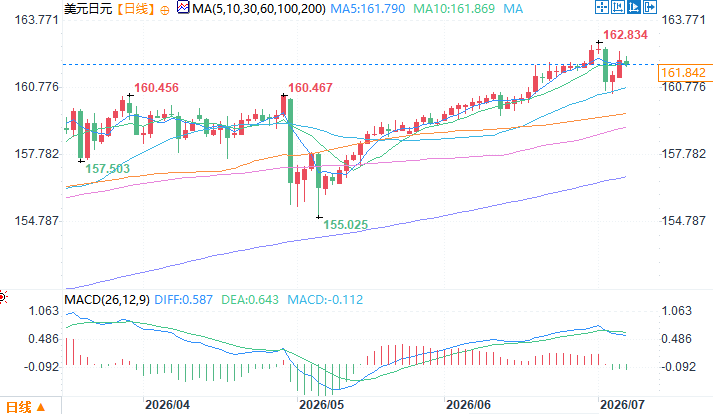
USD/JPY Daily Chart Source: EasyForex
At 12:48 Beijing time on July 7, the USD/JPY exchange rate was 161.83/84.
The long-term interest rate differential between the US and Japan supports carry trades that continue to short the yen. The shipping crisis in the Strait of Hormuz exacerbates Japan's energy import pressures, while instability between the US and Iran increases the safe-haven value of the dollar. Weak domestic wage and consumption data in Japan limit the Bank of Japan's room for tightening policy, with only rising expectations of a Fed rate cut slightly suppressing dollar bulls. The market is currently awaiting the Fed's meeting minutes on Wednesday; short-term pullbacks are seen merely as opportunities to establish long positions, and the medium- to long-term depreciation trend of the yen is unlikely to reverse quickly.
As the effects of intervention strategies fade, interest rate carry trades continue to put downward pressure on the yen.
Earlier market news indicated that Japanese regulators were adjusting their previous approach of issuing early intervention warnings and planned to directly and precisely target speculative foreign exchange funds. This news briefly boosted the yen, but since no substantive intervention measures have been introduced so far, the market impact has completely dissipated.
The core underlying logic suppressing the yen remains the significant borrowing cost difference between the US and Japan. Investors continue to borrow low-cost yen to purchase high-yield dollar assets, resulting in persistently high levels of carry trades and sustained selling pressure on the yen. Coupled with energy risks stemming from Middle East geopolitical conflicts, the market's long-term bearish outlook on the yen remains unchanged. Even with temporary pullbacks in the exchange rate, buying USD/JPY on dips remains active.
The Middle East shipping crisis is escalating, and dual geopolitical factors are supporting the US dollar.
The Strait of Hormuz, a critical global oil shipping route, faces another sudden risk, with maritime authorities reporting that an oil tanker was attacked by an unidentified flying object while en route. This comes after a prolonged standoff between the US and Iran over tolls for passage through the strait, casting doubt on the stability of shipping through the waterway. Japan, heavily reliant on Middle Eastern oil imports, will see its energy supply disrupted, significantly increasing imported inflation and further hindering its economic recovery, thus weakening the yen's fundamental support.
At the same time, the market is generally concerned about the lack of stability of the temporary easing agreement between the US and Iran. Geopolitical safe-haven demand continues to flow to the US dollar, strengthening the safe-haven attribute of the US dollar and indirectly supporting the exchange rate of the US dollar against the Japanese yen, forming a dual geopolitical logic that is bearish for the Japanese yen.
Weak domestic demand recovery in Japan is hindering the pace of interest rate hikes by the central bank.
The latest economic data for May reveals concerns about domestic demand. Japan's nominal total cash income rose 3.2% year-on-year, a slower pace than the revised 3.6% in the previous month. Real wages rose 1.4% year-on-year, marking the fifth consecutive month of positive growth, but the rate of income growth slowed significantly due to renewed inflation in consumer goods.
Domestic consumer spending was even weaker, with household spending declining year-on-year for the sixth consecutive month, down 0.4% in May. This weak consumption data suggests insufficient domestic growth momentum in Japan, significantly limiting the Bank of Japan's room for maneuver in tightening monetary policy. Market expectations of a delayed interest rate hike are weighing on the yen from a monetary policy perspective.
Expectations of a Fed rate cut limit the dollar's upside; short-term pullback does not change the long-term trend.
The market has gradually lowered its expectations for continued interest rate hikes by the Federal Reserve, and bullish sentiment has cooled, putting slight downward pressure on the dollar and limiting further gains in the USD/JPY pair. However, considering multiple fundamental factors such as interest rate differentials, geopolitics, and domestic demand in Japan, this pullback in the exchange rate is merely a technical correction. The correction range is expected to see continued buying support, limiting the downside potential.
From a trading perspective, to confirm that the USD/JPY pair has peaked in the short term, sustained and significant selling pressure from short sellers is needed. Currently, mainstream market funds are remaining on the sidelines, awaiting the release of the FOMC meeting minutes on Wednesday to glean insights into the policy stance of Fed officials and thus determine the future trend of the dollar.
Summarize
Considering the overall geopolitical situation, cross-border carry trade, monetary policy expectations of both countries, and Japanese domestic economic data, the recent pullback in the USD/JPY exchange rate is a short-term technical adjustment, and the core logic supporting the yen's weakness has not fundamentally changed. Middle East energy risks, the USD/JPY interest rate differential, and weak domestic demand in Japan continue to weigh on the yen, with only expectations of a Fed rate cut slightly limiting the dollar's gains.
The market focus in the short term is on the Federal Reserve meeting minutes, and the yen's upside potential is very limited before the Japanese government takes concrete steps to intervene in the foreign exchange market.
USD/JPY Daily Chart Source: EasyForex
At 12:48 Beijing time on July 7, the USD/JPY exchange rate was 161.83/84.
- Risk Warning and Disclaimer
- The market involves risk, and trading may not be suitable for all investors. This article is for reference only and does not constitute personal investment advice, nor does it take into account certain users’ specific investment objectives, financial situation, or other needs. Any investment decisions made based on this information are at your own risk.