From "aggressive selling" to "selective accumulation": Gold market sentiment has completed a key shift.
2026-07-07 13:51:21
On Tuesday (July 7) during Asian trading hours, spot gold continued its decline from the previous day, currently down about 1% to around $4,120 per ounce. Spot silver fell about 2.4%, trading around $60.50 per ounce.
Although gold prices have not yet broken through the first resistance level above $4,200, Saxo Bank’s head of commodities strategy, Hansen, believes that the most intense selling pressure in the months-long correction may have passed.
In the silver market, the key support level of $50 was successfully held, and the price subsequently rebounded back above $60, but it also faces significant technical and psychological recovery challenges.
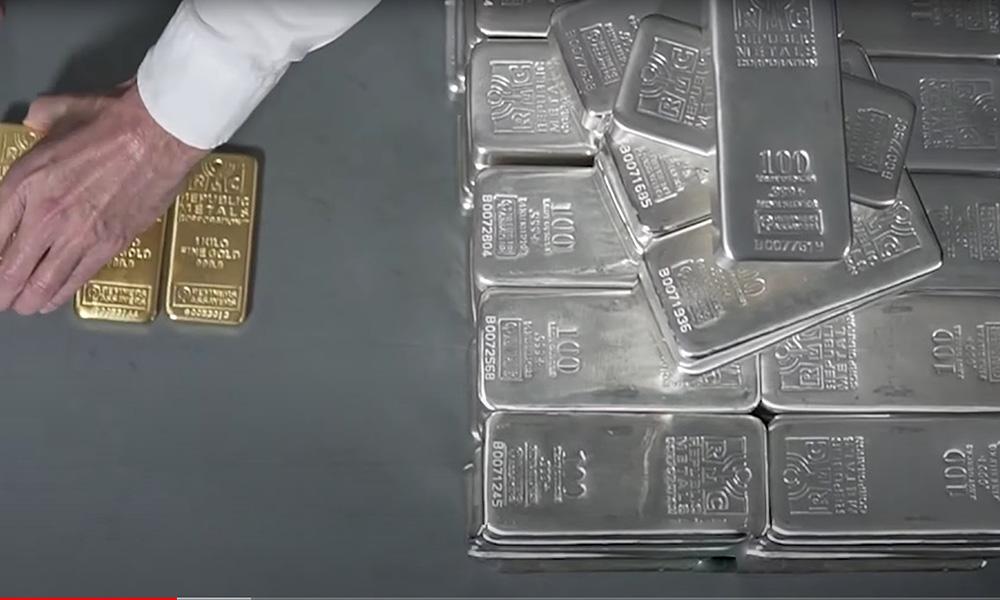
In a precious metals report released Monday, Saxo Bank’s Head of Commodity Strategy, Hansen, made a key observation: the price action in the gold market is shifting from “clearing out” to “consolidation and bottoming out.”
The significance of this shift cannot be underestimated. In the preceding months, gold prices had fallen steadily from their January highs, with a maximum pullback of approximately $1650 per ounce (about 28%), triggering a period of panic selling. Currently, however, "the sector has shifted from being aggressively bought to being selectively accumulated"—signaling a change in the underlying structure of market sentiment.
Hansen points out that gold's next move will depend on whether macroeconomic conditions continue to ease or turn unfavorable again. This assessment accurately summarizes gold's current "waiting to be confirmed" state: the most intense sell-off has passed, but new buying power has not yet fully taken over the market.
The recent stabilization of gold prices is attributed to marginal improvements in the macroeconomic environment, which manifests in two aspects:
First, the employment data weakened expectations of aggressive interest rate hikes. June's non-farm payrolls increased by only 57,000 jobs, a figure far below expectations, causing a significant pullback in market predictions of a rate hike this year. While the market still expects the Fed to raise rates this year, the core variable of "the number and magnitude of rate hikes" has undergone a substantial change.
Second, Warsh's comments offer room for speculation about a policy shift. Federal Reserve Chairman Warsh emphasized the commitment to price stability and the direction of bringing inflation back to the target, but also clearly stated that inflation risks have eased in recent weeks since he took over the Fed. This statement sends a marginally dovish signal.
Hansen stated that with easing inflationary pressures and a sharp drop in energy prices, a Fed rate hike this year is "illogical." Once the market widely accepts this view, the dollar will weaken due to the pressure from large long positions currently at high levels, and short-term bond yields will revert to the federal funds rate level. This implies a systemic macroeconomic boost for gold.
Despite the improving fundamentals, Hansen emphasized that gold still has a lot of technical work to do – the current price is still about 26% lower than the January high.
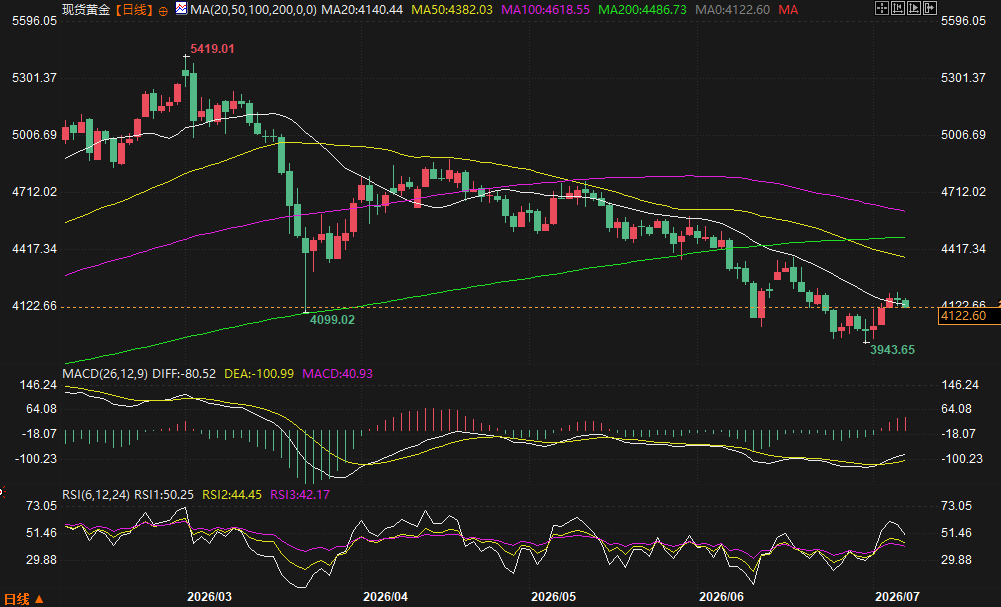
(Spot gold daily chart, source: FX678)
The key nodes of the technical structure are as follows:
The support level below $4,000 has held, which is the most important line of defense for the bulls in this correction.
However, the rebound near $4,200 encountered a new round of selling pressure. This indicates that some investors are still using the rebound to reduce their exposure—a typical price action after a deep correction, and explains why it takes time to build a sustainable market bottom.
The key resistance ahead is located at:
The 200-day moving average (approximately $4,485 per ounce) is the first major obstacle that gold bulls need to overcome.
Silver prices are currently above $60/ounce, but what's more noteworthy is its resilience at the bottom:
The "key support" in the mid-$50 range successfully halted the decline—this technical level has withstood the test during this pullback.
It then rebounded back above $60, demonstrating the resilience of silver prices.
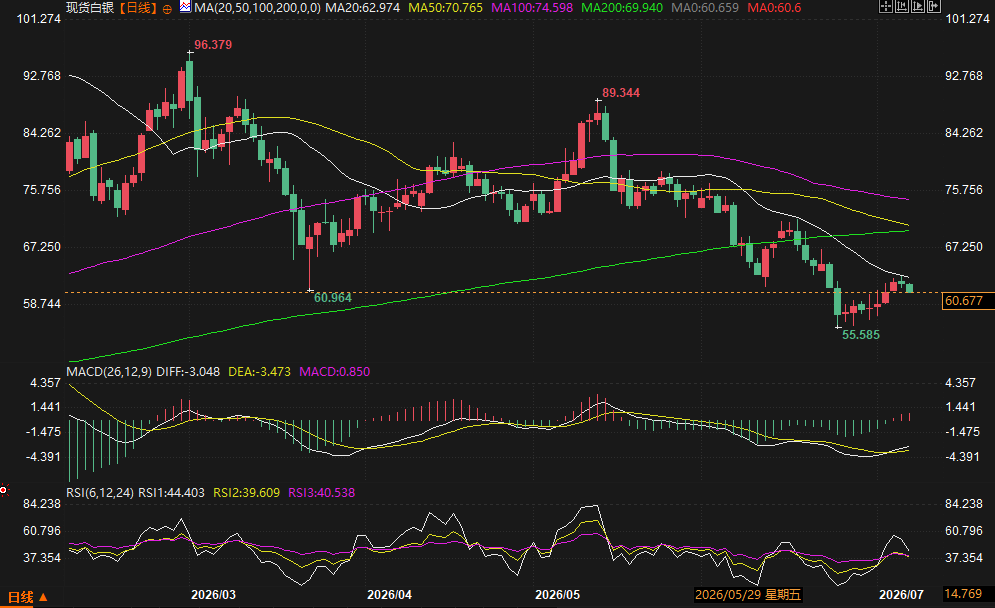
(Spot silver daily chart, source: EasyForex)
Hansen pointed out the dual nature of silver: on the one hand, silver has the macroeconomic sensitivity of gold (interest rates, the US dollar, risk aversion); on the other hand, it has a tighter fundamental background—years of supply deficits and sustained growth in industrial demand provide structural support.
However, this characteristic is a double-edged sword: the silver market is much smaller than the gold market and is more sensitive to capital flows. This means that when conditions improve, silver is extremely attractive to trend-following investors; but when sentiment reverses, it also faces a more severe risk of liquidation. For silver, it currently faces the dual task of "technical repair and psychological repair," but its fundamental structural support means that its upward elasticity after bottoming out may exceed that of gold.
In summary, gold and silver are at a critical juncture, transitioning from "liquidation" to "consolidation and bottoming out." Whether this transition can be successfully completed depends on the evolution of the following three variables:
First, the Fed's policy path has become clearer. If inflation data continues to decline in the coming weeks, market pricing in a rate hike this year will weaken further from the current "still expected" level. The decline in the dollar and yields will provide macroeconomic impetus for gold to break through the $4,200-$4,500 resistance zone.
Second, verifying ETF holdings flows. Whether long-term funds in gold ETFs begin to flow back will be a key indicator for verifying whether the "from liquidation to accumulation" transition is valid.
Third, the pace of overcoming technical resistance. The selling pressure around $4200 will take time to dissipate. If the price can trade time for space—that is, repeatedly test the $4000-$4200 range without breaking the previous low—the credibility of the bottoming structure will continue to increase. Conversely, if a rapid surge to $4200 is followed by another large-scale sell-off, the bottoming process may be longer than expected.
Hansen's conclusions provide a clear framework for the current market positioning: the most intense sell-off may be over, but a sustainable bottom will take time to form. With the macroeconomic backdrop improving but the technicals yet to confirm this, gold and silver are currently in a "phase of building momentum for directional choice"—patiently waiting for confirmation signals is more prudent than rushing to judge a trend reversal.
At 13:51 Beijing time on July 7, spot gold was trading at $4,124.10 per ounce, and spot silver was trading at $60.52 per ounce.
Although gold prices have not yet broken through the first resistance level above $4,200, Saxo Bank’s head of commodities strategy, Hansen, believes that the most intense selling pressure in the months-long correction may have passed.
In the silver market, the key support level of $50 was successfully held, and the price subsequently rebounded back above $60, but it also faces significant technical and psychological recovery challenges.
From Clearing to Consolidation: A Key Shift in Gold Market Sentiment
In a precious metals report released Monday, Saxo Bank’s Head of Commodity Strategy, Hansen, made a key observation: the price action in the gold market is shifting from “clearing out” to “consolidation and bottoming out.”
The significance of this shift cannot be underestimated. In the preceding months, gold prices had fallen steadily from their January highs, with a maximum pullback of approximately $1650 per ounce (about 28%), triggering a period of panic selling. Currently, however, "the sector has shifted from being aggressively bought to being selectively accumulated"—signaling a change in the underlying structure of market sentiment.
Hansen points out that gold's next move will depend on whether macroeconomic conditions continue to ease or turn unfavorable again. This assessment accurately summarizes gold's current "waiting to be confirmed" state: the most intense sell-off has passed, but new buying power has not yet fully taken over the market.
Macroeconomic policy support: a double boost from employment data and Warsh commentary
The recent stabilization of gold prices is attributed to marginal improvements in the macroeconomic environment, which manifests in two aspects:
First, the employment data weakened expectations of aggressive interest rate hikes. June's non-farm payrolls increased by only 57,000 jobs, a figure far below expectations, causing a significant pullback in market predictions of a rate hike this year. While the market still expects the Fed to raise rates this year, the core variable of "the number and magnitude of rate hikes" has undergone a substantial change.
Second, Warsh's comments offer room for speculation about a policy shift. Federal Reserve Chairman Warsh emphasized the commitment to price stability and the direction of bringing inflation back to the target, but also clearly stated that inflation risks have eased in recent weeks since he took over the Fed. This statement sends a marginally dovish signal.
Hansen stated that with easing inflationary pressures and a sharp drop in energy prices, a Fed rate hike this year is "illogical." Once the market widely accepts this view, the dollar will weaken due to the pressure from large long positions currently at high levels, and short-term bond yields will revert to the federal funds rate level. This implies a systemic macroeconomic boost for gold.
Technical signals: Bottoming out takes time
Despite the improving fundamentals, Hansen emphasized that gold still has a lot of technical work to do – the current price is still about 26% lower than the January high.
(Spot gold daily chart, source: FX678)
The key nodes of the technical structure are as follows:
The support level below $4,000 has held, which is the most important line of defense for the bulls in this correction.
However, the rebound near $4,200 encountered a new round of selling pressure. This indicates that some investors are still using the rebound to reduce their exposure—a typical price action after a deep correction, and explains why it takes time to build a sustainable market bottom.
The key resistance ahead is located at:
The 200-day moving average (approximately $4,485 per ounce) is the first major obstacle that gold bulls need to overcome.
Silver: Dual Elasticity Supported by Industrial Properties
Silver prices are currently above $60/ounce, but what's more noteworthy is its resilience at the bottom:
The "key support" in the mid-$50 range successfully halted the decline—this technical level has withstood the test during this pullback.
It then rebounded back above $60, demonstrating the resilience of silver prices.
(Spot silver daily chart, source: EasyForex)
Hansen pointed out the dual nature of silver: on the one hand, silver has the macroeconomic sensitivity of gold (interest rates, the US dollar, risk aversion); on the other hand, it has a tighter fundamental background—years of supply deficits and sustained growth in industrial demand provide structural support.
However, this characteristic is a double-edged sword: the silver market is much smaller than the gold market and is more sensitive to capital flows. This means that when conditions improve, silver is extremely attractive to trend-following investors; but when sentiment reverses, it also faces a more severe risk of liquidation. For silver, it currently faces the dual task of "technical repair and psychological repair," but its fundamental structural support means that its upward elasticity after bottoming out may exceed that of gold.
Outlook: Three key observation variables during the bottoming-out phase
In summary, gold and silver are at a critical juncture, transitioning from "liquidation" to "consolidation and bottoming out." Whether this transition can be successfully completed depends on the evolution of the following three variables:
First, the Fed's policy path has become clearer. If inflation data continues to decline in the coming weeks, market pricing in a rate hike this year will weaken further from the current "still expected" level. The decline in the dollar and yields will provide macroeconomic impetus for gold to break through the $4,200-$4,500 resistance zone.
Second, verifying ETF holdings flows. Whether long-term funds in gold ETFs begin to flow back will be a key indicator for verifying whether the "from liquidation to accumulation" transition is valid.
Third, the pace of overcoming technical resistance. The selling pressure around $4200 will take time to dissipate. If the price can trade time for space—that is, repeatedly test the $4000-$4200 range without breaking the previous low—the credibility of the bottoming structure will continue to increase. Conversely, if a rapid surge to $4200 is followed by another large-scale sell-off, the bottoming process may be longer than expected.
Hansen's conclusions provide a clear framework for the current market positioning: the most intense sell-off may be over, but a sustainable bottom will take time to form. With the macroeconomic backdrop improving but the technicals yet to confirm this, gold and silver are currently in a "phase of building momentum for directional choice"—patiently waiting for confirmation signals is more prudent than rushing to judge a trend reversal.
At 13:51 Beijing time on July 7, spot gold was trading at $4,124.10 per ounce, and spot silver was trading at $60.52 per ounce.
- Risk Warning and Disclaimer
- The market involves risk, and trading may not be suitable for all investors. This article is for reference only and does not constitute personal investment advice, nor does it take into account certain users’ specific investment objectives, financial situation, or other needs. Any investment decisions made based on this information are at your own risk.