The Hormuz conflict and internal divisions within the Federal Reserve led to a correction in gold prices.
2026-07-07 16:05:24
On Tuesday (July 7), during the Asian and European sessions, spot gold experienced a slight rise followed by a decline throughout the day. The rebound in gold was short-lived, as several negative factors emerged today.
The market had hoped that a ceasefire in the Middle East and a shift in the Federal Reserve's stance would continue to protect gold from inflation-induced interest rate hikes. However, a missile near the Gulf of Oman and Waller's speech triggered a powerful resonance on Tuesday. The latest developments in the Strait of Hormuz and Waller's speech in Rome not only failed to fuel gold's rise but instead formed a series of heavy blows, from "inflation concerns" to a "bond market storm," exerting a heavy double pressure on gold prices.
The attack on an LNG carrier off the coast of Oman early Tuesday morning has opened a new chapter in Middle Eastern shipping routes.
Tehran is using high-intensity military force to forcibly regain control of the Straits.
With Iran issuing a mandatory navigation ban and targeting alternative shipping lanes, the number of merchant ships on the Oman New Channel, which had previously served as a safety net, has plummeted, forcing global shipping companies to return to the rules set by Iran.
However, the escalation of this conflict did not generate much safe-haven buying for gold; instead, it brought an extremely heavy sense of inflationary suffocation to the market. The disruption of core energy shipping routes caused oil and gas supply chain premiums to surge again.
With all the conditions for an interest rate hike in place, Waller's revelation of the "struggle over policy" within the Federal Reserve has laid a fatal trap for gold.
Currently, the newly appointed Chairman Kevin Warsh is pushing for radical reforms, attempting to completely streamline the Federal Reserve's policy statements by downplaying or even abandoning "forward guidance."
In his speech last night, Waller emphasized the significance of forward guidance. Although he also made some platitudes in defense of Warsh, saying that forward guidance is sometimes indeed useless, he also stated that he previously supported rate cuts because of a weak job market, but this year the job market is strong and there is no need for rate cuts. This precisely exposes to the market the policy risks of internal disagreements within the Federal Reserve.
If new Chairman Warsh insists on abandoning forward guidance in future policies, it will undoubtedly increase the difficulty for the market to judge interest rates. The market needs higher yields to hedge against this uncertainty, and this communication vacuum will be directly reflected in the rise of US Treasury yields.
It is particularly noteworthy that Waller stated that while the labor market performed well, he did not mention the possibility that the non-farm payroll data would fall short of expectations. If the non-farm payroll data continues to be problematic, it could directly change his view that the job market is resilient.
At the climax of this macroeconomic drama, the gunfire in the Strait of Hormuz and the internal divisions within the Federal Reserve ultimately delivered a precise strangulation of gold through the channel of "US Treasury yields":
As a non-interest-bearing asset, gold is most afraid of the combination of "high inflation forcing central banks to raise interest rates" and "soaring US Treasury yields".
The first layer of pressure: the attack on ships in the Strait of Hormuz and the quietness of the Oman shipping lanes are essentially helping the Federal Reserve make hawkish decisions. Inflation concerns are not the same as risk aversion; they have directly solidified market expectations for another Fed rate hike in July or September.
The second layer of pressure: The risk of "abandoning forward guidance" exposed by Waller's speech is the biggest landmine in the bond market. Once the yield on US Treasury bonds soars due to uncontrolled expectations, global capital will rush to risk-free US Treasury yields, and the cost of holding gold will be driven to a terrifying level.
Even more concerning, if the bond market falls too sharply and triggers margin calls, institutions often prioritize selling gold, a highly liquid asset, to raise cash and "put out the fire."
In this round of competition, missiles in the Middle East became the fuse for inflation, while the Federal Reserve's chaotic communication expectations were the driving force behind rising US Treasury yields.
When these two forces combine, the soaring US Treasury yields are becoming the ultimate weapon to strangle gold price bulls, but the Strait of Hormuz is currently open to navigation.
The market is currently focused on the Federal Reserve meeting minutes this Thursday and next week's CPI data.
From a technical perspective, spot gold rebounded to the previously drawn resistance fan-shaped area, but was constrained by the descending resistance line and the upper rail of the descending channel. However, the overall pullback is still relatively small, which means that we need to pay attention to the gold price, as it may break through the above-mentioned resistance level at any time.
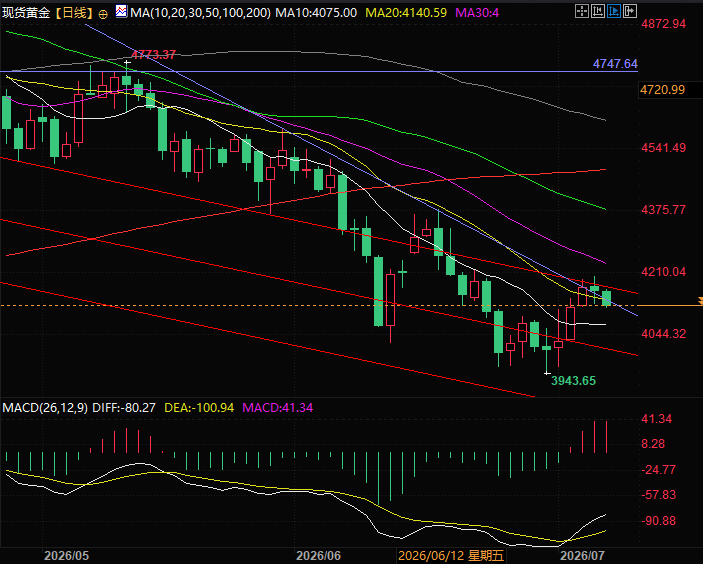
(Spot gold daily chart, source: FX678)
At 16:01 Beijing time, spot gold was trading at $4,127 per ounce.
The market had hoped that a ceasefire in the Middle East and a shift in the Federal Reserve's stance would continue to protect gold from inflation-induced interest rate hikes. However, a missile near the Gulf of Oman and Waller's speech triggered a powerful resonance on Tuesday. The latest developments in the Strait of Hormuz and Waller's speech in Rome not only failed to fuel gold's rise but instead formed a series of heavy blows, from "inflation concerns" to a "bond market storm," exerting a heavy double pressure on gold prices.
Escalating conflict in the Taiwan Strait: Instead of triggering safe-haven buying, it has set off alarm bells for inflation and interest rate hikes.
The attack on an LNG carrier off the coast of Oman early Tuesday morning has opened a new chapter in Middle Eastern shipping routes.
Tehran is using high-intensity military force to forcibly regain control of the Straits.
With Iran issuing a mandatory navigation ban and targeting alternative shipping lanes, the number of merchant ships on the Oman New Channel, which had previously served as a safety net, has plummeted, forcing global shipping companies to return to the rules set by Iran.
However, the escalation of this conflict did not generate much safe-haven buying for gold; instead, it brought an extremely heavy sense of inflationary suffocation to the market. The disruption of core energy shipping routes caused oil and gas supply chain premiums to surge again.
The debate over forward guidance has driven up US Treasury yields.
With all the conditions for an interest rate hike in place, Waller's revelation of the "struggle over policy" within the Federal Reserve has laid a fatal trap for gold.
Currently, the newly appointed Chairman Kevin Warsh is pushing for radical reforms, attempting to completely streamline the Federal Reserve's policy statements by downplaying or even abandoning "forward guidance."
In his speech last night, Waller emphasized the significance of forward guidance. Although he also made some platitudes in defense of Warsh, saying that forward guidance is sometimes indeed useless, he also stated that he previously supported rate cuts because of a weak job market, but this year the job market is strong and there is no need for rate cuts. This precisely exposes to the market the policy risks of internal disagreements within the Federal Reserve.
If new Chairman Warsh insists on abandoning forward guidance in future policies, it will undoubtedly increase the difficulty for the market to judge interest rates. The market needs higher yields to hedge against this uncertainty, and this communication vacuum will be directly reflected in the rise of US Treasury yields.
It is particularly noteworthy that Waller stated that while the labor market performed well, he did not mention the possibility that the non-farm payroll data would fall short of expectations. If the non-farm payroll data continues to be problematic, it could directly change his view that the job market is resilient.
The final showdown: a fatal blow, gold is undergoing a "double drain" of liquidity.
At the climax of this macroeconomic drama, the gunfire in the Strait of Hormuz and the internal divisions within the Federal Reserve ultimately delivered a precise strangulation of gold through the channel of "US Treasury yields":
As a non-interest-bearing asset, gold is most afraid of the combination of "high inflation forcing central banks to raise interest rates" and "soaring US Treasury yields".
The first layer of pressure: the attack on ships in the Strait of Hormuz and the quietness of the Oman shipping lanes are essentially helping the Federal Reserve make hawkish decisions. Inflation concerns are not the same as risk aversion; they have directly solidified market expectations for another Fed rate hike in July or September.
The second layer of pressure: The risk of "abandoning forward guidance" exposed by Waller's speech is the biggest landmine in the bond market. Once the yield on US Treasury bonds soars due to uncontrolled expectations, global capital will rush to risk-free US Treasury yields, and the cost of holding gold will be driven to a terrifying level.
Even more concerning, if the bond market falls too sharply and triggers margin calls, institutions often prioritize selling gold, a highly liquid asset, to raise cash and "put out the fire."
Summary and Technical Analysis:
In this round of competition, missiles in the Middle East became the fuse for inflation, while the Federal Reserve's chaotic communication expectations were the driving force behind rising US Treasury yields.
When these two forces combine, the soaring US Treasury yields are becoming the ultimate weapon to strangle gold price bulls, but the Strait of Hormuz is currently open to navigation.
The market is currently focused on the Federal Reserve meeting minutes this Thursday and next week's CPI data.
From a technical perspective, spot gold rebounded to the previously drawn resistance fan-shaped area, but was constrained by the descending resistance line and the upper rail of the descending channel. However, the overall pullback is still relatively small, which means that we need to pay attention to the gold price, as it may break through the above-mentioned resistance level at any time.
(Spot gold daily chart, source: FX678)
At 16:01 Beijing time, spot gold was trading at $4,127 per ounce.
- Risk Warning and Disclaimer
- The market involves risk, and trading may not be suitable for all investors. This article is for reference only and does not constitute personal investment advice, nor does it take into account certain users’ specific investment objectives, financial situation, or other needs. Any investment decisions made based on this information are at your own risk.