National Bank of Canada: The US dollar is trading near its 2026 high, but “vulnerability” is accumulating after the third quarter.
2026-07-07 16:39:30
On Tuesday (July 7), during the European session, the US dollar index fluctuated higher and is currently trading around 100.95.
National Bank of Canada (NBC) strategists Marion and Dams noted that the dollar is trading near its 2026 highs, with sticky inflation and wider interest rate differentials continuing to support it.
However, they are skeptical about the Fed’s impending tightening policy – June nonfarm payrolls increased by only 57,000, household surveys were weaker, and speculative dollar positions have been stretched to an extreme degree.
They believe that the dollar's support should be able to last in the short term, but the rise after the third quarter is becoming increasingly fragile.
The US dollar is currently trading near its 2026 highs, and this is no coincidence. Two major structural factors are supporting the dollar:
Sticky inflation is the primary factor. Despite a decline in energy prices, inflation in the services sector remains high. The fact that half of the FOMC members expect further rate hikes this year provides continued interest rate premium support for the dollar.
Wider interest rate differentials are the second pillar. Among the world's major central banks, the Federal Reserve's absolute interest rate level remains relatively high. Even if market expectations for interest rate hikes have receded somewhat, the dollar's interest rate advantage relative to other G10 currencies remains significant.
NBC strategists noted, "This repricing reinforces the dollar's interest rate advantage and explains why the dollar has appreciated against all major currencies over the past month."
However, the logic supporting the strengthening of the US dollar is facing challenges on two levels:
First, the job market is softening. June nonfarm payrolls increased by only 57,000, far below market expectations, while the data for the previous two months was revised downwards by a cumulative 74,000. Even more worrying is the household survey – the report showed a decrease of 507,000 in employment, with a significant drop in full-time positions. This is not a jobs report "strong enough to warrant further tightening."
Second, positioning has become extremely stretched. The market has fully accepted the narrative of a "stronger dollar," meaning a large number of long positions have been established. NBC strategists warn that "this makes the dollar more vulnerable to weaker inflation data, signs of a further cooling labor market, or any reduction in expectations of Fed tightening."
NBC strategists pointed out a key structural contradiction—a significant gap between the Federal Reserve's own forecasts and those of private economists:
Half of the FOMC members expect an interest rate hike this year.
However, only about 10% of private forecasting agencies expect an interest rate hike.
NBC sided with private forecasting firms. Their assessment was: "Persistent inflation does rule out interest rate cuts, but the moderate job growth trend means policymakers have time to wait before tightening further."
The core logic behind this assessment is that, given the current slowdown in employment growth, hastily raising interest rates could accelerate the economic slowdown, while inflation stems more from the supply side (energy, geopolitics) than from overheating on the demand side. Raising interest rates would have limited effect on curbing supply-side inflation, but could potentially cause unnecessary damage to employment.
NBC's outlook on the US dollar presents a clear framework of "short-term strength, medium-term pullback":
In the short term (within the third quarter): the dollar's support should be sustained. Sticky inflation and interest rate differentials will not disappear overnight, and geopolitical safe-haven demand from the Hormuz also provides additional buying support for the dollar.
Medium term (from Q3 to 2027): The upside is increasingly fragile. The dollar could face significant downward pressure should inflation data show more pronounced signs of decline, the labor market weaken further, or the market price in further tightening expectations from the Federal Reserve.
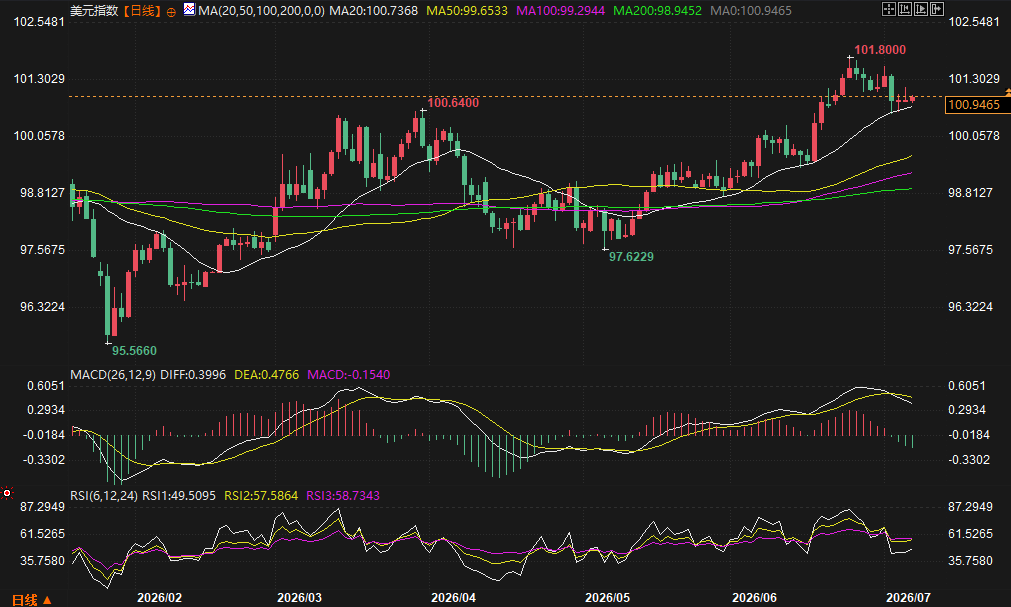
(US Dollar Index Daily Chart, Source: FX678)
At 15:45 Beijing time on July 7, the US dollar index was at 100.96.
National Bank of Canada (NBC) strategists Marion and Dams noted that the dollar is trading near its 2026 highs, with sticky inflation and wider interest rate differentials continuing to support it.
However, they are skeptical about the Fed’s impending tightening policy – June nonfarm payrolls increased by only 57,000, household surveys were weaker, and speculative dollar positions have been stretched to an extreme degree.
They believe that the dollar's support should be able to last in the short term, but the rise after the third quarter is becoming increasingly fragile.
The supporting logic for a stronger US dollar: interest rate differentials and sticky inflation.
The US dollar is currently trading near its 2026 highs, and this is no coincidence. Two major structural factors are supporting the dollar:
Sticky inflation is the primary factor. Despite a decline in energy prices, inflation in the services sector remains high. The fact that half of the FOMC members expect further rate hikes this year provides continued interest rate premium support for the dollar.
Wider interest rate differentials are the second pillar. Among the world's major central banks, the Federal Reserve's absolute interest rate level remains relatively high. Even if market expectations for interest rate hikes have receded somewhat, the dollar's interest rate advantage relative to other G10 currencies remains significant.
NBC strategists noted, "This repricing reinforces the dollar's interest rate advantage and explains why the dollar has appreciated against all major currencies over the past month."
Crowded Signals: Extreme Position Stretch and Warnings from Employment Data
However, the logic supporting the strengthening of the US dollar is facing challenges on two levels:
First, the job market is softening. June nonfarm payrolls increased by only 57,000, far below market expectations, while the data for the previous two months was revised downwards by a cumulative 74,000. Even more worrying is the household survey – the report showed a decrease of 507,000 in employment, with a significant drop in full-time positions. This is not a jobs report "strong enough to warrant further tightening."
Second, positioning has become extremely stretched. The market has fully accepted the narrative of a "stronger dollar," meaning a large number of long positions have been established. NBC strategists warn that "this makes the dollar more vulnerable to weaker inflation data, signs of a further cooling labor market, or any reduction in expectations of Fed tightening."
The policy expectation gap: the divergence between FOMC and private sector forecasts
NBC strategists pointed out a key structural contradiction—a significant gap between the Federal Reserve's own forecasts and those of private economists:
Half of the FOMC members expect an interest rate hike this year.
However, only about 10% of private forecasting agencies expect an interest rate hike.
NBC sided with private forecasting firms. Their assessment was: "Persistent inflation does rule out interest rate cuts, but the moderate job growth trend means policymakers have time to wait before tightening further."
The core logic behind this assessment is that, given the current slowdown in employment growth, hastily raising interest rates could accelerate the economic slowdown, while inflation stems more from the supply side (energy, geopolitics) than from overheating on the demand side. Raising interest rates would have limited effect on curbing supply-side inflation, but could potentially cause unnecessary damage to employment.
Outlook: Short-term support and medium-term pullback path
NBC's outlook on the US dollar presents a clear framework of "short-term strength, medium-term pullback":
In the short term (within the third quarter): the dollar's support should be sustained. Sticky inflation and interest rate differentials will not disappear overnight, and geopolitical safe-haven demand from the Hormuz also provides additional buying support for the dollar.
Medium term (from Q3 to 2027): The upside is increasingly fragile. The dollar could face significant downward pressure should inflation data show more pronounced signs of decline, the labor market weaken further, or the market price in further tightening expectations from the Federal Reserve.
(US Dollar Index Daily Chart, Source: FX678)
At 15:45 Beijing time on July 7, the US dollar index was at 100.96.
- Risk Warning and Disclaimer
- The market involves risk, and trading may not be suitable for all investors. This article is for reference only and does not constitute personal investment advice, nor does it take into account certain users’ specific investment objectives, financial situation, or other needs. Any investment decisions made based on this information are at your own risk.