From ceasefire to war: The US-Iran conflict escalates suddenly, and oil prices face a new storm.
2026-07-08 14:29:47
On Wednesday (July 8) during Asian trading hours, US crude oil futures surged, rising more than 3% to $72.93 per barrel from Tuesday's settlement price, a new high since June 24. This sharp rise was directly caused by a sudden major geopolitical event.
On Wednesday, the strategic standoff between the United States and Iran in the Strait of Hormuz abruptly escalated into direct military conflict. The U.S. military launched a massive airstrike against "more than 80" targets inside Iran in retaliation for Iranian attacks on merchant ships in the strait.
Tehran retaliated swiftly, launching attacks on military targets in Bahrain and Kuwait. The fragile ceasefire agreement that had lasted for weeks has effectively collapsed, and the security of the Strait of Hormuz, a vital artery for global energy supplies, faces its most severe challenge since the outbreak of the war.
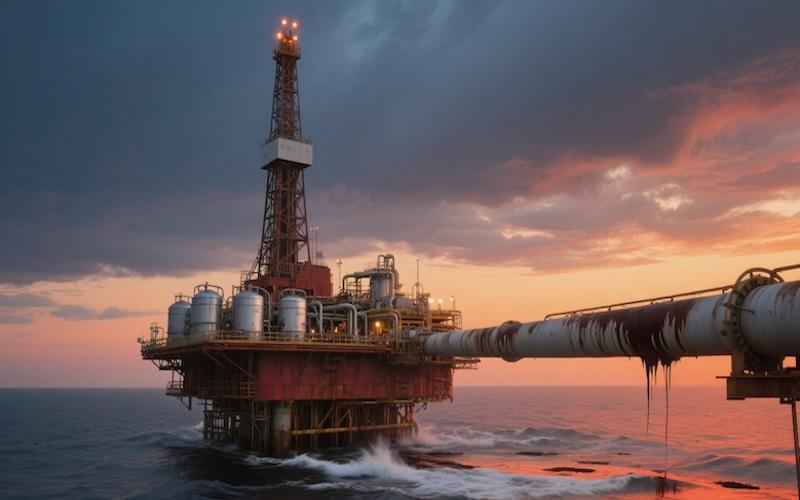
U.S. Central Command (CENTCOM) completed a new round of offensive strikes against Iran from the evening of July 7 to the early morning of July 8, local time. According to a statement released by the U.S. military, the operation utilized precision-guided weapons, striking more than 80 targets across multiple Iranian military systems both inside and outside the Strait of Hormuz.
Air defense systems and command and control networks
Coastal radar stations and anti-ship missile capabilities
More than 60 small vessels of the Islamic Revolutionary Guard Corps from both inside and outside the Taiwan Strait
The U.S. military stated explicitly that the strike was aimed at "disrupting Iran's ability to continue attacking international commerce along international trade corridors" and was a "direct response" to Iran's recent attacks on three merchant ships in the Strait of Hormuz. The attacked vessels included the Marshall Islands-flagged oil tanker "Al Rekayyat," the Saudi Arabian-flagged oil tanker "Wedyan," and the Liberian-flagged oil tanker "Cyprus Prosperity."
The U.S. military statement was strongly worded, calling Iran's actions "unprovoked aggression," constituting "a blatant and dangerous violation of the ceasefire agreement and undermining freedom of navigation," and emphasizing that it was prepared to hold Iran accountable if it failed to comply with the agreement.
Iran did not passively accept the attack. The Islamic Revolutionary Guard Corps issued a statement confirming that it had launched retaliatory attacks on military targets in a neighboring country, accusing "terrorist US forces that killed children" of "blatantly violating the ceasefire agreement," and claiming that US forces attacked Iranian coastal bases and civilian facilities.
Air sirens blared in Bahrain and Kuwait early Wednesday morning—the former home to the U.S. Fifth Fleet, and the latter a hub for U.S. personnel. Iran's retaliatory action indicates that the conflict has expanded from the Strait of Hormuz itself to the U.S. military presence in the region.
Iran’s chief negotiator, Mohammad Bagher Ghalibaf, accused the United States on the X platform of “serious” violations of the previously reached Islamabad Memorandum of Understanding, including “continued threats of further strikes,” “reinstatement of oil sanctions,” and “attacks on southern Iran.”
He reiterated Iran's firm stance: "The era of bullying and blackmail is over. It serves no purpose. We will never yield."
It is worth noting that this escalation of the conflict comes at a sensitive time in Iranian domestic politics—the country is in a state of high tension as it holds the funeral for former Supreme Leader Ayatollah Ali Khamenei, who was killed in attacks early in the war.
According to statistics from the United Nations International Maritime Organization, three civilian vessels were attacked in the Strait of Hormuz on Tuesday (July 7), marking the largest number of attacks on ships in a single day since late April, directly triggering a military response from the U.S. military.
Following the incident, international maritime authorities have raised the threat level for navigation in the strait from "substantial" to "serious".
This escalation of the conflict did not come without warning. Ending Iran's control of the Strait of Hormuz—a control that has severely disrupted global oil and gas supplies and driven up fuel and food prices—has been one of the core demands of previous negotiations.
Under the preliminary ceasefire agreement reached between the United States and Iran, both sides only guarantee safe and free passage through the Strait of Hormuz for 60 days, while striving to reach a final agreement on Iran's nuclear program. The agreement also grants Iran and Oman, along with other Gulf states, the power to jointly determine the future administration and maritime services of the Strait of Hormuz.
However, in practice, Iran has continued to attempt to exert unilateral influence, including demanding transit permits for passing ships and unilaterally claiming that only Tehran has the right to conduct minesweeping operations in the Strait.
Hours before the conflict erupted, Washington also revoked Tehran's oil sales license—a license that had been granted last month under a temporary ceasefire agreement—further escalating tensions.
Faced with the rapidly deteriorating situation in the Strait of Hormuz, Britain and France have demonstrated a clear willingness to intervene. British Prime Minister Sir Keir Starmer and French President Emmanuel Macron issued a joint statement last Friday, emphasizing that "the Strait of Hormuz is a vital artery of the global economy" and that "restoring the safe passage of ships through the strait is a matter of global concern."
The statement revealed that Oman has agreed to cooperate with Britain and France to ensure safe navigation within its sovereign territorial waters, while the two countries are "ready to deploy a broader multinational military operation to support freedom of navigation in the Strait of Hormuz."
The two leaders reaffirmed their commitment to maintaining regional stability and respecting the sovereignty of all countries, and expressed their willingness to maintain close cooperation with partners to safeguard global security, freedom of navigation, and international law.
This direct military confrontation between the US and Iran in the Strait of Hormuz marks the substantial end of the weeks-long ceasefire. More than 80 US airstrikes and Iran's retaliatory strikes against Bahrain and Kuwait have caused geopolitical risks in the Middle East to escalate dramatically in a short period.
For global markets, this development means that concerns about energy supply disruptions will once again become a core variable in pricing, and oil prices and safe-haven assets may face a new round of sharp fluctuations.
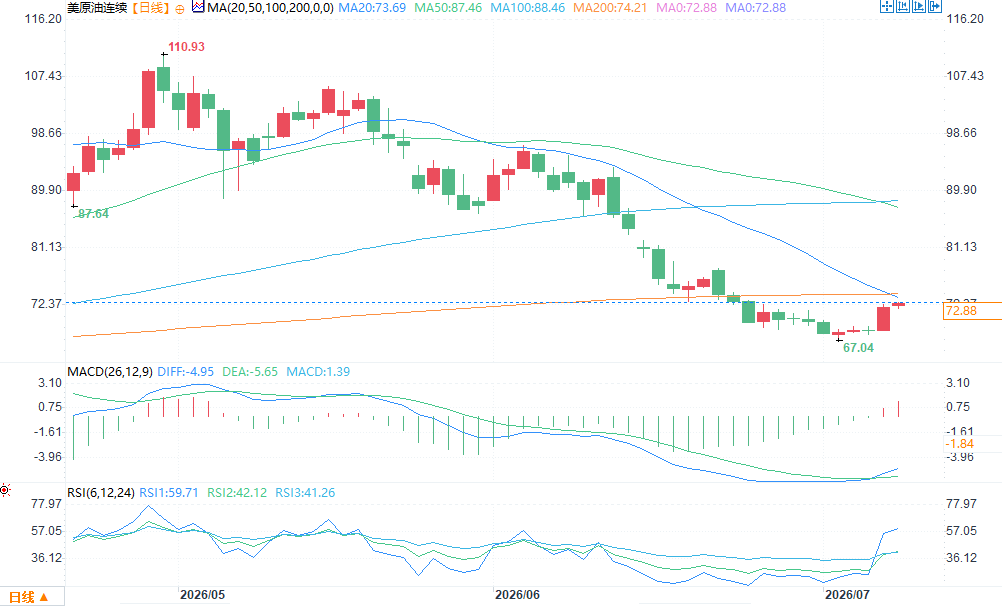
(US crude oil futures daily chart, source: FX678)
At 14:28 Beijing time on July 8, US crude oil futures were trading at $72.66 per barrel.
On Wednesday, the strategic standoff between the United States and Iran in the Strait of Hormuz abruptly escalated into direct military conflict. The U.S. military launched a massive airstrike against "more than 80" targets inside Iran in retaliation for Iranian attacks on merchant ships in the strait.
Tehran retaliated swiftly, launching attacks on military targets in Bahrain and Kuwait. The fragile ceasefire agreement that had lasted for weeks has effectively collapsed, and the security of the Strait of Hormuz, a vital artery for global energy supplies, faces its most severe challenge since the outbreak of the war.
Details of US airstrikes: More than 80 targets were precisely struck, covering multiple land and sea systems.
U.S. Central Command (CENTCOM) completed a new round of offensive strikes against Iran from the evening of July 7 to the early morning of July 8, local time. According to a statement released by the U.S. military, the operation utilized precision-guided weapons, striking more than 80 targets across multiple Iranian military systems both inside and outside the Strait of Hormuz.
Air defense systems and command and control networks
Coastal radar stations and anti-ship missile capabilities
More than 60 small vessels of the Islamic Revolutionary Guard Corps from both inside and outside the Taiwan Strait
The U.S. military stated explicitly that the strike was aimed at "disrupting Iran's ability to continue attacking international commerce along international trade corridors" and was a "direct response" to Iran's recent attacks on three merchant ships in the Strait of Hormuz. The attacked vessels included the Marshall Islands-flagged oil tanker "Al Rekayyat," the Saudi Arabian-flagged oil tanker "Wedyan," and the Liberian-flagged oil tanker "Cyprus Prosperity."
The U.S. military statement was strongly worded, calling Iran's actions "unprovoked aggression," constituting "a blatant and dangerous violation of the ceasefire agreement and undermining freedom of navigation," and emphasizing that it was prepared to hold Iran accountable if it failed to comply with the agreement.
Iran retaliates strongly: missile strikes against Bahrain and Kuwait, vowing not to yield.
Iran did not passively accept the attack. The Islamic Revolutionary Guard Corps issued a statement confirming that it had launched retaliatory attacks on military targets in a neighboring country, accusing "terrorist US forces that killed children" of "blatantly violating the ceasefire agreement," and claiming that US forces attacked Iranian coastal bases and civilian facilities.
Air sirens blared in Bahrain and Kuwait early Wednesday morning—the former home to the U.S. Fifth Fleet, and the latter a hub for U.S. personnel. Iran's retaliatory action indicates that the conflict has expanded from the Strait of Hormuz itself to the U.S. military presence in the region.
Iran’s chief negotiator, Mohammad Bagher Ghalibaf, accused the United States on the X platform of “serious” violations of the previously reached Islamabad Memorandum of Understanding, including “continued threats of further strikes,” “reinstatement of oil sanctions,” and “attacks on southern Iran.”
He reiterated Iran's firm stance: "The era of bullying and blackmail is over. It serves no purpose. We will never yield."
It is worth noting that this escalation of the conflict comes at a sensitive time in Iranian domestic politics—the country is in a state of high tension as it holds the funeral for former Supreme Leader Ayatollah Ali Khamenei, who was killed in attacks early in the war.
Triggering the conflict: Three merchant ships attacked in a single day, maritime threat escalates to "serious" level.
According to statistics from the United Nations International Maritime Organization, three civilian vessels were attacked in the Strait of Hormuz on Tuesday (July 7), marking the largest number of attacks on ships in a single day since late April, directly triggering a military response from the U.S. military.
Following the incident, international maritime authorities have raised the threat level for navigation in the strait from "substantial" to "serious".
Background of the ceasefire agreement: The fragile 60-day peace has broken down.
This escalation of the conflict did not come without warning. Ending Iran's control of the Strait of Hormuz—a control that has severely disrupted global oil and gas supplies and driven up fuel and food prices—has been one of the core demands of previous negotiations.
Under the preliminary ceasefire agreement reached between the United States and Iran, both sides only guarantee safe and free passage through the Strait of Hormuz for 60 days, while striving to reach a final agreement on Iran's nuclear program. The agreement also grants Iran and Oman, along with other Gulf states, the power to jointly determine the future administration and maritime services of the Strait of Hormuz.
However, in practice, Iran has continued to attempt to exert unilateral influence, including demanding transit permits for passing ships and unilaterally claiming that only Tehran has the right to conduct minesweeping operations in the Strait.
Hours before the conflict erupted, Washington also revoked Tehran's oil sales license—a license that had been granted last month under a temporary ceasefire agreement—further escalating tensions.
International reaction: UK-France joint statement upholds freedom of navigation; multiple countries on standby for military action.
Faced with the rapidly deteriorating situation in the Strait of Hormuz, Britain and France have demonstrated a clear willingness to intervene. British Prime Minister Sir Keir Starmer and French President Emmanuel Macron issued a joint statement last Friday, emphasizing that "the Strait of Hormuz is a vital artery of the global economy" and that "restoring the safe passage of ships through the strait is a matter of global concern."
The statement revealed that Oman has agreed to cooperate with Britain and France to ensure safe navigation within its sovereign territorial waters, while the two countries are "ready to deploy a broader multinational military operation to support freedom of navigation in the Strait of Hormuz."
The two leaders reaffirmed their commitment to maintaining regional stability and respecting the sovereignty of all countries, and expressed their willingness to maintain close cooperation with partners to safeguard global security, freedom of navigation, and international law.
In conclusion, the course of the conflict depends on the next moves by the US and Iran, and the global energy market faces significant uncertainty.
This direct military confrontation between the US and Iran in the Strait of Hormuz marks the substantial end of the weeks-long ceasefire. More than 80 US airstrikes and Iran's retaliatory strikes against Bahrain and Kuwait have caused geopolitical risks in the Middle East to escalate dramatically in a short period.
For global markets, this development means that concerns about energy supply disruptions will once again become a core variable in pricing, and oil prices and safe-haven assets may face a new round of sharp fluctuations.
(US crude oil futures daily chart, source: FX678)
At 14:28 Beijing time on July 8, US crude oil futures were trading at $72.66 per barrel.
- Risk Warning and Disclaimer
- The market involves risk, and trading may not be suitable for all investors. This article is for reference only and does not constitute personal investment advice, nor does it take into account certain users’ specific investment objectives, financial situation, or other needs. Any investment decisions made based on this information are at your own risk.