













Geopolitical risks trigger bond market turmoil: Trump's tough stance pushes up oil prices, and US Treasury yields rise to a one-and-a-half-month high.
2026-07-09 10:42:15
On Wednesday (July 8), U.S. Treasury yields across all maturities rose in tandem, driven by a surge in crude oil prices due to a sudden shift in geopolitical tensions.
Trump publicly declared the end of the US-Iran ceasefire at the NATO summit in Turkey, and subsequently made tough remarks about a second strike on Iran overnight. Brent crude and WTI crude futures jumped sharply, with markets worried that rising energy prices would further push up inflation, forcing US Treasury yields higher. Simultaneously, the market digested the minutes of Kevin Warsh's first policy meeting as Federal Reserve Chairman, revealing significant internal disagreement within the Fed regarding the direction of interest rates this year, with bullish and bearish views evenly matched. The combined effect of these two news events, while not causing dramatic fluctuations in the bond market, has led to a continued rise in the long-term financing pricing center, putting short-term upward pressure on global risk-free interest rates.
Trump stated at the NATO summit in Turkey that the ceasefire agreement previously reached between the US and Iran had expired. This statement immediately caused international oil prices to rise rapidly, directly triggering market panic about a rebound in imported inflation, which in turn drove up the yields on US Treasury bonds across all maturities.
At a subsequent joint press conference that day, Trump appeared alongside Ukrainian President Volodymyr Zelenskyy and made threatening remarks, stating, "I'll give you a heads-up that tonight we're going to launch a powerful strike against Iran." This escalation comes after the US completed a round of military action against Iran on Tuesday, further exacerbating the risks to shipping lanes in the Middle East.
Market data shows that Brent crude oil futures, the global benchmark for crude oil pricing, closed up 5.43%, settling at $78.19 per barrel; West Texas Intermediate (WTI) crude oil futures rose 4.37%, closing at $73.52 per barrel. The sharp rebound in energy prices led the market to reprice inflation risks, prompting funds to sell US Treasuries as a safe haven, resulting in weaker bond prices and higher yields.

The 10-year US Treasury yield, a core pricing benchmark for global mortgages, auto loans, and credit card products, rose more than 4 basis points to close at 4.58%. The 2-year US Treasury yield, closely pegged to the Federal Reserve's short-term interest rate expectations, also rose more than 4 basis points to close at 4.215%. The yield on the 30-year ultra-long-term bond, which is more sensitive to geopolitical conflicts, rose more than 2 basis points to close at 5.074%.
One basis point corresponds to 0.01%, a common unit of account in the market. Bond prices and yields move inversely, and a general rise in yields means that US Treasury assets were sold off on that day.
While digesting geopolitical and energy market trends, traders simultaneously analyzed the minutes of the Federal Open Market Committee's June policy meeting, Kevin Warsh's first policy meeting since taking office as Fed Chairman. The minutes clearly revealed the current state of internal divisions, highlighting the difficulty for committee members to reach a unified judgment on the interest rate path in the absence of complete inflation data.
The minutes show that a significant number of officials believed the reasonable federal funds rate would remain flat or slightly below the current range by the end of the year, while a considerable number of members predicted that the rate would need to be raised above the current range by the end of the year. There was no clear bias between the two views, leaving room for monetary policy to either loosen or tighten, further amplifying the market's speculation on medium- and long-term interest rates.
Following the release of the meeting minutes, the US Treasury market experienced only minor fluctuations, which did not alter the overall upward trend in yields that day.
In summary, the recurring geopolitical conflicts in the Middle East, leading to soaring oil prices and rising inflation expectations, are the core drivers of the current rise in US Treasury yields. Coupled with significant internal disagreements within the Federal Reserve regarding interest rates, global risk-free asset pricing is under short-term pressure. Although bond market volatility is limited, the dual uncertainties of energy and monetary policy will continue to constrain medium- and long-term bond prices. The subsequent developments in the Middle East and US inflation data will jointly determine the future direction of US Treasury yields.
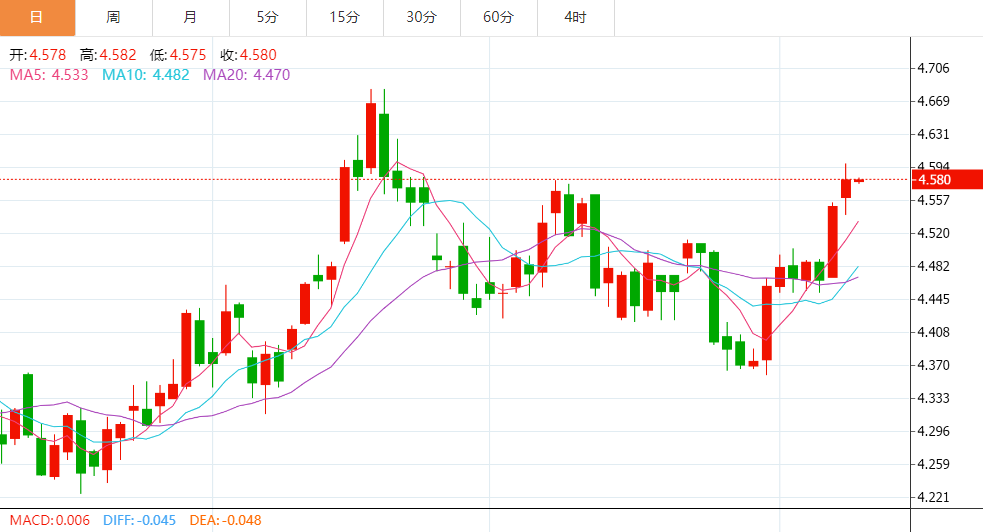
10-year US Treasury yield daily chart source:
At 10:41 AM Beijing time on July 9th, the 10-year US Treasury yield was 4.577%.
Trump publicly declared the end of the US-Iran ceasefire at the NATO summit in Turkey, and subsequently made tough remarks about a second strike on Iran overnight. Brent crude and WTI crude futures jumped sharply, with markets worried that rising energy prices would further push up inflation, forcing US Treasury yields higher. Simultaneously, the market digested the minutes of Kevin Warsh's first policy meeting as Federal Reserve Chairman, revealing significant internal disagreement within the Fed regarding the direction of interest rates this year, with bullish and bearish views evenly matched. The combined effect of these two news events, while not causing dramatic fluctuations in the bond market, has led to a continued rise in the long-term financing pricing center, putting short-term upward pressure on global risk-free interest rates.
Geopolitical rhetoric ignites oil price surge, while inflation concerns put pressure on US Treasury yields.
Trump stated at the NATO summit in Turkey that the ceasefire agreement previously reached between the US and Iran had expired. This statement immediately caused international oil prices to rise rapidly, directly triggering market panic about a rebound in imported inflation, which in turn drove up the yields on US Treasury bonds across all maturities.
At a subsequent joint press conference that day, Trump appeared alongside Ukrainian President Volodymyr Zelenskyy and made threatening remarks, stating, "I'll give you a heads-up that tonight we're going to launch a powerful strike against Iran." This escalation comes after the US completed a round of military action against Iran on Tuesday, further exacerbating the risks to shipping lanes in the Middle East.
Market data shows that Brent crude oil futures, the global benchmark for crude oil pricing, closed up 5.43%, settling at $78.19 per barrel; West Texas Intermediate (WTI) crude oil futures rose 4.37%, closing at $73.52 per barrel. The sharp rebound in energy prices led the market to reprice inflation risks, prompting funds to sell US Treasuries as a safe haven, resulting in weaker bond prices and higher yields.
US Treasury yields across all maturities rose in tandem, with both short-term and long-term yields increasing.
The 10-year US Treasury yield, a core pricing benchmark for global mortgages, auto loans, and credit card products, rose more than 4 basis points to close at 4.58%. The 2-year US Treasury yield, closely pegged to the Federal Reserve's short-term interest rate expectations, also rose more than 4 basis points to close at 4.215%. The yield on the 30-year ultra-long-term bond, which is more sensitive to geopolitical conflicts, rose more than 2 basis points to close at 5.074%.
One basis point corresponds to 0.01%, a common unit of account in the market. Bond prices and yields move inversely, and a general rise in yields means that US Treasury assets were sold off on that day.
The release of the Federal Reserve meeting minutes has exacerbated uncertainty about the policy outlook.
While digesting geopolitical and energy market trends, traders simultaneously analyzed the minutes of the Federal Open Market Committee's June policy meeting, Kevin Warsh's first policy meeting since taking office as Fed Chairman. The minutes clearly revealed the current state of internal divisions, highlighting the difficulty for committee members to reach a unified judgment on the interest rate path in the absence of complete inflation data.
The minutes show that a significant number of officials believed the reasonable federal funds rate would remain flat or slightly below the current range by the end of the year, while a considerable number of members predicted that the rate would need to be raised above the current range by the end of the year. There was no clear bias between the two views, leaving room for monetary policy to either loosen or tighten, further amplifying the market's speculation on medium- and long-term interest rates.
Following the release of the meeting minutes, the US Treasury market experienced only minor fluctuations, which did not alter the overall upward trend in yields that day.
Summarize
In summary, the recurring geopolitical conflicts in the Middle East, leading to soaring oil prices and rising inflation expectations, are the core drivers of the current rise in US Treasury yields. Coupled with significant internal disagreements within the Federal Reserve regarding interest rates, global risk-free asset pricing is under short-term pressure. Although bond market volatility is limited, the dual uncertainties of energy and monetary policy will continue to constrain medium- and long-term bond prices. The subsequent developments in the Middle East and US inflation data will jointly determine the future direction of US Treasury yields.
10-year US Treasury yield daily chart source:
At 10:41 AM Beijing time on July 9th, the 10-year US Treasury yield was 4.577%.
- Risk Warning and Disclaimer
- The market involves risk, and trading may not be suitable for all investors. This article is for reference only and does not constitute personal investment advice, nor does it take into account certain users’ specific investment objectives, financial situation, or other needs. Any investment decisions made based on this information are at your own risk.

